

- 42.0 x 65.0 cm


A imagem segue as suas escolhas: , .
Descrição do Item
Experience the opulent beauty of François Boucher’s ‘Chinese Dance,’ a captivating Rococo masterpiece brimming with vibrant colors and dynamic movement. This stunning 1742 oil painting captures an elegant dance scene, perfect for art lovers seeking a timeless treasure.
 Ler mais
Biografia do Artista
Descubra François Boucher (1703-1770), mestre do Rococó! Explore suas pinturas sensuais – cenas mitológicas, retratos e paisagens idílicas – definindo a arte francesa do século XVIII.
Reprodução em Óleo Feita à Mão
Óleo sobre tela pintado à mão no tamanho e moldura de sua escolha, feito sob encomenda pelos nossos artistas. ( Alternar para Impressão Alternar para Imagem Digital)
Saiba mais sobre esta pintura
 Visualizar na parede
 Compartilhar
 Compartilhar
 Detalhes
 Guia
Guia

 Baixar imagem
 Semelhantes
 Raio X
 Ver diaporama
 Perguntas e Respostas
 Estatísticas
Encomende a sua pintura em quatro passos simples
Não tenha pressa. Você pode alterar qualquer resposta; o preço no seu carrinho de compras será atualizado conforme cada escolha.
1 Passo um de quatro
Qual tamanho você gostaria?
Estes tamanhos mantêm as proporções da pintura original. A ilustração mostra a sua escolha numa parede, acima de um sofá de dois metros.
Ou informe suas próprias medidas
Escolha entre os nossos tamanhos pré-definidos que respeitam as proporções originais da obra de arte.

Insira a largura e a altura desejadas para se ajustarem à sua moldura ou parede. Como esta obra é pintada à mão, para um tamanho com proporções diferentes, o artista poderá pintar um pouco mais ao redor da imagem ou reduzir ligeiramente a composição — você escolhe. Enviamos uma maquete digital para sua aprovação antes de iniciar a pintura. A imagem exibida nesta página não representa o resultado real — apenas a maquete mostra o resultado final.
2 Passo dois de quatro
Como deve ser preparado: enrolado, esticado ou emoldurado?
Os preços abaixo referem-se ao tamanho escolhido na primeira etapa.
Escolha as bordas da tela esticada
Escolha sua moldura

Branco €1

Bordas esfumaçadas €1

Bordas estendidas €1

P118B €10

P118H €10

P118W €10

P438Z €10

P508JH €12

P508YH €12

P805H €10

P805Z €10

P919BZ €10

P919G €10

P919XJ €10

P959ZH €10

P968JZ €12

W106C €8

W218G €10

W218JH €8

W218Y €10

W307PJ €10

W316G €10

W316PJ €8

W316Y €10

W398PJ €8

W4111J €10

W500HY €15

W500JH €15

W692G €12

W849H €8

W940BG €15

W953PJ €8

H24-GOLD €30

H24-SILVER €30

H36-GOLD €45

H36-SILVER €45
Com moldura
Moldura: . Dimensões totais com a moldura: .
3 Passo três de quatro
Gostaria de alterar algo na pintura?
A maioria das pessoas responde que não. Como cada pintura é feita à mão, nosso artista também pode adaptá-la para você.
Após o pedido, a equipe da ArtsDot.com enviará um e-mail ao cliente para instruções e fornecerá uma prévia da montagem
4 Passo quatro de quatro
Algumas opções de acabamento
Todos eles são opcionais. As respostas já selecionadas não têm custo adicional.
Quem o pintou?
Entrega mundial () em 3 a 4 semanas, em vez das 5 semanas padrão. (3 Novembro). Sem comprometer a qualidade.
Uma placa de identificação, como em um museu?
Detalhes da Placa de Bronze Gravada
This elegant plaque features the artist's name and the title of the artwork, finely engraved for a timeless presentation.
It is made from bronze with a refined, elegant finish. The text is precisely laser-engraved for a sharp and permanent result. Measuring 9x2 cm, the plaque is compact yet easy to read. It's built to be durable and scratch-resistant, offering a professional, museum-quality look. Mounting is simple thanks to the included adhesive backing.
Detalhes da Placa de Acrílico Transparente
The plaque includes essential engraved details such as the artist's name, the title of the artwork, the date it was created, the type of media used-like oil on canvas or watercolor-a brief description of the piece, and a QR code that links to the complete artwork information.
It is crafted from clear acrylic, offering a sleek, modern appearance. The text is UV-engraved in black to ensure strong visual contrast. With a size of 10x15 cm, it ensures optimal readability. It comes equipped with two metal hooks for secure wall mounting. The plaque is designed to be weather-resistant, making it suitable for various environments, and it includes interactive features that work seamlessly with smartphone scanning.
Detalhes da Placa de Acrílico Preto
This elegant plaque includes engraved information such as the artist's name, the title of the artwork, the date it was created, the type of media used (like oil on canvas or watercolor), a short description of the artwork, and a QR code for quick access to more information.
The plaque itself is made from refined black acrylic with a premium finish. The text is laser-engraved in white for high contrast and readability. Its size is 10x15 cm, designed to be easy to read. It comes with two metal hooks for professional mounting. The design is sleek and fits any interior style. It is also weather-resistant and durable, with built-in digital integration for mobile compatibility.
Um verniz protetor?
Para quando você precisa?
✓ Verifique e peça
A sua pintura, conforme encomendada

Chinese Dance
Técnica de Reprodução
Tamanho da Reprodução
-

Artista Sênior de Elite
Mais detalhes, refinamento e tempo de produção adicional
-

Moldura para Reprodução
-
-
Para obras de arte ou reproduções com mais de 105 cm (aproximadamente 41 polegadas) em qualquer um dos lados, a moldura será enviada como um kit desmontado. Este método garante uma entrega segura e evita danos durante o transporte.
Montagem profissional necessária — este não é um produto DIY (faça você mesmo).
O kit deve ser montado e a tela esticada por um profissional de molduraria experiente, utilizando cola de madeira (não inclusa), um alicate de esticar tela e grampos para manter as travessas alinhadas enquanto a cola seca. A montagem incorreta ou a tensão desigual da tela podem danificar permanentemente a obra de arte e não estão cobertas pela nossa garantia.
 Para obras de arte ou reproduções com mais de 105 cm (aproximadamente 41 polegadas) em qualquer um dos lados, a moldura será enviada como um kit desmontado. Este método garante uma entrega segura e evita danos durante o transporte.
Todas as barras de madeira maciça estão incluídas, precisamente cortadas ao tamanho certo.
Montado com os parafusos fornecidos, além de cola para madeira para as junções dos cantos, que não está inclusa e deve ser providenciada pelo seu moldurista.
São necessárias ferramentas profissionais não incluídas: um alicate de estiramento de tela (esticador) e grampos para manter as ripas alinhadas enquanto a cola seca.
Importante:
As junções dos cantos requerem cola para madeira, as ripas devem ser mantidas com grampos até que a cola esteja completamente seca, e o estiramento da tela na moldura montada requer um alicate de esticar tela. Nenhum destes itens está incluído no kit. Por favor, certifique-se de contar com um profissional de molduraria experiente antes de encomendar este tamanho.

Etiqueta de identificação
-
-

Verniz de Proteção
Verniz brilhante (realça as cores e protege contra a luz e a umidade)
-

Personalizar minha obra
Exemplos de alterações possíveis: Substituir o rosto por uma foto do cliente; Adicionar um animal de estimação (ex.: substituir gato por cachorro); Incluir uma mensagem oculta no fundo; Alterar a paisagem ou os elementos do fundo.
-

Urgente
Entrega mundial () em 3 a 4 semanas, em vez das 5 semanas padrão. (3 Novembro). Sem comprometer a qualidade.
-
Envio Expresso
Entrega mundial para em 5 semanas. (10 Novembro).
Com envio incluído
Preço Total
€ 235
A opção de vidro está disponível apenas para tamanhos inferiores a 110 cm
Incluído em todos os pedidos
- Envio expresso gratuito para todo o mundo
- Tela de Linho de Alta Qualidade
- Seguro de transporte completo
- Garantia de Reembolso de Impostos Alfandegários
- Garantia de Fidelidade Cromática
- Política de Devolução em 100 Dias (Apenas para Defeitos)
- Garantia de reembolso de 100%
- Oferta de desconto por quantidade


François Boucher’s “Chinese Dance”: A Rococo Reverie
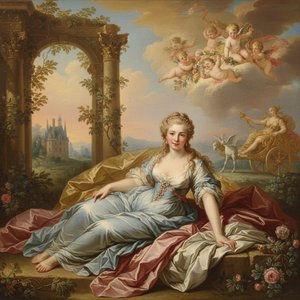
François Boucher's "Chinese Dance," completed in 1742, is more than just a beautiful painting; it’s a shimmering portal into the opulent world of the French Rococo. This oil on canvas masterpiece, measuring a modest 42 x 65 cm, immediately captivates with its vibrant palette and the seemingly effortless grace of its central figures. Housed in the Musée des Beaux-Arts et d'Archéologie in Besançon, France, it represents a pinnacle of Boucher’s skill – his ability to infuse a scene with both sensuality and meticulous detail, hallmarks of the era.
A Symphony of Color and Movement
Boucher masterfully employs color to evoke a sense of exoticism and delight. The dancers themselves are rendered in rich reds, blues, and golds, their silk garments shimmering under an implied light source. This isn't merely decorative; it’s a deliberate strategy to draw the viewer into the scene, mirroring the dynamism of the dance itself. Notice the delicate lines defining each figure – a signature of the Rococo style, prioritizing fluidity and movement over rigid realism. The composition is carefully balanced, with the semi-circular arrangement of the dancers creating a visual rhythm that draws the eye across the canvas.
The Allure of Orientalism
"Chinese Dance" taps into the European fascination with the Orient during the 18th century. The inclusion of a pagoda – a distinctly Asian architectural form – and swaying palm trees immediately transports the viewer to a fantastical, idealized landscape. This wasn't simply about depicting an actual Chinese scene; it was about creating a romanticized vision of the exotic, reflecting broader European desires for adventure and luxury. Boucher’s use of perspective and detail contributes significantly to this illusion, making the background feel remarkably tangible.
Technical Brilliance and Historical Context
Boucher's technical prowess is evident in his masterful handling of light and shadow, creating a sense of depth and realism that was revolutionary for its time. The oil on canvas medium allowed him to achieve subtle gradations of color and texture, contributing to the painting’s overall luminosity. Created during Boucher’s rise to prominence – following his victory at the Grand Prix de Rome – “Chinese Dance” exemplifies the artistic trends of the Rococo period, a style characterized by its emphasis on elegance, pleasure, and decorative excess. It's a testament to Boucher's ability to synthesize classical influences with contemporary tastes, solidifying his position as one of the leading artists of his generation.
A Timeless Masterpiece
"Chinese Dance" remains a captivating work of art, offering a glimpse into the aesthetic sensibilities of 18th-century France. Its vibrant colors, dynamic composition, and evocative subject matter continue to resonate with viewers today. ArtsDot.com offers meticulously crafted hand-painted reproductions that faithfully capture the beauty and spirit of this iconic Rococo masterpiece.
Perguntas e Respostas
"Chinese Dance" é típico do que François Boucher costumava criar?
Entre os temas recorrentes de François Boucher — rococo elegance, sensuality, movement, chinese culture, exoticism, beauty, courtly life, aristocratic taste — "Chinese Dance" traz seu próprio foco em rococo dance, chinese attire, oriental scene, françois boucher, pagoda building, palm trees, dynamic movement.
"Chinese Dance" permaneceu no país de origem do seu artista?
Sim – a obra de arte encontra-se no país de origem do artista. O país de nascimento de François Boucher é França, e o museu que detém o original de "Chinese Dance" está em França.
Qual é a identidade cromática de "Chinese Dance", de François Boucher?
A identidade cromática de "Chinese Dance", de François Boucher: uma paleta Earthy, dominada por Driftwood (#86724f).
Obras Relacionadas


François Boucher
1703 - 1770, França
Biografia do Artista
François Boucher: A Master of Rococo’s Delicate Embrace
François Boucher (1703-1770) stands as a monumental figure in the history of French art, inextricably linked to the opulent and sensual world of the Rococo. More than simply a painter, he was a master decorator, a designer of elegance, and an interpreter of aristocratic desires – a true embodiment of the era’s refined aesthetic. His work, characterized by a breathtaking blend of technical skill, mythological grandeur, and playful eroticism, continues to captivate viewers centuries later.
Early Years and Artistic Foundations
Born on September 29th, 1703, in the heart of Paris, François Boucher’s artistic journey began within a family steeped in creative tradition. His father, Jean Boucher, was himself a painter, providing young François with his initial exposure to the world of art. This early influence laid the groundwork for a career that would ultimately define an entire style. At the tender age of seventeen, Boucher caught the discerning eye of François Lemoyne, a prominent artist at the time, and became his apprentice. This brief but formative period instilled in him fundamental techniques and artistic principles. Further honing his skills with Jean-François Cars, a renowned engraver, broadened his technical repertoire and introduced him to the world of printmaking – a skill that would later prove invaluable.
However, the defining moment in Boucher’s early career arrived in 1720: he secured the prestigious Grand Prix de Rome. This competition, fiercely contested by aspiring artists, offered the winner the opportunity to study at the renowned Academy of France in Rome – a crucial stepping stone for any ambitious artist seeking recognition. Boucher's victory signaled his immense talent and set him on a path toward artistic greatness. His time in Italy was transformative, exposing him to the classical masterpieces of the Renaissance and Baroque periods, particularly the frescoes of Michelangelo in the Vatican’s Sistine Chapel. He meticulously studied these works, absorbing their grandeur, dynamism, and masterful use of color and composition – influences that would profoundly shape his own style.
Return to France and Ascendancy
Upon his return to Paris in 1731, Boucher was immediately welcomed into the Académie Royale de Peinture et de Sculpture. His debut work, “Rinaldo and Armida” (1734), instantly established him as a leading figure of the Rococo style. This monumental painting showcased his burgeoning talent – a masterful command of color, composition, and dramatic storytelling. The piece was so successful that it propelled Boucher to immediate fame and solidified his position within the Parisian art scene.
Boucher’s career truly flourished under the patronage of Madame de Pompadour, mistress of King Louis XV. She recognized his exceptional talent and became a devoted patron, commissioning numerous works from him – portraits, mythological scenes, landscapes, and decorative designs for her lavish chateaux. Her influence elevated Boucher to the highest echelons of French society, granting him unprecedented access to royal circles and solidifying his reputation as the foremost painter of the court.
A Flourishing Career: Themes and Techniques
Boucher’s oeuvre is remarkably diverse, encompassing a vast range of subjects. He excelled in mythological scenes – transforming classical narratives into exquisitely beautiful and sensual compositions. His “Triumph of Venus” (1740-1751), a series of paintings depicting the goddess Venus, stands as a testament to his mastery of color, form, and dramatic lighting. He also produced numerous portraits, often capturing the elegance and charm of aristocratic figures. Landscape painting was another significant aspect of his work, characterized by idyllic settings and a lyrical quality that evoked a sense of peace and tranquility.
Boucher’s technique was equally remarkable. He employed delicate brushwork, pastel palettes, and a masterful use of light and shadow to create an atmosphere of ethereal beauty. His figures were often depicted with a voluptuousness and grace that embodied the ideals of Rococo aesthetics – emphasizing pleasure, sensuality, and refined elegance. His designs for tapestries and porcelain further demonstrated his versatility as a decorator, contributing significantly to the opulent aesthetic of French aristocratic interiors.
Legacy and Historical Significance
François Boucher’s influence extended far beyond his own lifetime. He was not merely a painter; he was a cultural icon, embodying the tastes and values of 18th-century France. His work reflected the aristocratic culture of the era – characterized by luxury, refinement, and a pursuit of pleasure. He remains a significant figure in art history, celebrated for his technical skill, artistic innovation, and enduring contribution to the Rococo style. While some critics later questioned the perceived superficiality of Rococo art, Boucher’s legacy endures as one of the most influential and beloved artists of the French Baroque period.


Artigos Relacionados
François Boucher: Rococo Master of Myth, Sensuality, and the French Court
Explore the captivating world of François Boucher, master of Rococo painting! Discover his iconic works, aristocratic patronage, and lasting influence on French art history. Learn more at ArtsDot.

Rococó: 10 Obras-Primas que Definiram um Movimento Artístico Elegante | ArtsDot.com
Descubra as 10 obras-primas do Rococó! Explore a elegância de Fragonard, Boucher e Watteau. A arte do século XVIII ganha vida com cores pastel e detalhes luxuosos. Encontre reproduções de alta qualidade em ArtsDot.com.

The Rococo Style: Aristocratic Leisure & the Pursuit of Delight in 18th-Century Art
Explore the opulent world of Rococo art! Discover Watteau, Boucher & Nattier's masterpieces. Expert insights for collectors seeking museum-quality reproductions and custom portraits at ArtsDot.