


 Visualizar na parede
 Compartilhar
 Compartilhar
 Detalhes
 Guia
Guia

 Baixar imagem
 Semelhantes
 Raio X
 Ver diaporama
 Estatísticas
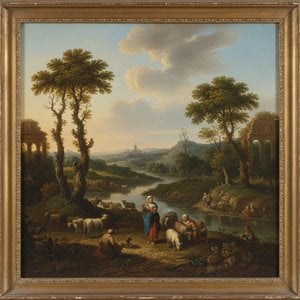
Imaginary Landscape


 Ler mais
Reprodução em Óleo Feita à Mão
Óleo sobre tela pintado à mão no tamanho e moldura de sua escolha, feito sob encomenda pelos nossos artistas. ( Alternar para Impressão Alternar para Imagem Digital)




P118B €10

P118H €10

P118W €10

P438Z €10

P508JH €12

P508YH €12

P805H €10

P805Z €10

P919BZ €10

P919G €10

P919XJ €10

P959ZH €10

P968JZ €12

W106C €8

W218G €10

W218JH €8

W218Y €10

W307PJ €10

W316G €10

W316PJ €8

W316Y €10

W398PJ €8

W4111J €10

W500HY €15

W500JH €15

W692G €12

W849H €8

W940BG €15

W953PJ €8




Escolha entre os nossos tamanhos pré-definidos que respeitam as proporções originais da obra de arte.

Insira a largura e a altura desejadas para se ajustarem à sua moldura ou parede. Como esta obra é pintada à mão, para um tamanho com proporções diferentes, o artista poderá pintar um pouco mais ao redor da imagem ou reduzir ligeiramente a composição — você escolhe. Enviamos uma maquete digital para sua aprovação antes de iniciar a pintura. A imagem exibida nesta página não representa o resultado real — apenas a maquete mostra o resultado final.
Após o pedido, a equipa ArtsDot.com enviará um e-mail ao cliente para solicitar instruções e fornecer uma prévia do esboço.
Entrega mundial () em 3 a 4 semanas, em vez das 5 semanas padrão. (25 Outubro). Sem comprometer a qualidade.

Envio expresso gratuito para todo o mundo

Tela de Linho de Alta Qualidade

Seguro de transporte completo

Garantia de Reembolso de Impostos Alfandegários

Garantia de Fidelidade Cromática

Política de Devolução em 100 Dias (Apenas para Defeitos)

Garantia de reembolso de 100%

Oferta de desconto por quantidade
 A opção de vidro está disponível apenas para tamanhos inferiores a 110 cm

Imaginary Landscape
Técnica de Reprodução
Tamanho da Reprodução
-


Preço Total
€ 231
A Serene Vision of Antiquity: Exploring Francisque Millet’s Imaginary Landscape
Francisque Millet's "Imaginary Landscape," painted in 1660, stands as a testament to the enduring influence of Italianate landscape painting during Louis XIV’s reign. More than just a depiction of scenery, it embodies a profound philosophical statement about humanity’s relationship with nature and its yearning for idealized beauty—a sentiment deeply rooted in the artistic currents sweeping across Europe at the time.- Subject Matter: The canvas portrays a tranquil valley bathed in soft sunlight, dominated by a majestic oak tree – a symbol of strength and longevity – beneath which two figures stroll leisurely. A distant bridge adds depth to the composition, hinting at connection and aspiration.
- Style & Influences: Millet’s style is unmistakably indebted to Nicolas Poussin and Gaspard Dughet, masters of Italianate landscape whose works championed a harmonious blend of observation and imagination. Like his predecessors, Millet sought not merely to represent the external world but to convey an inner state of contemplation and spiritual elevation.
- Technique: Executed in oil paint on canvas, Millet employed meticulous brushwork—characteristic of the Flemish tradition—to achieve remarkable tonal gradations and textural nuances. The artist skillfully captured the dappled light filtering through the foliage, creating a palpable sense of atmosphere that transports the viewer to a timeless realm of pastoral serenity.
- Symbolism: Beyond its visual beauty, “Imaginary Landscape” speaks volumes about humanist concerns. The figures embody human dignity and tranquility, suggesting a harmonious coexistence with the natural world—a counterpoint to the anxieties of the turbulent political landscape of Louis XIV's France.
Perguntas e Respostas
Quais são os direitos de reprodução de "Imaginary Landscape" no Museu de Belas Artes (Budapeste)?
"Imaginary Landscape", de Francisque Millet, pertencente ao Museu de Belas Artes (Budapeste), está em em domínio público — seus direitos autorais expiraram. Este status determina se reproduções da imagem podem ser feitas.
Para que tipo de uso é recomendada uma reprodução de "Imaginary Landscape", de Francisque Millet?
Uma reprodução de "Imaginary Landscape", de Francisque Millet é recomendada para Accent. Esta sugestão decorre do tema, da atmosfera e das cores da obra.
A qual movimento artístico "Imaginary Landscape", de Francisque Millet pertence?
"Imaginary Landscape", de Francisque Millet pertence ao movimento Italianate Landscape. Este movimento fornece o contexto estilístico da obra.
Obras Relacionadas


Biografia do Artista
Francisque Millet: Life and Legacy
Early Life and Training
- Born in Antwerp, Belgium in 1642, Francisque Millet (also known as Jean-François Milée) was the son of a French ivory worker who had settled in the region.
- He began his artistic training with Laurentius Frank, a cousin of Abraham Genoels.
- Remarkable Talent: Genoels noted Millet’s extraordinary ability to copy artworks quickly and accurately from memory, without needing to constantly refer to the original.
- At the age of eighteen, he married his master's daughter, solidifying his position within the artistic community.
Artistic Development and Influences
- Italianate Landscapes: Millet specialized in Italianate landscapes populated with figures, a style heavily influenced by Nicolas Poussin and his brother-in-law, Gaspard Dughet.
- His work often depicted serene scenes inspired by the Roman countryside, featuring classical architecture, lush vegetation, and pastoral figures.
- Travels and Exposure: He traveled extensively throughout France, England, and Holland, gaining exposure to different artistic styles and patrons. However, he was known for spending beyond his means.
Major Works and Style
- Millet produced a substantial body of work including landscapes with religious themes like “Landscape with Christ and His Disciples” as well as mythological scenes such as "Mercury and Battus".
- Characteristic Features: His paintings are characterized by their balanced compositions, atmospheric perspective, and meticulous attention to detail.
- He skillfully integrated figures into his landscapes, creating harmonious and visually appealing scenes.
- Examples of notable works include “Imaginary Landscape”, “Italian Scene With A Shrine” and "Classical Landscape".
Later Life and Death
- Millet’s life was tragically cut short in 1679 at the age of 36.
- Sudden Illness: He succumbed to a sudden high fever that led to insanity, and he died shortly thereafter.
- He was buried in the St Nicolas-des-Champs church in Paris.
Family Legacy and Historical Significance
- Jean-François Millet II: His son, also named Jean François Millet (1666–1723), followed in his father’s footsteps and became a member of the Academy of Painting in 1709.
- The younger Millet consulted artists like Watteau to enhance the figures within his landscapes.
- Influence on Later Artists: While overshadowed by later artists with the same name, Francisque Millet’s work paved the way for subsequent generations of landscape painters.
- Mark Twain even drew inspiration from Millet's life (and the confusion surrounding his name) to write the farcical play “Is He Dead?”.
- Millet’s contribution lies in his skillful execution of Italianate landscapes and his ability to blend classical influences with Baroque sensibilities.

Francisque Millet
1642 - 1679 , Belgium
Dados Rápidos
- Name: Francisque Millet
- Movement: Baroque
- Birth Date: 1642-04-27
- Death Date: 1679-06-03
- Influenced:
- Jean-François Millet II
- Jean Coustel
- Birth Place: Antwerp, Belgium
- Nationality: Flemish-French
- Date Of Birth: 1642
- Date Of Death: 1679
- Influenced By: Nicolas Poussin, Gaspard Dughet
- Notable Works:
- Landscape with Christ and His Disciples
- Imaginary Landscape
- Mountain Landscape With Lightning
- Place Of Birth: Antwerp, Belgium
Artigos Relacionados

John Constable: As 25 Obras-Primas que Definem o Mestre da Paisagem Inglesa | ArtsDot
Descubra as 25 obras-primas de John Constable, o mestre da paisagem inglesa! Explore a arte romântica, cores vibrantes e histórias fascinantes por trás de 'Hay Wain' e outras pinturas icônicas. Encontre reproduções de alta qualidade para decorar sua casa com ArtsDot.com.

Nicolas Poussin: Classicism, Allegory & Order in 17th-Century French Painting
Explore the life & work of Nicolas Poussin, a master of French Classicism. Discover his allegorical paintings, Roman influences, and enduring impact on art history. Expert analysis & insights.
Nicolaes Berchem: Dutch Golden Age Pastoralism & the Evolution of Landscape Painting
Explore the captivating world of Nicolaes Berchem, a leading Dutch Golden Age painter. Discover his idyllic landscapes, masterful technique & lasting influence on art history. Learn more at ArtsDot.

Evocations of Place: A Historical Journey Through Landscape Art
Explore the rich history of landscape art with ArtsDot. Discover renowned artists, movements like Impressionism & Romanticism, and expert guidance for collecting timeless pieces. Find your perfect serene escape today!

Os 10 Mestres da Paisagem Romântica: Arte para Inspirar a Sua Casa
Descubra os 10 quadros mais emblemáticos da Paisagem Romântica! Explore a história de Turner, Friedrich e outros mestres. Encontre reproduções de arte exclusivas para inspirar sua decoração em ArtsDot.com.