


 Visualizar em escala
 Enviar
 Compartilhar
 Ver detalhes
 Guia
Guia

 Baixar imagem
 Semelhantes
 Raio X
 Apresentação de slides
 Estatísticas
Flowers
 Oil On Canvas
- WallArt
- Italian Romanticism
 19th Century
 124.0 x 95.0 cm
 Pinacoteca di Brera
 Ver mais
Reprodução em Óleo Feita à Mão
Óleo sobre tela pintado à mão no tamanho e moldura de sua escolha, feito sob encomenda pelos nossos artistas. ( Alternar para Impressão Ver Imagem Digital)




P118B $10

P118H $10

P118W $10

P438Z $10

P508JH $12

P508YH $12

P805H $10

P805Z $10

P919BZ $10

P919G $10

P919XJ $10

P959ZH $10

P968JZ $12

W106C $8

W218G $10

W218JH $8

W218Y $10

W307PJ $10

W316G $10

W316PJ $8

W316Y $10

W398PJ $8

W4111J $10

W500HY $15

W500JH $15

W692G $12

W849H $8

W940BG $15

W953PJ $8




Escolha entre os nossos tamanhos pré-definidos que respeitam as proporções originais da obra de arte.

Pode inserir as suas próprias dimensões para se adequar a uma moldura ou espaço específico. Se o tamanho selecionado não corresponder às proporções da imagem original, iremos cortar a obra de arte ou estender a pintura com elementos adicionais pintados à mão. Um esboço digital será enviado para sua aprovação antes do início da produção.
Tenha em atenção que a pré-visualização no ecrã não reflete o corte ou extensão real. Apenas o esboço mostrará com precisão a composição final.
Embora tamanhos personalizados estejam disponíveis, recomendamos selecionar uma dimensão da lista predefinida para preservar as proporções originais.
Após o pedido, a equipa ArtsDot.com enviará um e-mail ao cliente para solicitar instruções e fornecer uma prévia do esboço.
Entrega mundial () em 3 a 4 semanas, em vez das 5 semanas padrão. (24 Setembro). Sem comprometer a qualidade.

Envio expresso gratuito para todo o mundo

Tela de Linho Premium

Seguro de transporte total

Garantia de Reembolso de Impostos Alfandegários

Garantia de Fidelidade de Cor

Política de Devolução em 100 Dias (Apenas para Defeitos)

Garantia de reembolso de 100%

Desconto para múltiplas unidades
 A opção de vidro está disponível apenas para tamanhos inferiores a 110 cm

Flowers
Técnica de Reprodução
Dimensões da Reprodução
-


Preço Total
$ 263
A Symphony of Petals: The Romantic Soul of Francesco Hayez
In the quietude of a masterfully rendered still life, Francesco Hayez’s “Flowers” emerges not merely as a botanical study, but as a profound whisper from the heart of Italian Romanticism. Created between 1834 and 1835, this exquisite work transcends the boundaries of simple decoration to offer a window into a turbulent era. While the eye is immediately drawn to the vibrant, overflowing bouquet, the discerning viewer senses an underlying tension—a delicate balance between the ephemeral beauty of nature and the enduring spirit of a nation yearning for unity. Hayez, a master of capturing both the tangible and the intangible, uses this arrangement of blossoms to compose a visual poem that resonates with hope, vitality, and a subtle, poetic melancholy.
The composition is a triumph of classical balance and dramatic contrast. A central vase, brimming with an abundance of life, sits anchored upon a dark, richly patterned cloth. This deep, grounding element serves as the perfect stage for the luminous explosion of color above it. Hayez’s technique is nothing short of breathtaking; through the meticulous application of oil glazes, he achieves a translucent quality that allows light to seemingly dance within each petal. One can almost feel the velvety texture of the crimson roses and the delicate, papery lightness of the lilies. The artist’s ability to manipulate light creates an illusion of shimmering movement, as if a gentle breeze might stir the arrangement at any moment, making the painting feel less like a static object and more like a living, breathing presence.
Symbolism and the Echo of History
To look upon “Flowers” is to engage with the political pulse of nineteenth-century Italy. During this period, much of the Italian peninsula languished under foreign dominion, yet beneath this surface of repression, a fervent nationalist sentiment was beginning to bloom. In the language of Romanticism, flowers were rarely just flowers; they were potent allegories. The lushness of the bouquet can be interpreted as a metaphor for the latent potential and burgeoning strength of the Italian identity. The interplay of light and shadow—the chiaroscuro effect—mirrors the struggle between the darkness of political fragmentation and the bright promise of a unified future.
For the collector or interior designer, this piece offers an unparalleled opportunity to introduce a sense of historical depth and sophisticated elegance into a space. The painting’s ability to harmonize intense color with a serene atmosphere makes it a versatile masterpiece for high-end curation. Whether placed in a sunlit gallery or a moody, classical study, the work commands attention through its sheer technical brilliance and emotional complexity. It is an investment in a piece of history that continues to bloom with new meanings, offering a timeless aesthetic that celebrates both the delicate beauty of the natural world and the indomitable strength of the human spirit.
Obras Relacionadas


Biografia do Artista
Early Life and Artistic Foundations
Francesco Hayez, a pivotal figure in the Italian Romantic movement, was born on February 10th, 1791, in the vibrant city of Venice. His lineage traced back to humble beginnings – his father, Giovanni, a French fisherman, and his mother, Chiara Torcella, hailing from Murano’s renowned glassmaking district. From a young age, Francesco exhibited an innate talent for drawing, nurtured by his uncle, Giovanni Binasco, who was an antiquarian and art restorer. Recognizing this potential, he apprenticed under his uncle, learning the meticulous techniques of restoration and gaining a foundational understanding of artistic principles. This early training instilled in him a deep appreciation for craftsmanship and historical accuracy, elements that would later characterize his monumental works. His exposure to Venetian art during his apprenticeship, particularly the influence of masters like Titian, laid the groundwork for his distinctive style.The Roman Years: Influences and Artistic Development
In 1806, Hayez embarked on a transformative journey to Milan, enrolling in the prestigious new Academy of Fine Arts. There, he studied under Teodoro Matteini, a leading Neoclassical painter who shaped Hayez’s early artistic sensibilities. However, his ambition extended beyond the confines of Milan; in 1809, he secured a coveted scholarship to Rome, where he spent several years immersed in the city's rich artistic heritage. Rome proved to be a crucible for his development, exposing him to the grandeur of antiquity and the innovations of the Baroque period. He studied under Antonio Canova, the celebrated sculptor, whose influence on Hayez’s approach to form and composition was profound. This Roman sojourn fostered a deep respect for classical ideals while simultaneously nurturing his burgeoning Romantic sensibilities.The Rise of Romanticism in Milan: Historical Narratives and National Identity
Returning to Milan in 1823, Hayez quickly established himself as the foremost exponent of Italian Romanticism. The city’s vibrant cultural scene provided fertile ground for his artistic explorations, which increasingly focused on grand historical paintings, political allegories, and meticulously rendered portraits. He skillfully blended elements of Neoclassicism with the emotional intensity and dramatic storytelling characteristic of Romanticism. His works often depicted scenes from Italian history, literature, and mythology, imbued with a strong sense of national identity and patriotic fervor – particularly during the Risorgimento (the movement for Italian unification). His ability to capture both historical accuracy and profound emotion resonated deeply with his audience, solidifying his reputation as the “painter of the nation.”Notable Works and Lasting Legacy
Hayez’s oeuvre is marked by a remarkable range of subjects and styles. Among his most celebrated works are *The Kiss* (1859), an iconic depiction of romantic love that has become synonymous with Italian art; *Pope Urban II Preaching the First Crusade in the Square of Clermont* (1857-58), a monumental historical tableau showcasing his mastery of composition and narrative; and *Portrait of Matilde Juva-Branca* (1867), an exquisite example of his portraiture skills. His later works, such as *Destruction of the Temple in Jerusalem* (1867) and *Marin Faliero* (1867), further demonstrated his versatility and continued to explore themes of power, betrayal, and human drama. Francesco Hayez died on February 12th, 1882, leaving behind a vast and influential body of work that continues to captivate audiences today. His legacy as one of Italy’s greatest Romantic painters remains firmly established, with his paintings displayed in prestigious museums like the Pinacoteca di Brera in Milan and the Civica Galleria d'Arte Moderna in Milan.
Francesco Hayez
1791 - 1882 , Itália
Informações Rápidas
- Artistic Movement Or Style: Romantismo
- Artists Or Movements Influenced By This Artist: ['Neoclassicismo']
- Artists Who Influenced This Artist: ['Teodoro Matteini']
- Date Of Birth: 10 Feb 1791
- Date Of Death: 12 Feb 1882
- Full Name: Francesco Hayez
- Nationality: Italiano
- Notable Artworks:
- O Beijo
- A Missa
- Kiss
- Place Of Birth: Veneza, Itália
Artigos Relacionados

Jan Jansz Wijnants: A Study in Dutch Golden Age Still Life & Floral Transience
Explore the captivating world of Jan Wijnants and Dutch Golden Age still life painting. Discover symbolism, masterful techniques & lasting influence on floral art history. Learn more!

Abraham Hendricksz van Beyeren: Pioneering Dutch Still Life & the Banquet Tradition
Explore the captivating world of Dutch Golden Age still life with Abraham van Beyeren. Discover his innovative techniques, symbolic banquet scenes & lasting influence on art history. Learn about collecting these masterpieces.

Da Natureza Morta Clássica à Abstração Contemporânea: Elevando Ambientes de Entretenimento com Arte Reproduzida
Descubra a evolução da natureza morta na arte e como reproduções personalizadas elevam o design de interiores de luxo. Guia completo para transformar seus espaços com elegância e sofisticação.

Silent Narratives: Exploring the Enduring Appeal of Still Life Painting Across Centuries
Explore the rich history of still life painting with ArtsDot. Discover Dutch Masters, decode vanitas symbolism & learn about collecting timeless art. Expert insights and museum-quality reproductions.
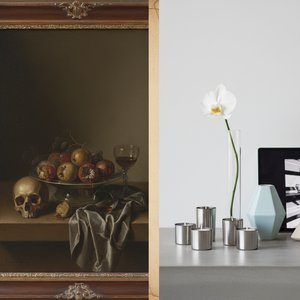
The Enduring Appeal of Still Life: A Historical & Contemporary Exploration
Explore the rich history & symbolism of still life painting with ArtsDot. Discover masterpieces from the Dutch Golden Age, learn about vanitas art, and find expert guidance for collecting timeless artworks.


