


The picture follows your choices: , .
Descrição do Item
 Ler mais
Biografia do Artista
Descubra Fernand Léger (1881-1955): Pioneiro do Cubismo & 'Tubismo'! Explore obras vibrantes que celebram a vida moderna, máquinas e a forma humana – um precursor da Pop Art.
Reprodução em Óleo Feita à Mão
Óleo sobre tela pintado à mão no tamanho e moldura de sua escolha, feito sob encomenda pelos nossos artistas. ( Alternar para Impressão Alternar para Imagem Digital)
More about this painting
 Visualizar na parede
 Compartilhar
 Compartilhar
 Detalhes
 Guia
Guia

 Baixar imagem
 Semelhantes
 Raio X
 Ver diaporama
 Q&A
Q&A Estatísticas
Order your painting in four simple steps
Take your time. You can change any answer; the price in your order card follows each choice.
1 Step one of four
Which size would you like?
These sizes keep the proportions of the original painting. The drawing shows your choice on a wall, above a two-metre sofa.
Or give your own measurements
Escolha entre os nossos tamanhos pré-definidos que respeitam as proporções originais da obra de arte.

Insira a largura e a altura desejadas para se ajustarem à sua moldura ou parede. Como esta obra é pintada à mão, para um tamanho com proporções diferentes, o artista poderá pintar um pouco mais ao redor da imagem ou reduzir ligeiramente a composição — você escolhe. Enviamos uma maquete digital para sua aprovação antes de iniciar a pintura. A imagem exibida nesta página não representa o resultado real — apenas a maquete mostra o resultado final.
2 Step two of four
How should it be prepared: rolled, stretched or framed?
The prices below are for the size you chose in step one.
Choose the edges of the stretched canvas
Choose your frame

White €1

Blurside €1

Extended €1

P118B €10

P118H €10

P118W €10

P438Z €10

P508JH €12

P508YH €12

P805H €10

P805Z €10

P919BZ €10

P919G €10

P919XJ €10

P959ZH €10

P968JZ €12

W106C €8

W218G €10

W218JH €8

W218Y €10

W307PJ €10

W316G €10

W316PJ €8

W316Y €10

W398PJ €8

W4111J €10

W500HY €15

W500JH €15

W692G €12

W849H €8

W940BG €15

W953PJ €8

H24-GOLD €30

H24-SILVER €30

H36-GOLD €45

H36-SILVER €45
Com moldura
Moulding: . Overall size with the frame: .
3 Step three of four
Would you like anything changed in the painting?
Most people answer no. Because each painting is made by hand, our artist can also adapt it for you.
After order, ArtsDot.com team will email client for instructions and provide a mockup preview
4 Step four of four
A few finishing options
All of them are optional. The answers already selected cost nothing extra.
Who paints it?
Entrega mundial () em 3 a 4 semanas, em vez das 5 semanas padrão. (29 Outubro). Sem comprometer a qualidade.
A nameplate, as in a museum?
Detalhes da Placa de Bronze Gravada
This elegant plaque features the artist's name and the title of the artwork, finely engraved for a timeless presentation.
It is made from bronze with a refined, elegant finish. The text is precisely laser-engraved for a sharp and permanent result. Measuring 9x2 cm, the plaque is compact yet easy to read. It's built to be durable and scratch-resistant, offering a professional, museum-quality look. Mounting is simple thanks to the included adhesive backing.
Detalhes da Placa de Acrílico Transparente
The plaque includes essential engraved details such as the artist's name, the title of the artwork, the date it was created, the type of media used-like oil on canvas or watercolor-a brief description of the piece, and a QR code that links to the complete artwork information.
It is crafted from clear acrylic, offering a sleek, modern appearance. The text is UV-engraved in black to ensure strong visual contrast. With a size of 10x15 cm, it ensures optimal readability. It comes equipped with two metal hooks for secure wall mounting. The plaque is designed to be weather-resistant, making it suitable for various environments, and it includes interactive features that work seamlessly with smartphone scanning.
Detalhes da Placa de Acrílico Preto
This elegant plaque includes engraved information such as the artist's name, the title of the artwork, the date it was created, the type of media used (like oil on canvas or watercolor), a short description of the artwork, and a QR code for quick access to more information.
The plaque itself is made from refined black acrylic with a premium finish. The text is laser-engraved in white for high contrast and readability. Its size is 10x15 cm, designed to be easy to read. It comes with two metal hooks for professional mounting. The design is sleek and fits any interior style. It is also weather-resistant and durable, with built-in digital integration for mobile compatibility.
A protective varnish?
When do you need it?
✓ Check and order
Your painting, as you ordered it

Still Life2
Técnica de Reprodução
Tamanho da Reprodução
-

Artista Sênior de Elite
Mais detalhes, refinamento e tempo de produção adicional
-

Moldura para Reprodução
-
-
Para obras de arte ou reproduções com mais de 105 cm (aproximadamente 41 polegadas) em qualquer um dos lados, a moldura será enviada como um kit desmontado. Este método garante uma entrega segura e evita danos durante o transporte.
Montagem profissional necessária — este não é um produto DIY (faça você mesmo).
O kit deve ser montado e a tela esticada por um profissional de molduraria experiente, utilizando cola de madeira (não inclusa), um alicate de esticar tela e grampos para manter as travessas alinhadas enquanto a cola seca. A montagem incorreta ou a tensão desigual da tela podem danificar permanentemente a obra de arte e não estão cobertas pela nossa garantia.
 Para obras de arte ou reproduções com mais de 105 cm (aproximadamente 41 polegadas) em qualquer um dos lados, a moldura será enviada como um kit desmontado. Este método garante uma entrega segura e evita danos durante o transporte.
Todas as barras de madeira maciça estão incluídas, precisamente cortadas ao tamanho certo.
Montado com os parafusos fornecidos, além de cola para madeira para as junções dos cantos, que não está inclusa e deve ser providenciada pelo seu moldurista.
São necessárias ferramentas profissionais não incluídas: um alicate de estiramento de tela (esticador) e grampos para manter as ripas alinhadas enquanto a cola seca.
Importante:
As junções dos cantos requerem cola para madeira, as ripas devem ser mantidas com grampos até que a cola esteja completamente seca, e o estiramento da tela na moldura montada requer um alicate de esticar tela. Nenhum destes itens está incluído no kit. Por favor, certifique-se de contar com um profissional de molduraria experiente antes de encomendar este tamanho.

Etiqueta de identificação
-
-

Verniz de Proteção
Verniz brilhante (realça as cores e protege contra a luz e a umidade)
-

Personalizar minha obra
Exemplos de alterações possíveis: Substituir o rosto por uma foto do cliente; Adicionar um animal de estimação (ex.: substituir gato por cachorro); Incluir uma mensagem oculta no fundo; Alterar a paisagem ou os elementos do fundo.
-

Urgente
Entrega mundial () em 3 a 4 semanas, em vez das 5 semanas padrão. (29 Outubro). Sem comprometer a qualidade.
-
Envio Expresso
Entrega mundial para em 5 semanas. (5 Novembro).
Com envio incluído
Preço Total
€ 232
A opção de vidro está disponível apenas para tamanhos inferiores a 110 cm
Included with every order
- Envio expresso gratuito para todo o mundo
- Tela de Linho de Alta Qualidade
- Seguro de transporte completo
- Garantia de Reembolso de Impostos Alfandegários
- Garantia de Fidelidade Cromática
- Política de Devolução em 100 Dias (Apenas para Defeitos)
- Garantia de reembolso de 100%
- Oferta de desconto por quantidade


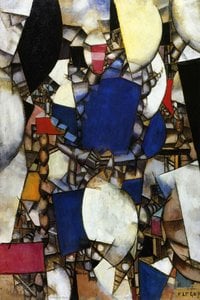
Still Life2: A Cubist Exploration of Form and Space
Fernand Léger’s “Still Life2,” painted in 1929, stands as a cornerstone of his influential ‘objects in space’ series—a bold declaration that abstraction could simultaneously honor the tangible world and embrace the dynamism of modern life. Executed with oil on canvas, this deceptively simple composition reveals layers of intellectual engagement beneath its geometric surface. Léger wasn't merely depicting objects; he was dissecting them, reconstructing them according to principles derived from film techniques—a conscious effort to capture the fleeting rhythms of a rapidly changing era.Composition and Form
The artwork’s visual impact stems immediately from its fractured perspective. Rather than striving for illusionistic depth, Léger employs overlapping planes and intersecting lines to create a flattened space where forms dominate. A substantial bowl occupies the central foreground, partially obscuring a solitary apple nestled within its depths—a deliberate disruption of traditional compositional conventions. Behind this focal point are angular rectangles and squares that suggest architectural structures, hinting at Léger’s fascination with industrial design and urban environments. Furthermore, a pair of scissors and a cylindrical form add to the assemblage, grounding the piece in everyday tools and subtly referencing the burgeoning mechanization of daily life.Technique and Materiality
Léger's masterful technique—characterized by meticulous hatching and cross-hatching—is crucial to conveying both tonal variation and sculptural form. The artist skillfully manipulates pigment density to sculptively render the bowl’s surface, emphasizing its contours and creating areas of subtle shadow that imbue the piece with a palpable sense of volume. This deliberate textural approach reflects Léger's commitment to capturing the physicality of his subjects—a departure from purely conceptual abstraction. The canvas itself is treated with careful consideration, ensuring optimal reproduction quality for collectors and interior designers alike.Symbolism and Emotional Resonance
“Still Life2” transcends mere visual representation; it embodies Léger’s philosophical stance on art's role in reflecting the spirit of its time. The fragmented composition speaks to a rejection of sentimental emotion—instead offering an intellectual contemplation of form, structure, and materiality. Like many Cubist works, this piece prioritizes geometric abstraction over narrative storytelling, inviting viewers to engage with the artwork on a purely perceptual level. Léger’s aim wasn't to evoke feeling but to stimulate thought, prompting consideration of how art could communicate the essence of modernity—a legacy that continues to inspire artists and resonate with audiences today.Historical Context
Painted during the height of Léger’s artistic experimentation, “Still Life2” aligns perfectly with the broader trajectory of Cubism and its influence on subsequent movements like Surrealism and Pop Art. Léger's exploration of spatial illusion—informed by cinematic principles—represented a significant challenge to established artistic traditions and cemented his position as a pioneer of visual innovation. Its enduring appeal lies in its ability to distill complex ideas into a deceptively elegant form, demonstrating the transformative power of abstraction to convey both intellectual rigor and aesthetic beauty.Perguntas e Respostas
Como posso visualizar uma reprodução de "Still Life2", de Fernand Léger?
Uma prévia de "Still Life2", de Fernand Léger está disponível na página de Pré-visualização da obra.
Qual tamanho de impressão de "Still Life2", de Fernand Léger se adequa ao ambiente recomendado?
Para um(a) Living Room, o tamanho de impressão recomendado para "Still Life2", de Fernand Léger é Large.
Que emoção transmite "Still Life2", de Fernand Léger?
"Still Life2" está associada a um sentimento Reflective. O tom emocional descreve a impressão que a obra transmite.
Obras Relacionadas




Fernand Léger
1881 - 1955, França
Biografia do Artista
A Life Forged in Form: The World of Fernand Léger
Fernand Léger, born Joseph Fernand Henri Léger em 1881, emergiu das paisagens rurais de Argentan, Normandia, como uma figura central na evolução da arte moderna. Sua jornada das fazendas de sua juventude para o centro da vanguarda parisiense é um testemunho de uma visão artística inabalável e de uma busca incessante por capturar o espírito da era da máquina. Diferentemente de muitos de seus contemporâneos que abraçaram a abstração como um refúgio da representação, Léger buscou *integrar* a modernidade – sua dinâmica, suas formas mecânicas, sua própria essência – em uma nova linguagem visual que era ao mesmo tempo poderosamente abstrata e profundamente enraizada no mundo observável. Sua vida inicial, imersa na fisicalidade do trabalho agrícola, forneceu um contraste de base para o futuro industrializado que ele tanto apaixonadamente retrataria. Inicialmente destinado à arquitetura, o caminho de Léger se desviou para a pintura após chegar a Paris por volta de 1900, sustentando-se através do trabalho de desenho enquanto aperfeiçoava suas habilidades artísticas. Este período foi marcado por treinamento acadêmico tradicional, mas não foi até encontrar o trabalho inovador de Paul Cézanne que uma verdadeira transformação começou a se desenrolar.The Birth of ‘Tubism’ and the Section d’Or
A retrospectiva de Cézanne em 1907 atuou como um catalisador, libertando Léger das representações convencionais e impulsionando-o em direção a uma abordagem mais geométrica e estrutural. Ele começou a desmontar formas, analisando suas estruturas subjacentes e reconstruindo-as sobre tela com uma nova ênfase na solidez e no volume. Esta exploração levou-o rapidamente ao círculo de Cubismo, mas Léger não estava contente em simplesmente replicar os estilos de Picasso ou Braque. Em vez disso, ele desenvolveu seu próprio idioma distinto – uma forma pessoal de Cubismo que os críticos apelidaram carinhosamente de “Tubismo”. Caracterizado por formas cilíndricas, planos achatados e contrastes de cores ousadas, Tubismo celebrou a estética da máquina muito antes de se tornar uma preocupação artística generalizada. Era uma arte nascida da observação do mundo industrial em ascensão, reconhecendo beleza em suas formas funcionais e ritmos mecânicos. Este período viu Léger participando ativamente da cena vanguardista, juntando-se a artistas como Jean Metzinger, Henri Le Fauconnier, Francis Picabia e Marcel Duchamp dentro do Grupo Puteaux, também conhecido como a Section d’Or (A Seção de Ouro). O grupo explorava princípios matemáticos de harmonia e proporção, buscando infundir sua arte com um senso de ordem e racionalidade. Suas investigações coletivas ultrapassaram os limites da expressão artística, pavimentando o caminho para o desenvolvimento futuro da arte abstrata.War, Mechanization, and a New Aesthetic
O estopim da Primeira Guerra Mundial teve um impacto profundo na vida e obra de Léger. Servir na frente de 1914 a 1916 expôs-o às realidades brutais da guerra moderna – bombardeios de artilharia, combate aéreo e os efeitos desumanizadores do conflito mecanizado. Esta experiência não levou à desilusão ou ao abandono da modernidade; na verdade, solidificou sua fascinação por máquinas e seu poder. Esboços feitos durante seu serviço documentaram a beleza austera da tecnologia militar, transformando instrumentos de destruição em assuntos de contemplação artística. Após retornar à vida civil, a estética de Léger passou por uma evolução adicional. Suas pinturas começaram a refletir uma sensibilidade mais aerodinâmica e mecanizada, celebrando a dinâmica e a eficiência do mundo industrial. *Soldier with a Pipe* (1916) exemplifica esta mudança, apresentando formas simplificadas e cores ousadas que evocam a sensação de precisão mecânica. Não se tratava apenas de uma escolha estética; era uma declaração filosófica – uma afirmação do potencial da modernidade para o progresso e a renovação, mesmo em face da devastação causada pelo conflito.The Evolution of Tubism and Figurative Work
Following the war, Léger continued to explore the intersection of art and industry, developing his style further. He moved away from the strict geometric forms of early Tubism, incorporating more figurative elements into his work while retaining a fascination with machine aesthetics. He began to paint scenes of urban life, factories, and transportation systems, often depicting them in a stylized manner that combined abstraction and representation. This period saw him experimenting with color palettes and techniques, seeking to capture the energy and dynamism of the modern world. Léger’s work became increasingly popular during the 1920s and 30s, exhibiting at major galleries and museums throughout Europe and America. His paintings were praised for their bold colors, simplified forms, and innovative approach to subject matter.Legacy and Lasting Influence
In his post-war years, Léger continued to explore the intersection of art and industry, creating works that celebrated modern life with a unique blend of abstraction and figuration. His *Paysages animés* (Animated Landscapes) series from 1921 showcased figures and animals seamlessly integrated into streamlined compositions, blurring the boundaries between organic and inorganic forms. He also experimented with sculpture and filmmaking, expanding his artistic practice beyond the confines of traditional painting. Léger’s influence on subsequent generations of artists is undeniable. His bold simplification of form, his embrace of industrial imagery, and his celebration of popular culture anticipated the emergence of Pop Art decades later. Artists like Roy Lichtenstein and Andy Warhol owe a clear debt to Léger's pioneering work. He bridged the gap between abstract art and figurative representation, demonstrating that it was possible to create works that were both intellectually rigorous and visually engaging. Today, Fernand Léger’s paintings are held in major museums worldwide, including the Musée d'Art et d'Histoire in France and the Musée National Fernand Léger, dedicated solely to his work. He remains a towering figure of 20th-century art – a visionary who dared to find beauty in the machine age and to translate its energy onto canvas with unparalleled boldness and originality. His legacy is not merely as a painter, but as a prophet of modernity. *A true pioneer whose work continues to resonate with audiences today.*


Artigos Relacionados

Fernand Léger: As 25 Obras-Primas que Definem um Ícone da Arte Moderna | ArtsDot
Descubra as 25 obras-primas de Fernand Léger, pioneiro do tubismo e da arte moderna. Explore a história, cores vibrantes e técnicas inovadoras por trás de seus quadros icônicos. Encontre reproduções de alta qualidade para decorar sua casa com estilo em ArtsDot.com.

Beyond Form & Color: Geometric Abstraction's Enduring Legacy in Art History
Explore the captivating world of geometric abstraction! Discover its origins, key artists like Malevich & Mondrian, and why this movement remains highly valued by art collectors today. Expert insights at ArtsDot.

Georges Braque: As 25 Obras-Primas Essenciais para Amantes da Arte Moderna | ArtsDot
Descubra as 25 obras-primas de Georges Braque, pioneiro do Cubismo! Explore a história, cores e técnicas por trás de seus quadros mais famosos. Encontre reproduções de arte exclusivas para decorar sua casa com elegância em ArtsDot.com.