


 Visualizar em escala
 Enviar
 Compartilhar
 Ver detalhes
 Guia de Obras do Aluno

 Baixar imagem
 Semelhantes
 Raio X
 Apresentação de slides
 Estatísticas
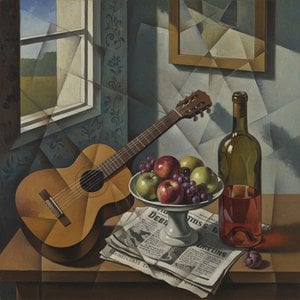
Still Life with Apples
 Acrylic On Canvas
- WallArt
- Cubism
 152.0 x 195.0 cm
 Ver mais
Giclée / Impressão de Arte
Impressão giclée ou em tela de qualidade de museu, com produção rápida e opções flexíveis de acabamento. ( Encomendar reprodução pintada à mão Ver Imagem Digital)




P118B €10

P118H €10

P118W €10

P438Z €10

P508JH €12

P508YH €12

P805H €10

P805Z €10

P919BZ €10

P919G €10

P919XJ €10

P959ZH €10

P968JZ €12

W106C €8

W218G €10

W218JH €8

W218Y €10

W307PJ €10

W316G €10

W316PJ €8

W316Y €10

W398PJ €8

W4111J €10

W500HY €15

W500JH €15

W692G €12

W849H €8

W940BG €15

W953PJ €8




Escolha entre os nossos tamanhos pré-definidos que respeitam as proporções originais da obra de arte.

Digite a largura e a altura de que necessita, para se ajustar à sua moldura ou à sua parede. Uma impressão só pode ser cortada, nunca ampliada além da imagem original, pelo que um tamanho com uma proporção diferente perderá parte da imagem. Enviamos-lhe uma maquete digital para aprovação antes de imprimirmos qualquer coisa. A imagem apresentada nesta página não mostra o corte real — apenas a maquete o faz.
Entrega mundial () em 2 semanas, em vez das 4/5 semanas padrão. (22 Outubro)

Envio expresso gratuito para todo o mundo

Tela de Linho Premium

Seguro de transporte total

Garantia de Reembolso de Impostos Alfandegários

Garantia de Fidelidade de Cor

Política de Devolução em 100 Dias (Apenas para Defeitos)

Garantia de reembolso de 100%

Desconto para múltiplas unidades
 A opção de vidro está disponível apenas para tamanhos inferiores a 110 cm

Still Life with Apples
Giclée / Impressão de Arte
Dimensões da Reprodução
-


Preço Total
€ 54
Fernand Léger’s Still Life: A Symphony of Form and Reflection
Fernand Léger’s “Still Life,” completed in 1925, transcends the conventional depiction of fruit and utensils; it embodies a radical reimagining of artistic representation—a cornerstone of Léger's distinctive style and a profound commentary on the burgeoning anxieties surrounding technological advancement. Exhibited during his peak creative period, this painting stands as an emblem of Léger’s unwavering commitment to synthesizing abstraction with tangible observation.
- Subject Matter: The composition centers around a simple arrangement of apples—three crimson specimens prominently positioned—a wine glass reflecting the ambient light, and two porcelain cups resting on a wooden tabletop. These objects are rendered not as realistic representations but as stylized forms that prioritize geometric abstraction.
- Style & Technique: Léger’s approach is characterized by “Constructivism,” an artistic movement born from the fervor of post-revolutionary Russia. He eschewed traditional brushstrokes in favor of a technique employing bold, angular lines and flattened planes—a deliberate rejection of Impressionistic nuances. The surface texture is deliberately roughened to mimic the materiality of industrial components, mirroring Léger’s fascination with machines and their influence on human experience.
Historical Context: Navigating the Machine Age
Painted during a period marked by rapid industrialization and growing apprehension about the dehumanizing effects of mechanized production, “Still Life” reflects Léger’s broader preoccupation with capturing the essence of modernity. The painting anticipates developments in Surrealist art—particularly André Breton's embrace of automatism—by prioritizing subconscious impulses over conscious control. Léger sought to convey not merely what he *saw* but what he *felt*, mirroring the pervasive anxieties of a society grappling with unprecedented transformations.
- Symbolism: The angular lines and geometric shapes employed in the painting serve as symbolic representations of industrial forms—the steel girders, the rivets, the pistons that define the urban landscape. The crimson hue of the apples evokes associations with vitality and passion—a deliberate counterpoint to the perceived bleakness of technological progress.
Emotional Impact: A Dialogue Between Form and Feeling
"Still Life" compels viewers to confront a disconcerting paradox—the simultaneous celebration of form’s precision and the acknowledgment of emotion's inherent instability. Léger’s masterful manipulation of color and line generates an unsettling tension that mirrors the psychological complexities of navigating a world increasingly dominated by machines. The painting invites contemplation on themes of alienation, resilience, and the enduring human desire for beauty amidst chaos—a testament to Léger’s profound artistic intuition.
- Concluding Remarks: Ultimately, Léger's “Still Life” transcends its formal constraints to deliver a powerful emotional resonance. It remains an unforgettable emblem of Constructivism and a poignant reflection on the anxieties and aspirations of the 1920s—a masterpiece that continues to inspire artists and captivate audiences worldwide.
Perguntas e Respostas
Qual é a recomendação de impressão para "Still Life with Apples" — qual tamanho e qual orientação?
Para "Still Life with Apples", a configuração de impressão recomendada é o tamanho Large e orientação Landscape.
Como o meio e o movimento se combinam em "Still Life with Apples"?
"Still Life with Apples" é feita em Acrylic On Canvas, no estilo Cubism.
A que fase do desenvolvimento de Fernand Léger "Still Life with Apples" pertence?
"Still Life with Apples" representa o Mature Period de Fernand Léger.
Obras Relacionadas


Biografia do Artista
A Life Forged in Form: The World of Fernand Léger
Fernand Léger, born Joseph Fernand Henri Léger em 1881, emergiu das paisagens rurais de Argentan, Normandia, como uma figura central na evolução da arte moderna. Sua jornada das fazendas de sua juventude para o centro da vanguarda parisiense é um testemunho de uma visão artística inabalável e de uma busca incessante por capturar o espírito da era da máquina. Diferentemente de muitos de seus contemporâneos que abraçaram a abstração como um refúgio da representação, Léger buscou *integrar* a modernidade – sua dinâmica, suas formas mecânicas, sua própria essência – em uma nova linguagem visual que era ao mesmo tempo poderosamente abstrata e profundamente enraizada no mundo observável. Sua vida inicial, imersa na fisicalidade do trabalho agrícola, forneceu um contraste de base para o futuro industrializado que ele tanto apaixonadamente retrataria. Inicialmente destinado à arquitetura, o caminho de Léger se desviou para a pintura após chegar a Paris por volta de 1900, sustentando-se através do trabalho de desenho enquanto aperfeiçoava suas habilidades artísticas. Este período foi marcado por treinamento acadêmico tradicional, mas não foi até encontrar o trabalho inovador de Paul Cézanne que uma verdadeira transformação começou a se desenrolar.The Birth of ‘Tubism’ and the Section d’Or
A retrospectiva de Cézanne em 1907 atuou como um catalisador, libertando Léger das representações convencionais e impulsionando-o em direção a uma abordagem mais geométrica e estrutural. Ele começou a desmontar formas, analisando suas estruturas subjacentes e reconstruindo-as sobre tela com uma nova ênfase na solidez e no volume. Esta exploração levou-o rapidamente ao círculo de Cubismo, mas Léger não estava contente em simplesmente replicar os estilos de Picasso ou Braque. Em vez disso, ele desenvolveu seu próprio idioma distinto – uma forma pessoal de Cubismo que os críticos apelidaram carinhosamente de “Tubismo”. Caracterizado por formas cilíndricas, planos achatados e contrastes de cores ousadas, Tubismo celebrou a estética da máquina muito antes de se tornar uma preocupação artística generalizada. Era uma arte nascida da observação do mundo industrial em ascensão, reconhecendo beleza em suas formas funcionais e ritmos mecânicos. Este período viu Léger participando ativamente da cena vanguardista, juntando-se a artistas como Jean Metzinger, Henri Le Fauconnier, Francis Picabia e Marcel Duchamp dentro do Grupo Puteaux, também conhecido como a Section d’Or (A Seção de Ouro). O grupo explorava princípios matemáticos de harmonia e proporção, buscando infundir sua arte com um senso de ordem e racionalidade. Suas investigações coletivas ultrapassaram os limites da expressão artística, pavimentando o caminho para o desenvolvimento futuro da arte abstrata.War, Mechanization, and a New Aesthetic
O estopim da Primeira Guerra Mundial teve um impacto profundo na vida e obra de Léger. Servir na frente de 1914 a 1916 expôs-o às realidades brutais da guerra moderna – bombardeios de artilharia, combate aéreo e os efeitos desumanizadores do conflito mecanizado. Esta experiência não levou à desilusão ou ao abandono da modernidade; na verdade, solidificou sua fascinação por máquinas e seu poder. Esboços feitos durante seu serviço documentaram a beleza austera da tecnologia militar, transformando instrumentos de destruição em assuntos de contemplação artística. Após retornar à vida civil, a estética de Léger passou por uma evolução adicional. Suas pinturas começaram a refletir uma sensibilidade mais aerodinâmica e mecanizada, celebrando a dinâmica e a eficiência do mundo industrial. *Soldier with a Pipe* (1916) exemplifica esta mudança, apresentando formas simplificadas e cores ousadas que evocam a sensação de precisão mecânica. Não se tratava apenas de uma escolha estética; era uma declaração filosófica – uma afirmação do potencial da modernidade para o progresso e a renovação, mesmo em face da devastação causada pelo conflito.The Evolution of Tubism and Figurative Work
Following the war, Léger continued to explore the intersection of art and industry, developing his style further. He moved away from the strict geometric forms of early Tubism, incorporating more figurative elements into his work while retaining a fascination with machine aesthetics. He began to paint scenes of urban life, factories, and transportation systems, often depicting them in a stylized manner that combined abstraction and representation. This period saw him experimenting with color palettes and techniques, seeking to capture the energy and dynamism of the modern world. Léger’s work became increasingly popular during the 1920s and 30s, exhibiting at major galleries and museums throughout Europe and America. His paintings were praised for their bold colors, simplified forms, and innovative approach to subject matter.Legacy and Lasting Influence
In his post-war years, Léger continued to explore the intersection of art and industry, creating works that celebrated modern life with a unique blend of abstraction and figuration. His *Paysages animés* (Animated Landscapes) series from 1921 showcased figures and animals seamlessly integrated into streamlined compositions, blurring the boundaries between organic and inorganic forms. He also experimented with sculpture and filmmaking, expanding his artistic practice beyond the confines of traditional painting. Léger’s influence on subsequent generations of artists is undeniable. His bold simplification of form, his embrace of industrial imagery, and his celebration of popular culture anticipated the emergence of Pop Art decades later. Artists like Roy Lichtenstein and Andy Warhol owe a clear debt to Léger's pioneering work. He bridged the gap between abstract art and figurative representation, demonstrating that it was possible to create works that were both intellectually rigorous and visually engaging. Today, Fernand Léger’s paintings are held in major museums worldwide, including the Musée d'Art et d'Histoire in France and the Musée National Fernand Léger, dedicated solely to his work. He remains a towering figure of 20th-century art – a visionary who dared to find beauty in the machine age and to translate its energy onto canvas with unparalleled boldness and originality. His legacy is not merely as a painter, but as a prophet of modernity. *A true pioneer whose work continues to resonate with audiences today.*
Fernand Léger
1881 - 1955 , França
Informações Rápidas
- Artistic Movement Or Style: Cubismo, Tubismo
- Artists Or Movements Influenced By This Artist: ['Pop Art']
- Artists Who Influenced This Artist: ['Paul Cézanne']
- Date Of Birth: 4 de fevereiro de 1881
- Date Of Death: 17 de agosto de 1955
- Full Name: Fernand Léger
- Nationality: Francês
- Notable Artworks:
- A Grande Parada
- Soldado com cano
- Elemento Máquina
- Place Of Birth: Argentan, França
Artigos Relacionados

Paul Cézanne: As 25 Obras-Primas que Definiram um Gênio da Arte Moderna | ArtsDot
Descubra as 25 obras-primas de Paul Cézanne, o mestre do pós-impressionismo! Explore a história, técnica e cores vibrantes por trás de quadros icônicos como 'Les Baigneurs' e 'Mont Sainte-Victoire'. Encontre reproduções de arte exclusivas para decorar sua casa com elegância em ArtsDot.com.

Georges Braque: As 25 Obras-Primas Essenciais para Amantes da Arte Moderna | ArtsDot
Descubra as 25 obras-primas de Georges Braque, pioneiro do Cubismo! Explore a história, cores e técnicas por trás de seus quadros mais famosos. Encontre reproduções de arte exclusivas para decorar sua casa com elegância em ArtsDot.com.
Deconstructing Reality: A Comprehensive Exploration of Cubist Still Life
Explore the revolutionary world of Cubist Still Life with ArtsDot. Discover Picasso & Braque's groundbreaking techniques, its philosophical roots, and lasting impact on modern art. Expert insights for collectors.

Top 10 Obras de Arte com Vibração Industrial | ArtsDot.com
Descubra 10 obras de arte icônicas que capturam a atmosfera industrial! Explore Monet, Manet e outros mestres do Impressionismo e Realismo. Encontre reproduções de alta qualidade para transformar sua decoração em ArtsDot.com.

Fernand Léger: As 25 Obras-Primas que Definem um Ícone da Arte Moderna | ArtsDot
Descubra as 25 obras-primas de Fernand Léger, pioneiro do tubismo e da arte moderna. Explore a história, cores vibrantes e técnicas inovadoras por trás de seus quadros icônicos. Encontre reproduções de alta qualidade para decorar sua casa com estilo em ArtsDot.com.


