


A imagem segue as suas escolhas: , .
Descrição do Item
A contemplative Baroque portrait of a scholar by Ferdinand Bol captures profound psychological depth through masterful chiaroscuro, inviting you to bring this piece of Dutch Golden Age history into your collection.
 Ler mais
Biografia do Artista
Ferdinand Bol (1616-1680) foi um pintor barroco holandês profundamente influenciado por Rembrandt. Reconhecido por cenas históricas marcantes e retratos elegantes, ele destacou-se como artista em Amsterdã. Explore suas obras excepcionais e descubra a beleza da arte dourada!
Reprodução em Óleo Feita à Mão
Óleo sobre tela pintado à mão no tamanho e moldura de sua escolha, feito sob encomenda pelos nossos artistas. ( Alternar para Impressão Alternar para Imagem Digital)
Saiba mais sobre esta pintura
 Visualizar na parede
 Compartilhar
 Compartilhar
 Detalhes
 Guia
Guia

 Baixar imagem
 Semelhantes
 Raio X
 Ver diaporama
 Perguntas e Respostas
 Estatísticas
Encomende a sua pintura em quatro passos simples
Não tenha pressa. Você pode alterar qualquer resposta; o preço no seu carrinho de compras será atualizado conforme cada escolha.
1 Passo um de quatro
Qual tamanho você gostaria?
Estes tamanhos mantêm as proporções da pintura original. A ilustração mostra a sua escolha numa parede, acima de um sofá de dois metros.
Ou informe suas próprias medidas
Escolha entre os nossos tamanhos pré-definidos que respeitam as proporções originais da obra de arte.

Insira a largura e a altura desejadas para se ajustarem à sua moldura ou parede. Como esta obra é pintada à mão, para um tamanho com proporções diferentes, o artista poderá pintar um pouco mais ao redor da imagem ou reduzir ligeiramente a composição — você escolhe. Enviamos uma maquete digital para sua aprovação antes de iniciar a pintura. A imagem exibida nesta página não representa o resultado real — apenas a maquete mostra o resultado final.
2 Passo dois de quatro
Como deve ser preparado: enrolado, esticado ou emoldurado?
Os preços abaixo referem-se ao tamanho escolhido na primeira etapa.
Escolha as bordas da tela esticada
Escolha sua moldura

Branco €1

Bordas esfumaçadas €1

Bordas estendidas €1

P118B €10

P118H €10

P118W €10

P438Z €10

P508JH €12

P508YH €12

P805H €10

P805Z €10

P919BZ €10

P919G €10

P919XJ €10

P959ZH €10

P968JZ €12

W106C €8

W218G €10

W218JH €8

W218Y €10

W307PJ €10

W316G €10

W316PJ €8

W316Y €10

W398PJ €8

W4111J €10

W500HY €15

W500JH €15

W692G €12

W849H €8

W940BG €15

W953PJ €8

H24-GOLD €30

H24-SILVER €30

H36-GOLD €45

H36-SILVER €45
Com moldura
Moldura: . Dimensões totais com a moldura: .
3 Passo três de quatro
Gostaria de alterar algo na pintura?
A maioria das pessoas responde que não. Como cada pintura é feita à mão, nosso artista também pode adaptá-la para você.
Após o pedido, a equipe da ArtsDot.com enviará um e-mail ao cliente para instruções e fornecerá uma prévia da montagem
4 Passo quatro de quatro
Algumas opções de acabamento
Todos eles são opcionais. As respostas já selecionadas não têm custo adicional.
Quem o pintou?
Entrega mundial () em 3 a 4 semanas, em vez das 5 semanas padrão. (4 Novembro). Sem comprometer a qualidade.
Uma placa de identificação, como em um museu?
Detalhes da Placa de Bronze Gravada
This elegant plaque features the artist's name and the title of the artwork, finely engraved for a timeless presentation.
It is made from bronze with a refined, elegant finish. The text is precisely laser-engraved for a sharp and permanent result. Measuring 9x2 cm, the plaque is compact yet easy to read. It's built to be durable and scratch-resistant, offering a professional, museum-quality look. Mounting is simple thanks to the included adhesive backing.
Detalhes da Placa de Acrílico Transparente
The plaque includes essential engraved details such as the artist's name, the title of the artwork, the date it was created, the type of media used-like oil on canvas or watercolor-a brief description of the piece, and a QR code that links to the complete artwork information.
It is crafted from clear acrylic, offering a sleek, modern appearance. The text is UV-engraved in black to ensure strong visual contrast. With a size of 10x15 cm, it ensures optimal readability. It comes equipped with two metal hooks for secure wall mounting. The plaque is designed to be weather-resistant, making it suitable for various environments, and it includes interactive features that work seamlessly with smartphone scanning.
Detalhes da Placa de Acrílico Preto
This elegant plaque includes engraved information such as the artist's name, the title of the artwork, the date it was created, the type of media used (like oil on canvas or watercolor), a short description of the artwork, and a QR code for quick access to more information.
The plaque itself is made from refined black acrylic with a premium finish. The text is laser-engraved in white for high contrast and readability. Its size is 10x15 cm, designed to be easy to read. It comes with two metal hooks for professional mounting. The design is sleek and fits any interior style. It is also weather-resistant and durable, with built-in digital integration for mobile compatibility.
Um verniz protetor?
Para quando você precisa?
✓ Verifique e peça
A sua pintura, conforme encomendada

David De Wildt
Técnica de Reprodução
Tamanho da Reprodução
-

Artista Sênior de Elite
Mais detalhes, refinamento e tempo de produção adicional
-

Moldura para Reprodução
-
-
Para obras de arte ou reproduções com mais de 105 cm (aproximadamente 41 polegadas) em qualquer um dos lados, a moldura será enviada como um kit desmontado. Este método garante uma entrega segura e evita danos durante o transporte.
Montagem profissional necessária — este não é um produto DIY (faça você mesmo).
O kit deve ser montado e a tela esticada por um profissional de molduraria experiente, utilizando cola de madeira (não inclusa), um alicate de esticar tela e grampos para manter as travessas alinhadas enquanto a cola seca. A montagem incorreta ou a tensão desigual da tela podem danificar permanentemente a obra de arte e não estão cobertas pela nossa garantia.
 Para obras de arte ou reproduções com mais de 105 cm (aproximadamente 41 polegadas) em qualquer um dos lados, a moldura será enviada como um kit desmontado. Este método garante uma entrega segura e evita danos durante o transporte.
Todas as barras de madeira maciça estão incluídas, precisamente cortadas ao tamanho certo.
Montado com os parafusos fornecidos, além de cola para madeira para as junções dos cantos, que não está inclusa e deve ser providenciada pelo seu moldurista.
São necessárias ferramentas profissionais não incluídas: um alicate de estiramento de tela (esticador) e grampos para manter as ripas alinhadas enquanto a cola seca.
Importante:
As junções dos cantos requerem cola para madeira, as ripas devem ser mantidas com grampos até que a cola esteja completamente seca, e o estiramento da tela na moldura montada requer um alicate de esticar tela. Nenhum destes itens está incluído no kit. Por favor, certifique-se de contar com um profissional de molduraria experiente antes de encomendar este tamanho.

Etiqueta de identificação
-
-

Verniz de Proteção
Verniz brilhante (realça as cores e protege contra a luz e a umidade)
-

Personalizar minha obra
Exemplos de alterações possíveis: Substituir o rosto por uma foto do cliente; Adicionar um animal de estimação (ex.: substituir gato por cachorro); Incluir uma mensagem oculta no fundo; Alterar a paisagem ou os elementos do fundo.
-

Urgente
Entrega mundial () em 3 a 4 semanas, em vez das 5 semanas padrão. (4 Novembro). Sem comprometer a qualidade.
-
Envio Expresso
Entrega mundial para em 5 semanas. (11 Novembro).
Com envio incluído
Preço Total
€ 235
A opção de vidro está disponível apenas para tamanhos inferiores a 110 cm
Incluído em todos os pedidos
- Envio expresso gratuito para todo o mundo
- Tela de Linho de Alta Qualidade
- Seguro de transporte completo
- Garantia de Reembolso de Impostos Alfandegários
- Garantia de Fidelidade Cromática
- Política de Devolução em 100 Dias (Apenas para Defeitos)
- Garantia de reembolso de 100%
- Oferta de desconto por quantidade


A Quiet Scholar Amidst Baroque Grandeur: Examining Ferdinand Bol’s “David De Wildt”
Ferdinand Bol, a figure often relegated to the footnotes of Dutch Golden Age art history, deserves a deeper appreciation for his contribution to the artistic landscape. While Rembrandt van Rijn commanded attention with dramatic chiaroscuro and emotive portraits, Bol carved out a distinct path—one characterized by meticulous realism and an uncanny ability to capture psychological nuance—particularly evident in works like “David De Wildt,” painted circa 1667.
- Subject Matter: The portrait depicts David De Wildt, a gentleman of considerable intellect, seated thoughtfully before a table laden with papers. This deliberate positioning speaks volumes about Bol’s artistic intention—to portray not merely appearance but also character and intellectual pursuits.
- Style & Technique: Bol's style firmly anchors itself within the Baroque tradition, yet diverges subtly from Rembrandt’s more overtly theatrical approach. The artist employs a masterful technique of sfumato – a hazy blending of tones – to soften contours and create an atmosphere of contemplative serenity. Fine details meticulously rendered in the subject’s face and clothing underscore Bol's commitment to realism, mirroring the exacting standards upheld by Rembrandt himself.
Bol’s apprenticeship under Rembrandt undoubtedly instilled a profound understanding of tonal modulation and psychological observation. However, “David De Wildt” transcends mere imitation; it embodies Bol’s own artistic sensibilities—a quiet confidence in conveying inner life through visual representation.
Historical Context & Artistic Influences
Painted during the height of Amsterdam’s cultural flourishing, “David De Wildt” reflects the broader preoccupation with humanist ideals prevalent at the time. The Baroque era championed grandeur and drama, yet Bol skillfully tempered these impulses with a sensitivity to human emotion. Rembrandt's influence is palpable in the subdued palette and masterful use of light—a hallmark of Rembrandt’s oeuvre—but Bol distinguishes himself through his nuanced portrayal of De Wildt’s gaze, conveying both seriousness and introspection.
- Location: Currently housed within the Rijksmuseum in Amsterdam, “David De Wildt” serves as a testament to Bol's enduring legacy. Its presence amongst other masterpieces underscores its significance within Dutch Baroque art history.
- Symbolism: The red curtain serving as backdrop is more than mere decorative element; it symbolizes prestige and formality—fitting for a portrait depicting a scholar of noble lineage.
Emotional Resonance & Artistic Legacy
"David De Wildt" transcends its formal constraints to evoke a powerful sense of contemplation and intellectual curiosity. Bol’s ability to capture the subtle expressions of thought—the furrowed brow, the steady gaze—demonstrates his profound understanding of human psychology. This portrait stands as an exemplar of Baroque realism, securing Bol's place amongst the most accomplished artists of his era.
Its enduring appeal lies in its quiet dignity and its invitation to contemplate the complexities of intellect and character – qualities that continue to resonate with viewers today. Bol’s meticulous technique and masterful composition solidify “David De Wildt” as a cornerstone of Dutch Baroque art, ensuring its continued fascination for generations to come.
Perguntas e Respostas
Quais temas aparecem em "David De Wildt", de Ferdinand Bol?
Os temas de "David De Wildt" são portraiture, dutch golden age, baroque art, scholarship, religious symbolism, light and shadow, amsterdam painting.
Qual é a luminosidade percebida de "David De Wildt", de Ferdinand Bol?
No geral, "David De Wildt" é registrado como deep_shadow. A luminosidade percebida descreve o quão clara ou escura a obra parece ser.
A qual movimento artístico pertence "David De Wildt", de Ferdinand Bol?
"David De Wildt" é uma obra do Baroque Portraiture. O movimento indica a tradição artística da qual a obra faz parte.
Obras Relacionadas


Ferdinand Bol
1616 - 1680, Países Baixos
Biografia do Artista
A Forgotten Master of the Dutch Golden Age
Ferdinand Bol, a name perhaps less familiar than those of his illustrious contemporaries Rembrandt van Rijn and Johannes Vermeer, nevertheless occupies a significant, if often overlooked, position within the pantheon of 17th-century Dutch Masters. Born in Dordrecht in 1616, Bol’s artistic journey was deeply intertwined with that of Rembrandt, serving as a pupil in the master's Amsterdam studio during a formative period. This apprenticeship profoundly shaped his style, initially leading to works so convincingly reminiscent of Rembrandt that attribution could prove challenging even for seasoned experts. However, to simply categorize Bol as a mere imitator would be a disservice to his own unique artistic voice and considerable talent. His early life laid the groundwork for a career marked by both technical brilliance and an evolving stylistic independence. While details regarding his initial training remain somewhat scarce – possibilities include tutelage under Jacob Cuyp in Dordrecht or Abraham Bloemaert in Utrecht – it was undoubtedly his time with Rembrandt that proved pivotal, immersing him in the dramatic lighting, psychological depth, and masterful brushwork characteristic of the Baroque period.From Rembrandt’s Shadow to Independent Vision
Bol's artistic development can be traced through a fascinating trajectory—one beginning with faithful emulation and gradually blossoming into a distinctive personal style. In his early works, the influence of Rembrandt is undeniable; compositions often echo those of his teacher, employing similar chiaroscuro effects and a penchant for portraying figures in moments of intense emotional or psychological drama. However, as Bol matured, he began to refine his technique, moving towards a greater emphasis on clarity, elegance, and refined detail. His palette lightened, and his figures acquired a more polished, aristocratic bearing. This shift is particularly evident in his portraits, which became increasingly sought after by Amsterdam’s wealthy elite. He quickly rose through the ranks of Amsterdam's artistic community, becoming a burgher in 1652 and marrying into a family with connections to both the Admiralty and the wine merchants’ guild – affiliations that undoubtedly contributed to securing prestigious commissions. Notably, he received orders for chimney pieces for the new Amsterdam Town Hall, designed by Jacob van Campen, a testament to his growing reputation and artistic standing. He even took on pupils of his own, most notably Godfrey Kneller, who would later achieve fame as an English portrait painter.Historical Narratives and Portraiture: A Diverse Oeuvre
Bol’s oeuvre is remarkably diverse, encompassing historical subjects, portraits, *tronies* (character studies), and even some landscape elements. He demonstrated a particular aptitude for large-scale historical paintings, imbuing them with a sense of grandeur and dramatic tension. The Peace Negotiations between Claudius Civilis and Quintus Petillius Cerealis on the Demolished Bridge, now housed in a museum collection, stands as a prime example of his skill in depicting complex narratives with compelling visual impact. The painting showcases not only his mastery of composition and perspective but also his ability to convey the weight of historical events through expressive gestures and carefully rendered details. He skillfully captured the solemnity of the occasion, utilizing Rembrandt’s techniques to create an image that resonates with both intellectual depth and emotional resonance. However, it was perhaps in the realm of portraiture that Bol truly excelled. He possessed an uncanny ability to capture the likenesses of his sitters while simultaneously revealing their inner character and social status. His portraits are characterized by a refined elegance and psychological insight, offering glimpses into the lives and personalities of Amsterdam’s prominent citizens. Works like Man in Golden Helmet (Mars), now residing in Warsaw's National Museum, exemplify this talent, presenting a figure imbued with both authority and vulnerability—a masterful depiction that transcends mere representation to convey profound emotional nuance.Technical Brilliance and Rembrandt’s Legacy
Bol’s artistic style evolved significantly from his initial apprenticeship under Rembrandt, yet he consistently maintained the master’s influence as a guiding principle. He perfected the technique of *alla prima*, applying paint directly onto the canvas without preliminary sketches—a method championed by Rembrandt himself—resulting in luminous surfaces and vibrant colors that capture the immediacy of observation. His brushwork is characterized by energetic strokes and subtle gradations, creating textures that convey both physicality and psychological complexity. Bol’s meticulous attention to detail—evident in his portraits and historical scenes alike—demonstrates a commitment to realism that distinguishes him from many of his contemporaries. Furthermore, he skillfully employed chiaroscuro – the dramatic interplay of light and shadow – mirroring Rembrandt's signature style, enhancing the emotional impact of his compositions and creating an atmosphere of palpable drama.Rediscovery and Recognition
Despite facing obscurity after his death in 1680, Bol’s artistic achievements have been increasingly recognized by scholars and collectors alike. Recent research has illuminated previously unknown paintings and challenged conventional interpretations of his work, revealing a more nuanced understanding of his stylistic development and artistic vision. Today, Ferdinand Bol is regarded as one of the foremost artists of the Dutch Baroque period—a testament to his enduring legacy and the transformative power of rediscovery. His captivating artworks continue to inspire admiration and intrigue, securing his place among the giants of European art history.
Artigos Relacionados

Illuminating Innovation: Exploring the Dutch Golden Age of Painting
Explore the Dutch Golden Age of painting with ArtsDot. Discover Rembrandt, Vermeer & other Masters. Learn about key characteristics, iconic artworks, and lasting influence. Expert insights for collectors & enthusiasts.

Os 10 Mestres do Barroco Holandês: Obras Essenciais para Decorar com Arte e História
Descubra os 10 mestres do Barroco Holandês! Explore a história e o legado de Rembrandt, Vermeer e outros artistas icônicos. Encontre reproduções de arte de alta qualidade para decorar sua casa com elegância em ArtsDot.com.
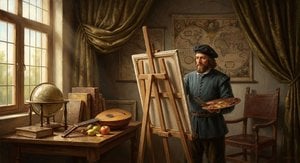
Illuminating Realism: Exploring the Dutch Golden Age of Painting (1600-1700)
Explore the Dutch Golden Age of painting (1600-1700) with ArtsDot. Discover Rembrandt, Vermeer & other masters. Learn about techniques, history & find museum-quality reproductions.