


 Visualizar em escala
 Enviar
 Compartilhar
 Ver detalhes
 Guia de Obras do Aluno

 Baixar imagem
 Semelhantes
 Raio X
 Apresentação de slides
 Estatísticas
Sarah Bernhardt
 Acrylic On Canvas
- WallArt
- 19th-century photography
 1864
1864 21.0 x 16.0 cm
 Museu J. Paul Getty
 Ver mais
Giclée / Impressão de Arte
Impressão giclée ou em tela de qualidade de museu, com produção rápida e opções flexíveis de acabamento. ( Encomendar reprodução pintada à mão Ver Imagem Digital)




P118B €10

P118H €10

P118W €10

P438Z €10

P508JH €12

P508YH €12

P805H €10

P805Z €10

P919BZ €10

P919G €10

P919XJ €10

P959ZH €10

P968JZ €12

W106C €8

W218G €10

W218JH €8

W218Y €10

W307PJ €10

W316G €10

W316PJ €8

W316Y €10

W398PJ €8

W4111J €10

W500HY €15

W500JH €15

W692G €12

W849H €8

W940BG €15

W953PJ €8




Escolha entre os nossos tamanhos pré-definidos que respeitam as proporções originais da obra de arte.

Digite a largura e a altura de que necessita, para se ajustar à sua moldura ou à sua parede. Uma impressão só pode ser cortada, nunca ampliada além da imagem original, pelo que um tamanho com uma proporção diferente perderá parte da imagem. Enviamos-lhe uma maquete digital para aprovação antes de imprimirmos qualquer coisa. A imagem apresentada nesta página não mostra o corte real — apenas a maquete o faz.
Entrega mundial () em 2 semanas, em vez das 4/5 semanas padrão. (24 Outubro)

Envio expresso gratuito para todo o mundo

Tela de Linho Premium

Seguro de transporte total

Garantia de Reembolso de Impostos Alfandegários

Garantia de Fidelidade de Cor

Política de Devolução em 100 Dias (Apenas para Defeitos)

Garantia de reembolso de 100%

Desconto para múltiplas unidades
 A opção de vidro está disponível apenas para tamanhos inferiores a 110 cm

Sarah Bernhardt
Giclée / Impressão de Arte
Dimensões da Reprodução
-


Preço Total
€ 54
A Portrait of Timeless Grace: Sarah Bernhardt by Félix Nadar
Félix Nadar’s “Sarah Bernhardt,” captured in 1864, transcends the conventional portrait and becomes a profound study of presence—a frozen moment of theatrical intensity. More than simply a likeness, it's an intimate revelation of the legendary actress herself, radiating both vulnerability and formidable strength. The photograph, executed with the meticulous precision characteristic of Nadar’s work, offers a rare glimpse into Bernhardt’s carefully constructed stage persona, yet simultaneously hints at the woman beneath the glittering facade.
The image is dominated by a striking monochrome palette—a symphony of grays ranging from deep charcoal to delicate silver. This deliberate absence of color forces the viewer to focus entirely on form and texture, highlighting the intricate details of Bernhardt’s face, the luxurious drape of her shawl, and the subtle play of light and shadow across her features. Nadar masterfully employs chiaroscuro—the dramatic contrast between light and dark—to sculpt Bernhardt's figure, emphasizing her cheekbones, the delicate curve of her lips, and the downward tilt of her head, a gesture that simultaneously conveys melancholy and quiet contemplation.
The Language of Photography: Technique and Process
Nadar’s choice of wet collodion process is crucial to understanding the photograph's unique character. This demanding technique required immediate development—the plate had to be prepared, exposed, and processed within minutes, creating a remarkable immediacy in the image. The slight imperfections inherent in this method – subtle shifts in tone, minute variations in sharpness – contribute to the photograph’s authentic feel, imbuing it with a sense of captured time rather than a polished, idealized representation.
The composition itself is remarkably restrained. Nadar eschews elaborate backgrounds or distracting props, focusing entirely on Bernhardt and her immediate surroundings. The shallow depth of field further isolates the subject, drawing the viewer’s attention to her face and creating an intimate sense of connection. Note the subtle vignette effect around the edges – a darkening that frames the subject and directs the eye inward, mirroring the theatrical spotlight she commanded on stage.
A Star is Born: Context and Symbolism
“Sarah Bernhardt” was taken at a pivotal moment in the actress’s career. Just twenty years old, she was already establishing herself as one of France's most celebrated performers, captivating audiences with her dramatic range and magnetic stage presence. The photograph captures this burgeoning fame—the poised confidence, the hint of vulnerability—and foreshadows the legendary status she would eventually achieve.
The shawl draped around Bernhardt’s shoulders is more than just a garment; it's a symbol of both protection and concealment. It frames her face, drawing attention to her expressive eyes and carefully controlled expression, while simultaneously hinting at the layers beneath—the private emotions and personal struggles that fueled her performances. The downward gaze, often interpreted as sadness or introspection, adds a layer of complexity to the portrait, suggesting a depth beyond mere theatricality.
A Legacy in Silver: Nadar’s Vision
Félix Nadar's “Sarah Bernhardt” stands as a testament to his pioneering spirit and artistic vision. He wasn’t simply documenting a celebrity; he was attempting to capture the essence of a personality, revealing the inner life behind the public persona. This photograph exemplifies Nadar’s approach to portraiture—a willingness to challenge conventions, embrace imperfection, and delve into the psychological complexities of his subjects. It remains a powerful and enduring image, offering a captivating glimpse into the world of 19th-century theater and the remarkable woman who dominated it.
Perguntas e Respostas
Onde posso encontrar um guia para "Sarah Bernhardt"?
O guia para "Sarah Bernhardt" é a página de Guia da obra — uma ficha informativa imprimível que apresenta a obra com sua legenda, autoria e tabela de identificação (artista, datas, técnica, tamanho original, coleção).
Quão clara é a obra "Sarah Bernhardt" no geral?
No geral, "Sarah Bernhardt" é registrado como deep_shadow. A luminosidade percebida descreve o quão clara ou escura a obra parece ser.
"Sarah Bernhardt", de Félix Nadar, está em domínio público? E por quê?
"Sarah Bernhardt" de Félix Nadar está em em domínio público - seus direitos autorais expiraram. O período de direitos autorais conta a partir do falecimento do artista, ocorrido em 1910.
Obras Relacionadas


Biografia do Artista
Félix Nadar: Um Pioneiro da Fotografia
Primeiros Anos e Inícios
- Nascimento: Gaspard-Félix Tournachon, em 5 de abril de 1820, em Paris (embora algumas fontes sugiram Lyon).
- Seu pai, Victor Tournachon, era impressor e livreiro.
- Inicialmente estudou medicina, mas abandonou o curso devido a dificuldades financeiras após a morte de seu pai.
- Nadar, como ficou conhecido, iniciou sua carreira como caricaturista e romancista, colaborando com diversos jornais da época.
Da Caricatura à Fotografia
- Começou a experimentar com a fotografia por volta de 1853.
- Abriu seu primeiro estúdio fotográfico em 1854, no número 113 da rue St. Lazare, mudando-se posteriormente para o 35 Boulevard des Capucines em 1860.
- Ganhou reconhecimento rapidamente por seus retratos marcantes e psicologicamente profundos.
- Rejeição às Convenções: Nadar evitava os cenários opulentos comuns na retratística da época, preferindo a luz natural e um foco intenso na personalidade do fotografado.
O Pioneirismo da Fotografia Aérea
- Em 1858, Nadar tornou-se a primeira pessoa a realizar fotografias aéreas utilizando balões.
- Superou desafios técnicos relacionados à revelação de placas fotográficas em altitude ao inventar uma cobertura de algodão à prova de gás para os cestos de seus balões.
- Também foi pioneiro no uso de iluminação artificial na fotografia, notadamente nas Catacumbas de Paris.
- Le Géant: Em 1863, encomendou a construção de um enorme balão chamado “Le Géant” (O Gigante), que serviu de inspiração para a obra *Cinco Semanas em um Balão*, de Jules Verne.
Grandes Conquistas e Influências
- Retratística: Fotografou inúmeras figuras proeminentes, incluindo Victor Hugo, Charles Baudelaire, Sarah Bernhardt e Gustave Courbet.
- Estabeleceu o primeiro serviço de correio aéreo do mundo durante o Cerco de Paris (1870-71), utilizando voos de balão.
- Sediou a primeira exposição impressionista em seu estúdio em 1874, proporcionando uma plataforma crucial para artistas emergentes.
- Publicou o que é considerado a primeira fotoentrevista em 1886, apresentando o químico Michel Eugène Chevreul.
Vida Posterior e Legado
- Transferiu seu estúdio para Marselha, onde permaneceu de 1895 a 1909.
- Faleceu em 20 de março de 1910, em Paris, e está sepultado no Cemitério do Père Lachaise.
- Seu filho, Paul Nadar, deu continuidade às operações do estúdio após sua morte.
- Quand j’étais photographe: Publicou memórias refletindo sobre sua vida e obra, oferecendo visões valiosas sobre a fotografia do século XIX.
- Significância Histórica: As técnicas inovadoras e a visão artística de Nadar impactaram profundamente o desenvolvimento da fotografia como forma de arte. Seus retratos permanecem como representações icônicas dos círculos intelectuais e artísticos parisienses.
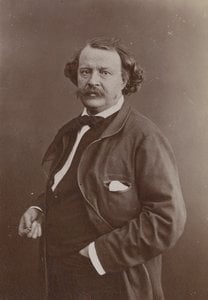
Félix Nadar
1820 - 1910
Informações Rápidas
- Birth Date: 5 de abril de 1820
- Death Date: 20 de março de 1910
- Influenced: ['Jules Verne']
- Movement:
- Fotografia
- Caricatura
- Impressionismo (associado)
- Name: Félix Nadar
- Nationality: Francês
- Notable Works:
- Retratos de Baudelaire, Hugo, Delacroix
- Fotografia Aérea
- Foto-entrevista com Chevreul
Artigos Relacionados

Monochrome Visions: Exploring the Aesthetic & Historical Significance of Black & White Photography
Explore the rich history & artistic power of black and white photography. From early techniques to iconic masters like Ansel Adams, discover why monochrome continues to captivate art lovers today. Expert insights for collectors.

As 10 Pinturas Mais Famosas Dominadas pelo Preto: Arte, História e Decoração
Descubra as 10 pinturas mais icônicas dominadas pelo preto! Explore a história, técnica e emoção por trás de obras-primas do Romantismo, Realismo e Expressionismo. Encontre reproduções de arte exclusivas na ArtsDot.com.

Beyond the Lens: Photography's Enduring Influence on Modern & Contemporary Art
Explore photography's pivotal role in shaping modern & contemporary art. Discover key movements, influential artists like Stieglitz, and expert collecting advice from ArtsDot.

Beyond the Portrait: Félix Nadar & the Psychological Depths of 19th-Century Photography
Explore the revolutionary photography of Félix Nadar – pioneer of portraiture, aerial imaging & psychological depth. Discover his iconic portraits of Baudelaire, Hugo & more. A deep dive into 19th-century art history.

Pictorialism: A Search for Artistic Photography's Soul – Aesthetics, Techniques & Legacy
Explore the captivating world of Pictorialism – a pivotal movement that transformed photography into fine art. Discover key artists like Stieglitz & Käsebier, techniques, and collecting tips from experts.