


 Visualizar na parede
 Compartilhar
 Compartilhar
 Detalhes

 Baixar imagem
 Semelhantes
 Raio X
 Slideshow
 Estatísticas
LADY BY THE WINDOW
 Other
Other 106.0 x 40.0 cm
 Ler mais
Reprodução em Óleo Feita à Mão
Óleo sobre tela pintado à mão no tamanho e moldura de sua escolha, feito sob encomenda pelos nossos artistas. ( Alternar para Impressão Alternar para Imagem Digital)




P118B $10

P118H $10

P118W $10

P438Z $10

P508JH $12

P508YH $12

P805H $10

P805Z $10

P919BZ $10

P919G $10

P919XJ $10

P959ZH $10

P968JZ $12

W106C $8

W218G $10

W218JH $8

W218Y $10

W307PJ $10

W316G $10

W316PJ $8

W316Y $10

W398PJ $8

W4111J $10

W500HY $15

W500JH $15

W692G $12

W849H $8

W940BG $15

W953PJ $8




Escolha entre os nossos tamanhos pré-definidos que respeitam as proporções originais da obra de arte.

Pode inserir as suas próprias dimensões para se adequar a uma moldura ou espaço específico. Se o tamanho selecionado não corresponder às proporções da imagem original, iremos cortar a obra de arte ou estender a pintura com elementos adicionais pintados à mão. Um esboço digital será enviado para sua aprovação antes do início da produção.
Tenha em atenção que a pré-visualização no ecrã não reflete o corte ou extensão real. Apenas o esboço mostrará com precisão a composição final.
Embora tamanhos personalizados estejam disponíveis, recomendamos selecionar uma dimensão da lista predefinida para preservar as proporções originais.
Após o pedido, a equipa ArtsDot.com enviará um e-mail ao cliente para solicitar instruções e fornecer uma prévia do esboço.
Entrega mundial () em 3 a 4 semanas, em vez das 5 semanas padrão. (15 Setembro). Sem comprometer a qualidade.

Envio expresso gratuito para todo o mundo

Tela de Linho de Alta Qualidade

Seguro de transporte completo

Garantia de Reembolso de Impostos Alfandegários

Garantia de Fidelidade Cromática

Política de Devolução de 100 Dias (Apenas Defeitos)

Garantia de reembolso de 100%

Oferta de desconto por quantidade
 A opção de vidro está disponível apenas para tamanhos inferiores a 110 cm

LADY BY THE WINDOW
Técnica de Reprodução
Tamanho da Reprodução
-


Preço Total
$ 263
Obras Relacionadas


![Untitled [uwaki No Sō (the Fickle Onethe Fickle One)] — Kitagawa Utamaro, Impressionistic Style](/media/artworks/images-thumb/46/8e/468eafb3b6da18ad90b6e962513246d1.jpg)


Biografia do Artista
Fei Danxu: A Master of Serene Beauty in 19th-Century China
Fei Danxu (費丹旭, 1801–1850), a name perhaps less familiar than some of his contemporaries, nevertheless stands as a significant figure in the vibrant world of Chinese painting during the Qing Dynasty. Born Zishao (子苕) and later adopting the artistic names Xiaolou (曉樓) and Huanxisheng (環溪生), he was a truly itinerant artist, traversing Zhejiang and Jiangsu provinces throughout his life, seeking inspiration and honing his craft. His legacy rests primarily on a remarkable body of work centered around exquisitely rendered portraits of women—a genre that reflects both the artistic trends of the time and Danxu’s own profound sensitivity to beauty and tranquility.
Danxu's early life in Wucheng (烏程), now part of Wuxing, Zhejiang, provided a foundation for his artistic development. He began painting at a remarkably young age, absorbing the techniques and aesthetics of his family—particularly his father, Fei Ju, another accomplished painter. This lineage instilled within him a deep appreciation for nature’s subtle harmonies and an understanding of traditional Chinese painting principles. However, unlike many artists who remained rooted in established styles, Danxu developed a distinctive approach, often referred to as the “Gai Fei” school alongside his fellow artist Gai Qi. This movement emphasized capturing the essence of beauty through delicate brushwork and evocative compositions—a departure from more rigid academic traditions.
The Art of the Lady: Portraiture and Symbolism
Danxu’s fame, and indeed much of his enduring appeal, stems almost entirely from his series of portraits depicting women. These are not merely likenesses; they are carefully constructed narratives imbued with symbolism and a profound sense of serenity. He frequently depicted these ladies in idyllic landscapes—a deliberate choice that elevates the subject beyond mere representation, transforming her into an embodiment of nature’s grace and harmony. The most celebrated example is undoubtedly “Lady by the Window” (畫一窗), a work that exemplifies his signature style.
The composition of "Lady by the Window" is remarkably restrained yet profoundly expressive. A woman sits pensively by a window, delicately unwrapping a cloth covering a qin (zither). The scene is bathed in soft light, suggesting a quiet moment of contemplation. Critics and scholars have noted Danxu’s masterful use of color—subtle washes of ink and delicate hues that evoke the atmosphere of a misty morning. The painting's influence can be traced back to Tang Yin (唐寅), a renowned Ming Dynasty painter known for his depictions of beautiful women in natural settings, suggesting an intentional homage to a master from centuries past.
Technique and Influences
Danxu’s technique was characterized by meticulous brushwork and a deep understanding of perspective. He employed a loose, flowing style—a hallmark of the “Gai Fei” school—that allowed for a sense of spontaneity and naturalism. His use of ink washes created a luminous quality that brought his subjects to life. While he drew inspiration from Tang Yin, Danxu’s work also reflects the influence of other masters, including Li Cheng (李成) and Zhao Mengfu (趙孟頫), demonstrating a sophisticated awareness of Chinese painting history.
Furthermore, Danxu's artistic journey was shaped by his itinerant lifestyle. He spent much of his adult life traveling and working as a freelance painter, often accepting commissions from wealthy patrons. This experience exposed him to diverse landscapes and cultures, enriching his artistic vision and contributing to the variety of subjects he depicted.
Legacy and Historical Significance
Despite his relatively modest fame during his lifetime, Fei Danxu’s work has gained increasing recognition in recent decades. His paintings are now housed in prestigious collections around the world, including the Shanghai Museum and the Freer Gallery of Art in Washington D.C. Danxu's legacy lies not only in his technical skill but also in his ability to capture a fleeting moment of beauty—a testament to the enduring power of Chinese art to evoke emotion and inspire contemplation.
His paintings offer a valuable window into the cultural values and aesthetic sensibilities of 19th-century China, reflecting a deep appreciation for nature, tranquility, and the idealized image of feminine grace. Fei Danxu’s work continues to resonate with viewers today, reminding us of the timeless beauty that can be found in the simplest of moments.

fei danxu
1802 - 1850
Dados Rápidos
- Artistic Movement Or Style: Gai Fei School
- Artists Or Movements Influenced By This Artist: ["Fei's brother Dancheng"]
- Artists Who Influenced This Artist: ['Gai Qi']
- Date Of Birth: 1802
- Date Of Death: 1850
- Full Name: Fei Danxu
- Nationality: Chinese
- Notable Artworks:
- Lady by the Window
- Twelve Beauties of Jinling
- Playing Flute under the Moon
- Place Of Birth: Wucheng (Zhejiang)
Artigos Relacionados

Reflections of an Era: Identity & Social Commentary in 19th-Century Portraiture
Explore the captivating world of 19th-century portraiture! Discover key artists, movements like Realism & Impressionism, and the powerful social commentary embedded within these iconic artworks. Expert insights at ArtsDot.
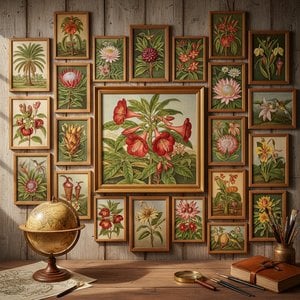
Marianne North: As 25 Obras-Primas da Pintora Botânica e Exploradora
Descubra as 25 obras-primas de Marianne North, a pintora botânica vitoriana que viajou o mundo! Explore paisagens tropicais vibrantes e flores exóticas em quadros únicos. Encontre reproduções de arte exclusivas para decorar sua casa com elegância em ArtsDot.com.

Século XIX na Arte: 10 Obras que Definem uma Era | ArtsDot
Mergulhe no século XIX com 10 obras de arte icônicas! Explore Monet, Renoir e Van Gogh. Descubra a história, técnica e emoção por trás dos mestres do Impressionismo e Realismo. Encontre reproduções de alta qualidade em ArtsDot.com.

Iconic Art of the 18th & 19th Centuries: Masterpieces for Your Home | ArtsDot
Journey through 18th & 19th century art! Explore iconic masterpieces by Monet, Van Gogh & more. Discover the stories behind these timeless paintings and find museum-quality reproductions for your home at ArtsDot.com.

Édouard Manet: As 25 Obras-Primas do Mestre Impressionista | ArtsDot
Descubra as 25 obras-primas de Édouard Manet, o mestre do Impressionismo! Explore a história por trás de 'Le Déjeuner sur l'herbe', 'Olympia' e mais. Reproduções de arte exclusivas para decorar sua casa com elegância. ArtsDot.