


 Visualizar na parede
 Compartilhar
 Compartilhar
 Detalhes

 Baixar imagem
 Semelhantes
 Raio X
 Slideshow
Ferry Boat
 Oil On Panel
- Baroque Landscape
 1622
1622 62.0 x 113.0 cm
 Rijksmuseum
 Ler mais
Giclée / Impressão de Arte
Impressão giclée ou em tela de qualidade de museu, com produção rápida e opções flexíveis de acabamento. ( Comprar pintura feita à mão Comprar imagem)




P118B $10

P118H $10

P118W $10

P438Z $10

P508JH $12

P508YH $12

P805H $10

P805Z $10

P919BZ $10

P919G $10

P919XJ $10

P959ZH $10

P968JZ $12

W106C $8

W218G $10

W218JH $8

W218Y $10

W307PJ $10

W316G $10

W316PJ $8

W316Y $10

W398PJ $8

W4111J $10

W500HY $15

W500JH $15

W692G $12

W849H $8

W940BG $15

W953PJ $8




Escolha entre os nossos tamanhos pré-definidos que respeitam as proporções originais da obra de arte.

Você pode inserir suas próprias dimensões para se ajustar a uma moldura ou espaço específico. Se o tamanho selecionado não corresponder às proporções da imagem original, iremos recortar a obra de arte ou estender a imagem com uma borda espelhada ou preenchimento sólido. Um mockup digital será enviado para sua aprovação antes do início da produção.
Por favor, observe que a visualização na tela não reflete o recorte ou a extensão real. Apenas o mockup mostrará com precisão a composição final.
Embora tamanhos personalizados estejam disponíveis, recomendamos selecionar uma dimensão da lista predefinida para preservar as proporções originais.
Entrega mundial () em 2 semanas, em vez das 4/5 semanas padrão. (23 Agosto)

Envio expresso gratuito para todo o mundo

Tela de Linho de Alta Qualidade

Seguro de transporte completo

Garantia de Reembolso de Impostos Alfandegários

Garantia de Fidelidade Cromática

Política de Devolução em 60 Dias (Apenas para Defeitos)

Garantia de reembolso de 100%

Oferta de desconto por quantidade
 A opção de vidro está disponível apenas para tamanhos inferiores a 110 cm

Ferry Boat
Giclée / Impressão de Arte
Tamanho da Reprodução
-


Preço Total
$ 62
Descrição do Colecionável
A Moment Frozen in Time: Esaias van de Velde’s “Ferry Boat”
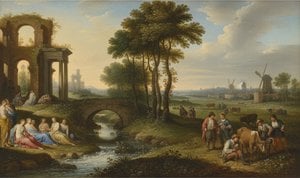
Esaias van de Velde's "Ferry Boat," painted in 1622, isn’t merely a depiction of a river crossing; it’s a carefully constructed tableau of Dutch life, imbued with the serenity and meticulous detail characteristic of the Golden Age. Housed within the Rijksmuseum in Amsterdam, this painting offers a rare glimpse into a world where commerce and community intertwined along the waterways that shaped the nation's identity. Van de Velde masterfully captures not just the physical scene but also the quiet rhythm of daily existence – a testament to his skill as a landscape artist and keen observer of human activity.
The painting immediately draws the eye to the tranquil waterway, rendered with an almost photographic precision. The water’s surface reflects the surrounding trees and buildings, creating a sense of depth that extends far into the distance. This masterful use of atmospheric perspective—a technique perfected during this period—is crucial to the work's overall effect, lending it a believable realism. At the heart of the composition lies the ferry boat itself, a sturdy vessel carrying passengers across the water with an air of effortless grace. The subtle details of its construction – the simple lines, the lack of elaborate ornamentation – speak volumes about the practicality and functionality valued by Dutch society.
The Palette of Peace: Style and Technique
Van de Velde’s artistic style is defined by a restrained palette of earthy tones—muted browns, greens, and blues—that evoke a sense of warmth and tranquility. He eschews dramatic contrasts in light and shadow, favoring instead a soft, diffused illumination that contributes to the painting's overall mood of peaceful contemplation. The brushstrokes are delicate and precise, meticulously applied to create a smooth, almost velvety surface. This technique, combined with his mastery of perspective and atmospheric effects, results in an image that is both visually stunning and emotionally resonant.
The artist’s use of oil paint allows for incredible detail and luminosity. He skillfully layered thin glazes of color to build up the forms and textures of the scene, creating a sense of depth and realism. Notice how he captures the subtle variations in tone on the water's surface—the shimmering reflections, the gentle ripples—demonstrating his deep understanding of light and its effects. The composition is carefully balanced, with the ferry boat positioned centrally to draw the viewer’s eye across the scene. The arrangement of figures along the riverbanks further enhances this sense of balance, creating a harmonious and visually pleasing whole.
A Window into 17th-Century Dutch Life
“Ferry Boat” offers a fascinating glimpse into the daily lives of people in 17th-century Holland. The figures lining the riverbanks—farmers, merchants, and laborers—engage in various activities: tending to their fields, unloading goods, or simply enjoying the scenery. Their presence adds a layer of social context to the scene, reminding us that this painting is not merely an exercise in landscape depiction but also a portrait of Dutch society. The inclusion of a horse-drawn cart suggests the importance of transportation and trade in the region’s economy.
The painting's historical context is particularly noteworthy. During the Dutch Golden Age, the country experienced a period of unprecedented prosperity and artistic innovation. Artists like Van de Velde were tasked with documenting the beauty of their homeland—its landscapes, its cities, and its people. “Ferry Boat” exemplifies this trend, capturing not only the physical reality of the scene but also the cultural values and social dynamics of the time. It’s a poignant reminder of a bygone era, offering viewers a chance to connect with the past in a meaningful way.
Bringing History Home: Reproductions and Legacy
High-quality reproductions of “Ferry Boat” are now readily available through platforms like ArtsDot.com, allowing art enthusiasts worldwide to bring this masterpiece into their homes. These meticulously crafted prints capture the essence of Van de Velde’s original painting—its serene atmosphere, its meticulous detail, and its profound sense of place. Whether displayed in a formal living room or a cozy study, a reproduction of “Ferry Boat” will serve as a timeless reminder of the beauty and artistry of the Dutch Golden Age.
For those seeking to delve deeper into the life and work of Esaias van de Velde, resources like Wikipedia and the WGA website offer invaluable information. Exploring these sources can provide further insights into his artistic influences, his techniques, and his enduring legacy as one of the most important landscape painters of the Dutch Golden Age.
Obras Relacionadas


Biografia do Artista
Esaias van de Velde: Um Mestre da Paisagem Holandesa
Esaias van de Velde (17 de maio de 1587 – 18 de novembro de 1630) ergue-se como uma figura fundamental no desenvolvimento da pintura de paisagem durante o Século de Ouro holandês. Nascido em Amsterdã, sua linhagem artística remonta ao seu pai, Hans van de Velde, um refugiado protestante da Flandres que buscou refúgio na Holanda após os tumultos religiosos do final do século XVI. Essa conexão familiar com a tradição flamenga moldou profundamente a formação artística inicial de Esaias, primeiramente sob a tutela de seu pai e mais tarde com Gillis van Coninxloo, um pintor de paisagens profundamente influenciado pelas obras de Pieter Brueghel o Pai. Sua criação neste cruzamento de influências artísticas lançou as bases para seu estilo distinto – um que acabaria por redefinir os limites da representação do mundo natural sobre a tela.Influências Iniciais e a Paisagem Artística de Haarlem
A carreira de Van de Velde floresceu em Haarlem, um vibrante centro de arte e comércio durante o século XVII, entre 1610 e 1618. Este período foi crucial para sua evolução artística. Ele ingressou na prestigiada Guilda de São Lucas de Haarlem em 1612, ao lado de Hercules Segers, um evento que marcou uma mudança significativa na percepção da pintura de paisagem na região. Antes disso, as paisagens eram frequentemente consideradas gêneros secundários, relegados a papéis puramente decorativos. A inclusão de Van de Velde elevou-as a uma categoria artística respeitada e independente, espelhando uma tendência mais ampla por toda a Holanda. Notavelmente, foi influenciado por Adam Elsheimer, um pintor alemão conhecido por seu uso dramático da luz e seus efeitos atmosféricos, o que o encorajou a se afastar das convenções mais rígidas de seu tutor e abraçar um ponto de vista mais baixo – uma técnica que oferecia aos espectadores uma perspectiva expansiva, quase imersiva, sobre as cenas à sua frente. Essa escolha deliberada, combinada com uma estrutura composicional triangular, tornou-se o selo de seu estilo singular.Cenas de Gênero e Militares: Expandindo Horizontes Artísticos
Embora celebrado principalmente por suas paisagens, o repertório artístico de Van de Velde estendia-se além do puramente naturalista. Ele incorporou com maestria cenas de gênero – representações da vida cotidiana – e pinturas militares em sua obra. Estas peças demonstram um olhar observacional apurado e uma capacidade ímpar de capturar o dinamismo e o drama da atividade humana tanto em cenários rurais quanto urbanos. Seu “O Emboscada de um Trem de Carroças” (por volta de 1618) exemplifica essa versatilidade, exibindo não apenas seu domínio da paisagem, mas também seu talento para retratar ação e narrativa com detalhes convincentes. Esses temas diversos revelam um pintor à vontade para navegar pelas complexidades de representar a experiência humana em todas as suas formas.Pintor de Corte e Legado Artístico
Em seus anos finais, Van de Velde conquistou uma prestigiada posição como pintor de corte do Príncipe Maurits e Frederick Henry na Haia. Este encargo solidificou sua reputação e lhe proporcionou acesso a um leque mais vasto de comissões, incluindo a criação de elaboradas cenas de batalha e representações cerimoniais. Seu trabalho neste período reflete uma sensibilidade artística refinada, caracterizada por detalhes meticulosos, paletas de cores sutis e uma compreensão cada vez mais sofisticada da luz e da sombra. Ele foi influenciado por Roelant Savery e Jan van de Velde, demonstrando uma clara linhagem dentro da tradição artística de sua família.Pupilos e Influência Duradoura
O impacto de Esaias van de Velde estendeu-se além de suas próprias criações; ele serviu como mentor para vários jovens artistas promissores, incluindo Pieter van Laer, Jan Martszen de Jonge e Anthony van de Velde (II). Sua influência pode ser vista nas obras de Palamedes Palamedesz, Nicolaes de Quade van Ravesteyn e Adriaen Adriaensz Ghibons – artistas que adotaram elementos de seu estilo e técnicas composicionais. Além disso, ele era primo de Jan van de Velde, adicionando outra camada ao legado artístico da família. A morte de Esaias na Haia em 1630 marcou o fim de uma era, mas suas contribuições para a pintura de paisagem holandesa permaneceram significativas, moldando o curso do gênero e inspirando gerações de artistas vindouras. Sua obra continua sendo admirada por seu realismo, iluminação dramática e evocativa representação do mundo natural.
Esaias Van De Velde
1587 - 1630 , Países Baixos
Dados Rápidos
- Artistic Movement Or Style: Escola de Haarlem, Paisagem
- Artists Or Movements Influenced By This Artist:
- Palamedes Palamedesz
- Jan Martszen de Jonge
- Artists Who Influenced This Artist:
- Adam Elsheimer
- Roelant Savery
- Date Of Birth: 1587-05-17 (batizado)
- Date Of Death: 1630-11-18
- Full Name: Esaias van de Velde
- Nationality: Holandês
- Notable Artworks:
- Paisagem Invernal
- A Emboscada
- O Roubo
- Place Of Birth: Amsterdã, Países Baixos
Artigos Relacionados

Willem van de Velde the Elder: Master of Maritime Painting & Chronicler of the Dutch Golden Age
Discover the captivating maritime paintings of Willem van de Velde the Elder, a master chronicler of the Dutch Golden Age. Explore his unparalleled realism and lasting influence on naval art history.

Jan van Goyen: Master of Dutch Landscape & Atmospheric Perspective
Discover Jan van Goyen, the master of Dutch landscape painting. Explore his subtle technique, atmospheric realism & lasting influence on art history. Learn about this 17th-century pioneer at ArtsDot.

Rembrandt van Rijn: As 25 Obras-Primas que Definem um Mestre da Luz e Sombra | ArtsDot
Descubra as 25 obras-primas de Rembrandt van Rijn, o mestre da luz e sombra! Explore a história por trás de 'A Ronda Noturna', seus auto-retratos e muito mais. Encontre reproduções de arte exclusivas para decorar sua casa com ArtsDot.com.
Cornelis van Poelenburch: Bridging Mannerism & the Dutch Baroque Landscape
Discover Cornelis van Poelenburch, a pivotal Dutch Baroque landscape painter bridging Mannerism & Italianate styles. Explore his life, key works, and lasting influence on 17th-century art with ArtsDot.

Goya: As 25 Obras-Primas que Definem um Mestre da Arte Espanhola | ArtsDot
Descubra as 25 obras-primas de Francisco Goya, o mestre espanhol do Romantismo. Explore retratos icônicos, gravuras impactantes e a história por trás de 'Saturno Devorando seu Filho' e 'A Majas'. Encontre reproduções de arte exclusivas para decorar sua casa com ArtsDot.com.

