


 Visualizar na parede
 Compartilhar
 Compartilhar
 Detalhes

 Baixar imagem
 Semelhantes
 Raio X
 Slideshow
Proun


 Ler mais
Giclée / Impressão de Arte
Impressão giclée ou em tela de qualidade de museu, com produção rápida e opções flexíveis de acabamento. ( Comprar pintura feita à mão Comprar imagem)




P118B $10

P118H $10

P118W $10

P438Z $10

P508JH $12

P508YH $12

P805H $10

P805Z $10

P919BZ $10

P919G $10

P919XJ $10

P959ZH $10

P968JZ $12

W106C $8

W218G $10

W218JH $8

W218Y $10

W307PJ $10

W316G $10

W316PJ $8

W316Y $10

W398PJ $8

W4111J $10

W500HY $15

W500JH $15

W692G $12

W849H $8

W940BG $15

W953PJ $8




Escolha entre os nossos tamanhos pré-definidos que respeitam as proporções originais da obra de arte.

Você pode inserir suas próprias dimensões para se ajustar a uma moldura ou espaço específico. Se o tamanho selecionado não corresponder às proporções da imagem original, iremos recortar a obra de arte ou estender a imagem com uma borda espelhada ou preenchimento sólido. Um mockup digital será enviado para sua aprovação antes do início da produção.
Por favor, observe que a visualização na tela não reflete o recorte ou a extensão real. Apenas o mockup mostrará com precisão a composição final.
Embora tamanhos personalizados estejam disponíveis, recomendamos selecionar uma dimensão da lista predefinida para preservar as proporções originais.
Entrega mundial () em 2 semanas, em vez das 4/5 semanas padrão. (26 Agosto)

Envio expresso gratuito para todo o mundo

Tela de Linho de Alta Qualidade

Seguro de transporte completo

Garantia de Reembolso de Impostos Alfandegários

Garantia de Fidelidade Cromática

Política de Devolução em 60 Dias (Apenas para Defeitos)

Garantia de reembolso de 100%

Oferta de desconto por quantidade
 A opção de vidro está disponível apenas para tamanhos inferiores a 110 cm

Proun
Giclée / Impressão de Arte
Tamanho da Reprodução
-


Preço Total
$ 62
Descrição do Colecionável
El Lissitzky’s Proun: A Revolutionary Geometry of Space
The photograph presented here offers a glimpse into “Proun 19D,” a seminal work by El Lissitzky, created in 1923 and embodying the radical principles of Constructivism. More than simply a painting, Proun (derived from the Czech word for ‘pronunciation’) represented Lissitzky’s ambitious attempt to redefine art's relationship with space – to move it beyond mere representation and into the realm of pure form and experience. This piece, executed in stark black and white, showcases his signature geometric abstraction: a carefully orchestrated arrangement of circles, crosses (the “X”), and lines that seem to defy conventional perspective. The composition isn’t about depicting an object; instead, it aims to reveal the underlying structure of space itself, suggesting a dynamic interplay between positive and negative forms.
Lissitzky's journey to this groundbreaking style was deeply rooted in his early life and artistic training. Born Lazar Markovich Lissitzky in 1890 in Pochinki, Russia, he initially pursued architecture and engineering, disciplines that were frustratingly closed off to him due to restrictions placed on Jewish students. This experience fueled a desire to create art that transcended social barriers and actively shaped the world around it. His early illustrations for Yiddish children’s books – works like ‘Chad Gadya’ – demonstrated an innate understanding of narrative and visual storytelling, foreshadowing his later explorations into abstract forms. His time in Berlin and Darmstadt exposed him to European avant-garde movements, particularly Cubism and Futurism, which profoundly influenced his thinking about space and form. However, it was upon returning to Russia that Lissitzky truly developed his unique vision, culminating in the creation of Proun.
The Principles of Constructivism and the Birth of Proun
Proun emerged from the broader context of Constructivism, a Russian artistic movement advocating for art’s role in building a new socialist society. Constructivists believed that art should be functional, accessible, and directly contribute to practical design – influencing architecture, furniture, typography, and even propaganda. Lissitzky embraced this philosophy wholeheartedly, rejecting traditional notions of illusionistic painting and instead focusing on the inherent properties of geometric forms. He theorized that a “Proun” was not merely a flat image but a three-dimensional projection of space, a ‘stage’ upon which the world could be reconfigured. The X shape, for instance, represented the intersection of two planes, while circles symbolized the sun and the cosmos – fundamental elements in his vision of a new spatial order.
Crucially, Lissitzky developed a system of “Proun stages,” believing that each work evolved through a series of transformations. “Proun 19D” is considered an early example, demonstrating the gradual shift from representational imagery to pure abstraction. He meticulously documented these changes in his diaries and drawings, creating a visual record of his artistic process – a testament to his belief in art as a dynamic, evolving entity.
Symbolism and Emotional Impact
While seemingly austere, “Proun 19D” is rich with symbolic meaning. The geometric forms aren’t arbitrary; they represent fundamental forces and relationships within the universe. The circle, often associated with wholeness and unity, suggests a harmonious balance between opposing elements. The X, representing intersection and connection, symbolizes the dynamic interaction of space and form. Lissitzky's work wasn't simply about aesthetics; it was an attempt to create a visual language that could communicate complex ideas about space, time, and social transformation.
The stark black and white palette further amplifies the piece’s impact, stripping away distractions and focusing attention on the essential forms. It evokes a sense of clarity, precision, and intellectual rigor – reflecting Lissitzky's commitment to rationalism and his belief in art as a tool for social progress. “Proun 19D” remains a powerful example of how abstract art can be both intellectually stimulating and emotionally resonant, inviting viewers to contemplate the fundamental nature of reality itself.
ArtsDot Reproductions: Bringing Proun to Life
ArtsDot is proud to offer meticulously crafted hand-painted reproductions of El Lissitzky’s “Proun 19D.” Our artists utilize traditional techniques and archival-quality materials to faithfully recreate the artwork's intricate details and subtle nuances. Whether you are an art collector, interior designer, or simply a lover of modern art, our reproductions provide a stunning way to experience the power and beauty of this iconic work. Explore our selection of sizes and framing options to find the perfect addition to your home or office – a tangible connection to one of the 20th century’s most visionary artists.
Obras Relacionadas


Biografia do Artista
A Revolutionary Vision: The Life and Art of El Lissitzky
El Lissitzky, born Lazar Markovich Lissitzky in 1890 in the small Russian town of Pochinok, emerged as a pivotal figure in the tumultuous landscape of early 20th-century art. His journey was one of constant reinvention, driven by a fervent belief in the power of art to shape society and reflect the dynamism of the modern world. From his initial training as an architect and engineer – pursuits hampered by restrictions placed upon Jewish students – Lissitzky’s path diverged towards artistic expression, initially through illustrations steeped in Jewish folklore. These early works, like his cover for ‘Chad Gadya’, reveal a nascent talent already grappling with narrative and visual storytelling, hinting at the profound cultural roots that would continue to inform his aesthetic. A move to Berlin and Darmstadt broadened his horizons, but it was upon returning to Russia that Lissitzky truly found his artistic voice, becoming inextricably linked with the revolutionary fervor sweeping through the nation.The Embrace of Abstraction: Suprematism and Proun
A defining moment arrived with his encounter with Kazimir Malevich and the embrace of Suprematism. This radical movement, dedicated to pure geometric abstraction, resonated deeply with Lissitzky’s desire to transcend representational art and tap into a universal visual language. He became a key member of UNovis, the Suprematist group established in Vitebsk, actively disseminating its principles through teaching and artistic production. However, Lissitzky didn't simply replicate Malevich’s style; he forged his own distinct path with the development of *Proun*. This unique series, born from a fusion of Suprematism and Constructivism, explored spatial relationships and geometric forms in dynamic compositions that often resembled architectural blueprints or exploded diagrams. Proun wasn't merely painting; it was an investigation into the very structure of space itself, a premonition of future architectural possibilities. These works, with their floating planes and intersecting lines, embodied Lissitzky’s belief in art as a force capable of constructing new realities. The influence of his engineering background is palpable here, lending a structural logic to the abstract forms. He sought to represent not objects themselves, but the *relationships* between them – a radical departure from traditional artistic practice.Art as Propaganda and Social Commentary
Lissitzky's artistic vision extended far beyond the canvas. He passionately believed that art should serve a social purpose, actively engaging with political ideologies and seeking ways to integrate design into everyday life. This conviction led him to become deeply involved in Soviet propaganda efforts, creating powerful posters and graphic designs intended to mobilize public support for the Bolshevik regime. His 1941 poster calling for tank construction stands as a testament to this commitment – a stark, impactful image reflecting the urgency of wartime. Beyond propaganda, Lissitzky revolutionized typography, exhibition design, and photomontage. He understood that effective communication required innovative visual strategies, and he fearlessly experimented with new techniques to convey his message. His photomontages, such as ‘The Constructor’ (1924), are particularly striking – self-portraits that blend photography with geometric abstraction, offering a complex commentary on identity and the role of the artist in society. These works were not simply decorative; they were carefully constructed arguments, designed to persuade and inspire action.A Cultural Ambassador: Spreading Constructivist Ideals
Lissitzky's influence transcended national borders. He served as a crucial cultural ambassador for Soviet art, disseminating Constructivist ideas throughout Western Europe, particularly in Germany. His innovative exhibition designs challenged traditional gallery spaces, creating immersive environments that actively engaged viewers. These exhibitions weren’t simply displays of artwork; they were carefully constructed experiences designed to provoke thought and inspire action. His work had a profound impact on the Bauhaus and De Stijl movements, influencing generations of artists and designers with its emphasis on geometric abstraction, functionalism, and social responsibility. He collaborated with figures like Kurt Schwitters and Theo van Doesburg, fostering a cross-cultural exchange that enriched the artistic landscape of the era. Lissitzky’s belief in the potential of design to improve society fueled his dedication to educating others about Constructivist principles and promoting their application in various fields, from architecture to typography.Legacy and Enduring Influence
El Lissitzky’s life was tragically cut short in 1941 in Moscow, but his legacy continues to resonate today. He bridged the gap between art and architecture, abstraction and social purpose, leaving behind a body of work that is both intellectually stimulating and visually captivating. The establishment of the Lissitzky Foundation in 2014 underscores the ongoing commitment to preserving his artistic heritage and preparing a comprehensive catalogue raisonné of his creations. His innovations in typography, exhibition design, and photomontage continue to inspire contemporary artists and designers, while his unwavering belief in the power of art as a force for social change remains profoundly relevant.- His work is held in numerous international collections
- Museums featuring his works include the Taganrog Art Museum and Novokuznetsk Art Museum.

El Lissitzky
1890 - 1941 , Rússia
Dados Rápidos
- Artistic Movement Or Style:
- Suprematismo
- Construtivismo
- Artists Or Movements Influenced By This Artist:
- Bauhaus
- De Stijl
- Artists Who Influenced This Artist: ['Kazimir Malevich']
- Date Of Birth: 23 Nov 1890
- Date Of Death: 30 Dez 1941
- Full Name: El Lissitzky
- Nationality: Russo
- Notable Artworks:
- O Construtor
- Chad Gadya
- Proun
- Place Of Birth: Pochinki, Rússia
Artigos Relacionados

El Greco: As 25 Obras-Primas que Definem um Gênio da Pintura | ArtsDot
Descubra as 25 obras-primas de El Greco, o mestre renascentista espanhol! Explore a história, técnica e emoção por trás de quadros icônicos como 'O Enterro do Conde Orgaz'. Encontre reproduções de arte exclusivas e inspire sua decoração em ArtsDot.com.

Abstração Geométrica: 10 Obras-Primas que Moldaram a Arte Moderna | ArtsDot.com
Descubra as 10 obras-primas da Abstração Geométrica que revolucionaram a arte moderna! Explore Kandinsky, Mondrian e outros artistas icônicos. Encontre reproduções de alta qualidade para decorar sua casa com ArtsDot.com.

Beyond Form & Color: Geometric Abstraction's Evolution in 20th/21st Century Art
Explore the evolution of geometric abstraction from Cubism to contemporary art. Discover key artists like Malevich & Mondrian, investment insights, and expert collecting advice at ArtsDot.

Kazimir Malevich: As 25 Obras-Primas Essenciais da Arte Abstrata | ArtsDot
Descubra as 25 obras-primas de Kazimir Malevich, pioneiro do suprematismo e da arte abstrata. Explore a história por trás de 'Black Square' e outras pinturas icônicas. Encontre reproduções de alta qualidade para transformar sua casa com ArtsDot.com!
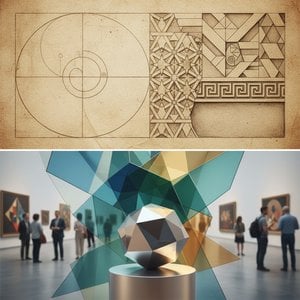
Geometric Design in Art: A Historical Survey & Contemporary Appeal for Collectors
Explore the enduring legacy of geometric abstraction! Discover key artists, historical movements & investment insights for discerning art collectors. Expert guidance from ArtsDot.



