


The picture follows your choices: , .
Descrição do Item
Explore a intensa obra de Egon Schiele! Esta pintura expressionista retrata uma figura feminina com um olhar enigmático, capturando a fragilidade e a beleza da existência humana. Uma obra marcante e perturbadora.
 Ler mais
Biografia do Artista
Explore a arte expressionista intensa de Egon Schiele (1890-1918): retratos marcantes, temas psicológicos e linhas únicas. Descubra reproduções exclusivas!
Reprodução em Óleo Feita à Mão
Óleo sobre tela pintado à mão no tamanho e moldura de sua escolha, feito sob encomenda pelos nossos artistas. ( Alternar para Impressão Alternar para Imagem Digital)
More about this painting
 Visualizar na parede
 Compartilhar
 Compartilhar
 Detalhes
 Guia
Guia

 Baixar imagem
 Semelhantes
 Raio X
 Ver diaporama
 Q&A
Q&A Estatísticas
Order your painting in four simple steps
Take your time. You can change any answer; the price in your order card follows each choice.
1 Step one of four
Which size would you like?
These sizes keep the proportions of the original painting. The drawing shows your choice on a wall, above a two-metre sofa.
Or give your own measurements
Escolha entre os nossos tamanhos pré-definidos que respeitam as proporções originais da obra de arte.

Insira a largura e a altura desejadas para se ajustarem à sua moldura ou parede. Como esta obra é pintada à mão, para um tamanho com proporções diferentes, o artista poderá pintar um pouco mais ao redor da imagem ou reduzir ligeiramente a composição — você escolhe. Enviamos uma maquete digital para sua aprovação antes de iniciar a pintura. A imagem exibida nesta página não representa o resultado real — apenas a maquete mostra o resultado final.
2 Step two of four
How should it be prepared: rolled, stretched or framed?
The prices below are for the size you chose in step one.
Choose the edges of the stretched canvas
Choose your frame

White €1

Blurside €1

Extended €1

P118B €10

P118H €10

P118W €10

P438Z €10

P508JH €12

P508YH €12

P805H €10

P805Z €10

P919BZ €10

P919G €10

P919XJ €10

P959ZH €10

P968JZ €12

W106C €8

W218G €10

W218JH €8

W218Y €10

W307PJ €10

W316G €10

W316PJ €8

W316Y €10

W398PJ €8

W4111J €10

W500HY €15

W500JH €15

W692G €12

W849H €8

W940BG €15

W953PJ €8

H24-GOLD €30

H24-SILVER €30

H36-GOLD €45

H36-SILVER €45
Com moldura
Moulding: . Overall size with the frame: .
3 Step three of four
Would you like anything changed in the painting?
Most people answer no. Because each painting is made by hand, our artist can also adapt it for you.
After order, ArtsDot.com team will email client for instructions and provide a mockup preview
4 Step four of four
A few finishing options
All of them are optional. The answers already selected cost nothing extra.
Who paints it?
Entrega mundial () em 3 a 4 semanas, em vez das 5 semanas padrão. (30 Outubro). Sem comprometer a qualidade.
A nameplate, as in a museum?
Detalhes da Placa de Bronze Gravada
This elegant plaque features the artist's name and the title of the artwork, finely engraved for a timeless presentation.
It is made from bronze with a refined, elegant finish. The text is precisely laser-engraved for a sharp and permanent result. Measuring 9x2 cm, the plaque is compact yet easy to read. It's built to be durable and scratch-resistant, offering a professional, museum-quality look. Mounting is simple thanks to the included adhesive backing.
Detalhes da Placa de Acrílico Transparente
The plaque includes essential engraved details such as the artist's name, the title of the artwork, the date it was created, the type of media used-like oil on canvas or watercolor-a brief description of the piece, and a QR code that links to the complete artwork information.
It is crafted from clear acrylic, offering a sleek, modern appearance. The text is UV-engraved in black to ensure strong visual contrast. With a size of 10x15 cm, it ensures optimal readability. It comes equipped with two metal hooks for secure wall mounting. The plaque is designed to be weather-resistant, making it suitable for various environments, and it includes interactive features that work seamlessly with smartphone scanning.
Detalhes da Placa de Acrílico Preto
This elegant plaque includes engraved information such as the artist's name, the title of the artwork, the date it was created, the type of media used (like oil on canvas or watercolor), a short description of the artwork, and a QR code for quick access to more information.
The plaque itself is made from refined black acrylic with a premium finish. The text is laser-engraved in white for high contrast and readability. Its size is 10x15 cm, designed to be easy to read. It comes with two metal hooks for professional mounting. The design is sleek and fits any interior style. It is also weather-resistant and durable, with built-in digital integration for mobile compatibility.
A protective varnish?
When do you need it?
✓ Check and order
Your painting, as you ordered it

Título: Untitled (3460)
Técnica de Reprodução
Tamanho da Reprodução
-

Artista Sênior de Elite
Mais detalhes, refinamento e tempo de produção adicional
-

Moldura para Reprodução
-
-
Para obras de arte ou reproduções com mais de 105 cm (aproximadamente 41 polegadas) em qualquer um dos lados, a moldura será enviada como um kit desmontado. Este método garante uma entrega segura e evita danos durante o transporte.
Montagem profissional necessária — este não é um produto DIY (faça você mesmo).
O kit deve ser montado e a tela esticada por um profissional de molduraria experiente, utilizando cola de madeira (não inclusa), um alicate de esticar tela e grampos para manter as travessas alinhadas enquanto a cola seca. A montagem incorreta ou a tensão desigual da tela podem danificar permanentemente a obra de arte e não estão cobertas pela nossa garantia.
 Para obras de arte ou reproduções com mais de 105 cm (aproximadamente 41 polegadas) em qualquer um dos lados, a moldura será enviada como um kit desmontado. Este método garante uma entrega segura e evita danos durante o transporte.
Todas as barras de madeira maciça estão incluídas, precisamente cortadas ao tamanho certo.
Montado com os parafusos fornecidos, além de cola para madeira para as junções dos cantos, que não está inclusa e deve ser providenciada pelo seu moldurista.
São necessárias ferramentas profissionais não incluídas: um alicate de estiramento de tela (esticador) e grampos para manter as ripas alinhadas enquanto a cola seca.
Importante:
As junções dos cantos requerem cola para madeira, as ripas devem ser mantidas com grampos até que a cola esteja completamente seca, e o estiramento da tela na moldura montada requer um alicate de esticar tela. Nenhum destes itens está incluído no kit. Por favor, certifique-se de contar com um profissional de molduraria experiente antes de encomendar este tamanho.

Etiqueta de identificação
-
-

Verniz de Proteção
Verniz brilhante (realça as cores e protege contra a luz e a umidade)
-

Personalizar minha obra
Exemplos de alterações possíveis: Substituir o rosto por uma foto do cliente; Adicionar um animal de estimação (ex.: substituir gato por cachorro); Incluir uma mensagem oculta no fundo; Alterar a paisagem ou os elementos do fundo.
-

Urgente
Entrega mundial () em 3 a 4 semanas, em vez das 5 semanas padrão. (30 Outubro). Sem comprometer a qualidade.
-
Envio Expresso
Entrega mundial para em 5 semanas. (6 Novembro).
Com envio incluído
Preço Total
€ 233
A opção de vidro está disponível apenas para tamanhos inferiores a 110 cm
Included with every order
- Envio expresso gratuito para todo o mundo
- Tela de Linho de Alta Qualidade
- Seguro de transporte completo
- Garantia de Reembolso de Impostos Alfandegários
- Garantia de Fidelidade Cromática
- Política de Devolução em 100 Dias (Apenas para Defeitos)
- Garantia de reembolso de 100%
- Oferta de desconto por quantidade


A Portrait of Fragility and Intensity
The image before us, “Untitled (3460),” is a profoundly unsettling yet undeniably captivating work by Egon Schiele – an artist whose life and art were inextricably linked to themes of mortality, vulnerability, and the raw intensity of human emotion. Painted in a style deeply rooted in Expressionism, this piece transcends mere representation; it’s a visceral exploration of the psyche, rendered with a startling directness that continues to resonate powerfully today. The central figure, a woman presented with an arresting frankness, immediately commands attention. Her exposed breasts are not merely a physical detail but a deliberate gesture, embodying a potent symbol of both vulnerability and defiant sexuality – a characteristic frequently explored by Schiele throughout his oeuvre.
The painting’s vintage feel, reminiscent of the artist's late output, suggests a period of intense personal struggle. Schiele’s biography reveals a childhood marked by loss and instability; the early death of his father, consumed by syphilis, cast a long shadow over his life and profoundly influenced his artistic vision. This trauma is palpable in the work – a sense of impending doom, a preoccupation with the ephemeral nature of existence, and an unflinching gaze at the darker aspects of human experience. The woman’s posture, coupled with the enigmatic object she holds in her hands (likely a piece of cloth or scarf), hints at a private ritual, a moment of introspection amidst a world fraught with uncertainty.
The Language of Line and Color
Schiele's technique is instantly recognizable. He employed bold, gestural lines – thick, swirling strokes that seem to vibrate with energy—to define the figure’s form and imbue the painting with movement. The color palette is deliberately muted, dominated by earthy tones and somber hues, further amplifying the sense of melancholy and introspection. Notice how he uses shading not to create volume but to emphasize contours and suggest a fragile physicality. The artist's mastery lies in his ability to convey emotion through form alone; there’s little reliance on realistic detail, instead prioritizing the expression of inner turmoil.
- Line as Emotion: Schiele’s lines are not merely descriptive; they *are* the emotion.
- Restrained Palette: The muted colors contribute to the painting's somber mood and sense of vulnerability.
- Gestural Brushwork: The dynamic brushstrokes convey a feeling of urgency and instability.
Historical Context and Schiele’s Vision
Egon Schiele (1890-1918) was a pivotal figure in the Expressionist movement, though he often resisted easy categorization. His work is characterized by its unflinching honesty, psychological depth, and exploration of taboo subjects – sexuality, death, and the human condition. Born in Vienna, Austria, his artistic development was shaped by both formal training at the Academy of Fine Arts and a deeply personal engagement with the anxieties of modern life. His mentor, Gustav Klimt, introduced him to the world of art, but Schiele quickly forged his own distinctive path, one marked by a raw intensity that set him apart.
Schiele’s exploration of mortality is particularly poignant given his own tragically short life. He died at the young age of 28 during the First World War, likely from complications related to influenza. His paintings often depict figures on the brink of death or consumed by grief – a reflection of his own experiences and anxieties. “Untitled (3460)” can be interpreted as a meditation on this fundamental human experience, capturing both the terror and the beauty inherent in facing our own mortality.
Symbolism and Emotional Resonance
Beyond its immediate visual impact, "Untitled (3460)" is rich in symbolic meaning. The woman’s exposed breasts can be seen as a challenge to conventional notions of femininity and morality, reflecting Schiele's rejection of societal constraints. The object she holds – whether a scarf or piece of cloth – may represent comfort, protection, or perhaps even a shroud, hinting at the inevitability of death. The overall composition creates a sense of claustrophobia and intimacy, drawing the viewer into the woman’s private world. This painting is not simply a portrait; it's an invitation to contemplate the complexities of human existence – our vulnerabilities, our desires, and our ultimate fate.
ArtsDot offers meticulously crafted hand-painted reproductions of this iconic work by Egon Schiele, allowing you to experience its power and beauty in exquisite detail. Explore our collection today and bring a piece of this profound masterpiece into your home or office.
Perguntas e Respostas
As cores de "Título: Untitled (3460)" parecem intensas ou suaves?
As cores em "Título: Untitled (3460)", de Egon Schiele possuem uma intensidade Vívido.
De que forma o estilo de "Título: Untitled (3460)" se relaciona com a época de seu criador?
"Título: Untitled (3460)", de Egon Schiele insere-se no movimento Expressionism, dentro da era Modernismo de seu criador.
A qual movimento artístico pertence "Título: Untitled (3460)", de Egon Schiele?
"Título: Untitled (3460)", de Egon Schiele pertence ao movimento Expressionism. Este movimento fornece o contexto estilístico da obra.
Obras Relacionadas


Egon Schiele
1890 - 1918, Áustria
Biografia do Artista
A Life Forged in Expression
Egon Schiele, nascido em Tulln an der Donau, na Áustria, em 1890, foi um pintor austríaco cuja vida e obra são marcadas por uma intensidade emocional e uma busca implacável pela verdade. Sua trajetória foi permeada por perdas trágicas, desafios pessoais e uma visão artística que desafiou as convenções de sua época. Desde cedo, Schiele demonstrou uma sensibilidade aguçada e um fascínio pelo mundo ao seu redor, especialmente pelos trens – um tema recorrente em suas pinturas, simbolizando a efemeridade da vida e o desejo de movimento. Sua infância, no entanto, foi marcada pela doença e pela morte do pai, Adolf Schiele, vítima de sífilis quando Egon tinha apenas 14 anos. A perda da irmã Elvira também deixou uma cicatriz profunda em sua psique, influenciando a temática central de suas obras: a mortalidade e a fragilidade da existência humana. Criado inicialmente por sua mãe e posteriormente sob a tutela do tio Leopold Czihaczek, Schiele desenvolveu um espírito independente e uma determinação férrea em seguir seu próprio caminho artístico.The Crucible of Vienna: Artistic Development
Schiele iniciou seus estudos formais na Kunstgewerbeschule (Escola de Artes e Ofícios) em Viena, mas logo se sentiu sufocado por sua abordagem conservadora. Transferiu-se para a Akademie der bildenden Künste (Academia de Belas Artes), apenas para se decepcionar ainda mais com as rígidas tradições acadêmicas. Desiludido com o sistema formal, Schiele optou por trilhar seu próprio caminho, uma demonstração de sua convicção artística inabalável. A influência de Gustav Klimt foi fundamental em seus primeiros anos; admirava o estilo decorativo e a exploração simbólica do mestre vienense, recebendo até mesmo orientação dele. No entanto, Schiele logo se distanciou da estética de Klimt, desenvolvendo uma voz singular caracterizada pela honestidade crua e pela intensidade psicológica. Co-fundou o Neues Wiener Kunstgruppe (Novo Grupo de Arte Vienense) em 1909, juntando-se a outros artistas progressistas que desafiavam as normas artísticas predominantes. Suas primeiras obras, frequentemente retratos perturbadores e autorretratos, emergiram como declarações poderosas de angústia emocional, apresentando figuras distorcidas e uma sensação palpável de vulnerabilidade. Essas pinturas não eram meras representações físicas, mas sim explorações do mundo interior – as ansiedades, desejos e medos que assombravam a psique humana. Ele buscava representar não o que *via*, mas o que *sentia*.Raw Emotion and Unflinching Truth
A arte de Egon Schiele é imediatamente reconhecível por sua honestidade crua e profundidade psicológica. Confrontou sem hesitação temas frequentemente considerados tabu – sexualidade, morte, ansiedade, isolamento – com um olhar direto e implacável. Seu estilo distintivo apresenta figuras alongadas, poses contorcidas e linhas expressivas que transmitem uma sensação de inquietação e intensidade emocional. A figura humana, particularmente o nua, tornou-se seu principal assunto, não como um objeto de beleza idealizada, mas como um veículo para explorar as complexidades da experiência humana. Os autorretratos constituem uma parte significativa de sua obra, oferecendo vislumbres íntimos de seu mundo interior – um mundo frequentemente marcado pela solidão e pela autossabotagem. Ele não se esquivou de retratar a si mesmo em poses desfavoráveis ou vulneráveis, revelando um nível profundo de autoconsciência e introspecção. Além dos autorretratos, Schiele criou inúmeros retratos de outros indivíduos, capturando seus semblantes com um realismo inquietante que parecia penetrar abaixo da superfície. Seus paisagens, embora menos centrais em sua obra do que seus retratos, demonstram seu domínio da forma e da cor, frequentemente refletindo a mesma intensidade emocional de seus retratos. O uso da linha é particularmente notável na arte de Schiele; não é meramente uma ferramenta para definir a forma, mas uma força expressiva que transmite emoção e tensão psicológica.Key Themes and Legacy
As obras de Egon Schiele são caracterizadas por uma série de temas recorrentes que refletem sua visão pessimista da vida e da morte. A mortalidade é um tema central, frequentemente representada através de símbolos como o *Physalis* (uma planta com um caroço seco que simboliza a transitoriedade da vida), a decomposição e a fragilidade do corpo humano. A sexualidade também desempenha um papel importante em sua obra, explorada de forma crua e honesta, muitas vezes com uma intensidade erótica e perturbadora. O isolamento e a solidão são temas constantes, refletidos na imagem solitária dos seus personagens e na atmosfera melancólica de suas paisagens. Apesar de enfrentar censura e desafios legais – incluindo um breve encarceramento por supostamente corromper menores com sua arte – Schiele ganhou reconhecimento dentro dos círculos vanguardistas de Viena. Sua obra desafiou as convenções da época, provocando admiração e indignação. No momento de sua trágica morte durante a pandemia da gripe espanhola em 1918, aos 28 anos, havia estabelecido-se como uma figura proeminente do Expressionismo austríaco. Suas obras, incluindo *Self-Portrait with Physalis*, *Couple Embracing* e *Field Landscape (Kreuzberg near Krumau)*, são consideradas testemunhos de seu talento artístico. Sua influência em gerações posteriores de artistas é inegável, especialmente aqueles interessados em explorar temas psicológicos e desafiar as normas artísticas convencionais. A arte de Schiele continua a ressoar com o público hoje, tornando-o um dos artistas mais importantes e influentes do início do século XX. Suas pinturas são agora exibidas em importantes museus ao redor do mundo, incluindo o Leopold Museum em Viena e o Egon Schiele Art Centrum em Český Krumlov, garantindo que seu legado artístico perdure. Ele deixou para trás um corpo de trabalho que não é apenas esteticamente atraente, mas profundamente humano – um testemunho do poder da arte para confrontar as complexidades da existência com honestidade, coragem e visão inabalável.- Temas Chave: Mortalidade, sexualidade, isolamento, angústia psicológica.
- Influências: Gustav Klimt, Secessione Vienense, trauma pessoal.
- Características do Estilo: Figuras alongadas, poses contorcidas, linhas expressivas, emoção crua.


Artigos Relacionados
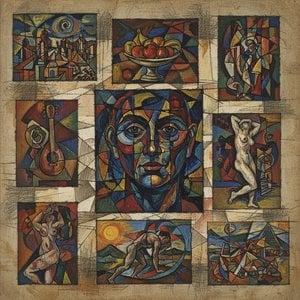
Cubismo Expressionista: 10 Obras-Primas que Moldaram a Arte Moderna | ArtsDot
Descubra as 10 obras-primas do Cubismo Expressionista que revolucionaram a arte moderna! Explore Picasso, Braque e outros mestres. Reproduções de alta qualidade para decorar sua casa com estilo. Explore a coleção completa em ArtsDot.com

Egon Schiele: Expressionism, Anxiety & the Modern Condition – A Comprehensive Exploration
Explore the emotionally charged world of Egon Schiele (1890-1918). Discover his Expressionist masterpieces, psychological themes, and lasting impact on modern art. A comprehensive guide for collectors & enthusiasts.

Expressionismo em Cores: 10 Obras-Primas que Definiram um Movimento Artístico
Descubra as 10 obras-primas do Expressionismo! Explore a emoção e intensidade de Munch, Kirchner, Kandinsky e outros artistas icônicos. Reproduções de arte exclusivas para decorar sua casa com paixão e história em ArtsDot.com.