


 Visualizar em escala
 Enviar
 Compartilhar
 Ver detalhes
 Guia de Obras do Aluno

 Baixar imagem
 Semelhantes
 Raio X
 Apresentação de slides
 Estatísticas
Study


 Ver mais
Giclée / Impressão de Arte
Impressão giclée ou em tela de qualidade de museu, com produção rápida e opções flexíveis de acabamento. ( Encomendar reprodução pintada à mão Ver Imagem Digital)




P118B €10

P118H €10

P118W €10

P438Z €10

P508JH €12

P508YH €12

P805H €10

P805Z €10

P919BZ €10

P919G €10

P919XJ €10

P959ZH €10

P968JZ €12

W106C €8

W218G €10

W218JH €8

W218Y €10

W307PJ €10

W316G €10

W316PJ €8

W316Y €10

W398PJ €8

W4111J €10

W500HY €15

W500JH €15

W692G €12

W849H €8

W940BG €15

W953PJ €8




Escolha entre os nossos tamanhos pré-definidos que respeitam as proporções originais da obra de arte.

Digite a largura e a altura de que necessita, para se ajustar à sua moldura ou à sua parede. Uma impressão só pode ser cortada, nunca ampliada além da imagem original, pelo que um tamanho com uma proporção diferente perderá parte da imagem. Enviamos-lhe uma maquete digital para aprovação antes de imprimirmos qualquer coisa. A imagem apresentada nesta página não mostra o corte real — apenas a maquete o faz.
Entrega mundial () em 2 semanas, em vez das 4/5 semanas padrão. (19 Outubro)

Envio expresso gratuito para todo o mundo

Tela de Linho Premium

Seguro de transporte total

Garantia de Reembolso de Impostos Alfandegários

Garantia de Fidelidade de Cor

Política de Devolução em 100 Dias (Apenas para Defeitos)

Garantia de reembolso de 100%

Desconto para múltiplas unidades
 A opção de vidro está disponível apenas para tamanhos inferiores a 110 cm

Study
Giclée / Impressão de Arte
Dimensões da Reprodução
-


Preço Total
€ 54
Donato Bramante’s Umbrella Vault: A Synthesis of Byzantine Grandeur and Renaissance Innovation
Donato Bramante’s “Umbrella Vault,” executed in 1493 for the Basilica di San Pietro in Montorio, Rome, stands as a pivotal moment in architectural history—a testament to Bramante's masterful assimilation of influences from both Byzantine tradition and burgeoning Renaissance ideals. Situated atop the basilica’s central nave, this monumental fresco represents more than just decorative embellishment; it embodies a profound conceptual shift toward spatial representation that would profoundly impact subsequent artistic endeavors.
The vault itself is conceived as an inverted dome, mirroring the structure of Hagia Sophia in Constantinople—a daring departure from prevailing Roman architectural conventions. Bramante’s intention wasn't merely to replicate Byzantine aesthetics; rather, he sought to elevate them to a new level of sophistication by applying Renaissance geometric principles. The vault’s curvature is meticulously calculated using mathematical formulas derived from Euclid and Apollonius, reflecting the humanist fascination with rational order and demonstrating Bramante’s commitment to reviving classical ideals.
- Geometric Precision: Bramante employed advanced geometry—Euclidean circles and parabolas—to achieve unparalleled accuracy in its construction.
- Symbolic Resonance: The inverted dome symbolizes the heavens, mirroring the Byzantine cathedral’s soaring interior space and reinforcing the basilica's spiritual significance.
- Color Palette: Employing muted hues of ochre, umber, and ivory—characteristic of Renaissance fresco painting—Bramante created a serene atmosphere that complements the vault’s grandeur.
The Basilica Context: A Dialogue Between Faith and Reason
San Pietro in Montorio was originally conceived as a mausoleum for Pope Julius II, commemorating his deceased son Cesare Borgia. However, Bramante swiftly transformed it into a cathedral—a bold decision that underscored the humanist conviction that art could serve both aesthetic pleasure and moral instruction. This architectural undertaking exemplifies the Renaissance’s ambition to reconcile Christian piety with classical erudition.
The basilica's location on Janiculan Hill—one of Rome’s seven hills—holds symbolic importance, reflecting the biblical narrative of Jesus’ ascension into heaven. Bramante deliberately positioned the vault above the nave to emphasize this spiritual dimension, creating a visual metaphor for divine transcendence.
Technique and Artistic Innovation
Bramante's fresco technique involved layering pigments onto wet plaster—a method perfected by Giotto and Brunelleschi—to achieve remarkable luminosity and depth. The artist skillfully utilized sfumato—a subtle blending of colors—to soften contours and create an illusion of atmospheric perspective, enhancing the vault’s visual impact.
Furthermore, Bramante's masterful use of foreshortening—the depiction of objects receding into space—demonstrates his mastery of Renaissance perspectival principles. This technique contributes to the vault’s sense of realism and reinforces its monumental scale, immersing viewers in a captivating illusion of depth.
Emotional Impact: A Vision of Heavenly Harmony
"Umbrella Vault" transcends mere architectural representation; it aspires to evoke contemplation and inspire awe. The vault's harmonious proportions—derived from classical geometry—communicate an idealized vision of beauty and order, reflecting the Renaissance humanist belief in human reason’s capacity to grasp divine truth.
The fresco’s subdued color palette fosters a tranquil mood, inviting viewers to immerse themselves in the basilica’s spiritual atmosphere. Ultimately, Bramante's masterpiece embodies the Renaissance spirit—a celebration of artistic innovation coupled with reverence for religious tradition—leaving an indelible mark on architectural history and continuing to captivate audiences centuries later.
Perguntas e Respostas
Qual é a tonalidade predominante de "Study" de Donato Bramante?
Um tom Ochre to Sepia percorre "Study" de Donato Bramante.
Em que período foi feita a obra "Study" de Donato Bramante?
O período histórico de "Study" de Donato Bramante é Renaissance. Esta classificação situa a obra na história da arte.
Que saturação e intensidade apresenta "Study" de Donato Bramante?
"Study" de Donato Bramante é registrado com uma saturação Clear Color Presence e uma intensidade Vivid.
Obras Relacionadas


![Projeto De Um Orfanato Militar [itália, Projeto: Fachada, Corte E Estudo De Detalhes] — Auguste-henri-victor Grandjean De Montigny, Neoclassicism](/media/artworks/images-thumb/2f/d4/2fd44529898111ac2b1b9866f47323b4.jpg)

Artigos Relacionados

Os 10 Grandes Mestres do Neoclassicismo: Arte, História e Decoração
Descubra os 10 maiores mestres do Neoclassicismo! Explore a história, técnica e beleza de obras icônicas de David, Ingres e Canova. Encontre reproduções de arte neoclássica para decorar sua casa com elegância em ArtsDot.com.
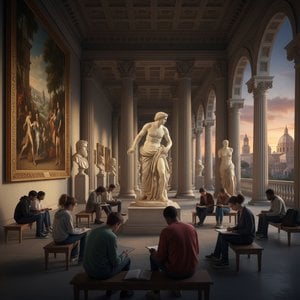
The Enduring Legacy of Classicism: Principles, Evolution & Influence in Western Art
Explore the enduring legacy of Classicism in Western art! Discover its historical context, key principles, iconic masterpieces & lasting influence. Learn about Renaissance and Neoclassical movements with ArtsDot.

The Nuances of Graphite: Exploring Emotional Depth & Technical Mastery in Pencil Drawing
Explore the captivating world of graphite drawing! Discover its rich history, master essential techniques like chiaroscuro, and learn how artists evoke emotion through this timeless medium. Expert insights for art enthusiasts.

The Alchemy of Graphite: An Expert Guide to Mastering Detail and Depth in Pencil Sketching
Unlock the secrets of graphite sketching with our expert guide for art students. Learn to master pencil grades, create realistic depth, and capture intricate textures through professional techniques designed to elevate your observational drawing skills.

The Eloquent Line: Exploring the Artistic Significance of Sketches Across Movements and Media
Explore the profound artistic significance of sketches throughout history. From Renaissance masters to modern innovators like Van Gogh & Guston, discover how these foundational works reveal technique, emotion, and vision. Learn more at ArtsDot.


