

- 348.0 x 570.0 cm


The picture follows your choices: , .
Descrição do Item
Marvel at Donatello's 'Cantoria,' a dynamic marble sculpture from 1439 showcasing angelic figures and intricate details of the Renaissance era. Explore its history & artistry!
 Ler mais
Biografia do Artista
Donatello (1386-1466): Escultor renascentista florentino. Pioneiro na escultura nua independente como o "David", conhecido pelo realismo expressivo, influência clássica e técnicas inovadoras. Explore suas obras-primas e legado!
Reprodução em Óleo Feita à Mão
Óleo sobre tela pintado à mão no tamanho e moldura de sua escolha, feito sob encomenda pelos nossos artistas. ( Alternar para Impressão Alternar para Imagem Digital)
More about this painting
 Compartilhar
 Compartilhar
 Detalhes
 Guia
Guia

 Baixar imagem
 Semelhantes
 Ver diaporama
 Q&A
Q&A Estatísticas
Order your painting in four simple steps
Take your time. You can change any answer; the price in your order card follows each choice.
1 Step one of four
Which size would you like?
These sizes keep the proportions of the original painting. The drawing shows your choice on a wall, above a two-metre sofa.
Or give your own measurements
Escolha entre os nossos tamanhos pré-definidos que respeitam as proporções originais da obra de arte.

Insira a largura e a altura desejadas para se ajustarem à sua moldura ou parede. Como esta obra é pintada à mão, para um tamanho com proporções diferentes, o artista poderá pintar um pouco mais ao redor da imagem ou reduzir ligeiramente a composição — você escolhe. Enviamos uma maquete digital para sua aprovação antes de iniciar a pintura. A imagem exibida nesta página não representa o resultado real — apenas a maquete mostra o resultado final.
2 Step two of four
How should it be prepared: rolled, stretched or framed?
The prices below are for the size you chose in step one.
Choose the edges of the stretched canvas
Choose your frame

White €1

Blurside €1

Extended €1

P118B €10

P118H €10

P118W €10

P438Z €10

P508JH €12

P508YH €12

P805H €10

P805Z €10

P919BZ €10

P919G €10

P919XJ €10

P959ZH €10

P968JZ €12

W106C €8

W218G €10

W218JH €8

W218Y €10

W307PJ €10

W316G €10

W316PJ €8

W316Y €10

W398PJ €8

W4111J €10

W500HY €15

W500JH €15

W692G €12

W849H €8

W940BG €15

W953PJ €8

H24-GOLD €30

H24-SILVER €30

H36-GOLD €45

H36-SILVER €45
Com moldura
Moulding: . Overall size with the frame: .
3 Step three of four
Would you like anything changed in the painting?
Most people answer no. Because each painting is made by hand, our artist can also adapt it for you.
After order, ArtsDot.com team will email client for instructions and provide a mockup preview
4 Step four of four
A few finishing options
All of them are optional. The answers already selected cost nothing extra.
Who paints it?
Entrega mundial () em 3 a 4 semanas, em vez das 5 semanas padrão. (2 Novembro). Sem comprometer a qualidade.
A nameplate, as in a museum?
Detalhes da Placa de Bronze Gravada
This elegant plaque features the artist's name and the title of the artwork, finely engraved for a timeless presentation.
It is made from bronze with a refined, elegant finish. The text is precisely laser-engraved for a sharp and permanent result. Measuring 9x2 cm, the plaque is compact yet easy to read. It's built to be durable and scratch-resistant, offering a professional, museum-quality look. Mounting is simple thanks to the included adhesive backing.
Detalhes da Placa de Acrílico Transparente
The plaque includes essential engraved details such as the artist's name, the title of the artwork, the date it was created, the type of media used-like oil on canvas or watercolor-a brief description of the piece, and a QR code that links to the complete artwork information.
It is crafted from clear acrylic, offering a sleek, modern appearance. The text is UV-engraved in black to ensure strong visual contrast. With a size of 10x15 cm, it ensures optimal readability. It comes equipped with two metal hooks for secure wall mounting. The plaque is designed to be weather-resistant, making it suitable for various environments, and it includes interactive features that work seamlessly with smartphone scanning.
Detalhes da Placa de Acrílico Preto
This elegant plaque includes engraved information such as the artist's name, the title of the artwork, the date it was created, the type of media used (like oil on canvas or watercolor), a short description of the artwork, and a QR code for quick access to more information.
The plaque itself is made from refined black acrylic with a premium finish. The text is laser-engraved in white for high contrast and readability. Its size is 10x15 cm, designed to be easy to read. It comes with two metal hooks for professional mounting. The design is sleek and fits any interior style. It is also weather-resistant and durable, with built-in digital integration for mobile compatibility.
A protective varnish?
When do you need it?
✓ Check and order
Your painting, as you ordered it

Cantoria
Técnica de Reprodução
Tamanho da Reprodução
-

Artista Sênior de Elite
Mais detalhes, refinamento e tempo de produção adicional
-

Moldura para Reprodução
-
-
Para obras de arte ou reproduções com mais de 105 cm (aproximadamente 41 polegadas) em qualquer um dos lados, a moldura será enviada como um kit desmontado. Este método garante uma entrega segura e evita danos durante o transporte.
Montagem profissional necessária — este não é um produto DIY (faça você mesmo).
O kit deve ser montado e a tela esticada por um profissional de molduraria experiente, utilizando cola de madeira (não inclusa), um alicate de esticar tela e grampos para manter as travessas alinhadas enquanto a cola seca. A montagem incorreta ou a tensão desigual da tela podem danificar permanentemente a obra de arte e não estão cobertas pela nossa garantia.
 Para obras de arte ou reproduções com mais de 105 cm (aproximadamente 41 polegadas) em qualquer um dos lados, a moldura será enviada como um kit desmontado. Este método garante uma entrega segura e evita danos durante o transporte.
Todas as barras de madeira maciça estão incluídas, precisamente cortadas ao tamanho certo.
Montado com os parafusos fornecidos, além de cola para madeira para as junções dos cantos, que não está inclusa e deve ser providenciada pelo seu moldurista.
São necessárias ferramentas profissionais não incluídas: um alicate de estiramento de tela (esticador) e grampos para manter as ripas alinhadas enquanto a cola seca.
Importante:
As junções dos cantos requerem cola para madeira, as ripas devem ser mantidas com grampos até que a cola esteja completamente seca, e o estiramento da tela na moldura montada requer um alicate de esticar tela. Nenhum destes itens está incluído no kit. Por favor, certifique-se de contar com um profissional de molduraria experiente antes de encomendar este tamanho.

Etiqueta de identificação
-
-

Verniz de Proteção
Verniz brilhante (realça as cores e protege contra a luz e a umidade)
-

Personalizar minha obra
Exemplos de alterações possíveis: Substituir o rosto por uma foto do cliente; Adicionar um animal de estimação (ex.: substituir gato por cachorro); Incluir uma mensagem oculta no fundo; Alterar a paisagem ou os elementos do fundo.
-

Urgente
Entrega mundial () em 3 a 4 semanas, em vez das 5 semanas padrão. (2 Novembro). Sem comprometer a qualidade.
-
Envio Expresso
Entrega mundial para em 5 semanas. (9 Novembro).
Com envio incluído
Preço Total
€ 234
A opção de vidro está disponível apenas para tamanhos inferiores a 110 cm
Included with every order
- Envio expresso gratuito para todo o mundo
- Tela de Linho de Alta Qualidade
- Seguro de transporte completo
- Garantia de Reembolso de Impostos Alfandegários
- Garantia de Fidelidade Cromática
- Política de Devolução em 100 Dias (Apenas para Defeitos)
- Garantia de reembolso de 100%
- Oferta de desconto por quantidade


The Echoes of Florence: Donatello’s Cantoria
Within the hallowed halls of the Museo dell'Opera del Duomo in Florence resides a sculpture that transcends mere stone and marble – it is an embodiment of Renaissance spirit, a vibrant testament to human aspiration. Donatello’s Cantoria, completed in 1439, isn’t simply a decorative element above a choir; it’s a dynamic narrative carved into the very fabric of space, inviting contemplation on faith, music, and the boundless energy of life itself. Commissioned for the south sacristy of Florence Cathedral, this monumental marble relief stands as a pivotal work, showcasing Donatello's mastery and signaling a dramatic shift in artistic expression.
The sculpture’s genesis lies within the Early Renaissance, a period of profound transformation where classical ideals intertwined with burgeoning humanism. Donatello, deeply influenced by his study of ancient Greek and Roman sculpture, sought to capture not just likeness but also emotion and movement – a departure from the more static representations prevalent in preceding centuries. The Cantoria reflects this ambition; it’s a celebration of earthly joy expressed through the depiction of a bustling scene of singing, dancing, and musical performance. The sheer scale of the work—measuring an impressive 348 x 570 cm—immediately commands attention, drawing the viewer into its intricate world.
A Symphony in Marble: Technique and Design
Donatello’s genius is immediately apparent in his masterful manipulation of marble. The sculpture isn't a smooth, polished surface; instead, it’s characterized by deeply incised lines, dramatic contrasts between light and shadow, and an astonishing level of detail. The figures are not rendered with idealized beauty but rather with a palpable sense of humanity – their faces etched with expressions of delight, exertion, and communal spirit. The use of architectural elements—columns, arches, and a pediment adorned with acanthus leaves—adds to the sculpture’s grandeur, creating a harmonious blend of classical form and Renaissance dynamism.
Notably, Donatello employed a technique known as “spolvero,” using a tool to dust away excess marble, leaving behind delicate lines that define the forms. This method, combined with his meticulous carving, results in an astonishingly lifelike quality, particularly evident in the faces of the figures. The incorporation of glass paste and gilded elements further enhances the visual impact, creating a shimmering effect that seems to imbue the scene with divine light. The frieze depicting dancing putti—winged cherubs—is a particular highlight, their swirling movements conveying an infectious sense of joy and celebration.
Symbolism and Spiritual Resonance
Beyond its technical brilliance, the Cantoria is rich in symbolic meaning. The act of singing and music itself represents praise and devotion to God – a core tenet of Renaissance spirituality. The depiction of diverse human activities—dancing, playing instruments, and engaging in communal rituals—underscores the importance of community and shared experience within the Christian faith. The use of the term “putti” (little spirits) suggests an elevation of these earthly pleasures to a realm of divine grace.
The architectural setting – the choir loft above the sacristy – further amplifies the sculpture’s symbolic significance. It was intended as a space for liturgical music and communal worship, transforming the Cantoria into more than just a decorative element; it became an integral part of the sacred ritual. The overall impression is one of exuberant joy and spiritual elevation, reflecting the Renaissance belief in the potential for human flourishing within a divinely ordained world.
A Legacy Enduring: Reproduction and Inspiration
Today, Donatello’s Cantoria remains a source of inspiration for artists and designers alike. Its dynamic composition, masterful technique, and profound symbolism continue to resonate with audiences across centuries. High-quality reproductions capture the essence of this remarkable sculpture, allowing viewers to appreciate its beauty and complexity in their own homes or studios. Whether admired as a historical artifact or simply enjoyed as a work of art, the Cantoria stands as a timeless testament to the creative genius of Donatello and the enduring power of Renaissance artistry.
Perguntas e Respostas
Que atmosfera uma reprodução de "Cantoria", de Donatello traria para um ambiente?
Com sua atmosfera Elegant, "Cantoria" é sugerida para um(a) Living Room.
Qual é a data e o estilo de "Cantoria", de Donatello?
"Cantoria" foi realizada em 1439, dentro do movimento Early Renaissance.
Que tipo de obra de arte é "Cantoria", de Donatello?
No catálogo, "Cantoria", de Donatello está registrado como Sculpture. A categoria ajuda a encontrar obras semelhantes.


Donatello
1386 - 1466, Itália
Biografia do Artista
Early Life and Artistic Beginnings
Donato di Niccolò di Betto Bardi, universally known as Donatello, emerged from the bustling heart of Florence around 1386 – a city already brimming with artistic innovation and ambition. His early life remains somewhat shrouded in mystery, yet it’s clear that his formative years were deeply intertwined with the burgeoning world of Florentine sculpture. Unlike many artists of his time who benefited from established family legacies, Donatello's origins were modest; his father, Niccolò di Betto Bardi, was a wool carder – a profession rooted in commerce rather than artistic tradition. However, this seemingly unremarkable background provided him with access to the workshops and studios where young sculptors honed their skills. Donatello’s formal training likely began around 1400, finding employment within the workshop of Lorenzo Ghiberti, a master sculptor renowned for his groundbreaking bronze doors for the Florence Cathedral (the Duomo). Ghiberti's studio served as a crucible of artistic experimentation, and Donatello absorbed countless techniques and principles during his time there. He was exposed to the intricate details of classical sculpture – a cornerstone of Renaissance art – alongside the established conventions of Gothic style prevalent at the time. This exposure would profoundly shape his future work, leading him to blend classical ideals with innovative approaches that distinguished him from his contemporaries.Key Works and Artistic Innovations
Donatello’s artistic trajectory truly began to unfold in the mid-1420s, marked by a series of groundbreaking works that challenged established norms and captivated audiences. His most celebrated achievement, undoubtedly, is the bronze *David* – a monumental figure that redefined the representation of the male nude in Western art. Unlike previous depictions of David, which often portrayed him as a youthful shepherd boy, Donatello’s version captured the hero at the moment of confronting Goliath, radiating an aura of intense determination and physical prowess. This wasn't merely a replication of biblical narrative; it was a profound exploration of human potential and courage – a testament to Donatello’s ability to infuse his sculptures with psychological depth. Beyond *David*, Donatello produced a remarkable array of works that showcased his versatility and technical mastery. The *St. Louis of Toulouse* at the Basilica di Santa Croce, for instance, exemplifies his command of classical forms and architectural integration. The sculpture's elegant drapery and serene expression are complemented by a carefully designed classical frame, demonstrating Donatello’s willingness to borrow from antiquity while maintaining his own distinctive style. Similarly, his *Sacrifice of Isaac* for the campanile of Santa Maria del Fiore in Florence is characterized by strikingly realistic portrait details – a departure from the idealized figures common in earlier Renaissance sculpture. The work's dramatic composition and emotional intensity further solidified Donatello’s reputation as a sculptor capable of capturing the essence of human experience.Artistic Style and Historical Context
Donatello’s artistic style evolved through distinct phases, reflecting both his personal development and the broader currents of the Italian Renaissance. Initially, his work exhibited a strong influence from Ghiberti's International Gothic style – characterized by graceful lines and subtle details. However, as he matured, Donatello increasingly embraced classical ideals, incorporating elements of Roman sculpture into his own creations. This shift is particularly evident in *David*, where the figure’s contrapposto stance (a naturalistic pose with weight shifted to one leg) and muscular anatomy are clearly indebted to ancient Greek models. Furthermore, Donatello's style was marked by a willingness to experiment with new techniques and materials. He pioneered the use of “rilievo schiacciato” – a shallow relief technique that created an illusion of depth and volume. This approach allowed him to achieve remarkable detail in smaller works while maintaining a sense of dynamism and spatial awareness. His innovative use of bronze, particularly his mastery of lost-wax casting, further distinguished his work from that of his contemporaries. Donatello’s artistic legacy extends far beyond his individual masterpieces. He profoundly influenced subsequent generations of sculptors, including Michelangelo Buonarroti, who famously declared that “all the artists of Christendom have been imitating Donatello.” His emphasis on realism, psychological depth, and classical ideals helped to shape the course of Renaissance art, leaving an indelible mark on Western artistic tradition.Museums and Artistic Legacy
Donatello’s sculptures are scattered across numerous museums and collections throughout Italy and beyond. The Museo della Collegiata in Empoli houses a remarkable collection of early Italian Renaissance art, including works by Francesco Botticini and Raffaello Botticini – providing valuable insights into Donatello's artistic development. The Museo Nazionale del Bargello in Florence proudly displays *St. George*, a testament to Donatello’s mastery of bronze sculpture. Similarly, the Basilica di Santa Croce in Venice houses the iconic *St. Louis of Toulouse*. The Baptistery of Siena features his relief work, including the dramatic depiction of *The Sacrifice of Isaac*. Finally, the Palazzo Vecchio in Florence retains *Judith Slaying Holofernes*, a powerful and unsettling portrayal of violence and triumph. Donatello’s impact on art history is undeniable. His innovative techniques, expressive figures, and profound understanding of human nature continue to inspire artists and captivate audiences today. He remains one of the most celebrated sculptors of all time – a true pioneer of the Renaissance and a master of his craft.
Artigos Relacionados

The Enduring Form: Exploring Themes & Techniques in Sculpture Across Historical Periods
Explore the rich history of sculpture from ancient masterpieces to contemporary innovations. Discover key techniques, influential artists & investment potential for discerning art collectors.

As 10 Obras em Bronze Mais Icônicas que Transformaram a História da Arte | ArtsDot
Descubra as 10 esculturas em bronze mais influentes da história! Explore a arte de Rodin, Michelangelo e outros mestres. Reproduções de alta qualidade para decorar sua casa com elegância. ArtsDot.
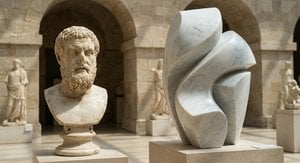
The Enduring Allure of Marble in Art History: From Classical Sculpture to Modern Abstraction
Explore the captivating history of marble sculpture from ancient Greece to modern art. Discover renowned artists like Canova & Michelangelo, carving techniques, and investment insights at ArtsDot.