


 Visualizar em escala
 Enviar
 Compartilhar
 Ver detalhes
 Guia
Guia

 Baixar imagem
 Semelhantes
 Raio X
 Apresentação de slides
 Estatísticas
Sindanglaya
 Other
Other 76.0 x 55.0 cm
 Ver mais
Giclée / Impressão de Arte
Impressão giclée ou em tela de qualidade de museu, com produção rápida e opções flexíveis de acabamento. ( Encomendar reprodução pintada à mão Ver Imagem Digital)




P118B $10

P118H $10

P118W $10

P438Z $10

P508JH $12

P508YH $12

P805H $10

P805Z $10

P919BZ $10

P919G $10

P919XJ $10

P959ZH $10

P968JZ $12

W106C $8

W218G $10

W218JH $8

W218Y $10

W307PJ $10

W316G $10

W316PJ $8

W316Y $10

W398PJ $8

W4111J $10

W500HY $15

W500JH $15

W692G $12

W849H $8

W940BG $15

W953PJ $8




Escolha entre os nossos tamanhos pré-definidos que respeitam as proporções originais da obra de arte.

Você pode inserir suas próprias dimensões para se ajustar a uma moldura ou espaço específico. Se o tamanho selecionado não corresponder às proporções da imagem original, iremos recortar a obra de arte ou estender a imagem com uma borda espelhada ou preenchimento sólido. Um mockup digital será enviado para sua aprovação antes do início da produção.
Por favor, observe que a visualização na tela não reflete o recorte ou a extensão real. Apenas o mockup mostrará com precisão a composição final.
Embora tamanhos personalizados estejam disponíveis, recomendamos selecionar uma dimensão da lista predefinida para preservar as proporções originais.
Entrega mundial () em 2 semanas, em vez das 4/5 semanas padrão. (23 Setembro)

Envio expresso gratuito para todo o mundo

Tela de Linho Premium

Seguro de transporte total

Garantia de Reembolso de Impostos Alfandegários

Garantia de Fidelidade de Cor

Política de Devolução em 100 Dias (Apenas para Defeitos)

Garantia de reembolso de 100%

Desconto para múltiplas unidades
 A opção de vidro está disponível apenas para tamanhos inferiores a 110 cm

Sindanglaya
Giclée / Impressão de Arte
Dimensões da Reprodução
-


Preço Total
$ 62
Obras Relacionadas


Biografia do Artista
The Poetic Soul of Displacement: The Life of Czesław Miłosz
Czesław Miłosz stands as a singular and profound voice in the landscape of twentieth-century literature, a writer whose very essence was shaped by the shifting borders and ethnic tensions of his homeland. Born in 1898 in the region of Wołyń, Poland, his early years were steeped in a world where identity was often caught in the crosswinds of historical upheaval. This formative period instilled within him an enduring sensitivity to the themes of displacement, loss, and the fragility of human existence—themes that would eventually become the heartbeat of his poetic oeuvre. His intellectual journey, which took him from the rigorous academic environments of Moscow and Warsaw to the vibrant, avant-garde circles of Paris, allowed him to weave together a tapestry of diverse cultural influences.
The development of Miłosz’s artistic style was deeply influenced by his exposure to the radical movements of his era. In Paris, during the 1920s, he immersed himself in the complexities of Surrealism and existentialist thought, learning to utilize dreamlike imagery and associative language to confront the difficult truths of reality. His work is characterized by a meticulous observation of the world, paired with a lyrical precision that captures both the beauty of nature and the horrors of human conflict. This duality—the ability to find the sacred within the mundane—is perhaps his greatest technical achievement, as he navigated the tension between the personal lyric and the historical epic.
Themes of Memory, Faith, and the Human Condition
The works of Miłosz are much more than mere verses; they are profound meditations on the weight of history and the persistence of memory. Through collections such as Zniewolony Cień (The Captive Shadow) and Dzienniki Ziemi (Diary of a Land), he grappled with the trauma of war and the complexities of human relationships under the shadow of totalitarianism. His writing often explores the intersection of faith and doubt, reflecting a soul that sought meaning amidst the wreckage of the twentieth century. There is a haunting quality to his exploration of exile, where the loss of a physical homeland mirrors a deeper, spiritual displacement.
Beyond the political and historical, Miłosz’s art is deeply rooted in the folklore and mythology of his Polish-Jewish heritage. This connection to myth allowed him to create a sense of timelessness within his poetry, bridging the gap between ancient tradition and modern catastrophe. His ability to synthesize these elements—the surreal, the historical, and the mythological—ensured that his work resonated far beyond the borders of Poland, touching upon universal truths about the human condition. His literary legacy is defined by this unwavering commitment to witnessing the truth, no matter how harrowing, while maintaining a profound reverence for the light of human consciousness.

czeslaw mystkowski
1898 - 1938
Informações Rápidas
- Artistic Movement Or Style: Watercolor
- Artists Or Movements Influenced By This Artist: ['Catastrophism poetry']
- Artists Who Influenced This Artist: ['École de Paris']
- Date Of Birth: 1898
- Date Of Death: 1938
- Full Name: Czesław Miłosz
- Nationality: Polish
- Notable Artworks: ['Sindanglaya']
- Place Of Birth: Polish eastern land (Wołyń)
Artigos Relacionados

Ephemeral Echoes: Exploring the Aesthetic & Historical Significance of Vintage Watercolor Painting
Explore the captivating world of vintage watercolor painting! Discover its rich history, techniques, influential artists & collecting tips. Expert insights for enthusiasts and collectors at ArtsDot.

Ephemeral Visions: Exploring the History & Emotional Resonance of Watercolor Painting
Explore the captivating history of watercolor painting, from ancient techniques to modern masters like Kandinsky & Blake. Discover essential artists, collecting tips & the emotional power of this luminous medium. Expert insights for art enthusiasts.

Aquarelas Imortais: 10 Obras-Primas que Revolucionaram a Arte | ArtsDot
Descubra as 10 obras-primas em aquarela que revolucionaram a arte! Explore a história de Turner, Cézanne e outros mestres. Encontre reproduções de alta qualidade para decorar sua casa com elegância. ArtsDot: arte atemporal ao seu alcance.

Ephemeral Visions: Exploring the Artistic Legacy & Contemporary Practice of Watercolor Painting
Explore the captivating world of watercolor painting! Discover its rich history, essential techniques, influential artists & collecting tips. A comprehensive guide for art enthusiasts from ArtsDot.
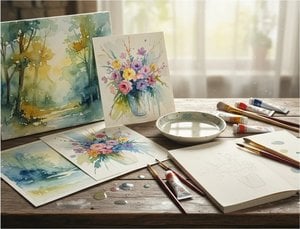
Ephemeral Visions: Exploring the Artistic Legacy & Nuances of Watercolor Painting
Explore the captivating world of watercolor painting! Discover its rich history, essential techniques, influential artists & collecting tips from art experts. A comprehensive guide for enthusiasts.