

 Visualizar em escala
 Enviar
 Compartilhar
 Ver detalhes

 Baixar
 Semelhantes
 Raio X
 Apresentação de slides
Ovidius
 Etching
- Contemporary Realism
 1970
1970- Modern
 58.0 x 48.0 cm
 USC Fisher Museum of Art
 Ver mais
Reprodução em Óleo Feita à Mão
Óleo sobre tela pintado à mão no seu tamanho e moldura, feito sob encomenda pelos nossos artistas. ( Comprar impressão Comprar imagem)




P118B $10

P118H $10

P118W $10

P438Z $10

P508JH $12

P508YH $12

P805H $10

P805Z $10

P919BZ $10

P919G $10

P919XJ $10

P959ZH $10

P968JZ $12

W106C $8

W218G $10

W218JH $8

W218Y $10

W307PJ $10

W316G $10

W316PJ $8

W316Y $10

W398PJ $8

W4111J $10

W500HY $15

W500JH $15

W692G $12

W849H $8

W940BG $15

W953PJ $8




Escolha entre os nossos tamanhos pré-definidos que respeitam as proporções originais da obra de arte.

Pode inserir as suas próprias dimensões para se adequar a uma moldura ou espaço específico. Se o tamanho selecionado não corresponder às proporções da imagem original, iremos cortar a obra de arte ou estender a pintura com elementos adicionais pintados à mão. Um esboço digital será enviado para sua aprovação antes do início da produção.
Tenha em atenção que a pré-visualização no ecrã não reflete o corte ou extensão real. Apenas o esboço mostrará com precisão a composição final.
Embora tamanhos personalizados estejam disponíveis, recomendamos selecionar uma dimensão da lista predefinida para preservar as proporções originais.
Após o pedido, a equipa ArtsDot.com enviará um e-mail ao cliente para solicitar instruções e fornecer uma prévia do esboço.
Entrega mundial () em 3 a 4 semanas, em vez das 5 semanas padrão. (12 Agosto). Sem comprometer a qualidade.

Envio Expresso Gratuito para todo o Mundo

Tela de Linho Premium

Seguro de transporte total

Garantia de Reembolso de Impostos Alfandegários

Garantia de Fidelidade de Cor

Política de Devolução de 60 Dias (Apenas para Defeitos)

Garantia de reembolso de 100%

Desconto para múltiplas unidades
 A opção de vidro está disponível apenas para tamanhos inferiores a 110 cm

Ovidius
Técnica de Reprodução
Dimensões da Reprodução
-


Preço Total
$ 538
Descrição da Obra
A Monument of Mystery: The Etched World of Csaba Rékassy
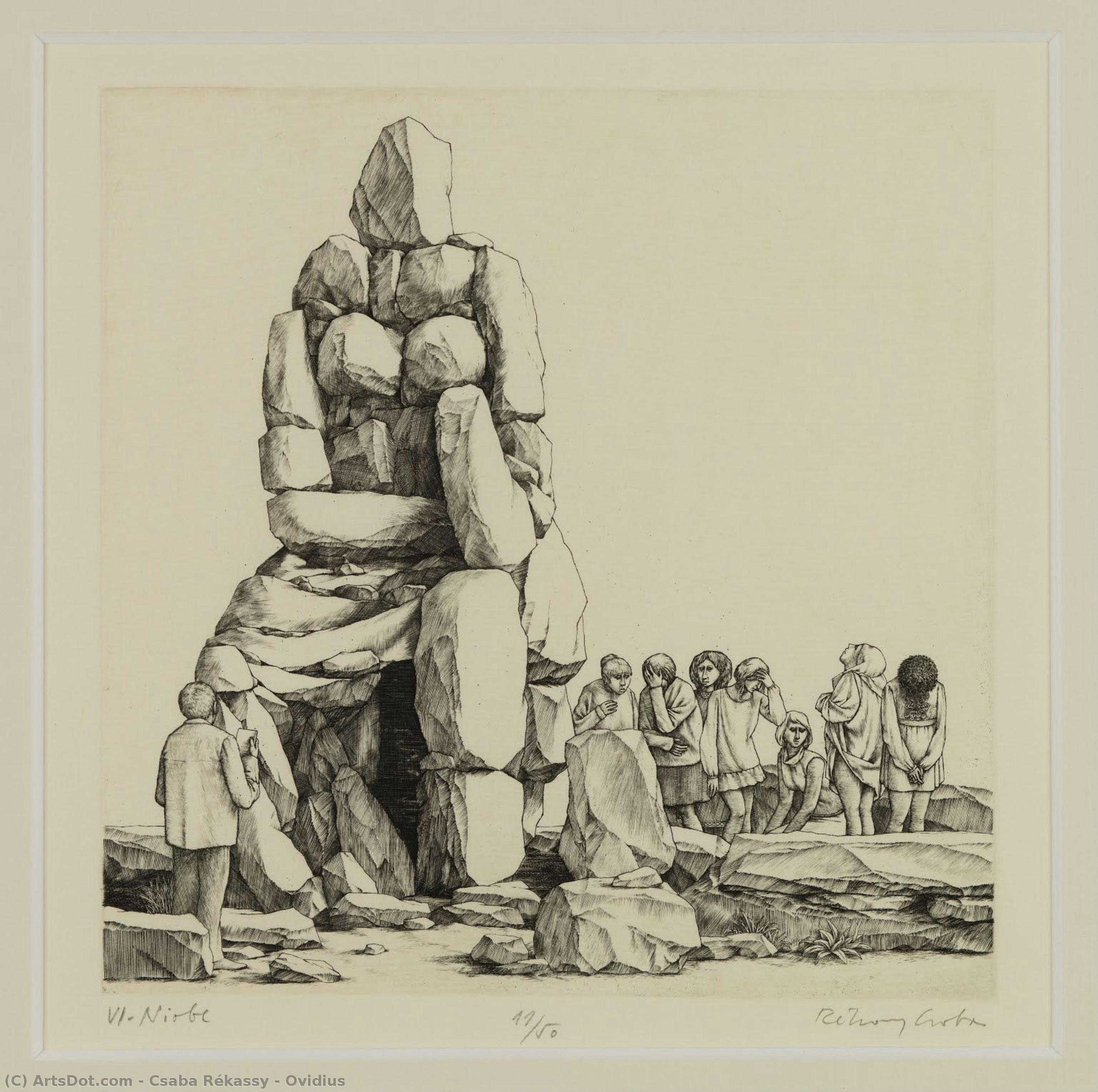
In the quiet, evocative depths of Csaba Rékassy’s 1970 etching, Ovidius, we are transported to a realm where history and myth converge. This masterful work of printmaking does not merely depict a scene; it invites the viewer into a profound moment of human discovery. At the heart of the composition stands an imposing, monolithic rock formation, reminiscent of an ancient Egyptian obelisk or a forgotten monument from a lost civilization. As a group of figures gathers around this colossal structure, their presence serves as a scale for the monumental task of understanding the past. The scene is thick with a sense of curiosity and reverence, capturing that fleeting, breathless instant when humanity encounters the sublime mysteries of antiquity.
The technical brilliance of Rékassy lies in his command over the etching medium, a technique that allows for an unparalleled level of textural detail. Through the meticulous application of fine lines, hatching, and cross-hatching, the artist breathes life into the cold stone and the soft fabrics of the onlookers. The monochromatic palette—a sophisticated dance of black, white, and infinite shades of gray—strips away the distraction of color to focus our attention on form, light, and shadow. This deliberate restraint emphasizes the rugged, angular textures of the central monument, contrasting them against the more rounded, organic forms of the human figures. The result is a composition that feels both physically grounded and spiritually ethereal.
Symbolism and the Echoes of Ovid
The title Ovidius suggests a deep connection to the classical poet Ovid, whose Metamorphoses explored the fluid boundaries between the human and the divine. In this etching, the rock formation acts as a powerful symbol of permanence, power, and the enduring weight of history. It stands as an unyielding witness to the passage of time, much like the legends recorded by Ovid. The figures, caught in various states of contemplation and wonder, represent the eternal human impulse to explore, to decode, and to find meaning within the remnants of what came before us. There is a palpable tension between the ephemeral nature of the people and the eternal presence of the stone.
For the discerning collector or interior designer, this piece offers more than just visual beauty; it provides an intellectual and emotional anchor for a space. The diffused, atmospheric lighting creates a soft, contemplative mood that is perfect for libraries, studies, or sophisticated living areas where one seeks to foster thought and reflection. As a high-quality reproduction, Ovidius brings the somber elegance of Hungarian printmaking tradition into the modern home, offering a window into a world of mystery and a tribute to the timeless beauty of classical inspiration.
Obras Relacionadas


Biografia do Artista
A Master of Hungarian Etching Tradition
Csaba Rékassy (1937 – 1989) stands as a singular figure in Hungarian art history, recognized for his unwavering dedication to the etching technique and his ability to distill classical artistic ideals into strikingly complex compositions. Born in Hungary during a period of significant cultural upheaval, Rékassy’s artistic journey unfolded largely independently, fueled by an innate talent and a profound respect for the heritage of Hungarian painting. Despite limited formal training—he was primarily self-taught—his output demonstrates an astonishing command of printmaking, cementing his place among Hungary's most accomplished artists.- Early Life & Artistic Beginnings: Details about Rékassy’s formative years are scarce, reflecting the challenges faced by artists operating outside established academic circles during that era.
- Notable Works & Artistic Influences: “Ovidius” remains Rékassy's most celebrated achievement. This monumental etching portrays a scene from Ovid’s Metamorphoses, capturing the poet’s dramatic narrative with breathtaking precision and conveying an emotional depth that transcends mere visual representation. Beyond classical influences, Rékassy absorbed inspiration from Hungarian folk art traditions, subtly incorporating elements of Hungarian ornamentation into his compositions. He was particularly drawn to the expressive power of chiaroscuro—the interplay between light and shadow—a technique perfected by Rembrandt and Caravaggio—artists he greatly admired.

csaba rékassy
1937 - 1989 , Hungary
Informações Rápidas
- Artistic Movement Or Style: Classical etching
- Date Of Death: 1989
- Full Name: csaba rékassy
- Nationality: Hungarian
- Notable Artworks:
- Ovidius
- Street scene, paris
- Place Of Birth: Hungary
Artigos Relacionados

As 10 Gravuras Mais Icônicas da História da Arte | ArtsDot
Descubra as 10 gravuras mais influentes da história, de Rembrandt a Goya! Explore a técnica, o contexto e a beleza atemporal dessas obras-primas. Encontre reproduções de alta qualidade para decorar sua casa com arte clássica em ArtsDot.com.

As 10 Pinturas Mais Famosas Dominadas pelo Preto: Arte, História e Decoração
Descubra as 10 pinturas mais icônicas dominadas pelo preto! Explore a história, técnica e emoção por trás de obras-primas do Romantismo, Realismo e Expressionismo. Encontre reproduções de arte exclusivas na ArtsDot.com.

Etching: A Historical Survey of Technique, Aesthetic Qualities & Enduring Artistic Significance
Explore the rich history of etching, from its origins to Rembrandt's masterful innovations. Discover the technique, aesthetic qualities & enduring legacy of this captivating art form. Expert insights for collectors and enthusiasts.

The Intricate World of Etching: A Historical Survey of Technique, Aesthetic Evolution, and Enduring Artistic Impact
Explore the rich history of etching, from its origins to modern practice. Discover techniques, key artists like Rembrandt, and insights for collectors. A comprehensive guide by ArtsDot.

Monochrome Visions: Exploring the Aesthetic & Historical Significance of Black & White Photography
Explore the rich history & artistic power of black and white photography. From early techniques to iconic masters like Ansel Adams, discover why monochrome continues to captivate art lovers today. Expert insights for collectors.

