
- Início

- Impressão em tela
- Cornelis Van Poelenburch
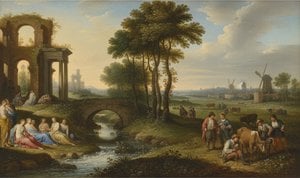
- Landscape with Diana and Callisto

 Encomendar pintura Comprar imagem em alta resolução
 Enviar
 Compartilhar
 Detalhes
 Adicionar aos favoritos

 Baixar
 Semelhantes
 Raio X
 Slideshow
Landscape with Diana and Callisto
 Oil On Canvas
- WallArt
- Baroque
 54.0 x 82.0 cm
 Museu Hermitage
 Ver mais
Giclê / Impressão de Arte
Impressão giclée ou em tela de qualidade de museu, com produção rápida e opções flexíveis de acabamento.




P118B $10

P118H $10

P118W $10

P438Z $10

P508JH $12

P508YH $12

P805H $10

P805Z $10

P919BZ $10

P919G $10

P919XJ $10

P959ZH $10

P968JZ $12

W106C $8

W218G $10

W218JH $8

W218Y $10

W307PJ $10

W316G $10

W316PJ $8

W316Y $10

W398PJ $8

W4111J $10

W500HY $15

W500JH $15

W692G $12

W849H $8

W940BG $15

W953PJ $8




Escolha entre os nossos tamanhos pré-definidos que respeitam as proporções originais da obra de arte.

Você pode inserir suas próprias dimensões para se ajustar a uma moldura ou espaço específico. Se o tamanho selecionado não corresponder às proporções da imagem original, iremos recortar a obra de arte ou estender a imagem com uma borda espelhada ou preenchimento sólido. Um mockup digital será enviado para sua aprovação antes do início da produção.
Por favor, observe que a visualização na tela não reflete o recorte ou a extensão real. Apenas o mockup mostrará com precisão a composição final.
Embora tamanhos personalizados estejam disponíveis, recomendamos selecionar uma dimensão da lista predefinida para preservar as proporções originais.
Entrega mundial () em 2 semanas, em vez das 4/5 semanas padrão. (2 Julho)

Envio Expresso Gratuito para todo o Mundo

Tela de Linho Premium

Seguro de envio completo

Garantia de Reembolso de Impostos Alfandegários

Garantia de Fidelidade de Cores

Política de Devolução de 60 Dias (Apenas para Defeitos)

Garantia de 100% de Reembolso

Desconto para múltiplas unidades
 A opção de vidro está disponível apenas para tamanhos inferiores a 110 cm

Landscape with Diana and Callisto
Giclê / Impressão de Arte
Dimensões da Reprodução
-


Preço Total Final
-
Descrição da Obra
Landscape with Diana and Callisto – A Baroque Masterpiece
Cornelis van Poelenburch’s “Landscape with Diana and Callisto,” painted circa 1630, stands as a testament to the burgeoning artistic fervor of the Dutch Golden Age and embodies the stylistic hallmarks of its era. More than just a depiction of a serene Italian hillside—though undeniably inspired by the picturesque landscapes favored during van Poelenburch’s formative years in Rome—the painting delves into profound mythological themes, exploring notions of divine retribution and human vulnerability within a meticulously crafted visual framework.Composition and Technique: Embracing Dynamic Movement
The artwork's composition is remarkably balanced, prioritizing a central group of figures – Diana and Callisto – nestled amongst rocky outcrops that dominate the mid-ground. These figures are positioned strategically to draw the viewer’s gaze upwards towards a hazy horizon line, creating an illusion of depth that anchors the scene in its surroundings. Van Poelenburch skillfully employs linear perspective, subtly diminishing size as objects recede into the distance, reinforcing this sense of spatial realism. Furthermore, he utilizes layering and blending techniques with oil paint on canvas—a technique common for his time—to achieve smooth transitions between colors and tones. Visible brushstrokes contribute to textural richness, particularly in the depiction of foliage and rock surfaces, hinting at the artist’s dedication to capturing natural detail.Historical Context: Roman Influence and Mythological Narrative
Van Poelenburch's journey to Rome profoundly impacted his artistic sensibilities, aligning him with a cohort of painters who sought inspiration from classical traditions. Like many artists of his generation, he embraced the Italianate landscape style—characterized by idealized vistas populated by diminutive figures enacting biblical or mythological narratives—demonstrating an awareness of artistic precedents and a desire to elevate his work beyond mere topographical representation. The scene portrays Diana, goddess of the hunt, confronting Callisto, Zeus’s wife who was seduced by Jupiter and subsequently impregnated – a tale rife with symbolism concerning divine justice and mortal transgression.Symbolism: Reflections on Time and Divine Judgment
The inclusion of ruined architectural structures—likely Roman columns—adds another layer of significance to the composition. These remnants serve as visual reminders of past glories, symbolizing the inevitable decay of civilizations and prompting contemplation about mortality. The figures’ expressions convey a palpable sense of vulnerability alongside serene observation, suggesting an emotional resonance that transcends the narrative itself. Diana's gaze is directed towards Callisto, embodying divine scrutiny and hinting at the consequences of defying celestial law.Emotional Impact: Tranquility Amidst Dramatic Narrative
Ultimately, “Landscape with Diana and Callisto” succeeds in conveying a captivating blend of tranquility and drama. Despite the weighty mythological subject matter—the confrontation between goddess and mortal—the painting’s muted color palette and diffused lighting evoke a feeling of contemplative stillness. It invites viewers to immerse themselves in the beauty of the Italian landscape while simultaneously pondering the timeless themes of morality, retribution, and human experience – qualities that continue to resonate with audiences today.Obras Relacionadas


Biografia do Artista
primeiros anos e formação
cornelis van poelenburgh, um proeminente pintor de paisagens holandês, nasceu em utrecht, na holanda, em 1594. seus primeiros passos no mundo das artes foram guiados pelo mestre abraham bloemaert, um artista de renome na época. este aprendizado fundamental foi o alicerce sobre o qual van poelenburch construiu seu futuro sucesso artístico.carreira artística e influências
as viagens de van poelenburch a roma, no início do século XVII, exerceram uma influência profunda em sua obra, consolidando-o como um dos principais representantes da primeira geração de pintores de paisagens holandeses que atuaram na Itália. suas pinturas de pequena escala, que frequentemente apresentam paisagens italianizadas habitadas por pequenas figuras encenando cenas bíblicas ou mitológicas, revelam um estilo único e encantador. obras notáveis:- satyrs spying on nymphs (após 1627), um exemplo característico do trabalho de van poelenburch, apresentando paisagens arcaicas com figuras em banho. (ver no ArtsDot)
- council of the gods (c. 1630), uma pintura que exibe a paisagem montanhosa idealizada de van poelenburch e deusas inspiradas no mundo romano, atualmente preservada no mauritshuis (haia, holanda). (ver no ArtsDot)
legado e últimos anos
a obra de van poelenburch era altamente estimada por seus contemporâneos, incluindo o grão-duque da toscana e o stadholder holandês. ele retornou posteriormente a utrecht, onde faleceu em 1667, apenas alguns anos após seu antigo mestre abraham bloemaert. pontos principais:- nascido em utrecht, holanda, em 1594
- treinado com abraham bloemaert
- influenciado por seu período em roma
- conhecido por paisagens italianizadas de pequena escala com figuras
- faleceu em utrecht em 1667 ver obras de cornelis van poelenburch no ArtsDot saiba mais sobre cornelis van poelenburgh na wikipedia

Cornelis Van Poelenburch
1594 - 1667 , Países Baixos
Informações Rápidas
- Artistic Movement Or Style: Paisagem Holandesa, Romanista
- Artists Or Movements Influenced By This Artist: ['Claude Lorraine']
- Artists Who Influenced This Artist: ['Abraham Bloemaert']
- Date Of Birth: 1594, Utrecht, Países Baixos
- Date Of Death: 1667, Utrecht, Países Baixos
- Full Name: Cornelis van Poelenburgh
- Nationality: Holandesa
- Notable Artworks:
- Sátiros espiando ninfas
- Conselho dos deuses
- Place Of Birth: Utrecht, Países Baixos
Artigos Relacionados
Cornelis van Poelenburch: Bridging Mannerism & the Dutch Baroque Landscape
Discover Cornelis van Poelenburch, a pivotal Dutch Baroque landscape painter bridging Mannerism & Italianate styles. Explore his life, key works, and lasting influence on 17th-century art with ArtsDot.

The Dramatic Vista: Exploring Emotion, Power & Technique in Baroque Landscape Painting
Explore the dramatic power of Baroque landscape painting! Discover Rembrandt, Vermeer & Caravaggio's techniques, symbolism & lasting influence. Expert insights for art lovers & collectors at ArtsDot.

Victor Vasnetsov: Myth, Nationalism & the Revival of Russian Fairy Tale Painting
Explore the captivating world of Victor Vasnetsov, a co-founder of Russian folklorist painting. Discover his iconic works, influence on national identity, and lasting legacy in this expert guide.

Echoes of Olympus: Mythological Narratives in Western Art Through the Ages
Explore the captivating history of mythological narratives in Western art! From ancient Greece to modern masterpieces, discover iconic artworks & symbolism. Expert analysis and high-quality reproductions at ArtsDot.

The Visceral Stage: Exploring Dramatic Narratives & Emotional Intensity in Baroque Art
Explore the dramatic world of Baroque art! Discover iconic masters like Caravaggio & Rembrandt, their techniques, and the movement's lasting impact. Expert insights for collectors & enthusiasts at ArtsDot.

