Visualizar em escala
 Enviar
 Compartilhar
 Ver detalhes
 Guia de Obras do Aluno

 Baixar imagem
 Semelhantes
 Raio X
 Apresentação de slides
 Estatísticas
Springime


 Ver mais
Reprodução em Óleo Feita à Mão
Óleo sobre tela pintado à mão no tamanho e moldura de sua escolha, feito sob encomenda pelos nossos artistas. ( Alternar para Impressão Ver Imagem Digital)




P118B €10

P118H €10

P118W €10

P438Z €10

P508JH €12

P508YH €12

P805H €10

P805Z €10

P919BZ €10

P919G €10

P919XJ €10

P959ZH €10

P968JZ €12

W106C €8

W218G €10

W218JH €8

W218Y €10

W307PJ €10

W316G €10

W316PJ €8

W316Y €10

W398PJ €8

W4111J €10

W500HY €15

W500JH €15

W692G €12

W849H €8

W940BG €15

W953PJ €8




Escolha entre os nossos tamanhos pré-definidos que respeitam as proporções originais da obra de arte.

Digite a largura e a altura de que necessita, para se ajustar à sua moldura ou à sua parede. Esta obra é pintada à mão, por isso, para um tamanho com uma proporção diferente, o artista pode pintar um pouco mais ao redor da imagem ou cortar um pouco — você escolhe. Enviamos-lhe uma maquete digital para aprovação antes de a pintura começar. A imagem exibida nesta página não mostra o resultado real — apenas a maquete mostra.
Após o pedido, a equipa ArtsDot.com enviará um e-mail ao cliente para solicitar instruções e fornecer uma prévia do esboço.
Entrega mundial () em 3 a 4 semanas, em vez das 5 semanas padrão. (19 Outubro). Sem comprometer a qualidade.

Envio expresso gratuito para todo o mundo

Tela de Linho Premium

Seguro de transporte total

Garantia de Reembolso de Impostos Alfandegários

Garantia de Fidelidade de Cor

Política de Devolução em 100 Dias (Apenas para Defeitos)

Garantia de reembolso de 100%

Desconto para múltiplas unidades
 A opção de vidro está disponível apenas para tamanhos inferiores a 110 cm

Springime
Técnica de Reprodução
Dimensões da Reprodução
-


Preço Total
€ 229
A Moment of Renewal: Introducing Charles Edward Conder’s “Springime”
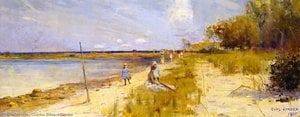
Charles Edward Conder's "Springime," painted in 1892, isn’t merely a depiction of springtime; it’s an immersion into the very essence of renewal. This oil on canvas, currently residing within the hallowed halls of the Tate Gallery in London, captures a fleeting moment of vibrant beauty – a celebration of burgeoning life against a backdrop of warm, inviting hues. Conder, a pivotal figure in Australia's Heidelberg School movement, masterfully blends Impressionistic techniques with a distinctly Australian sensibility, creating an artwork that resonates with both tranquility and dynamic energy.
The painting immediately draws the eye to its foreground: a profusion of delicate pink blossoms clustered around a graceful tree. These aren’t simply flowers; they are symbols of rebirth, mirroring the season's promise of new beginnings. Behind this vibrant display, a smaller, more distant tree provides depth and scale, anchoring the scene within a broader landscape. The careful layering of colors – from the warm yellows dominating the sky to the subtle greens of the foliage – establishes a harmonious balance between light and shadow, creating an atmosphere that is both luminous and deeply felt.
The Heidelberg School: A New Vision of Australian Art
To fully appreciate “Springime,” it’s crucial to understand its context within the Heidelberg School. Emerging in late 19th-century Australia, this group of artists sought to capture the unique beauty and spirit of their homeland – a landscape vastly different from the European traditions dominating the art world at the time. Rejecting academic formality, they embraced *plein air* painting, working directly outdoors to observe and record nature’s nuances with immediacy and sensitivity. Conder, along with Tom Roberts and Frederick McCubbin, became central figures in this movement, developing a distinctive style characterized by loose brushstrokes, vibrant colors, and an emphasis on everyday Australian life.
Conder's work often reflected his own experiences – his early years in India, his move to Australia, and his travels throughout Europe. “Springime,” however, feels distinctly rooted in the Australian landscape, capturing not just a visual representation but also a feeling of optimism and connection to the natural world. The painting’s composition subtly evokes the vastness of the Australian outback, hinting at both its beauty and its inherent challenges.
Technique and Symbolism: A Dance of Light and Color
Conder's masterful use of color is a defining characteristic of “Springime.” He employs broken brushstrokes to create an impressionistic effect, allowing the colors to blend and shimmer in the viewer’s eye. The warm yellows and oranges of the sky are juxtaposed with the cooler greens and pinks of the foliage, creating a dynamic interplay of light and shadow. The artist's attention to detail is evident in the delicate rendering of the flowers and leaves, as well as the subtle variations in tone that suggest depth and texture.
Beyond its aesthetic qualities, “Springime” carries symbolic weight. The blossoming tree represents hope and regeneration, while the distant landscape suggests a connection to something larger than oneself. The painting’s overall mood is one of serenity and contemplation – an invitation to pause and appreciate the simple beauty of nature. It's a testament to Conder's ability to capture not just what he saw but also what he felt.
Bringing “Springime” Home: Reproductions and Artistic Inspiration
“Springime” is more than just a painting; it’s an experience. High-quality reproductions offer a remarkable way to bring this captivating artwork into your home or office, adding a touch of timeless beauty and tranquility to any space. Whether you're drawn to the painting's vibrant colors, its evocative symbolism, or simply its undeniable charm, “Springime” is sure to inspire and delight.
Perguntas e Respostas
Os direitos autorais de "Springime" de Charles Edward Conder permitem reproduções?
"Springime" de Charles Edward Conder, pertencente ao Tate Gallery, está em em domínio público - seus direitos autorais expiraram. Este status determina se reproduções da imagem podem ser feitas.
Para qual ambiente "Springime" de Charles Edward Conder é recomendado, considerando as suas cores?
Considerando as suas cores Earthy, "Springime" é sugerida para um(a) Living Room.
"Springime", de Charles Edward Conder, está em domínio público? E por quê?
"Springime" de Charles Edward Conder está em em domínio público - seus direitos autorais expiraram. O período de direitos autorais conta a partir do falecimento do artista, ocorrido em 1909.
Obras Relacionadas


Biografia do Artista
early life and artistic journey
Charles Edward Conder (1868 - 1909) foi um pintor, litógrafo e designer inglês nascido em Londres, filho do segundo de seis filhos, James Conder, engenheiro civil e Mary Ann Ayres. Passou anos na Índia como criança antes da morte de sua mãe em 14 maio 1873 em Bombaim, quando ele tinha apenas quatro anos; foi enviado de volta à Inglaterra e frequentou várias escolas incluindo uma escola preparatória em Eastbourne, onde estudou desde 1877. Abandonou a escola aos quinze anos e seu pai religioso, contra suas naturais inclinações artísticas, decidiu que deveria seguir seus passos como engenheiro civil.
artistic career in australia
Em 1884, aos dezesseis anos, foi enviado para Sydney, Austrália, onde trabalhou para seu tio, um topógrafo do governo da Nova Gales do Sul. No entanto, ele não gostou do trabalho, preferindo desenhar o cenário em vez de realizar levantamentos. Em 1886, deixou o emprego e tornou-se artista para o *Illustrated Sydney News*, onde estava na companhia de outros artistas como Albert Henry Fullwood, Frank Mahony e Benjamin Edwin Minns. Também frequentou as aulas de pintura de Alfred James Daplyn e juntou-se à Sociedade Artística da Nova Gales do Sul, participando de excursões pictóricas com Julian Ashton.
the heidelberg school and notable works
Conder tornou-se um pintor australiano importante no início do século XX. Sua obra mais famosa é *Departure of the Orient – Circular Quay* (1888), uma cena portuária que captura o movimento e a luz da hora do pôr do sol em Sydney Cove. Esta pintura foi adquirida pelo Art Gallery of New South Wales, marcando seu primeiro trabalho a entrar em uma coleção pública e consolidando sua posição como um dos principais artistas da Escola Heidelberg.
legacy and later life
Conder passou seus últimos anos na Europa, principalmente Inglaterra, mas visitou França várias vezes. Sua saúde deteriorou-se constantemente devido à sífilis, que o acompanhou até o fim de sua vida e impediu que ele continuasse pintando. Apesar disso, Conder produziu obras significativas que permanecem como testemunhos de uma época e um artista excepcional.

Charles Edward Conder
1868 - 1909 , Reino Unido
Informações Rápidas
- Artistic Movement Or Style: Heidelberg School
- Artists Who Influenced This Artist:
- Alfred Daplyn
- Victor Mann
- Julian Ashton
- Date Of Birth: October 24, 1868
- Date Of Death: February 9, 1909
- Full Name: Charles Edward Conder
- Nationality: British
- Notable Artworks:
- Departure of the Orient – Circular Quay
- A holiday at Mentone
- Under The Southern Sun
- Place Of Birth: Tottenham, United Kingdom
Artigos Relacionados

John Constable: As 25 Obras-Primas que Definem o Mestre da Paisagem Inglesa | ArtsDot
Descubra as 25 obras-primas de John Constable, o mestre da paisagem inglesa! Explore a arte romântica, cores vibrantes e histórias fascinantes por trás de 'Hay Wain' e outras pinturas icônicas. Encontre reproduções de alta qualidade para decorar sua casa com ArtsDot.com.

Os 10 Mestres da Paisagem Romântica: Arte para Inspirar a Sua Casa
Descubra os 10 quadros mais emblemáticos da Paisagem Romântica! Explore a história de Turner, Friedrich e outros mestres. Encontre reproduções de arte exclusivas para inspirar sua decoração em ArtsDot.com.

Stephen Bone: A Reassessment of Colour, Form & the British Neo-Romantic Landscape Tradition
Explore the vibrant world of Stephen Bone (1904-1958), a key figure in British Neo-Romanticism. Discover his captivating landscapes, impactful war art & unique artistic style. Learn about his life, influences & legacy.

Edward Hopper: As 25 Obras-Primas que Definem a Alma Americana | ArtsDot
Descubra as 25 obras-primas de Edward Hopper, o mestre do realismo americano. Explore a atmosfera melancólica, luz e sombra em quadros icônicos como 'Nighthawks'. Encontre reproduções de arte exclusivas para decorar sua casa com ArtsDot.com.

Edward Wilkins Waite: A Victorian Vision of Surrey's Serene Landscapes & Artistic Legacy
Explore the serene landscapes of Edward Wilkins Waite (1854-1924), a prolific Victorian painter celebrated for his depictions of Surrey's countryside. Discover his artistic influences, career highlights & collecting guide.