

 Visualizar na parede
 Compartilhar
 Compartilhar
 Detalhes
 Guia
Guia

 Baixar imagem
 Semelhantes
 Raio X
 Ver diaporama
 Perguntas e Respostas
 Estatísticas
neubrandenburg

 Ler mais
Giclée / Impressão de Arte
Impressão giclée ou em tela de qualidade de museu, com produção rápida e opções flexíveis de acabamento. ( Comprar pintura feita à mão Alternar para Imagem Digital)




P118B €10

P118H €10

P118W €10

P438Z €10

P508JH €12

P508YH €12

P805H €10

P805Z €10

P919BZ €10

P919G €10

P919XJ €10

P959ZH €10

P968JZ €12

W106C €8

W218G €10

W218JH €8

W218Y €10

W307PJ €10

W316G €10

W316PJ €8

W316Y €10

W398PJ €8

W4111J €10

W500HY €15

W500JH €15

W692G €12

W849H €8

W940BG €15

W953PJ €8




Escolha entre os nossos tamanhos pré-definidos que respeitam as proporções originais da obra de arte.

Insira a largura e a altura desejadas para se ajustarem à sua moldura ou parede. Uma impressão pode ser apenas cortada, nunca ampliada além da imagem original; portanto, um tamanho com proporções diferentes resultará na perda de parte da imagem. Enviamos uma maquete digital para sua aprovação antes de realizarmos a impressão. A imagem exibida nesta página não mostra o corte real — apenas a maquete o faz.
Entrega mundial () em 2 semanas, em vez das 4/5 semanas padrão. (12 Novembro)

Envio expresso gratuito para todo o mundo

Tela de Linho de Alta Qualidade

Seguro de transporte completo

Garantia de Reembolso de Impostos Alfandegários

Garantia de Fidelidade Cromática

Política de Devolução em 100 Dias (Apenas para Defeitos)

Garantia de reembolso de 100%

Oferta de desconto por quantidade
 A opção de vidro está disponível apenas para tamanhos inferiores a 110 cm

neubrandenburg
Giclée / Impressão de Arte
Tamanho da Reprodução
-


Preço Total
€ 56
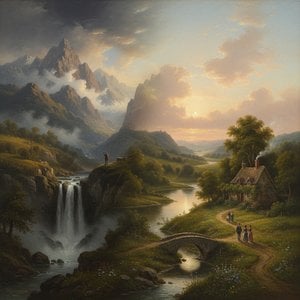
A Vista of Quietude: Exploring Caspar David Friedrich’s *neubrandenburg*
This evocative landscape by Caspar David Friedrich transports viewers to a serene yet subtly melancholic world. *neubrandenburg* is not merely a depiction of a town and its cathedral; it's an exploration of humanity’s place within the vastness of nature, a hallmark of the Romantic era. The painting presents a distant view of Neubrandenburg, dominated by the imposing spire of its cathedral, set against a dramatic skyscape.Style & Historical Context
Friedrich was a pivotal figure in the German Romantic movement (early 19th century), a period characterized by an emphasis on emotion, individualism, and the sublime power of nature. Rejecting the Enlightenment’s focus on reason, Romantics sought spiritual truth through experiencing the natural world. *neubrandenburg* exemplifies this ethos. The painting's style leans heavily into Romantic ideals – it isn’t a precise topographical rendering but rather an emotional response to the landscape. This was a time of significant societal shifts; the rise of industrialization and urbanization led many to yearn for a connection with the unspoiled beauty of nature, which Friedrich masterfully captures. His work often served as a counterpoint to the increasingly materialistic world.Composition & Technique
The composition is powerfully structured around horizontal lines – the horizon dividing the scene into foreground, middle ground and background. This reinforces the sense of expansive space. The small figures in the lower right corner are crucial; they provide a scale reference, emphasizing the immensity of the landscape and subtly suggesting human insignificance within it. Friedrich’s technique is characterized by loose brushstrokes and a muted color palette. He expertly employs atmospheric perspective – colors become paler and less saturated with distance – to create a convincing illusion of depth. The oil on canvas medium allows for rich texture and nuanced tonal variations, particularly in the swirling clouds that dominate the sky.Symbolism & Interpretation
The cathedral spire is arguably the focal point, rising above the town as a symbol of faith and spiritual aspiration. However, its distance and relative smallness within the vast landscape suggest a questioning of traditional religious authority. The dramatic sky, transitioning from dark greys to golden hues, can be interpreted as representing both hope and uncertainty – the transient nature of life itself. The figures in the foreground, seemingly lost in contemplation, invite viewers to share their quiet introspection. Friedrich frequently used landscapes not just as representations of places but as mirrors reflecting inner emotional states.Emotional Impact & Legacy
*neubrandenburg* evokes a sense of peaceful solitude and contemplative melancholy. It’s a painting that encourages viewers to pause, reflect, and connect with the natural world on a deeper level. The work's enduring appeal lies in its ability to tap into universal human emotions – awe, wonder, and a longing for something beyond the material realm. Friedrich’s influence can be seen in subsequent artistic movements, including Symbolism and Expressionism, and his landscapes continue to inspire artists and viewers alike today. A reproduction of this painting would bring a sense of tranquility and intellectual depth to any interior space.Perguntas e Respostas
Qual é a tonalidade predominante que percorre "neubrandenburg", de Caspar David Friedrich?
A tonalidade dominante de "neubrandenburg", de Caspar David Friedrich é Ochre to Sepia. A tonalidade é o tom subjacente da paleta.
Qual é a luminosidade de "neubrandenburg", de Caspar David Friedrich?
As cores de "neubrandenburg" apresentam uma luminância Gentle Luminance.
"neubrandenburg", de Caspar David Friedrich é uma composição em formato retrato, paisagem ou quadrada?
"neubrandenburg", de Caspar David Friedrich é uma composição em Portrait. Vale a pena conferir as proporções antes de escolher o tamanho da impressão.
Obras Relacionadas


Biografia do Artista
Uma Visão Solitária
Nascido na cidade portuária báltica de Greifswald em 1774, os primeiros anos de Caspar David Friedrich foram moldados por um profundo sentimento de perda. As mortes de sua mãe e de seus irmãos lançaram uma longa sombra sobre sua juventude, fomentando uma sensibilidade à mortalidade que se tornaria um tema central em sua obra. Ele iniciou seu treinamento sob a tutela de seu irmão Christian antes de buscar a arte e a teologia na Universidade de Leipzig. Embora não tenha concluído nenhum dos dois cursos, esse interesse dual pelo visual e pelo espiritual definiria seu caminho criativo. Suas habilidades técnicas foram ainda mais refinadas em Copenhague, onde foi exposto a tradições de paisagem que acabaria por transformar em um meio para expressar estados emocionais internos.
Sua abordagem da paisagem afastou-se do detalhe meticuloso favorecido por seus predecessores. Em vez disso, ele buscou imbuir o cenário com significado simbólico, utilizando elementos naturais para representar a alma humana. Ele frequentemente empregava Rückenfiguren — figuras vistas de costas — para convidar o espectador a compartilhar uma experiência contemplativa. Sua paleta, frequentemente composta por azuis suaves, cinzas e marrons, realçava o clima de introspecção e solenidade que permeia sua obra. Ele não pintava apenas o que via; ele pintava o clima interno do espírito humano.
A Linguagem do Sublime
A obra de Friedrich enfatiza o sublime, buscando uma conexão espiritual através da escala do mundo natural. Suas composições frequentemente colocam figuras solitárias contra uma paisagem vasta e, muitas vezes, avassaladora. Em "Wanderer above the Sea of Fog" (c. 1818), a figura silhuetada confronta um mar de névoa turbulhenta, personificando a tensão entre a presença humana e o infinito. "The Sea of Ice" (1824) apresenta um desolador ermo Ártico, uma representação do poder imenso da natureza e de sua indiferença ao destino humano. Essas obras refletem uma preocupação com a fragilidade da existência e a busca por significado dentro da paisagem.
Suas pinturas frequentemente utilizam elementos específicos para transmitir esses estados internos:
- "The Abbey in the Oakwood" (1809-1810), onde um cemitério de igreja em ruínas e árvores nuas sugerem a mortalidade e a decadência espiritual.
- "Chalk Cliffs on Rügen" (1818), que utiliza a luz atmosférica para definir a costa.
- "The Watzmann," uma representação da majestade das montanhas.
- "Evening Landscape with Two Men" (1830), uma cena tranquila de contemplação ao crepúsculo.
Legado e Redescoberta
A trajetória da carreira de Friedrich não foi uma ascensão constante. Embora tenha alcançado reconhecimento durante sua vida, sua popularidade diminuiu à medida que os gostos artísticos se voltavam para outros movimentos. Ele morreu em Dresden em 1840 e, por um tempo, seu nome desapareceu do primeiro plano do mundo da arte. Sua reputação passou por uma redescoberta significativa no final do século XX, quando foi reconhecido como uma figura central no Romantismo alemão. Sua ênfase na experiência subjetiva e na expressão emocional abriu caminho para movimentos posteriores, incluindo o Simbolismo e o Surrealismo.
Sua influência estendeu-se a artistas que buscavam explorar o mundo interior através de meios visuais. Ao rejeitar o racionalismo do Iluminismo em favor da emoção e da imaginação, ele capturou o espírito de uma era. Suas paisagens serviram como símbolos de identidade nacional durante um período de fragmentação política na Alemanha. Hoje, sua obra continua a ressoar, lembrando ao público a profunda conexão entre a humanidade e o mundo natural.

Caspar David Friedrich
1774 - 1840 , Alemanha
Dados Rápidos
- Artistic Movement Or Style: Romantismo
- Artists Or Movements Influenced By This Artist:
- Simbolistas
- Surrealistas
- Artists Who Influenced This Artist:
- Mestres Holandeses
- J.C. Dahl
- Date Of Birth: 1774
- Date Of Death: 1840
- Full Name: Caspar David Friedrich
- Nationality: Alemã
- Notable Artworks:
- Abadia no Carvalho
- Caminhante sobre o Mar de Névoa
- Penhascos de Giz em Rügen
- O Mar de Gelo
- Place Of Birth: Greifswald, Alemanha
Artigos Relacionados

Evoking Nature's Sublime: A Comprehensive Exploration of 19th-Century Landscape Painting
Explore the captivating world of 19th-century landscape painting! Discover renowned artists like Friedrich & Monet, key movements, and find the perfect artwork to bring nature's serenity into your home. Expert insights at ArtsDot.

The Sublime and the Picturesque: Exploring Emotion & Nature in Romantic Landscape Painting
Explore the emotional power of Romantic landscape painting! Discover the sublime & picturesque traditions, key artists like Friedrich & Cole, and find your perfect artwork at ArtsDot.

Os 10 Mestres da Paisagem Romântica: Arte para Inspirar a Sua Casa
Descubra os 10 quadros mais emblemáticos da Paisagem Romântica! Explore a história de Turner, Friedrich e outros mestres. Encontre reproduções de arte exclusivas para inspirar sua decoração em ArtsDot.com.
The Sublime and the Picturesque: Exploring Emotion & Nature in Romantic Landscape Painting
Explore the emotional power of Romantic landscape painting! Discover the sublime & picturesque aesthetics, key artists like Friedrich & Cole, and lasting influence on art history. Find your perfect piece at ArtsDot.

Caspar David Friedrich: Romanticism's Master of Landscape & the Sublimity of Inner Experience
Explore the profound landscapes of Caspar David Friedrich, a master of German Romanticism. Discover the symbolism, themes & enduring influence of this iconic artist. A deep dive into his life and work.


