

 Visualizar na parede
 Compartilhar
 Compartilhar
 Detalhes
 Guia
Guia

 Baixar imagem
 Semelhantes
 Raio X
 Ver diaporama
 Perguntas e Respostas
 Estatísticas
Woman in park

- 38.0 x 23.0 cm


 Ler mais
Giclée / Impressão de Arte
Impressão giclée ou em tela de qualidade de museu, com produção rápida e opções flexíveis de acabamento. ( Comprar pintura feita à mão Alternar para Imagem Digital)




P118B €10

P118H €10

P118W €10

P438Z €10

P508JH €12

P508YH €12

P805H €10

P805Z €10

P919BZ €10

P919G €10

P919XJ €10

P959ZH €10

P968JZ €12

W106C €8

W218G €10

W218JH €8

W218Y €10

W307PJ €10

W316G €10

W316PJ €8

W316Y €10

W398PJ €8

W4111J €10

W500HY €15

W500JH €15

W692G €12

W849H €8

W940BG €15

W953PJ €8




Escolha entre os nossos tamanhos pré-definidos que respeitam as proporções originais da obra de arte.

Insira a largura e a altura desejadas para se ajustarem à sua moldura ou parede. Uma impressão pode ser apenas cortada, nunca ampliada além da imagem original; portanto, um tamanho com proporções diferentes resultará na perda de parte da imagem. Enviamos uma maquete digital para sua aprovação antes de realizarmos a impressão. A imagem exibida nesta página não mostra o corte real — apenas a maquete o faz.
Entrega mundial () em 2 semanas, em vez das 4/5 semanas padrão. (5 Novembro)

Envio expresso gratuito para todo o mundo

Tela de Linho de Alta Qualidade

Seguro de transporte completo

Garantia de Reembolso de Impostos Alfandegários

Garantia de Fidelidade Cromática

Política de Devolução em 100 Dias (Apenas para Defeitos)

Garantia de reembolso de 100%

Oferta de desconto por quantidade
 A opção de vidro está disponível apenas para tamanhos inferiores a 110 cm

Woman in park
Giclée / Impressão de Arte
Tamanho da Reprodução
-


Preço Total
€ 56
A Moment Frozen in Crimson: The Luminous World of August Macke
In the fleeting moments before the shadows of the Great War descended upon Europe, August Macke captured a vision of serenity that remains as vibrant today as it was in 1914. "Woman in Park" is not merely a depiction of a stroll through nature; it is a poignant fragment of an idealized world, rendered with a sensitivity to light and color that borders on the poetic. As one gazes upon the striking figure of the woman, draped in a bold, crimson dress, there is an immediate sense of being transported to a sun-drenched afternoon where time seems to hold its breath. The painting serves as a masterful bridge between the observational grace of Impressionism and the emotive power of German Expressionism, offering a window into a period of profound artistic transformation.
The composition is a delicate dance of balance and movement. The central figure, walking with an air of quiet composure and hands clasped behind her back, acts as the anchor for the entire scene. Around her, the lush greenery of the park unfolds in a tapestry of dappled light and rhythmic brushstrokes. Macke’s genius lies in his ability to weave life into the landscape; two birds—one perched high in the foliage and another caught in mid-flight—infuse the stillness with a sense of spontaneous vitality. These small, natural details act as symbols of harmony and freedom, suggesting a world where humanity and nature exist in perfect, unblemed synchronicity.
Technique and the Language of Color
To study Macke’s technique is to witness the evolution of a modern master. While his roots are deeply embedded in the Impressionist tradition—evident in the way he utilizes broken brushstrokes to capture the flickering quality of sunlight—his palette reveals a much deeper, more psychological intent. The brilliant red of the woman's attire is not just a visual focal point; it is a deliberate emotional pulse set against the muted, earthy tones of the park’s path and trees. This juxtaposition creates a dynamic tension, a hallmark of the Der Blaue Reiter movement, where color is used to convey internal feeling rather than mere external reality.
For the discerning collector or interior designer, this piece offers an unparalleled opportunity to introduce a sense of sophisticated energy into a space. The painting’s ability to command attention through its primary color contrasts, while maintaining a soothing, pastoral atmosphere, makes it a versatile masterpiece for high-end decor. Whether placed in a contemporary gallery setting or a classic study, the artwork provides a focal point that invites contemplation and evokes a sense of timeless elegance.
A Legacy of Light and Loss
There is an inherent melancholy woven into the beauty of "Woman in Park." Knowing that Macke’s life and career were tragically cut short by the First World War lends the work a haunting, nostalgic quality. It stands as a testament to a lost era of optimism—a "fragment of idealism," as many historians suggest. The painting captures the very essence of what was at stake: the beauty of modern life, the joy of simple observation, and the harmony of the natural world. Owning a reproduction of this work is more than an aesthetic choice; it is an act of preserving a luminous moment of peace from the brink of history.
Perguntas e Respostas
A imagem de "Woman in park", de Augusto Macke pode ser reproduzida livremente?
Quanto aos direitos autorais, "Woman in park" está em em domínio público — seus direitos autorais expiraram.
Qual tamanho de impressão de "Woman in park", de Augusto Macke se adequa ao ambiente recomendado?
Para um(a) Living Room, sugere-se que "Woman in park" seja impresso no tamanho Small.
Onde posso ver a obra original "Woman in park", de Augusto Macke?
"Woman in park", de Augusto Macke está em exibição no MoMA - Museu de Arte Moderna, New York City, United States of America. A referência ao museu diz respeito à obra original, não a reproduções.
Obras Relacionadas


Biografia do Artista
A Life Cut Short: The Vibrant World of August Macke
August Robert Ludwig Macke, a name inextricably linked to the brief but brilliant flowering of German Expressionism, lived a life tragically curtailed by the horrors of the First World War. Born in 1887 in Meschede, Westphalia, his artistic journey was one of rapid evolution and profound exploration – a relentless pursuit of capturing not just what he *saw*, but how he *felt* about it. Macke’s early years were marked by a restless spirit and an insatiable curiosity, shaping him into the innovative artist he would become. His formative years in Bonn, where he received his initial education, laid the groundwork for his distinctive style, while independent study and travel exposed him to a diverse range of influences that would ultimately coalesce into his unique artistic vision.Early Influences and Artistic Beginnings
Macke’s early artistic development was profoundly shaped by the vibrant cultural landscape of late 19th-century Germany. He began drawing at a young age, driven by an innate desire to capture the beauty of the natural world – the rolling hills of Westphalia, the dense forests, and the shimmering waters of the Rhine. Initially, he sought guidance from formal art academies, studying at the Düsseldorf Art Academy from 1904-1906 under Adolf Maennchen. However, Macke quickly found himself chafing against the rigid academic traditions, which emphasized meticulous draftsmanship and historical subject matter. He yearned for a more expressive and personal approach to art – one that prioritized emotion and sensation over strict adherence to convention. Seeking alternative sources of inspiration, Macke immersed himself in the burgeoning world of theatre design, working as a stage designer for the Düsseldorf Playhouse. This experience honed his compositional skills, sharpened his eye for color and form, and exposed him to the dynamic energy of performance – all of which would later inform his paintings. Crucially, he also began frequenting art exhibitions and absorbing the ideas of leading modernists like Henri Matisse and Paul Gauguin, whose bold use of color and simplified forms resonated deeply with his own artistic sensibilities. He was particularly drawn to the Fauves’ rejection of traditional academic painting techniques, embracing a more direct and emotionally charged approach.Parisian Revelations: Orphism and Beyond
In 1912, Macke embarked on a transformative journey to Paris – a pivotal moment in his artistic development. It was here that he encountered Robert Delaunay and the burgeoning movement of Orphism, a branch of Cubism focused on pure abstraction and vibrant color harmonies. Delaunay’s work, characterized by its broken planes of color and dynamic compositions, profoundly influenced Macke's approach to painting, encouraging him to move beyond representational imagery and explore the expressive potential of color itself. He began experimenting with simultaneous contrast – the principle that colors appear different depending on the colors surrounding them – creating paintings that shimmered with energy and vitality. Simultaneously, Macke’s close friendship with Franz Marc, a fellow Expressionist and member of Der Blaue Reiter (The Blue Rider), provided him with invaluable intellectual and artistic support. Der Blaue Reiter was a loosely organized group of artists who sought to create art that reflected the spiritual and emotional realities of modern life. The group's emphasis on intuition, symbolism, and the exploration of inner experience aligned perfectly with Macke’s own artistic goals. He participated in several of their exhibitions, contributing works that showcased his evolving style – a blend of Fauvist color, Cubist form, and Expressionist emotion.The Blue Rider and a Unique Vision
As a member of Der Blaue Reiter, Macke played a crucial role in shaping the group’s aesthetic direction. Unlike some of his colleagues who leaned towards darker, more angst-ridden themes, Macke consistently sought to portray beauty and harmony in the world around him. His paintings – such as Bathing Girls with Town in the Background – radiate warmth and vitality through their bold color palettes and confident brushwork. He masterfully blended elements of Fauvism, Cubism, and Futurism into a distinctly personal style, creating compositions that are both visually striking and emotionally resonant. His work often depicted scenes from everyday life – landscapes, portraits, interiors – imbued with a sense of joy and optimism. Macke’s fascination with the natural world extended to his depictions of animals, which he treated not as mere subjects but as embodiments of primal energy and instinct. His paintings of horses, birds, and other creatures are characterized by their dynamic poses, vibrant colors, and expressive brushstrokes – capturing a sense of movement and vitality that transcends simple representation. His luminist approach, particularly evident in works like Türkisches Café, demonstrates his remarkable sensitivity to light and shadow, creating images that shimmer with an ethereal glow.A Tragic End and Lasting Legacy
The outbreak of World War I brought a sudden and devastating end to Macke’s promising career. Driven by patriotic fervor, he volunteered for military service in 1914 and was tragically killed in action on September 26th near Champagne, France, at the young age of 27. His final painting, Farewell, poignantly captures the somber mood that descended upon Europe as war engulfed the continent. Despite his untimely death, August Macke’s legacy endures. His paintings – celebrated for their vibrant colors, dynamic compositions, and optimistic vision – continue to captivate audiences around the world. He remains a significant figure in the history of Expressionism, a testament to the power of art to transcend personal tragedy and inspire hope amidst darkness. His works are held in prominent collections across Europe, offering visitors a chance to experience the beauty and emotional depth of his unique artistic vision.Exploring Macke’s World Today
Today, August Macke's works are exhibited in museums throughout Germany and beyond, including the Staatsgalerie Moderner Kunst in Munich, the Museum Ludwig in Cologne, and the Kunsthaus Zürich. Numerous online resources provide detailed information about his life, work, and artistic influences – offering a rich tapestry of insights for art enthusiasts and scholars alike. The Westfälisches Landesmuseum Münster and the Kunstmuseum Bonn are particularly noteworthy for their extensive holdings of Macke’s paintings, providing a comprehensive overview of his artistic development. Exploring his paintings through online databases such as ArtsDot allows for a closer examination of his technique and subject matter, revealing the enduring appeal of this remarkable artist whose life was tragically cut short but whose legacy continues to shine brightly.
Augusto Macke
1887 - 1914 , Alemanha
Dados Rápidos
- Artistic Movement Or Style: Expressionismo
- Artists Or Movements Influenced By This Artist: ['Der Blaue Reiter']
- Artists Who Influenced This Artist:
- Robert Delaunay
- Franz Marc
- Date Of Birth: 3 de janeiro de 1887
- Date Of Death: 26 de setembro de 1914
- Full Name: August Robert Ludwig Macke
- Nationality: Alemão
- Notable Artworks:
- Mulher em um Casaco Verde
- Banhistas com Cidade
- Café Turco
- Place Of Birth: Meschede, Alemanha
Artigos Relacionados

Impressionistic Realism's Finest: 10 Masterpieces for Your Home | ArtsDot
Journey through Impressionistic Realism with 10 iconic masterpieces by Monet, Renoir & Van Gogh. Explore art history, techniques & find museum-quality reproductions for your home at ArtsDot.com. Discover all masterpieces online!

Expressionismo Alemão: 10 Obras-Primas que Moldaram a Arte Moderna | ArtsDot
Descubra as 10 obras-primas do Expressionismo Alemão que revolucionaram a arte moderna. Explore a paixão de Munch, Kirchner e Kandinsky! Reproduções de museu em ArtsDot.com. Explore a coleção online.

The Visceral Cry of a Nation: Exploring Emotion & Distortion in German Expressionism
Explore the powerful world of German Expressionism with ArtsDot. Discover Kirchner, Nolde & Die Brücke's emotive masterpieces. Learn about this pivotal art movement and its lasting impact on modern art.
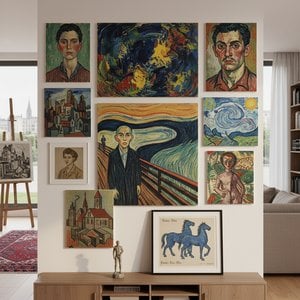
Expressionismo: 10 Obras-Primas que Moldaram a Arte Moderna | ArtsDot
Descubra as 10 obras-primas do Expressionismo que revolucionaram a arte moderna! Explore a emoção, cores vibrantes e histórias de Munch, Kirchner, Kandinsky e outros artistas icônicos. Encontre reproduções de alta qualidade em ArtsDot.com.

August Macke: Expressionist Visions of Harmony & Modern Life
Explore the vibrant Expressionist paintings of August Macke (1887-1914). Discover his key role in Der Blaue Reiter, Fauvist influences, and captivating depictions of modern life. A comprehensive guide for art enthusiasts & collectors.


