


 Enviar
 Compartilhar
 Ver detalhes
 Guia de Obras do Aluno

 Baixar imagem
 Semelhantes
 Apresentação de slides
 Estatísticas
Le stelle


 Ver mais
Giclée / Impressão de Arte
Impressão giclée ou em tela de qualidade de museu, com produção rápida e opções flexíveis de acabamento. ( Encomendar reprodução pintada à mão Ver Imagem Digital)




































Escolha entre os nossos tamanhos pré-definidos que respeitam as proporções originais da obra de arte.

Você pode inserir suas próprias dimensões para se ajustar a uma moldura ou espaço específico. Se o tamanho selecionado não corresponder às proporções da imagem original, iremos recortar a obra de arte ou estender a imagem com uma borda espelhada ou preenchimento sólido. Um mockup digital será enviado para sua aprovação antes do início da produção.
Por favor, observe que a visualização na tela não reflete o recorte ou a extensão real. Apenas o mockup mostrará com precisão a composição final.
Embora tamanhos personalizados estejam disponíveis, recomendamos selecionar uma dimensão da lista predefinida para preservar as proporções originais.
Entrega mundial () em 2 semanas, em vez das 4/5 semanas padrão. (26 Setembro)

Envio expresso gratuito para todo o mundo

Tela de Linho Premium

Seguro de transporte total

Garantia de Reembolso de Impostos Alfandegários

Garantia de Fidelidade de Cor

Política de Devolução em 100 Dias (Apenas para Defeitos)

Garantia de reembolso de 100%

Desconto para múltiplas unidades
 A opção de vidro está disponível apenas para tamanhos inferiores a 110 cm

Le stelle
Giclée / Impressão de Arte
Dimensões da Reprodução
-


Preço Total
$ 62
A Celestial Contemplation in Clay
In the quiet intimacy of Arturo Martini’s 1932 terracotta, Le stelle (The Stars), we encounter a moment suspended in time. This exquisite small-scale sculpture invites the viewer into a private, spiritual dialogue between the earthly and the infinite. The work depicts two seated women, their forms rendered with a delicate balance of weight and grace, as they gaze upward toward the heavens. There is an undeniable sense of profound stillness within the composition; the figures do not merely look at the sky, they seem to be absorbing its vastness. As they tilt their faces toward the unseen celestial expanse, the sculpture transcends its physical boundaries, suggesting that the space surrounding the clay is just as vital to the narrative as the material itself.
The emotional resonance of Le stelle lies in its ability to evoke a sense of shared wonder. To look upon these figures is to feel the pull of the nocturnal sky and the quiet humility one feels when confronted by the cosmos. For the collector or the interior designer, this piece offers more than just aesthetic beauty; it provides an anchor of tranquility. It is a work that commands a room not through loud presence, but through a subtle, magnetic pull toward introspection and peace.
The Mastery of the Sculptor’s Hand
Arturo Martini was a master of navigating the tension between tradition and modernity, and nowhere is this more evident than in his manipulation of terracotta. In Le stelle, the artist utilizes the natural, earthy warmth of the reddish-brown clay to ground the ethereal subject matter. The technique is remarkably tactile; one can almost sense the sculptor’s fingers pressing into the damp earth to define the flowing drapery and the soft contours of the women's limbs. The surface texture is intentionally varied, featuring rougher patches that catch the light and smoother transitions that suggest the softness of skin.
The composition follows a classical triangular formation, a choice that lends the piece an enduring stability and balance. This structural harmony allows the more fluid, organic shapes of the human forms to feel both natural and monumental. The play of light and shadow across the undulating surfaces of the clay creates a dynamic three-dimensionality, ensuring that the sculpture remains captivating from every angle. It is this meticulous attention to the physical properties of the medium that elevates the work from a mere representation to a living, breathing entity.
A Legacy of Artistic Integrity
To understand Le stelle, one must understand the turbulent era in which Martini worked. Living through the rise and fall of Italian Fascism, Martini’s career was a complex journey through various artistic currents, from the fractured energy of Futurism to a deeply personal, almost archaic classicism. While he was often called upon for monumental public works, his smaller, more intimate pieces like this terracotta reveal his true soul—an artist seeking truth in the fundamental connection between humanity and the natural world.
This piece serves as a poignant reminder of Martini’s ability to bypass the political noise of his time to reach for something eternal. For those seeking to adorn a space with art that possesses both historical depth and timeless elegance, Le stelle stands as a testament to the enduring power of the human spirit. Whether placed in a sunlit study or a sophisticated gallery setting, a high-quality reproduction of this masterpiece brings with it a legacy of craftsmanship and a window into the infinite.
Obras Relacionadas


Biografia do Artista
Arturo Martini: Bridging Classicism and the Modern Spirit
Arturo Martini (1889 – 1947) remains a compelling figure in Italian sculpture, a testament to an artist who navigated the turbulent currents of his time—from the fervent energy of Futurism through the complexities of Fascist patronage and finally, a poignant return to artistic integrity. Born into modest circumstances in Treviso, Martini’s early life instilled within him a deep appreciation for craftsmanship, initially honed as a goldsmith before he found his true voice in sculpture. This grounding in material and technique would profoundly shape his later work, allowing him to seamlessly blend traditional forms with innovative approaches. His trajectory is marked by a restless exploration of style, reflecting the shifting artistic landscape of early 20th-century Italy.Early Influences and the Embrace of Futurism
Martini’s artistic journey began in Venice and Munich, exposing him to diverse European influences. He initially studied under Adolf von Hildebrand in Munich, absorbing elements of German Expressionism, but it was his encounter with the burgeoning Futurist movement that truly ignited his creative spirit. The dynamism and rejection of academic tradition within Futurism resonated deeply, prompting Martini to experiment with fractured forms, rhythmic lines, and a sense of violent energy—a characteristic vividly displayed in early works like “I Morti di Bligny” (1935). This piece, depicting the aftermath of a train crash, exemplifies his embrace of Futurist principles: a fragmented composition conveying movement and chaos through sharp angles and distorted figures. Correspondence with Umberto Boccioni further solidified his connection to this revolutionary artistic current, resulting in a modernist booklet that documented his exploration of new techniques and ideas.The Shadow of Fascism and Monumental Works
The interwar period witnessed a dramatic shift in Martini’s career. Italy's embrace of Fascism presented both opportunities and challenges. Martini found himself increasingly involved with public sculpture, commissioned to create monumental works that served as symbols of the regime’s power and ideology. He produced impressive bronze sculptures for institutions like La Sapienza University in Rome – notably a colossal figure representing the Roman poet Titus Livius Patavinus – and memorials honoring figures such as Tito Minniti, the Italian aviator. These commissions demanded a shift towards more formal, classical styles, reflecting the aesthetic preferences of the Fascist government. However, beneath this veneer of official patronage, Martini’s artistic integrity remained intact; he subtly infused these monumental pieces with his own unique sensibility, injecting elements of irony and dynamism into traditionally static forms.A Rejection of Sculpture and a Return to Personal Vision
As the Fascist regime crumbled in 1945, Martini experienced a profound disillusionment. He famously denounced sculpture as “a dead language” in his influential essay, *Scultura, lingua morta*, articulating his belief that art should be free from external constraints and driven by genuine emotional expression. This critique marked a decisive break with his previous work, leading him to abandon sculpture altogether. Yet, despite this rejection, Martini’s artistic spirit persisted. In 1946, he created “Masaccio,” a poignant marble tribute to Primo Visentin, a partisan leader killed during the war in Loria. This final masterpiece embodies his enduring commitment to humanism and serves as a powerful testament to the sacrifices made during Italy's struggle for liberation. The sculpture’s raw emotion and understated elegance stand in stark contrast to the grandiosity of his earlier works, reflecting a newfound sense of artistic freedom.Legacy and Enduring Influence
Arturo Martini’s legacy is complex and multifaceted. He was a pivotal figure in bridging the gap between classicism and modernism, demonstrating an extraordinary ability to synthesize diverse influences into a uniquely personal style. His work profoundly impacted subsequent generations of Italian sculptors, including Marino Marini, Emilio Greco, and Marcello Mascherini, who carried forward his innovative spirit and formal experimentation. Martini’s sculptures—ranging from dynamic Futurist compositions to monumental civic monuments and intimate tributes—continue to captivate viewers with their expressive power, technical skill, and enduring relevance. He remains a significant voice in the history of Italian art, a testament to an artist who dared to challenge convention and forge his own path amidst the tumultuous events of the 20th century.
arturo martini
1889 - 1947
Informações Rápidas
- Artistic Movement Or Style:
- Classicism
- Modernism
- Futurist
- Artists Or Movements Influenced By This Artist:
- Marino Marini
- Emilio Greco
- Artists Who Influenced This Artist: ['Umberto Boccioni']
- Date Of Birth: 1889-08-11
- Date Of Death: 1947-03-22
- Full Name: Arturo Martini
- Nationality: Italian
- Notable Artworks:
- Le Stelle
- Minerva (1935)
- San giorgio e il drago (1926)
- Place Of Birth: Treviso, Italy
Artigos Relacionados

The Enduring Form: Sculpture Across History, Technique & Emotional Resonance
Explore the rich history of sculpture with ArtsDot. Discover key techniques, influential artists & investment potential for discerning collectors. Expert insights into valuing and collecting timeless masterpieces.

The Enduring Form: Exploring Themes & Techniques in Sculpture Across Historical Periods
Explore the rich history of sculpture from ancient masterpieces to contemporary innovations. Discover key techniques, influential artists & investment potential for discerning art collectors.

Esculturas em Bronze Icônicas: 10 Obras que Revolucionaram a Arte | ArtsDot
Descubra as 10 esculturas em bronze mais icônicas da história! Explore a arte de Rodin, Michelangelo e outros mestres. Encontre reproduções de alta qualidade para sua casa em ArtsDot.com.
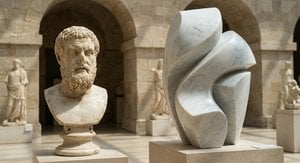
The Enduring Allure of Marble in Art History: From Classical Sculpture to Modern Abstraction
Explore the captivating history of marble sculpture from ancient Greece to modern art. Discover renowned artists like Canova & Michelangelo, carving techniques, and investment insights at ArtsDot.

As 10 Obras em Bronze Mais Icônicas que Transformaram a História da Arte | ArtsDot
Descubra as 10 esculturas em bronze mais influentes da história! Explore a arte de Rodin, Michelangelo e outros mestres. Reproduções de alta qualidade para decorar sua casa com elegância. ArtsDot.