

 Visualizar na parede
 Compartilhar
 Compartilhar
 Detalhes
 Guia
Guia

 Baixar imagem
 Semelhantes
 Raio X
 Ver diaporama
 Perguntas e Respostas
 Estatísticas
Tears

- 23.0 x 29.0 cm


 Ler mais
Giclée / Impressão de Arte
Impressão giclée ou em tela de qualidade de museu, com produção rápida e opções flexíveis de acabamento. ( Comprar pintura feita à mão Alternar para Imagem Digital)




P118B €10

P118H €10

P118W €10

P438Z €10

P508JH €12

P508YH €12

P805H €10

P805Z €10

P919BZ €10

P919G €10

P919XJ €10

P959ZH €10

P968JZ €12

W106C €8

W218G €10

W218JH €8

W218Y €10

W307PJ €10

W316G €10

W316PJ €8

W316Y €10

W398PJ €8

W4111J €10

W500HY €15

W500JH €15

W692G €12

W849H €8

W940BG €15

W953PJ €8




Escolha entre os nossos tamanhos pré-definidos que respeitam as proporções originais da obra de arte.

Insira a largura e a altura desejadas para se ajustarem à sua moldura ou parede. Uma impressão pode ser apenas cortada, nunca ampliada além da imagem original; portanto, um tamanho com proporções diferentes resultará na perda de parte da imagem. Enviamos uma maquete digital para sua aprovação antes de realizarmos a impressão. A imagem exibida nesta página não mostra o corte real — apenas a maquete o faz.
Entrega mundial () em 2 semanas, em vez das 4/5 semanas padrão. (14 Novembro)

Envio expresso gratuito para todo o mundo

Tela de Linho de Alta Qualidade

Seguro de transporte completo

Garantia de Reembolso de Impostos Alfandegários

Garantia de Fidelidade Cromática

Política de Devolução em 100 Dias (Apenas para Defeitos)

Garantia de reembolso de 100%

Oferta de desconto por quantidade
 A opção de vidro está disponível apenas para tamanhos inferiores a 110 cm

Tears
Giclée / Impressão de Arte
Tamanho da Reprodução
-


Preço Total
€ 56
A Portrait of Inner Turmoil: Arnold Schönberg’s “Tears”
Arnold Schönberg's "Tears," painted in 1910, is not merely a depiction of a man weeping; it’s a profound and unsettling exploration of the artist’s internal landscape. Created during a period of radical experimentation within his music – a time when he was forging new paths toward atonality – the painting reflects the anxieties and intensities that fueled his groundbreaking compositions. As Karl Linke's insightful introduction suggests, this image transcends simple representation, becoming a visceral embodiment of the “inner weeping” that Schönberg sought to capture in his scores.
- Subject Matter: The central figure is a man’s face, rendered with stark realism and imbued with an almost unbearable sorrow.
- Color Palette: The deliberate misuse of color – hues occupying spaces they shouldn't – speaks to Schönberg’s rejection of conventional artistic norms and his embrace of instinctual expression.
- Technical Detail: Notice the meticulous rendering of the facial features, particularly the intense red pupils that draw the viewer into the man’s tormented gaze.
The Symbolism of Despair
"Tears" operates on multiple symbolic levels. The weeping figure isn't a portrait of grief in the traditional sense; it represents the artist’s struggle to translate profound emotional experiences – specifically, the dissonance and anguish he was pioneering in his music – onto canvas. The veiled face suggests a deliberate obscuring of the source of this sorrow, perhaps reflecting Schönberg’s own attempts to grapple with the unsettling nature of his artistic vision. The image embodies the feeling of being “led” by an unseen force, mirroring the composer's experience of musical intuition.
The painting’s brown background further amplifies the sense of isolation and introspection. It acts as a neutral stage upon which this intensely personal drama unfolds, emphasizing the figure’s vulnerability and the overwhelming nature of his emotional state.
Historical Context & Artistic Innovation
Painted in 1910, “Tears” sits squarely within Schönberg's pivotal period of artistic development. This was a time when he was dismantling traditional harmonic structures and exploring new sonic territories – a process that would ultimately revolutionize the course of 20th-century music. The painting’s raw emotional intensity anticipates the radicalism of his later works, such as “Pierrot Lunaire,” which explored themes of psychological distress and alienation.
Schönberg's decision to depict himself in this way – a figure consumed by inner turmoil – reflects the broader artistic climate of the early 20th century, where artists were increasingly interested in exploring subjective experience and challenging established conventions. This work is a testament to Schönberg’s willingness to push boundaries, both musically and visually.
A Captivating Reproduction
This hand-painted reproduction captures the essence of “Tears” with remarkable fidelity. The meticulous attention to detail – from the texture of the man's beard to the unsettling intensity of his gaze – ensures that this powerful image will resonate deeply with viewers. The 23 x 29 cm size makes it ideal for a variety of settings, while the rich colors and textured surface create a truly immersive experience. A striking addition to any art collection or interior design scheme, “Tears” offers a poignant glimpse into the mind of one of music’s most influential figures.
Perguntas e Respostas
Como "Tears" equilibra luz e sombra?
"Tears" apresenta um brilho geral de balanced, com uma luminância de Soft Shadow.
Qual é o lugar de "Tears" na história da arte?
A classificação histórico-artística de "Tears", de Arnold Schönberg é Expressionist Modernism, do período 19th Century.
Por quais outros nomes Arnold Schönberg é conhecido(a)?
Outros nomes registrados para Arnold Schönberg, criador de "Tears", incluem Schonberg, Schoenberg, Arnold schoenberg, Arnold franz walter schönberg.
Obras Relacionadas


Biografia do Artista
primeiros anos e o despertar musical
arnold schoenberg, compositor austro-americano, nasceu em 13 de setembro de 1874, em viena, áustria. sua infância foi marcada por origens humildes, sendo seu pai um sapateiro. apesar disso, a paixão inata de schoenberg pela música o levou a um profundo processo de autodidatismo no campo musical.evolução musical e obras notáveis
as primeiras obras de schoenberg, como verklärte nacht (1899), exibiam uma síntese entre o estilo de brahms e wagner. conforme sua arte progredia, ele se tornou a figura central da segunda escola vienense, ao lado de anton webern e alban berg. suas composições, incluindo o quarteto de cordas nº 2 (1907–1908), erwartung (1909) e pierrot lunaire (1912), exemplificaram sua abordagem inovadora em direção à atonalidade.ensino, emigração e vida tardia
schoenberg renunciou à academia prussiana de artes em 1933 devido à ascensão do nazismo ao poder, que rotulou sua música como "degenerada". ele então lecionou nos estados unidos, inclusive na universidade da califórnia, los angeles (1936–1944), onde instalações levam seu nome em sua honra. [https://ArtsDot.com/@/arnold-schaenberg](descubra mais sobre a vida e as obras de schoenberg na ArtsDot).- schoenberg explorou a música para cinema e escreveu composições mais tonais, concluindo sua sinfonia de câmara nº 2 em 1939.
- ele satirizou tiranos fascistas em ode a napoleão (1942), inspirado por byron.
- a viena do pós-guerra ofereceu-lhe a cidadania honorária, mas ele enfrentava problemas de saúde, como retratado em seu trio para cordas (1946).
legado e influência
conforme o mundo tomava conhecimento do holocausto, schoenberg imortalizou suas vítimas em a survivor from warsaw (1947). o conservatório e academia de música de israel elegeu-o presidente honorário em 1951. [https://ArtsDot.com/@@/a@d3bqc7-the-museum-destroyed-by-fire-(united-states)](saiba mais sobre o impacto de seu trabalho na ArtsDot). pontos principais:- a música inovadora de schoenberg foi uma das mais influentes e polêmicas da música clássica do século XX.
- pelo menos três gerações de compositores expandiram seus princípios, ainda que formais.
- suas visões estéticas e musicohistóricas influenciaram os musicólogos theodor w. adorno e carl dahlhaus. [https://ArtsDot.com/@@/a@d3cl2x--a-journey-through-art-history-with-ArtsDot-s-extensive-collection-](explore a vasta coleção de arte na ArtsDot, abrangendo do século XII ao XX).

Arnold Schönberg
1874 - 1951 , Áustria
Dados Rápidos
- Artistic Movement Or Style: Técnica dodecafônica; Expressionismo
- Artists Or Movements Influenced By This Artist:
- Anton Webern
- Alban Berg
- Artists Who Influenced This Artist:
- Johannes Brahms
- Richard Wagner
- Date Of Birth: 13 de setembro de 1874
- Date Of Death: 1951
- Full Name: Arnold Schoenberg
- Nationality: Austro-americano
- Notable Artworks:
- Suite, op. 29
- Music Typewriter
- Staffliner
- Place Of Birth: Viena, Áustria
Artigos Relacionados

The Visceral Language of Emotion: Exploring Representations of Intense Feeling in Art History
Explore the profound history of emotional representation in art. Discover how masters like Goya evoked feeling & the impact of affect theory on collecting. Expert analysis for discerning connoisseurs.

Echoes of a Turning Tide: Artistic Responses to Sociopolitical Shifts in 1908
Explore the artistic revolution of 1908! Discover how Fauvism, led by Matisse, responded to societal shifts. Expert analysis & museum-quality reproductions at ArtsDot.

The Psychological Resonance of Erwartung: Schoenberg’s Musical Expressionism and the Visual Language of Modernity
Explore the profound link between Schoenberg’s music and Expressionist art. Discover the visual language of modernism now.

25 Masterpieces by Nicholas Roerich: A Journey Through Spirit and Symbolism
Embark on a spiritual journey through the 25 most iconic Nicholas Roerich paintings. From Russian Symbolism to mystical Himalayan landscapes, explore the stories behind these timeless masterpieces and find museum-quality art reproductions. Discover all masterpieces on ArtsDot.com.
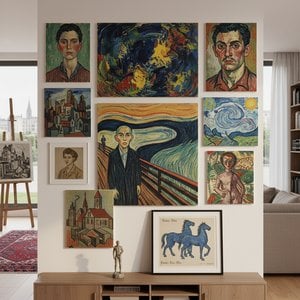
Expressionismo: 10 Obras-Primas que Moldaram a Arte Moderna | ArtsDot
Descubra as 10 obras-primas do Expressionismo que revolucionaram a arte moderna! Explore a emoção, cores vibrantes e histórias de Munch, Kirchner, Kandinsky e outros artistas icônicos. Encontre reproduções de alta qualidade em ArtsDot.com.


