

 Visualizar na parede
 Compartilhar
 Compartilhar
 Detalhes
 Guia
Guia

 Baixar imagem
 Semelhantes
 Raio X
 Ver diaporama
 Perguntas e Respostas
 Estatísticas
Self-Portrait

- 9.0 x 10.0 cm


 Ler mais
Giclée / Impressão de Arte
Impressão giclée ou em tela de qualidade de museu, com produção rápida e opções flexíveis de acabamento. ( Comprar pintura feita à mão Alternar para Imagem Digital)




P118B €10

P118H €10

P118W €10

P438Z €10

P508JH €12

P508YH €12

P805H €10

P805Z €10

P919BZ €10

P919G €10

P919XJ €10

P959ZH €10

P968JZ €12

W106C €8

W218G €10

W218JH €8

W218Y €10

W307PJ €10

W316G €10

W316PJ €8

W316Y €10

W398PJ €8

W4111J €10

W500HY €15

W500JH €15

W692G €12

W849H €8

W940BG €15

W953PJ €8




Escolha entre os nossos tamanhos pré-definidos que respeitam as proporções originais da obra de arte.

Insira a largura e a altura desejadas para se ajustarem à sua moldura ou parede. Uma impressão pode ser apenas cortada, nunca ampliada além da imagem original; portanto, um tamanho com proporções diferentes resultará na perda de parte da imagem. Enviamos uma maquete digital para sua aprovação antes de realizarmos a impressão. A imagem exibida nesta página não mostra o corte real — apenas a maquete o faz.
Entrega mundial () em 2 semanas, em vez das 4/5 semanas padrão. (7 Novembro)

Envio expresso gratuito para todo o mundo

Tela de Linho de Alta Qualidade

Seguro de transporte completo

Garantia de Reembolso de Impostos Alfandegários

Garantia de Fidelidade Cromática

Política de Devolução em 100 Dias (Apenas para Defeitos)

Garantia de reembolso de 100%

Oferta de desconto por quantidade
 A opção de vidro está disponível apenas para tamanhos inferiores a 110 cm

Self-Portrait
Giclée / Impressão de Arte
Tamanho da Reprodução
-


Preço Total
€ 56
A Study in Yellow and Green: Arnold Schoenberg's Self-Portrait (1922)
This intimate drawing, measuring just 9 x 10 cm, offers an arresting glimpse into the mind of one of the 20th century’s most revolutionary composers – Arnold Schoenberg. Executed in 1922, a pivotal year in his artistic development, the work transcends a simple portrait; it's a concentrated distillation of intellectual intensity and perhaps, a subtle self-examination rendered with remarkable precision. The stark palette of yellow and green immediately draws the viewer in, colors that would become increasingly significant within Schoenberg’s musical explorations of atonality and dissonance.
- Subject & Composition: The central focus is undeniably the artist himself – a man with a neatly trimmed mustache, his gaze direct and unwavering. The simplified rendering emphasizes key features: the piercing green eyes, a hallmark of Schoenberg’s artistic vision, and the strong jawline hinting at an unyielding intellect.
- Technique & Materials: Crafted in black and yellow tones, the drawing utilizes a technique that suggests both meticulous observation and a deliberate departure from representational realism. The use of shading creates depth and volume, while the limited color palette contributes to a sense of austerity and focused contemplation.
The Second Viennese School & Atonality
To fully appreciate this self-portrait, it’s crucial to understand Schoenberg's place within the artistic landscape of early 20th-century Vienna. He was at the heart of the “Second Viennese School,” a group of composers – including Alban Berg and Anton Webern – who radically challenged traditional harmonic structures. Schoenberg pioneered atonality, rejecting the established rules of key signatures and chord progressions, believing that music should be free from conventional constraints. This drawing can be seen as a visual manifestation of this intellectual shift; the deliberate use of color and simplified form reflects a desire to break away from established artistic conventions.
The year 1922 was particularly significant for Schoenberg, marking a period of intense experimentation with serialism – a compositional technique based on mathematical series that further explored the possibilities of atonality. This self-portrait isn’t merely a likeness; it's a visual echo of his groundbreaking musical ideas.
Symbolic Resonance & Emotional Impact
While seemingly straightforward, the drawing possesses a subtle emotional depth. The intense gaze suggests introspection and perhaps a sense of isolation – feelings that likely accompanied Schoenberg as he navigated the turbulent waters of artistic innovation. The yellow and green hues, often associated with envy and growth respectively, could symbolize his ambition and relentless pursuit of new musical frontiers. The starkness of the image evokes a feeling of quiet contemplation, inviting the viewer to engage in their own thoughts about creativity, genius, and the challenges of pushing boundaries.
A Collector’s Piece – Reproduction & Legacy
This hand-painted reproduction captures not only the visual details of Schoenberg's self-portrait but also the spirit of a revolutionary artist. Each reproduction is meticulously crafted by skilled artisans, ensuring an authentic representation of this significant work. Perfect for interior design projects seeking a touch of intellectual sophistication or as a unique addition to any art collection, this piece offers a tangible connection to one of music’s most influential figures. Its small size makes it ideal for display in intimate settings, while its powerful imagery ensures that it will remain a captivating subject of contemplation for years to come.
Perguntas e Respostas
Qual técnica e estilo caracterizam "Self-Portrait", de Arnold Schoenberg?
"Self-Portrait", de Arnold Schoenberg combina a técnica de Acrylic On Canvas com o estilo Atonal Expressionism. Técnica e movimento descrevem a execução e o estilo da obra.
Qual uso e espaço são recomendados para "Self-Portrait", de Arnold Schoenberg?
"Self-Portrait" é sugerida para Reflective, e o espaço recomendado é um(a) Living Room.
Onde posso encontrar obras de arte semelhantes a "Self-Portrait", de Arnold Schoenberg?
Obras de arte semelhantes a "Self-Portrait", de Arnold Schoenberg podem ser encontradas na página de Obras semelhantes desta obra.
Obras Relacionadas


Biografia do Artista
primeiros anos e o despertar musical
arnold schoenberg, compositor austro-americano, nasceu em 13 de setembro de 1874, em viena, áustria. sua infância foi marcada por origens humildes, sendo seu pai um sapateiro. apesar disso, a paixão inata de schoenberg pela música o levou a um profundo processo de autodidatismo no campo musical.evolução musical e obras notáveis
as primeiras obras de schoenberg, como verklärte nacht (1899), exibiam uma síntese entre o estilo de brahms e wagner. conforme sua arte progredia, ele se tornou a figura central da segunda escola vienense, ao lado de anton webern e alban berg. suas composições, incluindo o quarteto de cordas nº 2 (1907–1908), erwartung (1909) e pierrot lunaire (1912), exemplificaram sua abordagem inovadora em direção à atonalidade.ensino, emigração e vida tardia
schoenberg renunciou à academia prussiana de artes em 1933 devido à ascensão do nazismo ao poder, que rotulou sua música como "degenerada". ele então lecionou nos estados unidos, inclusive na universidade da califórnia, los angeles (1936–1944), onde instalações levam seu nome em sua honra. [https://ArtsDot.com/@/arnold-schaenberg](descubra mais sobre a vida e as obras de schoenberg na ArtsDot).- schoenberg explorou a música para cinema e escreveu composições mais tonais, concluindo sua sinfonia de câmara nº 2 em 1939.
- ele satirizou tiranos fascistas em ode a napoleão (1942), inspirado por byron.
- a viena do pós-guerra ofereceu-lhe a cidadania honorária, mas ele enfrentava problemas de saúde, como retratado em seu trio para cordas (1946).
legado e influência
conforme o mundo tomava conhecimento do holocausto, schoenberg imortalizou suas vítimas em a survivor from warsaw (1947). o conservatório e academia de música de israel elegeu-o presidente honorário em 1951. [https://ArtsDot.com/@@/a@d3bqc7-the-museum-destroyed-by-fire-(united-states)](saiba mais sobre o impacto de seu trabalho na ArtsDot). pontos principais:- a música inovadora de schoenberg foi uma das mais influentes e polêmicas da música clássica do século XX.
- pelo menos três gerações de compositores expandiram seus princípios, ainda que formais.
- suas visões estéticas e musicohistóricas influenciaram os musicólogos theodor w. adorno e carl dahlhaus. [https://ArtsDot.com/@@/a@d3cl2x--a-journey-through-art-history-with-ArtsDot-s-extensive-collection-](explore a vasta coleção de arte na ArtsDot, abrangendo do século XII ao XX).

Arnold Schoenberg
1874 - 1951 , Áustria
Dados Rápidos
- Artistic Movement Or Style: Técnica dodecafônica; Expressionismo
- Artists Or Movements Influenced By This Artist:
- Anton Webern
- Alban Berg
- Artists Who Influenced This Artist:
- Johannes Brahms
- Richard Wagner
- Date Of Birth: 13 de setembro de 1874
- Date Of Death: 1951
- Full Name: Arnold Schoenberg
- Nationality: Austro-americano
- Notable Artworks:
- Suite, op. 29
- Music Typewriter
- Staffliner
- Place Of Birth: Viena, Áustria
Artigos Relacionados
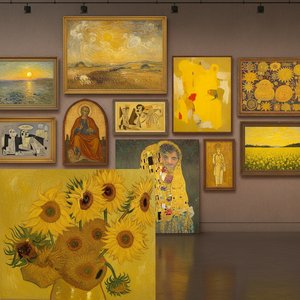
As 10 Obras Mais Famosas Dominadas pelo 'Amarelo Cromo': Arte e Decoração
Descubra as 10 pinturas mais famosas dominadas pelo vibrante 'amarelo cromo'! Explore a história de Van Gogh, Monet e outros mestres. Encontre reproduções de arte exclusivas para decorar sua casa com elegância em ArtsDot.com.

Giclée Prints: Archival Quality & Aesthetic Nuances for the Discerning Collector
Explore the world of giclée prints with ArtsDot. Learn about archival quality, aesthetic nuances & investment potential. Expert guidance for discerning art collectors seeking museum-quality reproductions and lasting value.

Echoes of Time: Exploring the Enduring Appeal & Historical Context of Vintage Art Prints
Explore the captivating world of vintage art prints! Discover their history, collecting tips & enduring appeal. Expert insights on chromolithography and building a legacy collection with ArtsDot.

The Enduring Legacy of Fine Art Prints: Technique, History & Aesthetic Impact
Explore the rich history & techniques of fine art prints. Discover investment potential, assess authenticity, and learn how to preserve your collection with expert guidance. Trusted insights for discerning collectors.

As 10 Pinturas Mais Famosas Dominadas pelo Preto: Arte, História e Decoração
Descubra as 10 pinturas mais icônicas dominadas pelo preto! Explore a história, técnica e emoção por trás de obras-primas do Romantismo, Realismo e Expressionismo. Encontre reproduções de arte exclusivas na ArtsDot.com.


