
 Acrílico sobre tela
- Arte de Parede
- Classical Modern Sculpture
 1902
1902 113.0 x 147.0 cm
 Song Art Museum

The picture follows your choices: , .
Descrição do Item
Escultura de Aristide Maillol que captura a serenidade e energia da beleza clássica mediterrânea, simbolizando fertilidade e história rica em formas geométricas simples e equilibradas.
 Ler mais
Biografia do Artista
Escultor francês Aristide Maillol (1861-1944) é conhecido por suas esculturas monumentais de figuras femininas clássicas e sua busca pela beleza atemporal. Explore sua obra icônica e legado artístico!
Reprodução em Óleo Feita à Mão
Óleo sobre tela pintado à mão no tamanho e moldura de sua escolha, feito sob encomenda pelos nossos artistas. ( Alternar para Impressão Alternar para Imagem Digital)
More about this painting
 Visualizar na parede
 Compartilhar
 Compartilhar
 Detalhes
 Guia
Guia

 Baixar imagem
 Semelhantes
 Raio X
 Ver diaporama
 Q&A
Q&A Estatísticas
Order your painting in four simple steps
Take your time. You can change any answer; the price in your order card follows each choice.
1 Step one of four
Which size would you like?
These sizes keep the proportions of the original painting. The drawing shows your choice on a wall, above a two-metre sofa.
Or give your own measurements
Escolha entre os nossos tamanhos pré-definidos que respeitam as proporções originais da obra de arte.

Insira a largura e a altura desejadas para se ajustarem à sua moldura ou parede. Como esta obra é pintada à mão, para um tamanho com proporções diferentes, o artista poderá pintar um pouco mais ao redor da imagem ou reduzir ligeiramente a composição — você escolhe. Enviamos uma maquete digital para sua aprovação antes de iniciar a pintura. A imagem exibida nesta página não representa o resultado real — apenas a maquete mostra o resultado final.
2 Step two of four
How should it be prepared: rolled, stretched or framed?
The prices below are for the size you chose in step one.
Choose the edges of the stretched canvas
Choose your frame

White €1

Blurside €1

Extended €1

P118B €10

P118H €10

P118W €10

P438Z €10

P508JH €12

P508YH €12

P805H €10

P805Z €10

P919BZ €10

P919G €10

P919XJ €10

P959ZH €10

P968JZ €12

W106C €8

W218G €10

W218JH €8

W218Y €10

W307PJ €10

W316G €10

W316PJ €8

W316Y €10

W398PJ €8

W4111J €10

W500HY €15

W500JH €15

W692G €12

W849H €8

W940BG €15

W953PJ €8

H24-GOLD €30

H24-SILVER €30

H36-GOLD €45

H36-SILVER €45
Com moldura
Moulding: . Overall size with the frame: .
3 Step three of four
Would you like anything changed in the painting?
Most people answer no. Because each painting is made by hand, our artist can also adapt it for you.
After order, ArtsDot.com team will email client for instructions and provide a mockup preview
4 Step four of four
A few finishing options
All of them are optional. The answers already selected cost nothing extra.
Who paints it?
Entrega mundial () em 3 a 4 semanas, em vez das 5 semanas padrão. (29 Outubro). Sem comprometer a qualidade.
A nameplate, as in a museum?
Detalhes da Placa de Bronze Gravada
This elegant plaque features the artist's name and the title of the artwork, finely engraved for a timeless presentation.
It is made from bronze with a refined, elegant finish. The text is precisely laser-engraved for a sharp and permanent result. Measuring 9x2 cm, the plaque is compact yet easy to read. It's built to be durable and scratch-resistant, offering a professional, museum-quality look. Mounting is simple thanks to the included adhesive backing.
Detalhes da Placa de Acrílico Transparente
The plaque includes essential engraved details such as the artist's name, the title of the artwork, the date it was created, the type of media used-like oil on canvas or watercolor-a brief description of the piece, and a QR code that links to the complete artwork information.
It is crafted from clear acrylic, offering a sleek, modern appearance. The text is UV-engraved in black to ensure strong visual contrast. With a size of 10x15 cm, it ensures optimal readability. It comes equipped with two metal hooks for secure wall mounting. The plaque is designed to be weather-resistant, making it suitable for various environments, and it includes interactive features that work seamlessly with smartphone scanning.
Detalhes da Placa de Acrílico Preto
This elegant plaque includes engraved information such as the artist's name, the title of the artwork, the date it was created, the type of media used (like oil on canvas or watercolor), a short description of the artwork, and a QR code for quick access to more information.
The plaque itself is made from refined black acrylic with a premium finish. The text is laser-engraved in white for high contrast and readability. Its size is 10x15 cm, designed to be easy to read. It comes with two metal hooks for professional mounting. The design is sleek and fits any interior style. It is also weather-resistant and durable, with built-in digital integration for mobile compatibility.
A protective varnish?
When do you need it?
✓ Check and order
Your painting, as you ordered it

La Méditerranée
Técnica de Reprodução
Tamanho da Reprodução
-

Artista Sênior de Elite
Mais detalhes, refinamento e tempo de produção adicional
-

Moldura para Reprodução
-
-
Para obras de arte ou reproduções com mais de 105 cm (aproximadamente 41 polegadas) em qualquer um dos lados, a moldura será enviada como um kit desmontado. Este método garante uma entrega segura e evita danos durante o transporte.
Montagem profissional necessária — este não é um produto DIY (faça você mesmo).
O kit deve ser montado e a tela esticada por um profissional de molduraria experiente, utilizando cola de madeira (não inclusa), um alicate de esticar tela e grampos para manter as travessas alinhadas enquanto a cola seca. A montagem incorreta ou a tensão desigual da tela podem danificar permanentemente a obra de arte e não estão cobertas pela nossa garantia.
 Para obras de arte ou reproduções com mais de 105 cm (aproximadamente 41 polegadas) em qualquer um dos lados, a moldura será enviada como um kit desmontado. Este método garante uma entrega segura e evita danos durante o transporte.
Todas as barras de madeira maciça estão incluídas, precisamente cortadas ao tamanho certo.
Montado com os parafusos fornecidos, além de cola para madeira para as junções dos cantos, que não está inclusa e deve ser providenciada pelo seu moldurista.
São necessárias ferramentas profissionais não incluídas: um alicate de estiramento de tela (esticador) e grampos para manter as ripas alinhadas enquanto a cola seca.
Importante:
As junções dos cantos requerem cola para madeira, as ripas devem ser mantidas com grampos até que a cola esteja completamente seca, e o estiramento da tela na moldura montada requer um alicate de esticar tela. Nenhum destes itens está incluído no kit. Por favor, certifique-se de contar com um profissional de molduraria experiente antes de encomendar este tamanho.

Etiqueta de identificação
-
-

Verniz de Proteção
Verniz brilhante (realça as cores e protege contra a luz e a umidade)
-

Personalizar minha obra
Exemplos de alterações possíveis: Substituir o rosto por uma foto do cliente; Adicionar um animal de estimação (ex.: substituir gato por cachorro); Incluir uma mensagem oculta no fundo; Alterar a paisagem ou os elementos do fundo.
-

Urgente
Entrega mundial () em 3 a 4 semanas, em vez das 5 semanas padrão. (29 Outubro). Sem comprometer a qualidade.
-
Envio Expresso
Entrega mundial para em 5 semanas. (5 Novembro).
Com envio incluído
Preço Total
€ 232
A opção de vidro está disponível apenas para tamanhos inferiores a 110 cm
Included with every order
- Envio expresso gratuito para todo o mundo
- Tela de Linho de Alta Qualidade
- Seguro de transporte completo
- Garantia de Reembolso de Impostos Alfandegários
- Garantia de Fidelidade Cromática
- Política de Devolução em 100 Dias (Apenas para Defeitos)
- Garantia de reembolso de 100%
- Oferta de desconto por quantidade


La Méditerranée: Uma Ode à Serenidade e à Filosofia Mailloliana
Aristide Maillol, um escultor cuja obra transcende o tempo e permanece fiel aos princípios da beleza clássica, nasceu em Banyuls-sur-Mer, França, em 1861. Sua trajetória artística não foi marcada por reconhecimento imediato, mas sim por uma lenta e deliberada evolução, uma busca constante pela perfeição formal que o consagrou como um dos artistas mais importantes do início do século XX, conectando o simbolismo à emergência da escultura moderna. Inicialmente atraído pela pintura, Maillol estudou na École des Beaux-Arts em Paris, onde absorveu os estilos acadêmicos dominantes, embora tenha sido influenciado por artistas contemporâneos como Pierre Puvis de Chavannes e, crucialmente, Paul Gauguin. Gauguin o incentivou a romper com o realismo rígido, promovendo uma apreciação pelas artes decorativas e uma investigação da beleza simbólica – uma semente que germinou na obra de Maillol, inspirando-o a explorar formas geométricas como arquitetura para capturar a essência do eterno, em contraste com a captura fugaz do corpo humano.- Estilo: O trabalho de Maillol é caracterizado por uma estética profundamente influenciada pelo neoclassicismo e pelo simbolismo francês. Ele busca uma beleza pura e equilibrada, inspirada nas esculturas gregas e romanas clássicas, que reflete uma visão filosófica da natureza humana e do universo.
- Técnica: Maillol dominou a escultura em mármore branco, utilizando métodos tradicionais de modelagem e acabamento para criar obras de extraordinária precisão técnica e suavidade estética. Sua abordagem meticulosa enfatiza o controle sobre os materiais e formas, buscando uma expressão artística que seja ao mesmo tempo elegante e poderosa.
- Contexto Histórico: A obra "La Méditerranée" foi criada em 1902, um período de intensa transformação cultural e artística na França pós-impressionista. Maillol estava explorando novas ideias sobre como representar o corpo humano e a natureza, buscando uma linguagem visual que fosse capaz de transmitir emoções profundas e conceitos filosóficos complexos.
- Inspiração: A imagem da Méditerranée como um símbolo de fertilidade e renovação encontra eco nas obras de Maillol, que celebram a força vital da natureza e a beleza das formas geométricas simples.
- Emoção: O olhar fixo e tranquilo da mulher escultórica transmite uma sensação de calma interior e contemplação espiritual – emoções que são consideradas importantes para o desenvolvimento humano e para a busca pela felicidade.
Perguntas e Respostas
Onde "La Méditerranée", de Aristide Maillol está em exibição hoje?
A obra original "La Méditerranée" pode ser vista no Song Art Museum, Pequim, República Popular da China.
Que emoção transmite "La Méditerranée", de Aristide Maillol?
"La Méditerranée", de Aristide Maillol transmite um tom emocional Calma.
"La Méditerranée", de Aristide Maillol é uma pintura, um desenho ou uma gravura?
No catálogo, "La Méditerranée", de Aristide Maillol está registrado como Arte de Parede. A categoria ajuda a encontrar obras semelhantes.
Obras Relacionadas


Aristide Maillol
1861 - 1944, França
Biografia do Artista
Aristide Maillol (1861–1944) - Art UK
Aristide Joseph Bonaventure Maillol, a name synonymous with the serene power and classical beauty of early 20th-century sculpture, emerged from humble beginnings in the small fishing village of Banyuls-sur-Mer, France. Born in 1861, his artistic journey was not one of immediate recognition but rather a gradual unfolding, a deliberate refinement of vision that ultimately positioned him as a pivotal figure bridging Symbolism and the burgeoning world of modern sculpture. Initially drawn to painting, Maillol’s early studies at the École des Beaux-Arts in Paris exposed him to the prevailing academic styles, yet it was the influence of contemporaries like Pierre Puvis de Chavannes and, crucially, Paul Gauguin that truly ignited his artistic spirit. Gauguin encouraged a departure from strict realism, fostering an appreciation for decorative arts and a search for more profound, symbolic expression—a seed that would blossom in Maillol’s later work. This encouragement led him to establish a tapestry workshop in Banyuls in 1893, a period of intense technical learning and aesthetic exploration that honed his skills and laid the groundwork for his eventual mastery of form.From Tapestry to Timeless Forms
The transition from painting and tapestry design to sculpture was not instantaneous but rather a slow, deliberate evolution occurring around the age of forty. Maillol began experimenting with small terracotta figures, gradually scaling up his ambitions as he gained confidence and technical proficiency. This shift coincided with a growing dissatisfaction with the prevailing artistic trends of the time, particularly the dramatic realism championed by Auguste Rodin. While acknowledging Rodin’s genius, Maillol sought a different path—one rooted in classical ideals of beauty, balance, and enduring form. He rejected fleeting emotionalism in favor of a more timeless, monumental quality, emphasizing the inherent structure and stability of the human body. This wasn't merely an aesthetic choice; it was a philosophical one, reflecting a belief in the power of art to transcend the ephemeral and connect with universal truths. His sculptures weren’t intended as portraits of individuals but rather as embodiments of archetypal figures—representations of humanity itself.The Female Form: A Monument to Serenity
The female figure became the central subject of Maillol's artistic exploration, and it is through his depictions of women that he achieved lasting renown. These were not idealized representations in the conventional sense; rather, they possessed a grounded physicality, a sense of weight and presence that distinguished them from more ethereal portrayals. His figures are often depicted reclining or in gentle motion, their forms imbued with a serene composure and quiet strength. La Méditerranée (1902-1905), perhaps his most celebrated work, exemplifies this approach—a monumental depiction of his wife, rendered with a profound sense of peace and timelessness. Other significant works, such as Action enchaînée (1905-1908) and L'Ile-de-France (1925), demonstrate Maillol’s ability to convey movement within a stable, classical framework. Beyond sculpture, he also explored woodcuts and prints, creating illustrations for literary masterpieces like Virgil’s Eclogues and Paul Verlaine’s Chansons pour elle, further demonstrating his versatility and artistic range.Legacy and Enduring Influence
Aristide Maillol’s impact on the development of modern sculpture is undeniable. His deliberate rejection of Rodin’s dramatic realism and his embrace of classical principles paved the way for a new generation of sculptors, including Henry Moore, who were inspired by his emphasis on simplified forms and monumental scale. He represented a crucial link between Symbolism and the burgeoning modernist movements, establishing a standard for classical figuration in European art that resonated for decades. His later years were marked by a close relationship with Dina Vierny, who served not only as his model but also as a dedicated administrator of his estate, ensuring the preservation and promotion of his work. Even during the turmoil of World War II, Maillol continued to sculpt in relative isolation at Banyuls-sur-Mer, remaining committed to his artistic vision until his untimely death in an automobile accident in 1944. Today, the Musée Maillol in Paris stands as a testament to his enduring legacy, housing a comprehensive collection of his sculptures and drawings—a space where visitors can immerse themselves in the serene beauty and timeless power of his art. His work continues to inspire awe and admiration, reminding us of the profound capacity of sculpture to capture the essence of human form and spirit. ## Notable Artworks- La Méditerranée (1902-1905): A monumental depiction of Maillol’s wife, embodying tranquility and timelessness
- Action enchaînée (1905-1908): Demonstrates movement within a stable classical framework
- Monument Cézanne (1911-1916): Reflects the influence of Cézanne's exploration of form and volume
- Vénus (1924): Represents Maillol’s fascination with idealized female figures
- La Rivière (1943): A poignant work created during World War II, capturing beauty amidst adversity

Artigos Relacionados

The Enduring Form: Sculpture Across History, Technique & Emotional Resonance
Explore the rich history of sculpture with ArtsDot. Discover key techniques, influential artists & investment potential for discerning collectors. Expert insights into valuing and collecting timeless masterpieces.
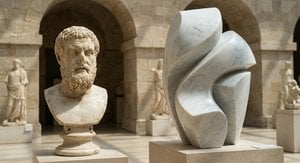
The Enduring Allure of Marble in Art History: From Classical Sculpture to Modern Abstraction
Explore the captivating history of marble sculpture from ancient Greece to modern art. Discover renowned artists like Canova & Michelangelo, carving techniques, and investment insights at ArtsDot.

As 10 Obras em Bronze Mais Icônicas que Transformaram a História da Arte | ArtsDot
Descubra as 10 esculturas em bronze mais influentes da história! Explore a arte de Rodin, Michelangelo e outros mestres. Reproduções de alta qualidade para decorar sua casa com elegância. ArtsDot.