


 Visualizar na parede
 Compartilhar
 Compartilhar
 Detalhes

 Baixar imagem
 Semelhantes
 Raio X
 Slideshow
 Estatísticas
Rest on Flight into Egypt
 Acrylic On Canvas
- WallArt
- Baroque Painting
 1604
1604 82.0 x 82.0 cm
 Museu Hermitage
 Ler mais
Reprodução em Óleo Feita à Mão
Óleo sobre tela pintado à mão no tamanho e moldura de sua escolha, feito sob encomenda pelos nossos artistas. ( Alternar para Impressão Alternar para Imagem Digital)




P118B $10

P118H $10

P118W $10

P438Z $10

P508JH $12

P508YH $12

P805H $10

P805Z $10

P919BZ $10

P919G $10

P919XJ $10

P959ZH $10

P968JZ $12

W106C $8

W218G $10

W218JH $8

W218Y $10

W307PJ $10

W316G $10

W316PJ $8

W316Y $10

W398PJ $8

W4111J $10

W500HY $15

W500JH $15

W692G $12

W849H $8

W940BG $15

W953PJ $8




Escolha entre os nossos tamanhos pré-definidos que respeitam as proporções originais da obra de arte.

Pode inserir as suas próprias dimensões para se adequar a uma moldura ou espaço específico. Se o tamanho selecionado não corresponder às proporções da imagem original, iremos cortar a obra de arte ou estender a pintura com elementos adicionais pintados à mão. Um esboço digital será enviado para sua aprovação antes do início da produção.
Tenha em atenção que a pré-visualização no ecrã não reflete o corte ou extensão real. Apenas o esboço mostrará com precisão a composição final.
Embora tamanhos personalizados estejam disponíveis, recomendamos selecionar uma dimensão da lista predefinida para preservar as proporções originais.
Após o pedido, a equipa ArtsDot.com enviará um e-mail ao cliente para solicitar instruções e fornecer uma prévia do esboço.
Entrega mundial () em 3 a 4 semanas, em vez das 5 semanas padrão. (12 Setembro). Sem comprometer a qualidade.

Envio expresso gratuito para todo o mundo

Tela de Linho de Alta Qualidade

Seguro de transporte completo

Garantia de Reembolso de Impostos Alfandegários

Garantia de Fidelidade Cromática

Política de Devolução de 100 Dias (Apenas Defeitos)

Garantia de reembolso de 100%

Oferta de desconto por quantidade
 A opção de vidro está disponível apenas para tamanhos inferiores a 110 cm

Rest on Flight into Egypt
Técnica de Reprodução
Tamanho da Reprodução
-


Preço Total
$ 263
A Moment of Grace: Annibale Carracci’s “Rest on Flight into Egypt”
Annibale Carracci's "Rest on Flight into Egypt," painted in 1604, is more than just a depiction of a biblical scene; it’s a carefully constructed tableau brimming with humanist ideals and the burgeoning naturalism that defined the artist’s revolutionary approach to painting. Born in Bologna in 1560, Carracci's early life was steeped in artistic tradition, yet he and his brother Agostino, along with cousin Ludovico, yearned for a more dynamic and expressive style than the prevailing Mannerist tendencies of the time. This desire led them to establish the *Accademia degli Incamminati*, a collective dedicated to rediscovering and reinterpreting the principles of the High Renaissance – particularly those embodied by Michelangelo and Raphael.
The painting itself captures a pivotal moment within the narrative of the Flight into Egypt: Mary, Joseph, and the infant Jesus pause on their arduous journey. It’s not a dramatic escape or a perilous flight, but rather a quiet respite, a tender tableau of familial devotion. Carracci masterfully orchestrates this scene, placing the figures amidst a landscape rendered with an almost palpable sense of warmth and light. The trees in the background, bathed in a golden glow, suggest both shelter and the promise of a new beginning – a visual metaphor for the family’s uncertain future.
The Language of Renaissance Naturalism
Carracci's technique is a testament to his commitment to naturalism. He moved away from the stylized poses and attenuated figures characteristic of Mannerism, favoring instead a more robust and believable representation of human form. Observe how he renders Mary’s face – not with the ethereal smoothness often associated with religious painting, but with a subtle modeling that reveals the contours of her features and conveys a sense of genuine weariness and maternal concern. Similarly, Joseph's posture is grounded and solid, reflecting his role as protector and provider. The figures are depicted in a relaxed, almost informal manner, suggesting a shared intimacy and vulnerability.
- Color Palette: Carracci employs a rich, warm palette dominated by earthy tones – ochres, browns, and greens – creating an atmosphere of rustic tranquility.
- Chiaroscuro: The masterful use of *chiaroscuro* (the contrast between light and dark) adds depth and drama to the scene, drawing the viewer’s eye to the central figures while subtly suggesting the surrounding landscape.
- Compositional Balance: The composition is carefully balanced, with the figures arranged in a harmonious group that draws the eye naturally through the scene.
Symbolism and Narrative Resonance
Beyond its immediate depiction of the Flight into Egypt, the painting resonates with deeper symbolic meanings. The journey itself represents not just a physical escape but also a spiritual one – a flight from persecution and a search for refuge. The presence of the supporting figures—the man standing to the right, the woman on the left, and the individual further back—adds layers of narrative complexity, perhaps suggesting the broader community that has offered them aid or the unseen forces guiding their path. The horse, a practical element in the scene, also carries symbolic weight, representing both travel and divine providence.
Carracci’s deliberate choice to portray this moment of respite is significant. It shifts the focus from the dramatic events of flight to the quiet dignity of family life and the enduring power of faith. “Rest on Flight into Egypt” isn't simply a religious painting; it’s an exploration of human emotion, familial bonds, and the promise of hope amidst adversity – themes that continue to resonate powerfully with viewers today.
Bringing Carracci Home: A Reproduction for Your Space
ArtsDot.com offers meticulously crafted hand-painted reproductions of Annibale Carracci’s “Rest on Flight into Egypt,” allowing you to bring this masterpiece into your home or office. Our skilled artisans replicate the artist's nuanced technique and vibrant color palette with exceptional accuracy, ensuring that your reproduction captures the essence of the original painting. Available in a range of sizes, from intimate wall pieces to grand statement artworks, our reproductions are created using archival-quality materials for lasting beauty and value. Consider this piece not just as decoration, but as a window into the heart of the Renaissance – a testament to human compassion and artistic genius.
Obras Relacionadas


Biografia do Artista
Early Life and the Bolognese Roots
Annibale Carracci, born in Bologna on November 3, 1560, emerged from a family deeply entrenched in artistic tradition. His initial training likely unfolded within the nurturing environment of his familial workshop, laying the foundation for a career that would profoundly reshape the landscape of Italian painting. Bologna at this time was a vibrant hub of intellectual and artistic ferment, yet it felt somewhat distant from the dominant currents emanating from Rome and Venice. This sense of provincialism fueled a desire among a group of young artists—Annibale, his brother Agostino, and cousin Ludovico—to forge a new path, one that would revitalize Italian art by looking to the masters of the High Renaissance while simultaneously embracing a more naturalistic approach.
In 1582, this ambition materialized in the establishment of the *Accademia degli Incamminati*, initially known as the Academy of the Desiderosi. This wasn’t merely a studio; it was a crucible for artistic innovation, a space dedicated to rigorous life drawing, spirited debate, and a collective pursuit of artistic excellence. The academy's name itself—the “Progressives”—signified their intent: to move beyond the stylistic complexities of Mannerism and chart a new course toward a more grounded, emotionally resonant form of expression. The Incamminati became a model for art academies across Europe, emphasizing observation from life as the cornerstone of artistic training.
A Synthesis of Styles and Influences
Carracci’s artistic vision wasn't born in a vacuum; it was meticulously crafted through a deep engagement with the legacies of past masters. He possessed an extraordinary ability to synthesize diverse influences, creating a style that felt both deeply rooted in tradition and strikingly original. He admired the clarity of line and compositional balance found in the works of Raphael and Andrea del Sarto, seeking to emulate their grace and harmony. Yet, he also recognized the power of color and atmospheric effects championed by Venetian painters like Titian, infusing his own work with a vibrant luminosity and emotional depth.
The influence of Correggio was particularly profound, evident in Carracci’s dynamic compositions and illusionistic techniques—especially those showcased in his frescoes. He wasn’t simply copying these masters; he was absorbing their strengths and forging them into something new. This eclectic blend became the hallmark of the Bolognese School, a significant branch of Baroque art that emphasized both classical ideals and naturalistic observation. Carracci’s genius lay in his ability to reconcile seemingly disparate elements, creating a harmonious whole that resonated with both intellectual rigor and emotional power.
The Roman Triumph: Palazzo Farnese and Beyond
The invitation to decorate the Palazzo Farnese in Rome marked a pivotal moment in Annibale Carracci’s career. This monumental commission—a vast fresco cycle depicting scenes from mythology—provided him with an unparalleled opportunity to showcase his artistic prowess and establish his reputation on a grand scale. The *Triumph of Bacchus and Ariadne*, arguably his masterpiece, is a breathtaking display of illusionistic technique, dynamic composition, and vibrant color. The frescoes seem to dissolve the boundaries between painting and reality, drawing the viewer into a world of mythic grandeur.
Alongside the *Triumph*, Carracci also undertook *The Loves of the Gods* at Palazzo Farnese, further exploring themes of mythology and love with a blend of classical idealism and keen observation. These works weren’t merely decorative; they were statements about the power of art to elevate the human spirit and celebrate the beauty of the natural world. His success in Rome solidified his position as one of the leading artists of his time, attracting a stream of commissions and influencing generations of painters.
Legacy and Historical Significance
Annibale Carracci’s impact on art history is immeasurable. He played a crucial role in bridging the gap between the High Renaissance and the Baroque period, moving away from the stylized complexities of Mannerism toward a more dynamic, emotionally charged aesthetic. His emphasis on naturalism—on depicting figures with anatomical accuracy and psychological depth—paved the way for artists like Caravaggio, who would further revolutionize Italian painting with their dramatic use of light and shadow.
The Accademia degli Incamminati, founded by Carracci and his associates, served as a model for art academies across Europe, promoting artistic training based on observation and classical principles. His frescoes at Palazzo Farnese remain iconic examples of Baroque illusionism and artistic grandeur, continuing to inspire awe and admiration centuries after their creation. The collective legacy of the Carracci family—Annibale, Agostino, and Ludovico—is one of profound innovation and enduring influence, establishing Bologna as a major center for artistic creativity.
Carracci’s work wasn't simply about technical skill; it was about conveying emotion, telling stories, and celebrating the human experience. He sought to create art that was both beautiful and meaningful, capable of inspiring wonder and provoking thought. His legacy endures not only in his magnificent paintings but also in the enduring principles he championed: a commitment to observation, a reverence for tradition, and an unwavering belief in the power of art to transform the world.

Annibale Carracci
1560 - 1609 , Itália
Dados Rápidos
- Artistic Movement Or Style: Barroco
- Artists Or Movements Influenced By This Artist:
- Caravaggio
- Escola de Bolonha
- Artists Who Influenced This Artist:
- Rafael
- Andrea del Sarto
- Titian
- Date Of Birth: 3 de novembro de 1560
- Date Of Death: 15 de julho de 1609
- Full Name: Annibale Carracci
- Nationality: Italiano
- Notable Artworks:
- Triumph Bacchus
- Loves dos Deuses
- Retrato Gabrieli
- Place Of Birth: Bologna, Itália
Artigos Relacionados

The Visceral Stage: Exploring Dramatic Narratives & Emotional Intensity in Baroque Art
Explore the dramatic world of Baroque art! Discover iconic masters like Caravaggio & Rembrandt, their techniques, and the movement's lasting impact. Expert insights for collectors & enthusiasts at ArtsDot.

Os 10 Mestres do Barroco: Obras-Primas que Moldaram a Arte e Decoram o Lar
Descubra os 10 maiores ícones do Barroco! Explore a história, técnica e emoção por trás de Caravaggio, Rembrandt, Bernini e outros mestres. Encontre reproduções de arte barroca para decorar seu lar com luxo em ArtsDot.com.

Barroco Brasileiro: Opulência e Emoção para Interiores Contemporâneos
Descubra como o Barroco brasileiro pode transformar seus interiores! Explore a história, elementos-chave e dicas para integrar este estilo luxuoso e cheio de emoção em sua casa.

Simon Vouet: A Baroque Master's Journey from Italian Influence to French Classicism
Explore the life & art of Simon Vouet, a pivotal French Baroque painter who introduced Italian styles to France. Discover his masterpieces and lasting influence on 17th-century art.
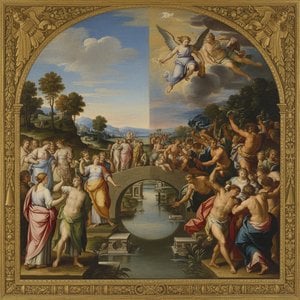
Annibale Carracci: Bridging Renaissance Ideals & Baroque Innovation
Explore the life & art of Annibale Carracci, a pivotal figure bridging Renaissance ideals with Baroque innovation. Discover his masterpieces and lasting influence on Italian painting.


