

 Visualizar na parede
 Compartilhar
 Compartilhar
 Detalhes
 Guia
Guia

 Baixar imagem
 Semelhantes
 Raio X
 Ver diaporama
 Perguntas e Respostas
 Estatísticas
Paisagem fluvial

- 89.0 x 148.0 cm


 Ler mais
Giclée / Impressão de Arte
Impressão giclée ou em tela de qualidade de museu, com produção rápida e opções flexíveis de acabamento. ( Comprar pintura feita à mão Alternar para Imagem Digital)




P118B €10

P118H €10

P118W €10

P438Z €10

P508JH €12

P508YH €12

P805H €10

P805Z €10

P919BZ €10

P919G €10

P919XJ €10

P959ZH €10

P968JZ €12

W106C €8

W218G €10

W218JH €8

W218Y €10

W307PJ €10

W316G €10

W316PJ €8

W316Y €10

W398PJ €8

W4111J €10

W500HY €15

W500JH €15

W692G €12

W849H €8

W940BG €15

W953PJ €8




Escolha entre os nossos tamanhos pré-definidos que respeitam as proporções originais da obra de arte.

Insira a largura e a altura desejadas para se ajustarem à sua moldura ou parede. Uma impressão pode ser apenas cortada, nunca ampliada além da imagem original; portanto, um tamanho com proporções diferentes resultará na perda de parte da imagem. Enviamos uma maquete digital para sua aprovação antes de realizarmos a impressão. A imagem exibida nesta página não mostra o corte real — apenas a maquete o faz.
Entrega mundial () em 2 semanas, em vez das 4/5 semanas padrão. (5 Novembro)

Envio expresso gratuito para todo o mundo

Tela de Linho de Alta Qualidade

Seguro de transporte completo

Garantia de Reembolso de Impostos Alfandegários

Garantia de Fidelidade Cromática

Política de Devolução em 100 Dias (Apenas para Defeitos)

Garantia de reembolso de 100%

Oferta de desconto por quantidade
 A opção de vidro está disponível apenas para tamanhos inferiores a 110 cm

Paisagem fluvial
Giclée / Impressão de Arte
Tamanho da Reprodução
-


Preço Total
€ 56
Uma Cena Cativante da Serenidade da Natureza
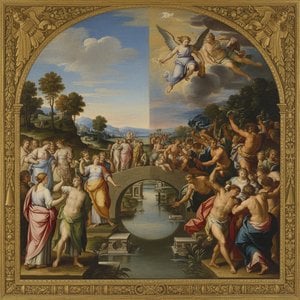
Mergulhe em uma paisagem belamente detalhada que captura a essência tranquila do mundo natural. Esta obra de arte retrata um rio pacífico serpenteando por um ambiente exuberante e verdejante, convidando os espectadores a vivenciar um momento de reflexão silenciosa. A cena ganha vida com árvores texturizadas, águas que fluem suavemente e montanhas distantes, criando uma composição harmoniosa que celebra a beleza atemporal da natureza. Sua atmosfera serena evoca sentimentos de calma e introspecção, tornando-a uma peça central ideal para espaços dedicados ao relaxamento e à inspiração.Estilo e Técnica Primorosos
Criada em 1589, esta pintura exemplifica o estilo realista característico da transição do final do Renascimento para o início do Barroco. O artista emprega pinceladas meticulosas para renderizar texturas com uma precisão notável — desde a casca retorcida das árvores até a superfície cintilante do rio. Luz e sombra são habilmente manipuladas para produzir um efeito luminoso, com a luz solar filtrando-se através da folhagem e lançando reflexos salpicados por toda a paisagem. A perspectiva naturalista e a representação detalhada convidam os observadores a explorar cada elemento, tornando esta obra um testemunho do domínio técnico do artista e de sua observação aguçada do mundo natural.Contexto Histórico e Significância Artística
Produzida durante um período de inovação artística, esta paisagem reflete o surgimento de uma apreciação pela beleza da natureza para além dos temas religiosos e mitológicos. Ela se alinha à ênfase do início do Barroco no realismo e na profundidade emocional, capturando um momento de harmonia entre os seres humanos e o seu ambiente. A qualidade idílica da cena ecoa os ideais renascentistas de harmonia e equilíbrio, ao mesmo tempo que sugere a fascinação romântica pelo sublime e pelo poder inspirador da natureza. Como uma obra de Annibale Carracci, ela incorpora a abordagem pioneira do artista na pintura de paisagem, fundindo a precisão clássica com uma sensação de profundidade atmosférica.Simbolismo e Impacto Emocional
Além de seu apelo visual, a pintura transmite sutilmente temas de paz, harmonia e a vitalidade duradoura da natureza. O pequeno barco com figuras remando ao longo do rio sugere a coexistência humana com o meio ambiente, enfatizando uma relação gentil e respeitosa com o mundo natural. As montanhas distantes simbolizam estabilidade e atemporalidade, enquanto o céu suave e nublado evoca um senso de calma e introspecção. Em suma, esta obra convida os espectadores a pausar, refletir e encontrar consolo na beleza serena da paisagem, tornando-se uma adição poderosa a qualquer coleção ou espaço interior que busque tranquilidade e inspiração.Perfeita para Colecionismo e Decoração de Interiores
Esta reprodução de alta qualidade oferece a amantes da arte, colecionadores e designers de interiores a oportunidade de trazer um pedaço da história e da beleza natural para o seu ambiente. Sua composição equilibrada e paleta de cores harmoniosa tornamla versátil para diversos estilos de decoração — do clássico ao contemporâneo. Seja exibida em uma sala de estar, escritório ou galeria, esta paisagem servirá como um ponto focal atemporal que inspira serenidade e apreciação pela arte sublime do período Barroco inicial.Perguntas e Respostas
Qual artista e qual estilo estão por trás de "Paisagem fluvial"?
Por trás de "Paisagem fluvial" estão Annibale Carracci e o movimento Italian Baroque.
Qual cor predomina na composição de "Paisagem fluvial", de Annibale Carracci?
A cor que mais se destaca em "Paisagem fluvial" é Bege-acinzentado (#c4c6cd). A cor dominante é útil ao combinar uma obra de arte com um ambiente interno.
Posso visualizar "Paisagem fluvial", de Annibale Carracci antes de fazer o pedido?
Para visualizar uma reprodução de "Paisagem fluvial", de Annibale Carracci, acesse a página de Pré-visualização da obra.
Obras Relacionadas


Biografia do Artista
Early Life and the Bolognese Roots
Annibale Carracci, born in Bologna on November 3, 1560, emerged from a family deeply entrenched in artistic tradition. His initial training likely unfolded within the nurturing environment of his familial workshop, laying the foundation for a career that would profoundly reshape the landscape of Italian painting. Bologna at this time was a vibrant hub of intellectual and artistic ferment, yet it felt somewhat distant from the dominant currents emanating from Rome and Venice. This sense of provincialism fueled a desire among a group of young artists—Annibale, his brother Agostino, and cousin Ludovico—to forge a new path, one that would revitalize Italian art by looking to the masters of the High Renaissance while simultaneously embracing a more naturalistic approach.
In 1582, this ambition materialized in the establishment of the *Accademia degli Incamminati*, initially known as the Academy of the Desiderosi. This wasn’t merely a studio; it was a crucible for artistic innovation, a space dedicated to rigorous life drawing, spirited debate, and a collective pursuit of artistic excellence. The academy's name itself—the “Progressives”—signified their intent: to move beyond the stylistic complexities of Mannerism and chart a new course toward a more grounded, emotionally resonant form of expression. The Incamminati became a model for art academies across Europe, emphasizing observation from life as the cornerstone of artistic training.
A Synthesis of Styles and Influences
Carracci’s artistic vision wasn't born in a vacuum; it was meticulously crafted through a deep engagement with the legacies of past masters. He possessed an extraordinary ability to synthesize diverse influences, creating a style that felt both deeply rooted in tradition and strikingly original. He admired the clarity of line and compositional balance found in the works of Raphael and Andrea del Sarto, seeking to emulate their grace and harmony. Yet, he also recognized the power of color and atmospheric effects championed by Venetian painters like Titian, infusing his own work with a vibrant luminosity and emotional depth.
The influence of Correggio was particularly profound, evident in Carracci’s dynamic compositions and illusionistic techniques—especially those showcased in his frescoes. He wasn’t simply copying these masters; he was absorbing their strengths and forging them into something new. This eclectic blend became the hallmark of the Bolognese School, a significant branch of Baroque art that emphasized both classical ideals and naturalistic observation. Carracci’s genius lay in his ability to reconcile seemingly disparate elements, creating a harmonious whole that resonated with both intellectual rigor and emotional power.
The Roman Triumph: Palazzo Farnese and Beyond
The invitation to decorate the Palazzo Farnese in Rome marked a pivotal moment in Annibale Carracci’s career. This monumental commission—a vast fresco cycle depicting scenes from mythology—provided him with an unparalleled opportunity to showcase his artistic prowess and establish his reputation on a grand scale. The *Triumph of Bacchus and Ariadne*, arguably his masterpiece, is a breathtaking display of illusionistic technique, dynamic composition, and vibrant color. The frescoes seem to dissolve the boundaries between painting and reality, drawing the viewer into a world of mythic grandeur.
Alongside the *Triumph*, Carracci also undertook *The Loves of the Gods* at Palazzo Farnese, further exploring themes of mythology and love with a blend of classical idealism and keen observation. These works weren’t merely decorative; they were statements about the power of art to elevate the human spirit and celebrate the beauty of the natural world. His success in Rome solidified his position as one of the leading artists of his time, attracting a stream of commissions and influencing generations of painters.
Legacy and Historical Significance
Annibale Carracci’s impact on art history is immeasurable. He played a crucial role in bridging the gap between the High Renaissance and the Baroque period, moving away from the stylized complexities of Mannerism toward a more dynamic, emotionally charged aesthetic. His emphasis on naturalism—on depicting figures with anatomical accuracy and psychological depth—paved the way for artists like Caravaggio, who would further revolutionize Italian painting with their dramatic use of light and shadow.
The Accademia degli Incamminati, founded by Carracci and his associates, served as a model for art academies across Europe, promoting artistic training based on observation and classical principles. His frescoes at Palazzo Farnese remain iconic examples of Baroque illusionism and artistic grandeur, continuing to inspire awe and admiration centuries after their creation. The collective legacy of the Carracci family—Annibale, Agostino, and Ludovico—is one of profound innovation and enduring influence, establishing Bologna as a major center for artistic creativity.
Carracci’s work wasn't simply about technical skill; it was about conveying emotion, telling stories, and celebrating the human experience. He sought to create art that was both beautiful and meaningful, capable of inspiring wonder and provoking thought. His legacy endures not only in his magnificent paintings but also in the enduring principles he championed: a commitment to observation, a reverence for tradition, and an unwavering belief in the power of art to transform the world.

Annibale Carracci
1560 - 1609 , Itália
Dados Rápidos
- Artistic Movement Or Style: Barroco
- Artists Or Movements Influenced By This Artist:
- Caravaggio
- Escola de Bolonha
- Artists Who Influenced This Artist:
- Rafael
- Andrea del Sarto
- Titian
- Date Of Birth: 3 de novembro de 1560
- Date Of Death: 15 de julho de 1609
- Full Name: Annibale Carracci
- Nationality: Italiano
- Notable Artworks:
- Triumph Bacchus
- Loves dos Deuses
- Retrato Gabrieli
- Place Of Birth: Bologna, Itália
Artigos Relacionados

Os 10 Mestres do Barroco: Obras-Primas que Moldaram a Arte e Decoram o Lar
Descubra os 10 maiores ícones do Barroco! Explore a história, técnica e emoção por trás de Caravaggio, Rembrandt, Bernini e outros mestres. Encontre reproduções de arte barroca para decorar seu lar com luxo em ArtsDot.com.

The Dramatic Flourish: Exploring the Baroque Movement's Enduring Legacy in Art History
Explore the dramatic world of Baroque art! Discover iconic artists like Caravaggio & Rubens, defining techniques, and its lasting impact on art history. Expert insights for collectors & enthusiasts at ArtsDot.

Barroco Brasileiro: Opulência e Emoção para Interiores Contemporâneos
Descubra como o Barroco brasileiro pode transformar seus interiores! Explore a história, elementos-chave e dicas para integrar este estilo luxuoso e cheio de emoção em sua casa.

Simon Vouet: A Baroque Master's Journey from Italian Influence to French Classicism
Explore the life & art of Simon Vouet, a pivotal French Baroque painter who introduced Italian styles to France. Discover his masterpieces and lasting influence on 17th-century art.
Annibale Carracci: Bridging Renaissance Ideals & Baroque Innovation
Explore the life & art of Annibale Carracci, a pivotal figure bridging Renaissance ideals with Baroque innovation. Discover his masterpieces and lasting influence on Italian painting.


