


 Visualizar em escala
 Enviar
 Compartilhar
 Ver detalhes
 Guia de Obras do Aluno

 Baixar imagem
 Semelhantes
 Raio X
 Apresentação de slides
 Estatísticas
Hunting
 Oil On Canvas
- WallArt
- Baroque Painting
 1585
1585- Renaissance
 136.0 x 253.0 cm
 Museu do Louvre
 Ver mais
Reprodução em Óleo Feita à Mão
Óleo sobre tela pintado à mão no tamanho e moldura de sua escolha, feito sob encomenda pelos nossos artistas. ( Alternar para Impressão Ver Imagem Digital)




P118B €10

P118H €10

P118W €10

P438Z €10

P508JH €12

P508YH €12

P805H €10

P805Z €10

P919BZ €10

P919G €10

P919XJ €10

P959ZH €10

P968JZ €12

W106C €8

W218G €10

W218JH €8

W218Y €10

W307PJ €10

W316G €10

W316PJ €8

W316Y €10

W398PJ €8

W4111J €10

W500HY €15

W500JH €15

W692G €12

W849H €8

W940BG €15

W953PJ €8




Escolha entre os nossos tamanhos pré-definidos que respeitam as proporções originais da obra de arte.

Pode inserir as suas próprias dimensões para se adequar a uma moldura ou espaço específico. Se o tamanho selecionado não corresponder às proporções da imagem original, iremos cortar a obra de arte ou estender a pintura com elementos adicionais pintados à mão. Um esboço digital será enviado para sua aprovação antes do início da produção.
Tenha em atenção que a pré-visualização no ecrã não reflete o corte ou extensão real. Apenas o esboço mostrará com precisão a composição final.
Embora tamanhos personalizados estejam disponíveis, recomendamos selecionar uma dimensão da lista predefinida para preservar as proporções originais.
Após o pedido, a equipa ArtsDot.com enviará um e-mail ao cliente para solicitar instruções e fornecer uma prévia do esboço.
Entrega mundial () em 3 a 4 semanas, em vez das 5 semanas padrão. (13 Outubro). Sem comprometer a qualidade.

Envio expresso gratuito para todo o mundo

Tela de Linho Premium

Seguro de transporte total

Garantia de Reembolso de Impostos Alfandegários

Garantia de Fidelidade de Cor

Política de Devolução em 100 Dias (Apenas para Defeitos)

Garantia de reembolso de 100%

Desconto para múltiplas unidades
 A opção de vidro está disponível apenas para tamanhos inferiores a 110 cm

Hunting
Técnica de Reprodução
Dimensões da Reprodução
-


Preço Total
€ 227
The Pulse of the Chase: A Renaissance Revival
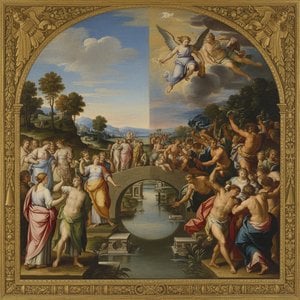
In the grand tapestry of the late Renaissance, few works capture the raw, kinetic energy of life quite like Annibale Carracci’s Hunting. This monumental oil on canvas is not merely a depiction of a sporting event; it is a visceral immersion into a world of movement, nobility, and the primal thrill of the pursuit. As the eye wanders across the expansive 136 x 253 cm surface, one is immediately swept up in a choreographed chaos where every diagonal line serves to propel the viewer deeper into the thicket. The composition is masterfully orchestrated, utilizing the sweeping motions of horses and the focused trajectories of hounds to create a sense of breathless anticipation. It is a scene that breathes with the scent of damp earth and the sharp crack of a rifle, making it an extraordinary centerpiece for any collection seeking to inject dramatic vitality into a space.
At the heart of this masterpiece lies a profound shift in artistic philosophy. Carracci, a pioneer of the Bolognese School, sought to break free from the artificiality of Mannerism, turning instead toward a revitalized naturalism. In Hunting, we see this commitment to truth through his meticulous rendering of anatomy and texture. The way light catches the muscular tension of a charging horse or the soft, frantic flutter of birds in flight reveals a painter deeply enamored with the physical world. For the discerning collector or interior designer, this technique offers a sophisticated layer of depth; the subtle gradations of tone and the rich, layered pigments create a tactile quality that commands attention, transforming a wall into a window onto a historical epoch.
Symbolism and the Grandeur of Tradition
Beyond its surface-level excitement, the painting serves as an eloquent symbol of prestige and the aristocratic lifestyle of the late 16th century. The presence of well-bred horses and organized hunting parties speaks to the social hierarchies of the era, where the hunt was a ritual of power and a display of dominion over nature. Carracci skillfully weaves together elements of human ambition and animal instinct, creating a narrative that is both high-born and deeply grounded. This duality makes the work particularly compelling for modern interiors; it possesses the classical dignity required for formal settings, yet retains an emotional accessibility that resonates with our own enduring fascination with the wild and the untamed.
To possess a reproduction of such a significant work is to invite a piece of art history into the home. It is an invitation to contemplate the transition from the structured ideals of the High Renaissance to the burgeoning dynamism of the Baroque. Whether placed in a sunlit gallery or a moody, library-inspired study, Hunting acts as a conversational anchor, offering endless layers of discovery. It remains a testament to Carracci’s ability to elevate a momentary action into an eternal moment of grace, making it an indispensable inspiration for those who appreciate art that is as intellectually stimulating as it is visually breathtaking.
Perguntas e Respostas
Qual origem nacional fundamenta o Baroque Painting de "Hunting"?
"Hunting" foi criada por Annibale Carracci, nascido em Itália, dentro do movimento Baroque Painting. A origem do artista vincula a obra ao Baroque Painting conforme praticado por artistas de Itália.
Qual é o nível de popularidade de "Hunting" dentro do Baroque Painting?
Dentro do movimento Baroque Painting, "Hunting" possui um nível de popularidade Notable.
Quantas pessoas visualizam "Hunting"?
Existe uma página de Estatísticas para "Hunting". Ela apresenta o gráfico de visitas mensais da obra e de outras obras do artista, com detalhamento por país e idioma.
Quão intensas são as cores de "Hunting"?
A cor de "Hunting" possui Muted de saturação e Monochromatic de intensidade.
"Hunting" está disponível como uma impressão fine art?
Uma impressão de "Hunting" de Annibale Carracci pode ser encomendada diretamente em esta página: uma impressão fine art em tela de algodão ou papel canvas de arquivo.
Que tema e atmosfera combinam em "Hunting" de Annibale Carracci?
"Hunting" apresenta hunting scene, italian art, renaissance influence, carracci brothers, classical composition, animal painting, baroque drama, roman patronage, e o seu estado de espírito registrado é Dramatic.
A que fase da carreira de Annibale Carracci corresponde a data de 1585 de "Hunting"?
"Hunting", criado em 1585, pertence ao Mature Period da carreira de Annibale Carracci.
Qual uso e espaço são recomendados para "Hunting" de Annibale Carracci?
O uso de (Focal) e o espaço (Hotel Lobby) são as duas recomendações registradas para "Hunting" de Annibale Carracci.
Obras Relacionadas


Biografia do Artista
Early Life and the Bolognese Roots
Annibale Carracci, born in Bologna on November 3, 1560, emerged from a family deeply entrenched in artistic tradition. His initial training likely unfolded within the nurturing environment of his familial workshop, laying the foundation for a career that would profoundly reshape the landscape of Italian painting. Bologna at this time was a vibrant hub of intellectual and artistic ferment, yet it felt somewhat distant from the dominant currents emanating from Rome and Venice. This sense of provincialism fueled a desire among a group of young artists—Annibale, his brother Agostino, and cousin Ludovico—to forge a new path, one that would revitalize Italian art by looking to the masters of the High Renaissance while simultaneously embracing a more naturalistic approach.
In 1582, this ambition materialized in the establishment of the *Accademia degli Incamminati*, initially known as the Academy of the Desiderosi. This wasn’t merely a studio; it was a crucible for artistic innovation, a space dedicated to rigorous life drawing, spirited debate, and a collective pursuit of artistic excellence. The academy's name itself—the “Progressives”—signified their intent: to move beyond the stylistic complexities of Mannerism and chart a new course toward a more grounded, emotionally resonant form of expression. The Incamminati became a model for art academies across Europe, emphasizing observation from life as the cornerstone of artistic training.
A Synthesis of Styles and Influences
Carracci’s artistic vision wasn't born in a vacuum; it was meticulously crafted through a deep engagement with the legacies of past masters. He possessed an extraordinary ability to synthesize diverse influences, creating a style that felt both deeply rooted in tradition and strikingly original. He admired the clarity of line and compositional balance found in the works of Raphael and Andrea del Sarto, seeking to emulate their grace and harmony. Yet, he also recognized the power of color and atmospheric effects championed by Venetian painters like Titian, infusing his own work with a vibrant luminosity and emotional depth.
The influence of Correggio was particularly profound, evident in Carracci’s dynamic compositions and illusionistic techniques—especially those showcased in his frescoes. He wasn’t simply copying these masters; he was absorbing their strengths and forging them into something new. This eclectic blend became the hallmark of the Bolognese School, a significant branch of Baroque art that emphasized both classical ideals and naturalistic observation. Carracci’s genius lay in his ability to reconcile seemingly disparate elements, creating a harmonious whole that resonated with both intellectual rigor and emotional power.
The Roman Triumph: Palazzo Farnese and Beyond
The invitation to decorate the Palazzo Farnese in Rome marked a pivotal moment in Annibale Carracci’s career. This monumental commission—a vast fresco cycle depicting scenes from mythology—provided him with an unparalleled opportunity to showcase his artistic prowess and establish his reputation on a grand scale. The *Triumph of Bacchus and Ariadne*, arguably his masterpiece, is a breathtaking display of illusionistic technique, dynamic composition, and vibrant color. The frescoes seem to dissolve the boundaries between painting and reality, drawing the viewer into a world of mythic grandeur.
Alongside the *Triumph*, Carracci also undertook *The Loves of the Gods* at Palazzo Farnese, further exploring themes of mythology and love with a blend of classical idealism and keen observation. These works weren’t merely decorative; they were statements about the power of art to elevate the human spirit and celebrate the beauty of the natural world. His success in Rome solidified his position as one of the leading artists of his time, attracting a stream of commissions and influencing generations of painters.
Legacy and Historical Significance
Annibale Carracci’s impact on art history is immeasurable. He played a crucial role in bridging the gap between the High Renaissance and the Baroque period, moving away from the stylized complexities of Mannerism toward a more dynamic, emotionally charged aesthetic. His emphasis on naturalism—on depicting figures with anatomical accuracy and psychological depth—paved the way for artists like Caravaggio, who would further revolutionize Italian painting with their dramatic use of light and shadow.
The Accademia degli Incamminati, founded by Carracci and his associates, served as a model for art academies across Europe, promoting artistic training based on observation and classical principles. His frescoes at Palazzo Farnese remain iconic examples of Baroque illusionism and artistic grandeur, continuing to inspire awe and admiration centuries after their creation. The collective legacy of the Carracci family—Annibale, Agostino, and Ludovico—is one of profound innovation and enduring influence, establishing Bologna as a major center for artistic creativity.
Carracci’s work wasn't simply about technical skill; it was about conveying emotion, telling stories, and celebrating the human experience. He sought to create art that was both beautiful and meaningful, capable of inspiring wonder and provoking thought. His legacy endures not only in his magnificent paintings but also in the enduring principles he championed: a commitment to observation, a reverence for tradition, and an unwavering belief in the power of art to transform the world.

Annibale Carracci
1560 - 1609 , Itália
Informações Rápidas
- Artistic Movement Or Style: Barroco
- Artists Or Movements Influenced By This Artist:
- Caravaggio
- Escola de Bolonha
- Artists Who Influenced This Artist:
- Rafael
- Andrea del Sarto
- Titian
- Date Of Birth: 3 de novembro de 1560
- Date Of Death: 15 de julho de 1609
- Full Name: Annibale Carracci
- Nationality: Italiano
- Notable Artworks:
- Triumph Bacchus
- Loves dos Deuses
- Retrato Gabrieli
- Place Of Birth: Bologna, Itália
Artigos Relacionados

The Pursuit of Power & Prestige: Hunting Scenes in Western Art
Explore the rich history of hunting scenes in Western art, from royal pursuits to powerful allegories. Discover masterpieces & expert insights for discerning collectors. ArtsDot offers museum-quality reproductions.

The Enduring Power of Painting: A Historical & Contemporary Exploration of Form and Emotion
Explore the rich history & enduring techniques of oil painting with ArtsDot. Discover masterpieces, learn about art collecting, and find authentic handmade reproductions crafted by skilled artists.

Barroco Brasileiro: Opulência e Emoção para Interiores Contemporâneos
Descubra como o Barroco brasileiro pode transformar seus interiores! Explore a história, elementos-chave e dicas para integrar este estilo luxuoso e cheio de emoção em sua casa.
Annibale Carracci: Bridging Renaissance Ideals & Baroque Innovation
Explore the life & art of Annibale Carracci, a pivotal figure bridging Renaissance ideals with Baroque innovation. Discover his masterpieces and lasting influence on Italian painting.

Os 10 Mestres do Barroco: Obras-Primas que Moldaram a Arte e Decoram o Lar
Descubra os 10 maiores ícones do Barroco! Explore a história, técnica e emoção por trás de Caravaggio, Rembrandt, Bernini e outros mestres. Encontre reproduções de arte barroca para decorar seu lar com luxo em ArtsDot.com.


