


A imagem segue as suas escolhas: , .
Descrição do Item
Experience André Derain's iconic 'Charing Cross from SW'! This vibrant Fauvist masterpiece captures London’s energy with bold colors and dynamic brushstrokes. A stunning reproduction of a pivotal work by a modern art pioneer.
 Ler mais
Biografia do Artista
André Derain (1880-1954): Pioneiro do Fauvismo, famoso por cores vibrantes e estilo expressivo. Explore suas obras icônicas em Londres e sua evolução para o classicismo.
Reprodução em Óleo Feita à Mão
Óleo sobre tela pintado à mão no tamanho e moldura de sua escolha, feito sob encomenda pelos nossos artistas. ( Alternar para Impressão Alternar para Imagem Digital)
Saiba mais sobre esta pintura
 Visualizar na parede
 Compartilhar
 Compartilhar
 Detalhes
 Guia
Guia

 Baixar imagem
 Semelhantes
 Raio X
 Ver diaporama
 Perguntas e Respostas
 Estatísticas
Encomende a sua pintura em quatro passos simples
Não tenha pressa. Você pode alterar qualquer resposta; o preço no seu carrinho de compras será atualizado conforme cada escolha.
1 Passo um de quatro
Qual tamanho você gostaria?
Estes tamanhos mantêm as proporções da pintura original. A ilustração mostra a sua escolha numa parede, acima de um sofá de dois metros.
Ou informe suas próprias medidas
Escolha entre os nossos tamanhos pré-definidos que respeitam as proporções originais da obra de arte.

Insira a largura e a altura desejadas para se ajustarem à sua moldura ou parede. Como esta obra é pintada à mão, para um tamanho com proporções diferentes, o artista poderá pintar um pouco mais ao redor da imagem ou reduzir ligeiramente a composição — você escolhe. Enviamos uma maquete digital para sua aprovação antes de iniciar a pintura. A imagem exibida nesta página não representa o resultado real — apenas a maquete mostra o resultado final.
2 Passo dois de quatro
Como deve ser preparado: enrolado, esticado ou emoldurado?
Os preços abaixo referem-se ao tamanho escolhido na primeira etapa.
Escolha as bordas da tela esticada
Escolha sua moldura

Branco €1

Bordas esfumaçadas €1

Bordas estendidas €1

P118B €10

P118H €10

P118W €10

P438Z €10

P508JH €12

P508YH €12

P805H €10

P805Z €10

P919BZ €10

P919G €10

P919XJ €10

P959ZH €10

P968JZ €12

W106C €8

W218G €10

W218JH €8

W218Y €10

W307PJ €10

W316G €10

W316PJ €8

W316Y €10

W398PJ €8

W4111J €10

W500HY €15

W500JH €15

W692G €12

W849H €8

W940BG €15

W953PJ €8

H24-GOLD €30

H24-SILVER €30

H36-GOLD €45

H36-SILVER €45
Com moldura
Moldura: . Dimensões totais com a moldura: .
3 Passo três de quatro
Gostaria de alterar algo na pintura?
A maioria das pessoas responde que não. Como cada pintura é feita à mão, nosso artista também pode adaptá-la para você.
Após o pedido, a equipe da ArtsDot.com enviará um e-mail ao cliente para instruções e fornecerá uma prévia da montagem
4 Passo quatro de quatro
Algumas opções de acabamento
Todos eles são opcionais. As respostas já selecionadas não têm custo adicional.
Quem o pintou?
Entrega mundial () em 3 a 4 semanas, em vez das 5 semanas padrão. (4 Novembro). Sem comprometer a qualidade.
Uma placa de identificação, como em um museu?
Detalhes da Placa de Bronze Gravada
This elegant plaque features the artist's name and the title of the artwork, finely engraved for a timeless presentation.
It is made from bronze with a refined, elegant finish. The text is precisely laser-engraved for a sharp and permanent result. Measuring 9x2 cm, the plaque is compact yet easy to read. It's built to be durable and scratch-resistant, offering a professional, museum-quality look. Mounting is simple thanks to the included adhesive backing.
Detalhes da Placa de Acrílico Transparente
The plaque includes essential engraved details such as the artist's name, the title of the artwork, the date it was created, the type of media used-like oil on canvas or watercolor-a brief description of the piece, and a QR code that links to the complete artwork information.
It is crafted from clear acrylic, offering a sleek, modern appearance. The text is UV-engraved in black to ensure strong visual contrast. With a size of 10x15 cm, it ensures optimal readability. It comes equipped with two metal hooks for secure wall mounting. The plaque is designed to be weather-resistant, making it suitable for various environments, and it includes interactive features that work seamlessly with smartphone scanning.
Detalhes da Placa de Acrílico Preto
This elegant plaque includes engraved information such as the artist's name, the title of the artwork, the date it was created, the type of media used (like oil on canvas or watercolor), a short description of the artwork, and a QR code for quick access to more information.
The plaque itself is made from refined black acrylic with a premium finish. The text is laser-engraved in white for high contrast and readability. Its size is 10x15 cm, designed to be easy to read. It comes with two metal hooks for professional mounting. The design is sleek and fits any interior style. It is also weather-resistant and durable, with built-in digital integration for mobile compatibility.
Um verniz protetor?
Para quando você precisa?
✓ Verifique e peça
A sua pintura, conforme encomendada

Charing Cross from sw
Técnica de Reprodução
Tamanho da Reprodução
-

Artista Sênior de Elite
Mais detalhes, refinamento e tempo de produção adicional
-

Moldura para Reprodução
-
-
Para obras de arte ou reproduções com mais de 105 cm (aproximadamente 41 polegadas) em qualquer um dos lados, a moldura será enviada como um kit desmontado. Este método garante uma entrega segura e evita danos durante o transporte.
Montagem profissional necessária — este não é um produto DIY (faça você mesmo).
O kit deve ser montado e a tela esticada por um profissional de molduraria experiente, utilizando cola de madeira (não inclusa), um alicate de esticar tela e grampos para manter as travessas alinhadas enquanto a cola seca. A montagem incorreta ou a tensão desigual da tela podem danificar permanentemente a obra de arte e não estão cobertas pela nossa garantia.
 Para obras de arte ou reproduções com mais de 105 cm (aproximadamente 41 polegadas) em qualquer um dos lados, a moldura será enviada como um kit desmontado. Este método garante uma entrega segura e evita danos durante o transporte.
Todas as barras de madeira maciça estão incluídas, precisamente cortadas ao tamanho certo.
Montado com os parafusos fornecidos, além de cola para madeira para as junções dos cantos, que não está inclusa e deve ser providenciada pelo seu moldurista.
São necessárias ferramentas profissionais não incluídas: um alicate de estiramento de tela (esticador) e grampos para manter as ripas alinhadas enquanto a cola seca.
Importante:
As junções dos cantos requerem cola para madeira, as ripas devem ser mantidas com grampos até que a cola esteja completamente seca, e o estiramento da tela na moldura montada requer um alicate de esticar tela. Nenhum destes itens está incluído no kit. Por favor, certifique-se de contar com um profissional de molduraria experiente antes de encomendar este tamanho.

Etiqueta de identificação
-
-

Verniz de Proteção
Verniz brilhante (realça as cores e protege contra a luz e a umidade)
-

Personalizar minha obra
Exemplos de alterações possíveis: Substituir o rosto por uma foto do cliente; Adicionar um animal de estimação (ex.: substituir gato por cachorro); Incluir uma mensagem oculta no fundo; Alterar a paisagem ou os elementos do fundo.
-

Urgente
Entrega mundial () em 3 a 4 semanas, em vez das 5 semanas padrão. (4 Novembro). Sem comprometer a qualidade.
-
Envio Expresso
Entrega mundial para em 5 semanas. (11 Novembro).
Com envio incluído
Preço Total
€ 235
A opção de vidro está disponível apenas para tamanhos inferiores a 110 cm
Incluído em todos os pedidos
- Envio expresso gratuito para todo o mundo
- Tela de Linho de Alta Qualidade
- Seguro de transporte completo
- Garantia de Reembolso de Impostos Alfandegários
- Garantia de Fidelidade Cromática
- Política de Devolução em 100 Dias (Apenas para Defeitos)
- Garantia de reembolso de 100%
- Oferta de desconto por quantidade


Charing Cross from SW: A Fauvist Symphony of London
André Derain’s “Charing Cross from SW” isn't merely a depiction of a London landmark; it’s an explosion of feeling, a vibrant declaration of the Fauvist movement at its peak. Painted in 1906, this artwork captures a bustling scene along the Thames, dominated by the iconic Charing Cross bridge, yet rendered through a lens entirely unique to Derain's revolutionary approach to color and form. The painting immediately assaults the senses with its audacious palette – fiery reds clash with intense blues and greens, punctuated by yellows and ochres, creating an almost hallucinatory effect. This wasn’t an attempt to faithfully recreate reality; instead, Derain sought to express the *emotional* essence of London, a feeling of energy, movement, and perhaps even a touch of urban chaos. The bridge itself is simplified, its structure reduced to bold geometric shapes, contributing to the overall sense of dynamism. The inclusion of boats navigating the river adds another layer of visual interest, further emphasizing the painting’s lively composition.The Birth of Fauvism: A Wild Beast Aesthetic
“Charing Cross from SW” stands as a pivotal example of Fauvism, an artistic movement that shook the foundations of late 19th and early 20th-century art. Emerging in France around 1905, Fauvism, meaning “wild beasts,” was characterized by its deliberate rejection of academic traditions and a fearless embrace of pure color. Artists like Derain and Matisse abandoned naturalistic representation in favor of using color as the primary subject matter – not to depict reality, but to evoke emotion and create visual impact. Louis Vauxcelles, the critic who coined the term “Fauves,” described their work as possessing a "riotous colourism," perfectly capturing the intensity and unconventional nature of their approach. Derain’s early experiments with color, influenced by his time in Collioure, Mediterranean France, where he painted alongside Matisse, laid the groundwork for this bold new style. The painting reflects this period of experimentation, showcasing a willingness to break from established norms and explore the expressive potential of color alone.Technique and Composition: A Dance of Brushstrokes
Derain’s technique in “Charing Cross from SW” is both energetic and deliberate. He employed loose, visible brushstrokes – a hallmark of Fauvist painting – that contribute significantly to the work's sense of movement and immediacy. The paint is applied with thick impasto, creating a tactile surface that invites close examination. Notice how he uses broken color—applying small dabs or strokes of different hues side-by-side rather than blending them seamlessly. This technique intensifies the vibrancy of the colors and creates a shimmering effect, particularly noticeable in the reflections on the water. The composition itself is carefully constructed to draw the viewer’s eye through the scene. The bridge acts as a central anchor, while the boats and figures create a sense of depth and movement, leading the eye across the canvas. The strategic placement of light and shadow further enhances the painting's dramatic impact.Symbolism and Emotional Resonance
Beyond its striking visual qualities, “Charing Cross from SW” is rich in symbolic meaning. The Charing Cross itself has a long and storied history, representing the intersection of life and death, faith and reason. In Derain’s hands, it becomes a symbol of London's enduring spirit – a vibrant, chaotic, yet undeniably captivating metropolis. The river Thames, flowing beneath the bridge, represents continuity and connection, while the boats symbolize movement and change. The painting evokes a sense of urban vitality, capturing not just the physical appearance of London but also its energy, its dynamism, and perhaps even a hint of its underlying tension. It’s a powerful portrayal of a city in constant flux, viewed through the intensely subjective lens of Fauvist expressionism. The work invites contemplation on the relationship between art, emotion, and perception – a testament to Derain's ability to translate his inner vision onto canvas.Perguntas e Respostas
Quem é o artista por trás de "Charing Cross from sw"?
"Charing Cross from sw" é atribuída a André Derain.
Em que fase da carreira de André Derain se situa "Charing Cross from sw", considerando a sua data?
Dada a sua data de 1906, "Charing Cross from sw" insere-se no período Fauvist Style de André Derain.
As cores de "Charing Cross from sw", de André Derain são saturadas ou suaves?
A paleta de "Charing Cross from sw" possui uma saturação Clear Color Presence.
Obras Relacionadas


André Derain
1880 - 1954, França
Biografia do Artista
Early Life and the Seeds of Fauvism
André Derain, born in 1880 in the charming village of Chatou near Paris, wasn’t initially destined for a life steeped in paint and canvas. Contrary to some narratives suggesting an immediate artistic awakening through encounters with fellow painters like Vlaminck or Matisse, Derain embarked on his artistic journey independently around 1895. These early explorations were often undertaken alongside Father Jacomin and his sons during countryside excursions—a formative experience that instilled a deep appreciation for the natural world. He briefly pursued engineering at the Académie Camillo in 1898, where fatefully, he crossed paths with Henri Matisse, initiating a pivotal artistic partnership. Further studies under Eugène Carrière honed his foundational skills, but it was military service from 1901 to 1904 that temporarily interrupted his burgeoning career. Upon his return, persuaded by the unwavering belief of Matisse, Derain decisively abandoned engineering and fully committed himself to painting, continuing his education at the Académie Julian. This commitment marked a turning point, setting him on a path toward becoming a central figure in one of modern art’s most revolutionary movements.The Explosive Birth of Color: Fauvism
The summer of 1905 proved to be an explosive moment for Derain and Matisse as they collaborated in the sun-drenched coastal village of Collioure. This period birthed works like “Mountains at Collioure,” characterized by a radical departure from representational color. The landscapes weren’t merely depictions of places; they were expressions of feeling, rendered through intensely vibrant, non-naturalistic hues. When their work was exhibited at the Salon d'Automne that same year, it provoked outrage and astonishment. Critic Louis Vauxcelles famously dubbed them “Les Fauves”—the wild beasts—a name initially intended as derisive but ultimately embraced by the artists themselves. Derain’s contribution to this movement wasn’t merely stylistic; he possessed a unique ability to translate emotional intensity into pure color. In 1906, Ambroise Vollard commissioned him to paint London, resulting in a series of striking canvases depicting the Thames and Tower Bridge. These weren't conventional cityscapes; they were bold interpretations, capturing the energy and atmosphere of London through an unconventional lens—a testament to Derain’s innovative vision. Influenced by artists like Van Gogh and Cézanne, he pushed the boundaries of color and form, laying the groundwork for future generations of expressionist painters.Beyond Fauvism: A Shifting Aesthetic
The initial fervor of Fauvism didn't define Derain’s entire artistic trajectory. Around 1907, his style began a significant evolution, moving away from the unrestrained chromatic exuberance toward more subdued tones and an increased emphasis on form. This period, often referred to as his “gothic” phase (1911-1914), reflected a growing interest in structure and composition. He immersed himself in the study of Old Masters, incorporating elements of Cubism while simultaneously seeking inspiration from classical forms. This wasn’t a rejection of his earlier work but rather an expansion of his artistic vocabulary. Derain's versatility extended beyond painting; in 1919, he designed the ballet “La Boutique Fantasque” for Sergei Diaghilev’s Ballets Russes, demonstrating his aptitude for theatrical design and further showcasing his diverse talents. Key works from this era, such as "Harlequin and Pierrot" and the monumental mural "Return of Ulysses," exemplify this stylistic shift—a move toward a more controlled and intellectually rigorous approach to artmaking.Major Achievements and Legacy
André Derain’s legacy is firmly rooted in his pivotal role in establishing Fauvism, a movement that irrevocably altered the course of modern painting. His bold use of color, coupled with an expressive brushstroke, created works that were both emotionally charged and visually arresting. Beyond this foundational contribution, he demonstrated remarkable adaptability throughout his career. His London paintings stand as particularly significant examples of his ability to capture atmosphere and emotion through unconventional means. Later in life, he returned to a more classical style, producing portraits, landscapes, and still lifes characterized by a refined elegance. His work was exhibited widely across Europe and America, solidifying his reputation as one of the most important artists of the early 20th century. His influence can be seen in the works of numerous subsequent painters who followed in his footsteps, embracing color and experimentation.A Complex Figure
André Derain’s life was not without its complexities. During World War II, his presence in Germany drew criticism, leading to a period of estrangement from some former supporters after the war. Despite this controversy, his artistic contributions remain undeniable. He died in 1954, leaving behind a rich and diverse body of work that continues to be studied and admired for its innovation, emotional intensity, and enduring appeal. His journey represents not only an artistic evolution but also a reflection of the turbulent times through which he lived—a testament to the power of art to both reflect and shape our understanding of the world.

Artigos Relacionados

The Raw Emotion of Color: Exploring Fauvism's Revolutionary Expression
Explore the revolutionary world of Fauvism! Discover the bold colors & expressive power of Matisse, Derain & Vlaminck. Learn about this pivotal art movement's history and lasting impact on modern painting.

Henri Edmond Cross: A Pioneer of Neo-Impressionism & the Divisionist Aesthetic
Explore the life & art of Henri Edmond Cross, a pivotal Neo-Impressionist painter. Discover his innovative divisionist technique, political affiliations, and lasting influence on modern art movements like Fauvism. Learn about key works & legacy.
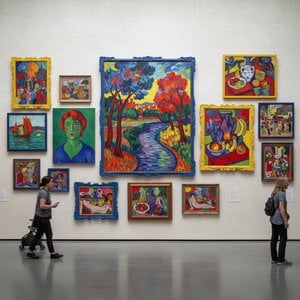
Fauvismo: 10 Obras-Primas que Revolucionaram a Arte Moderna | ArtsDot
Descubra as 10 obras-primas do Fauvismo, com Matisse e Derain! Explore a história, cores vibrantes e técnicas revolucionárias deste movimento artístico. Encontre reproduções de arte exclusivas para decorar sua casa em ArtsDot.com.