


 Visualizar na parede
 Compartilhar
 Compartilhar
 Detalhes

 Baixar imagem
 Semelhantes
 Raio X
 Slideshow
Monaco, Monte-Carlo

 Ler mais
Reprodução em Óleo Feita à Mão
Óleo sobre tela pintado à mão no tamanho e moldura de sua escolha, feito sob encomenda pelos nossos artistas. ( Comprar impressão Comprar imagem)




P118B $10

P118H $10

P118W $10

P438Z $10

P508JH $12

P508YH $12

P805H $10

P805Z $10

P919BZ $10

P919G $10

P919XJ $10

P959ZH $10

P968JZ $12

W106C $8

W218G $10

W218JH $8

W218Y $10

W307PJ $10

W316G $10

W316PJ $8

W316Y $10

W398PJ $8

W4111J $10

W500HY $15

W500JH $15

W692G $12

W849H $8

W940BG $15

W953PJ $8




Escolha entre os nossos tamanhos pré-definidos que respeitam as proporções originais da obra de arte.

Pode inserir as suas próprias dimensões para se adequar a uma moldura ou espaço específico. Se o tamanho selecionado não corresponder às proporções da imagem original, iremos cortar a obra de arte ou estender a pintura com elementos adicionais pintados à mão. Um esboço digital será enviado para sua aprovação antes do início da produção.
Tenha em atenção que a pré-visualização no ecrã não reflete o corte ou extensão real. Apenas o esboço mostrará com precisão a composição final.
Embora tamanhos personalizados estejam disponíveis, recomendamos selecionar uma dimensão da lista predefinida para preservar as proporções originais.
Após o pedido, a equipa ArtsDot.com enviará um e-mail ao cliente para solicitar instruções e fornecer uma prévia do esboço.
Entrega mundial () em 3 a 4 semanas, em vez das 5 semanas padrão. (4 Setembro). Sem comprometer a qualidade.

Envio expresso gratuito para todo o mundo

Tela de Linho de Alta Qualidade

Seguro de transporte completo

Garantia de Reembolso de Impostos Alfandegários

Garantia de Fidelidade Cromática

Política de Devolução em 60 Dias (Apenas para Defeitos)

Garantia de reembolso de 100%

Oferta de desconto por quantidade
 A opção de vidro está disponível apenas para tamanhos inferiores a 110 cm

Monaco, Monte-Carlo
Técnica de Reprodução
Tamanho da Reprodução
-


Preço Total
$ 263
Monaco Monte Carlo: An Ode to Elegance and Ornamentation
The artwork, “Monaco Monte Carlo,” created in 1897 by Alphonse Maria Mucha, stands as a quintessential emblem of Art Nouveau—a movement that sought to liberate art from academic constraints and embrace the beauty of organic forms inspired by nature. More than just a promotional poster for Monaco’s opulent casino district, it's a meticulously crafted visual poem celebrating luxury, leisure, and the idealized feminine spirit. Mucha’s signature style is immediately recognizable: flowing curvilinear lines dominate the composition, intertwining seamlessly with stylized floral arrangements that burst forth from the central figure’s drapery—a deliberate echo of the natural world and its fecundity.- Style & Influences: Mucha's Art Nouveau aesthetic draws heavily from influences like Pierre-Auguste Renoir and Gustave Moreau, artists who similarly explored themes of mythology and symbolism through decorative painting. However, Mucha distinguishes himself with a singular vision—one that prioritizes graceful movement and sensual beauty above all else.
- Composition & Technique: The poster employs a vertical orientation, maximizing visual impact while maintaining compositional balance. Lithography was the printing technique chosen, ensuring exceptional clarity and tonal gradation – crucial for capturing the shimmering gold leaf accents strategically applied to highlight key floral elements and contribute to the overall ethereal luminescence of the scene.
- Symbolism & Narrative: At its core lies an allegorical representation of femininity—a reclining woman adorned in flowing robes embodies elegance, serenity, and aristocratic grace. Surrounding her are stylized flowers—primarily lilies and roses—representing purity, devotion, and prosperity – motifs commonly found throughout Art Nouveau art.
- Historical Context: Monaco’s burgeoning reputation as a glamorous destination for European aristocracy fueled Mucha's artistic ambition. The poster reflects the broader cultural fascination with exotic locales and idealized beauty during the Belle Époque, capturing the spirit of an era defined by optimism and artistic experimentation.
- Floral Arrangement: The lilies and roses dominate the floral arrangement, meticulously rendered in shades of ivory and blush pink. Their petals are depicted with astonishing realism—a testament to Mucha’s meticulous observation of botanical specimens.
- Line Quality: Mucha achieves this mesmerizing effect through careful consideration of line quality—employing subtle variations in thickness and curvature to create depth and texture without resorting to traditional perspective techniques.
- Atmospheric Perspective: Mucha skillfully employs atmospheric perspective—reducing color saturation and tonal gradation in distant floral elements—to create a convincing illusion of depth.
- Sensual Appeal: Mucha's meticulous attention to detail—particularly in the depiction of drapery folds and floral textures—appeals to the senses—creating a visually stimulating experience that lingers long after viewing.


Biografia do Artista
Early Life and Artistic Beginnings
Alphonse Maria Mucha, nascido em 24 de julho de 1860, na pitoresca cidade de Ivančice, na Morávia (hoje parte da República Tcheca), foi um artista cuja jornada artística começou com uma paixão precoce pela pintura. Desde a infância, demonstrou um talento inegável para o desenho e a cor, habilidades que lhe renderam um lugar de destaque no coro da Catedral de São Pedro em Brno, sua cidade natal. Aos 12 anos, ingressou na escola secundária local, mas sua inclinação para as artes logo se mostrou incompatível com os métodos tradicionais de ensino, levando à sua expulsão. Apesar dessa interrupção formal, a determinação de Mucha em seguir seu caminho artístico permaneceu inabalável.
Um evento crucial em sua trajetória foi a visita a uma igreja local onde admirou um afresco em estilo barroco tcheco. A beleza e o impacto da obra despertaram nele um profundo interesse pela arte, e ele decidiu que seu destino era se tornar um artista profissional. Após um breve período trabalhando como pintor decorativo em Viena, Mucha encontrou-se em Paris, a capital artística da época, onde iniciou seus estudos na Academia Julian e na Académie Colarossi, absorvendo as técnicas e influências do movimento Art Nouveau.
The Rise of a Style: Art Nouveau and Sarah Bernhardt
Paris se tornou o palco para a ascensão meteórica de Mucha. Sua habilidade em capturar a beleza feminina e sua sensibilidade estética rapidamente chamaram a atenção da comunidade artística e comercial. Em 1894, uma oportunidade inesperada surgiu quando foi contratado para criar um pôster para a peça Gismonda, estrelada pela lendária atriz Sarah Bernhardt no Théâtre de la Renaissance. Este pôster, com suas cores vibrantes, linhas sinuosas e figuras femininas idealizadas, se tornou um sucesso instantâneo, catapultando Mucha ao reconhecimento nacional e internacional.
A colaboração com Bernhardt durou seis anos, durante os quais Mucha projetou cartazes para diversas produções da atriz. Sua reputação cresceu exponencialmente, e ele passou a ser considerado o principal designer de pôsteres do estilo Art Nouveau. A demanda por seus trabalhos aumentou significativamente, impulsionando sua carreira e consolidando seu lugar na história da arte.
The Slav Epic: A Monumental Undertaking
Em 1912, Mucha recebeu um importante patrocínio de Charles Richard Crane, um industrial americano filiado ao movimento nacionalista eslavo. Com o apoio financeiro de Crane, Mucha embarcou em um projeto ambicioso e de longo prazo: a criação da Épopée Slave (Slav Epic), uma série de 20 grandes pinturas que retratavam a história e a cultura dos povos eslavos. Este ciclo de obras, que se estendeu por quase duas décadas, é considerado sua obra-prima e um testemunho de seu talento e visão artística.
A Épopée Slave é uma representação épica da história eslava, combinando elementos tradicionais com a estética Art Nouveau. As pinturas são ricamente detalhadas, cheias de simbolismo e expressivas, e refletem o interesse de Mucha pela identidade cultural de seu país de origem. A conclusão do projeto em 1930 marcou um momento significativo na carreira de Mucha e deixou um legado duradouro na arte tcheca.
Legacy and Influence
Alphonse Mucha faleceu em 14 de julho de 1939, em Praga, deixando para trás um corpo de trabalho impressionante que continua a inspirar artistas e designers até hoje. Seu estilo Art Nouveau, caracterizado por linhas fluidas, formas orgânicas e uma forte ênfase na beleza feminina, influenciou gerações de artistas e designers, tanto na Europa quanto nos Estados Unidos. Sua obra é admirada por sua elegância, sofisticação e capacidade de evocar emoção e sensibilidade.
Além de suas contribuições artísticas, Mucha também desempenhou um papel importante na promoção da cultura tcheca no exterior. Seus cartazes, pôsteres e ilustrações ajudaram a divulgar a arte e o folclore tchecos em todo o mundo, contribuindo para a construção da identidade nacional do país. Sua vida e obra são um exemplo de talento artístico, paixão pela cultura e compromisso com a beleza.

Alphonse Mucha
1860 - 1939 , República Tcheca
Dados Rápidos
- Artistic Movement Or Style: Art Nouveau
- Artists Or Movements Influenced By This Artist: ['Propreta']
- Artists Who Influenced This Artist:
- Renoir
- Moreau
- Date Of Birth: 15 Jul 1860
- Date Of Death: 14 Jul 1939
- Full Name: Alphonse Maria Mucha
- Nationality: Tcheco
- Notable Artworks:
- Uprising Slavo
- Salon Cent
- Filhas de Tespio
- Ribambelle Gobelins
- Campones
- Place Of Birth: Brno, República Tcheca
Artigos Relacionados
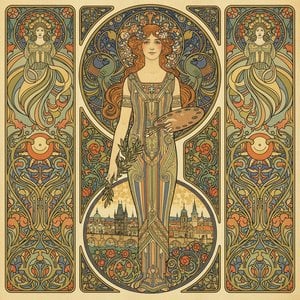
Alphonse Mucha: A Comprehensive Exploration of Art Nouveau's Master of Decorative Symbolism
Explore the life & art of Alphonse Mucha, master of Art Nouveau! Discover his iconic posters, stunning illustrations, and the monumental Slav Epic. A comprehensive guide for collectors & enthusiasts.

Art Nouveau: 10 Obras-Primas que Definiram um Movimento Atemporal | ArtsDot
Descubra as 10 obras-primas que moldaram a Art Nouveau! Explore a beleza floral de Mucha, o simbolismo de Klimt e a inovação de Gaudí. Encontre reproduções de arte exclusivas e inspire sua decoração em ArtsDot.com.

The Flowing Line & Flourishing Form: Exploring Art Nouveau's Aesthetic Legacy
Explore the captivating world of Art Nouveau! Discover its origins, key artists like Horta & Mucha, regional styles, innovative techniques, and lasting influence on architecture & design. A comprehensive guide for art enthusiasts.

F.A.Q.: Impressões em Poster – Durabilidade, Comparação com Canvas e Tamanhos Disponíveis
Descubra tudo sobre impressões em poster na ! Durabilidade, comparação com canvas, tamanhos disponíveis e opções de personalização para colecionadores exigentes. Qualidade garantida.

Raphael Kirchner: A Poetic Vision of Belle Époque Society Through Art Nouveau Lithography
Explore the captivating world of Raphael Kirchner, a master of Art Nouveau illustration during the Belle Époque. Discover his iconic 'Kirchner Girls,' pioneering pin-up art & lasting influence.

