

 Visualizar na parede
 Compartilhar
 Compartilhar
 Detalhes

 Baixar imagem
 Semelhantes
 Raio X
 Slideshow
 Estatísticas
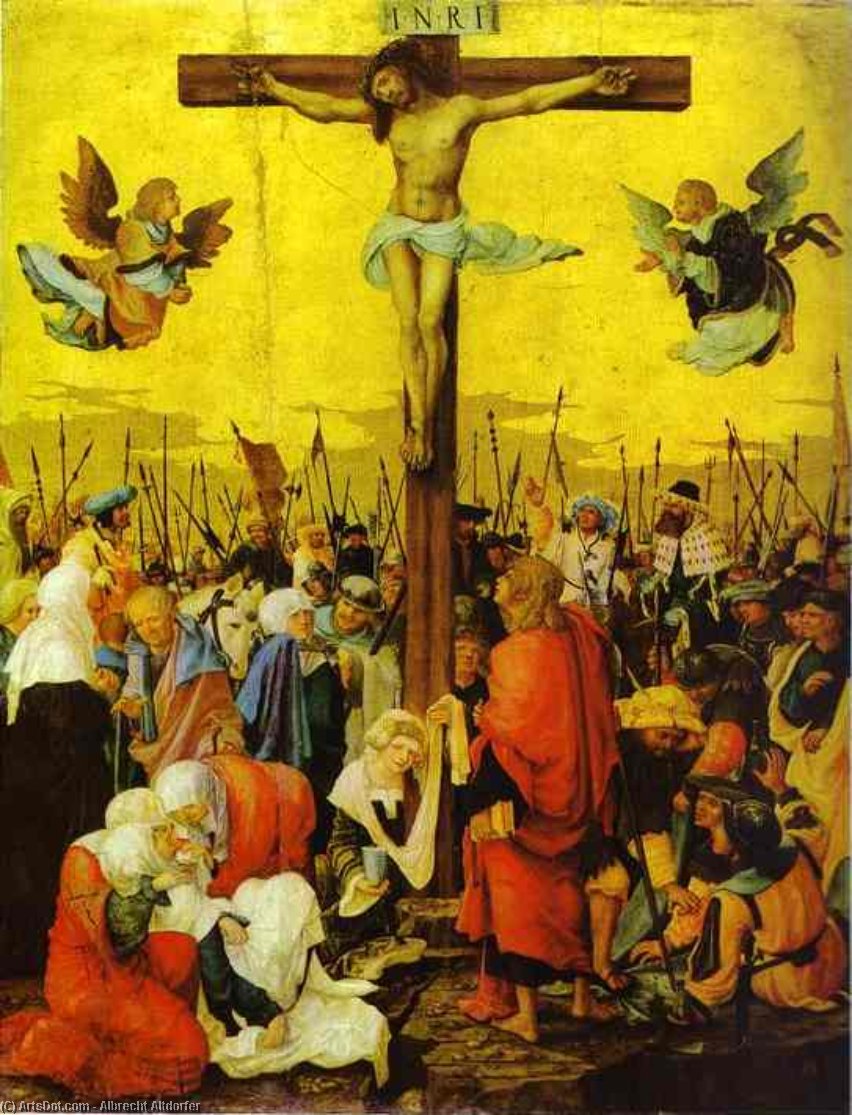
Crucifixion


 Ler mais
Giclée / Impressão de Arte
Impressão giclée ou em tela de qualidade de museu, com produção rápida e opções flexíveis de acabamento. ( Comprar pintura feita à mão Alternar para Imagem Digital)




P118B $10

P118H $10

P118W $10

P438Z $10

P508JH $12

P508YH $12

P805H $10

P805Z $10

P919BZ $10

P919G $10

P919XJ $10

P959ZH $10

P968JZ $12

W106C $8

W218G $10

W218JH $8

W218Y $10

W307PJ $10

W316G $10

W316PJ $8

W316Y $10

W398PJ $8

W4111J $10

W500HY $15

W500JH $15

W692G $12

W849H $8

W940BG $15

W953PJ $8




Escolha entre os nossos tamanhos pré-definidos que respeitam as proporções originais da obra de arte.

Você pode inserir suas próprias dimensões para se ajustar a uma moldura ou espaço específico. Se o tamanho selecionado não corresponder às proporções da imagem original, iremos recortar a obra de arte ou estender a imagem com uma borda espelhada ou preenchimento sólido. Um mockup digital será enviado para sua aprovação antes do início da produção.
Por favor, observe que a visualização na tela não reflete o recorte ou a extensão real. Apenas o mockup mostrará com precisão a composição final.
Embora tamanhos personalizados estejam disponíveis, recomendamos selecionar uma dimensão da lista predefinida para preservar as proporções originais.
Entrega mundial () em 2 semanas, em vez das 4/5 semanas padrão. (11 Setembro)

Envio expresso gratuito para todo o mundo

Tela de Linho de Alta Qualidade

Seguro de transporte completo

Garantia de Reembolso de Impostos Alfandegários

Garantia de Fidelidade Cromática

Política de Devolução de 100 Dias (Apenas Defeitos)

Garantia de reembolso de 100%

Oferta de desconto por quantidade
 A opção de vidro está disponível apenas para tamanhos inferiores a 110 cm

Crucifixion
Giclée / Impressão de Arte
Tamanho da Reprodução
-


Preço Total
$ 62
The Weight of Sorrow: Albrecht Altdorfer’s “Crucifixion”
Albrecht Altdorfer's "Crucifixion," painted in 1526, isn’t merely a depiction of a pivotal religious event; it’s a visceral experience. Emerging from the burgeoning German Renaissance, Altdorfer wasn’t simply replicating biblical narratives; he was forging a new visual language, one deeply rooted in the natural world yet imbued with profound spiritual intensity. This particular rendition transcends simple illustration, becoming a landscape saturated with grief and a haunting meditation on sacrifice. The painting immediately commands attention not through grand scale – it's remarkably intimate, measuring just 29 x 21 cm – but through its masterful manipulation of light, color, and composition to evoke an overwhelming sense of sorrow.
The scene unfolds against a dramatically rendered landscape—a brooding, almost primeval forest. The trees, rendered in thick, layered brushstrokes of deep greens, browns, and purples, seem to writhe with the weight of the event. This isn’t a picturesque vista; it's a wilderness imbued with an unsettling energy. Altdorfer deliberately eschews traditional depictions of serene backgrounds, instead presenting a landscape actively participating in the drama. The distant mountains, shrouded in mist and shadow, amplify the feeling of isolation and despair. Notice how the artist uses atmospheric perspective – lighter hues for objects further away – to create a sense of depth and distance, drawing the viewer’s eye into the heart of the scene.
A Pioneer of Landscape
Albrecht Altdorfer stands as a pivotal figure in art history, largely credited with establishing landscape painting as an independent artistic subject within Europe. Prior to his work, landscapes were typically relegated to mere backgrounds for religious or mythological scenes. However, Altdorfer recognized the power of the natural world to convey emotion and meaning. His meticulous observation of nature—evident in the detailed rendering of foliage, rocks, and atmospheric conditions—transformed the landscape from a passive backdrop into an active participant in the narrative. This shift was revolutionary, paving the way for later generations of landscape artists like Albert Bierstadt and Frederic Church.
His background as a town architect and council member further informs his artistic approach. Altdorfer possessed a keen eye for spatial relationships and a deep understanding of how to create a sense of harmony and balance within a composition. This skill is brilliantly demonstrated in “Crucifixion,” where the human figure—Jesus—is carefully positioned within the landscape, creating a dynamic interplay between the earthly realm and the divine.
Symbolism and Emotional Resonance
Beyond its technical brilliance, "Crucifixion" resonates deeply with viewers through its potent symbolism. The stark simplicity of Jesus’s pose – arms outstretched, head bowed – is profoundly moving. Altdorfer avoids any overtly dramatic or theatrical elements, opting instead for a quiet, understated portrayal of suffering. The figures surrounding the cross—angels and soldiers—are rendered in muted tones, emphasizing the central tragedy. Even the light itself seems to weep, casting long shadows across the landscape.
The choice of a dark, foreboding forest as the setting is particularly significant. Forests have historically been associated with death, mourning, and the unknown. In this context, it serves as a powerful metaphor for the spiritual darkness surrounding Jesus’s sacrifice. The painting isn't simply depicting an event; it’s exploring the profound emotional consequences of that event—the grief, despair, and sense of loss experienced by those who witnessed it.
A Timeless Masterpiece
“Crucifixion” is more than just a religious painting; it’s a testament to Altdorfer's artistic genius and his ability to capture the essence of human emotion. The meticulous detail, masterful use of color and light, and profound symbolism combine to create an unforgettable image that continues to resonate with viewers centuries after its creation. Reproductions, like this one, offer a remarkable opportunity to experience the power and beauty of this iconic work, bringing its haunting message into our own spaces.
Obras Relacionadas


Biografia do Artista
Albrecht Altdorfer: A Pioneer of German Renaissance Landscape
Albrecht Altdorfer, born around 1480 in the vibrant city of Regensburg, Germany, stands as a monumental figure bridging the late Gothic era and the burgeoning German Renaissance. He wasn’t merely an artist *of* his time; he fundamentally reshaped its artistic trajectory, particularly through his groundbreaking exploration of landscape painting. Rooted in a family deeply intertwined with artistic tradition—his father, Ulrich Altdorfer, was himself a painter and miniaturist—Altdorfer swiftly distinguished himself not as a follower, but as an innovator, driven by a unique vision that would forever alter the course of German art. Regensburg, strategically positioned on the Danube River, served as his formative crucible, imbuing his work with a profound connection to the natural world and the spirit of its bustling, multicultural environment. Beyond his artistic pursuits, Altdorfer was a man of civic responsibility, diligently serving as both town architect and a respected member of Regensburg’s council—a testament to his remarkably versatile talents. Yet, it is through his art – particularly his early engravings and drawings from around 1506, such as *Stygmata of St. Francis* and *St. Jerome* – that he first unveiled his distinctive voice, hinting at the intense emotionality and meticulous detail that would characterize his mature style.The Danube School and a Revolutionary Vision
Altdorfer’s place in art history is inextricably linked to the Danube School, an influential collective of artists active throughout southern Germany during the early 16th century. This artistic circle shared a common passion: elevating landscape from its traditional role as mere background to become a central subject worthy of independent exploration. Before Altdorfer's pioneering work, landscapes primarily functioned as settings for religious or historical narratives; he dared to depict nature *for itself*, imbuing it with atmosphere and profound emotional resonance. A pivotal journey down the Danube River and into the dramatic Alps around 1511 served as a transformative catalyst for his artistic development. The breathtaking vistas—the dense forests, towering mountains, and turbulent rivers—ignited within him an unyielding passion for capturing nature’s beauty and power with unprecedented fidelity and emotional depth. He essentially became one of the first modern landscape painters, not simply replicating what he saw but conveying a visceral *experience* – a sense of awe, mystery, and even spiritual connection to the natural world. This wasn't merely topographical accuracy; it was about translating the feeling of being immersed within a landscape onto canvas. Works like “The Large Spruce” exemplify this shift, offering a serene yet intricate depiction of nature’s beauty, capturing not just its appearance but also its essence.Masterpieces and Artistic Influences
Throughout his prolific career, Altdorfer produced a remarkably diverse body of work encompassing paintings, engravings, drawings, and architectural designs. Among his most celebrated achievements is *The Battle of Alexander at Issus* (1529), a monumental commission from Duke William IV of Bavaria. This painting stands as a testament to his mastery of composition, detail, and dramatic storytelling—a perfect blend of military action and evocative landscape. The swirling clouds, jagged mountains, and chaotic melee of soldiers create an overwhelming sense of energy and spectacle, transporting the viewer directly into the heart of the battle. His collaboration with Emperor Maximilian I in Innsbruck from 1513 further broadened his artistic horizons and provided opportunities for ambitious, large-scale projects. Altdorfer’s artistic style wasn't forged in isolation; he drew inspiration from a rich tapestry of influences. The poetic lyricism of Italian Renaissance masters like Giorgione, the expressive figures of Lucas Cranach the Elder, and the meticulous detail of Albrecht Dürer all left their indelible mark on his work. However, Altdorfer skillfully synthesized these diverse influences into a uniquely personal vision—characterized by its intense emotionality, dramatic lighting effects, and evocative landscapes. His engravings, such as “Mucius Scaevola Burning His Hand,” demonstrate his exceptional skill in this medium, showcasing delicate lines and intricate details that convey movement and drama.Legacy and Lasting Impact
Albrecht Altdorfer’s artistic legacy extends far beyond the 55 panels, 120 drawings, and numerous engravings he created during his lifetime. He fundamentally altered the way artists approached landscape painting, paving the path for future generations to explore its expressive possibilities. His influence can be seen in the works of later German Romantic painters who similarly sought to capture the sublime beauty and emotional power of nature. Today, Altdorfer’s art is proudly displayed in major museum collections across the globe—including the Museum Ostdeutsche Galerie in Germany (where his *Madonna (Beautiful Maria of Regensburg)* resides) and the Kunstsammlungen und Museen Augsburg in Austria. His innovative spirit, technical skill, and profound connection to the natural world continue to inspire artists and captivate audiences centuries after his death in 1538. He remains a towering figure of the German Renaissance—a true pioneer who dared to see landscape not merely as scenery but as a powerful force capable of evoking deep emotion and spiritual meaning. His work stands as a testament to the enduring power of art to transform our perception of the world around us—a legacy that continues to resonate with viewers today.Exploring Altdorfer’s Diverse Works
Beyond his iconic landscapes and battle scenes, Altdorfer's artistic range encompassed religious subjects, mythological narratives, and even architectural designs. His depictions of biblical stories, such as “Abraham’s Sacrifice,” are imbued with a dramatic intensity and emotional depth that set them apart from earlier interpretations. He wasn’t simply illustrating scripture; he was exploring the human condition through the lens of faith.- Engravings: Altdorfer's engravings, like “Mucius Scaevola Burning His Hand,” demonstrate his mastery of line and detail, often conveying a sense of movement and drama.
- Drawings: His drawings offer intimate glimpses into his creative process, revealing his meticulous observation skills and expressive use of shading.
- Architectural Designs: As town architect of Regensburg, Altdorfer contributed to the city’s fortifications and urban planning, showcasing his practical as well as artistic talents.

Albrecht Altdorfer
1480 - 1538 , Alemanha
Dados Rápidos
- Artistic Movement Or Style: Escola do Danúbio
- Artists Or Movements Influenced By This Artist: ['Romantismo Alemão']
- Artists Who Influenced This Artist:
- Giorgione
- Lucas Cranach
- Date Of Birth: c. 1480
- Date Of Death: 1538
- Full Name: Albrecht Altdorfer
- Nationality: Alemão
- Notable Artworks:
- Batalha de Alexandre
- Grande Bétula
- Place Of Birth: Regensburg, Alemanha
Artigos Relacionados

Albrecht Altdorfer: Innovation, Spirituality & the Northern Renaissance Landscape
Explore the groundbreaking art of Albrecht Altdorfer, a pioneer of the Northern Renaissance's Danube School. Discover his innovative landscapes, spiritual symbolism & lasting influence on German painting.

Os 10 Mestres da Paisagem Romântica: Arte para Inspirar a Sua Casa
Descubra os 10 quadros mais emblemáticos da Paisagem Romântica! Explore a história de Turner, Friedrich e outros mestres. Encontre reproduções de arte exclusivas para inspirar sua decoração em ArtsDot.com.

Evocations of Place: A Historical Journey Through Landscape Art
Explore the rich history of landscape art with ArtsDot. Discover renowned artists, movements like Impressionism & Romanticism, and expert guidance for collecting timeless pieces. Find your perfect serene escape today!

John Constable: As 25 Obras-Primas que Definem o Mestre da Paisagem Inglesa | ArtsDot
Descubra as 25 obras-primas de John Constable, o mestre da paisagem inglesa! Explore a arte romântica, cores vibrantes e histórias fascinantes por trás de 'Hay Wain' e outras pinturas icônicas. Encontre reproduções de alta qualidade para decorar sua casa com ArtsDot.com.

Albrecht Dürer: As 25 Obras-Primas do Mestre da Renascença | ArtsDot
Descubra as 25 obras-primas de Albrecht Dürer, mestre do Renascimento Alemão. Explore a história, técnicas e significado por trás de gravuras icônicas como 'Melancolia I' e autorretratos impressionantes. Encontre reproduções de arte exclusivas para decorar seu lar com ArtsDot.com.


