

 Compartilhar
 Compartilhar
 Detalhes
 Guia
Guia

 Baixar imagem
 Semelhantes
 Ver diaporama
 Perguntas e Respostas
 Estatísticas
Faith


 Ler mais
Giclée / Impressão de Arte
Impressão giclée ou em tela de qualidade de museu, com produção rápida e opções flexíveis de acabamento. ( Comprar pintura feita à mão Alternar para Imagem Digital)




































Escolha entre os nossos tamanhos pré-definidos que respeitam as proporções originais da obra de arte.

Insira a largura e a altura desejadas para se ajustarem à sua moldura ou parede. Uma impressão pode ser apenas cortada, nunca ampliada além da imagem original; portanto, um tamanho com proporções diferentes resultará na perda de parte da imagem. Enviamos uma maquete digital para sua aprovação antes de realizarmos a impressão. A imagem exibida nesta página não mostra o corte real — apenas a maquete o faz.
Entrega mundial () em 2 semanas, em vez das 4/5 semanas padrão. (6 Novembro)

Envio expresso gratuito para todo o mundo

Tela de Linho de Alta Qualidade

Seguro de transporte completo

Garantia de Reembolso de Impostos Alfandegários

Garantia de Fidelidade Cromática

Política de Devolução em 100 Dias (Apenas para Defeitos)

Garantia de reembolso de 100%

Oferta de desconto por quantidade
 A opção de vidro está disponível apenas para tamanhos inferiores a 110 cm

Faith
Giclée / Impressão de Arte
Tamanho da Reprodução
-


Preço Total
€ 56
A Vision in Marble: The Ethereal Essence of Faith
In the quiet, shadowed corridors of an art gallery, where light plays delicately against deep charcoal walls, stands a masterpiece that commands a singular, breathless attention. Adolfo Wildt’s Faith is not merely a sculpture; it is a profound encounter with the sublime. Carved from marble with a precision that defies the very nature of stone, this work transcends its physical medium to capture something far more elusive. The piece emerges from the darkness, its surfaces catching the light in a way that suggests an almost supernatural translucency, a hallmark of Wildt’s unparalleled technical mastery.
The sculpture invites the viewer into a space of reverence and quiet contemplation. There is a striking tension held within the marble—a balance between the heavy, cold reality of the stone and the weightless, spiritual aspiration the subject represents. As one gazes upon the form, the interplay of light and shadow creates a sense of movement, as if the very essence of devotion is breathing through the polished surface. For the discerning collector or the interior designer seeking a centerpiece of profound character, Faith offers an unparalleled emotional depth that anchors a room with both sophistication and soul.
Technical Brilliance and the Sculptor's Touch
To understand the impact of Faith, one must appreciate the meticulous lineage of its creator. Wildt, a master who emerged from the vibrant artistic landscape of Milan, brought to this work a unique sensitivity forged during his early years as a goldsmith. This background is evident in the exquisite, fine-grained detail that adorns the sculpture, where every curve and contour has been polished to an opalescent sheen. His ability to manipulate marble to mimic the softness of skin or the delicate texture of light is nothing short of miraculous.
The technique employed here bridges the gap between classical tradition and the burgeoning modernism of his era. While the subject matter evokes the timelessness of historical religious iconography, the execution possesses a sharp, almost experimental edge. The way the light interacts with the sculpted surfaces creates a dramatic chiaroscuro effect, making the sculpture appear to shift and evolve depending on the viewer's perspective. This dynamic quality ensures that the piece remains a living presence within any curated space, offering new visual discoveries with every passing hour.
A Legacy of Devotion and Artistry
The historical context of Wildt’s work adds a layer of prestige to this magnificent sculpture. As an artist who navigated the transition from the Scapigliatura movement toward a more refined, modern aesthetic, Wildt possessed the rare ability to infuse classical forms with contemporary psychological intensity. Faith stands as a testament to this era of profound artistic transformation, embodying a period where the boundaries of sculpture were being pushed toward new heights of expression.
For those looking to integrate a piece of such historical and aesthetic significance into a collection, Faith represents more than just decoration. It is an investment in a legacy of Italian excellence. Whether placed in a private study, a grand salon, or a contemporary gallery setting, the sculpture serves as a focal point for intellectual and emotional engagement. It does not merely occupy space; it defines it, bringing with it an aura of timelessness, strength, and an unshakeable sense of peace.
Perguntas e Respostas
O que "Faith", de Adolfo Wildt retrata?
Os temas presentes em "Faith", de Adolfo Wildt incluem classical sculpture, religious symbolism, marble art”, “gallery setting”, “human form”, “art history”, italian art”. Juntos, eles sintetizam o assunto da obra.
Qual é a cor predominante de "Faith", de Adolfo Wildt?
A cor dominante de "Faith", de Adolfo Wildt é Phthalo Green (#252124).
A que movimento e a que época pertence "Faith", de Adolfo Wildt?
"Faith", de Adolfo Wildt insere-se no movimento Academic Art / Neoclassicism, dentro da era Século XIX de seu criador.
Obras Relacionadas


Biografia do Artista
Adolfo Wildt (1868-1931): A Milanese Bridging Worlds
Adolfo Wildt, born in Milan on March 1st, 1868, to a Swiss family who had embraced Lombardy as their new home, emerged as a pivotal figure in Italian sculpture during a period of profound artistic transition. His journey was one marked by early hardship and relentless dedication, beginning not within the hallowed halls of an academy but amidst the practical demands of labor. Leaving school at the tender age of nine, Wildt’s initial forays into the working world saw him apprenticed first as a hairdresser, then as a goldsmith – experiences that instilled in him a meticulous attention to detail and a nascent understanding of form. However, it was his apprenticeship at eleven with Giuseppe Grandi, a prominent sculptor associated with the Scapigliatura movement, that truly ignited his artistic calling. Under Grandi’s tutelage, Wildt began to master the demanding art of sculpting marble, laying the foundation for a career defined by technical brilliance and emotional depth. By eighteen, his talent was already garnering recognition within Milanese artistic circles, foreshadowing the significant contributions he would make to the world of sculpture. He continued his education at the Brera Academy of Fine Arts, solidifying his theoretical knowledge alongside his burgeoning practical skills.Early Life and Artistic Beginnings
Wildt’s formative years instilled in him a profound appreciation for craftsmanship and observation—qualities that would permeate his entire artistic practice. Born into a family rooted in Swiss traditions yet embracing the cosmopolitan spirit of Lombardy, he faced considerable obstacles early on, abandoning formal schooling to pursue vocational training as a hairdresser and goldsmith. These experiences weren’t merely utilitarian; they honed his dexterity and fostered an acute awareness of material properties—skills that would prove invaluable later in his sculpting endeavors. The influence of Giuseppe Grandi, a sculptor championing the Scapigliatura movement, proved decisive. Grandi recognized Wildt’s innate talent and nurtured it through rigorous instruction in marble carving, shaping him into one of Italy’s foremost sculptors. By eighteen, Wildt’s burgeoning reputation within Milanese artistic circles signaled his exceptional potential—a promise that would soon be fulfilled by his subsequent studies at the Brera Academy.The Scapigliatura Movement and Artistic Influences
Wildt's formative years coincided with the ascendance of the Scapigliatura movement, a rebellious faction challenging academic conventions and advocating for expressive freedom. Artists like Grandi embraced this ethos, rejecting idealized representations in favor of raw emotion and psychological insight—principles that profoundly impacted Wildt’s artistic sensibilities. This engagement with Scapigliatura instilled in him a conviction that sculpture should convey not merely visual accuracy but also profound emotional resonance. Furthermore, Federico Villa’s mentorship solidified his understanding of sculptural technique and encouraged experimentation with form and texture. Observing Villa's masterful handling of marble—particularly his ability to achieve remarkable luminosity—Wildt internalized the importance of meticulous attention to detail and a willingness to push creative boundaries.Patronage, Recognition, and Artistic Breakthrough
A pivotal moment arrived in 1893 when Wildt exhibited his first major work – a portrait of his wife – at the Permanent Society for Fine Arts in Milan. The painting’s immediate acquisition by the Galleria Nazionale d'Arte Moderna in Rome served as an affirmation of his artistic promise and garnered considerable acclaim from critics and collectors alike. However, perhaps the most transformative agreement was forged in 1894 with Franz Rose, a Prussian collector possessing discerning taste and substantial financial resources. For eighteen years, Rose provided Wildt with unwavering support—both economic security and preferential access to exhibitions—allowing him to immerse himself entirely in his artistic pursuits. This patronage facilitated Wildt’s participation in prestigious events across Europe – Milan, Munich, Zurich, Berlin, and Dresden – introducing his work to a discerning international audience. Notably, Adolf von Hildebrand and Auguste Rodin recognized Wildt’s innovative approach to marble sculpting, praising his ability to achieve an almost ethereal transparency within the stone—a characteristic that distinguished him from many of his contemporaries.Style and Technique: Marble and Expression
Wildt's sculptural style evolved throughout his career, reflecting both Romantic ideals and emerging modernist tendencies. He championed a technique characterized by exceptional precision and meticulous attention to detail, striving for an unparalleled level of realism while simultaneously conveying profound emotional depth. His mastery of marble sculpting—particularly his ability to achieve remarkable luminosity – was widely admired, establishing him as one of Italy’s foremost sculptors. Wildt’s exploration of themes such as faith, sorrow, and the human condition is palpable in his oeuvre, foreshadowing the rise of Expressionism in sculpture. His most celebrated works—including *Fulcieri Paulucci de’ Calboli*, *Saint Lucia*, *St. Francis of Assisi*, and *Mask of Sorrow*—are imbued with a solemn beauty that transcends mere visual representation. These sculptures exemplify Wildt’s commitment to conveying psychological complexity through stylized forms, reflecting his own personal struggles and capturing the essence of human experience. His influence extended beyond individual commissions; he founded the Marble School in Milan in 1921, ensuring that his knowledge and skills would be passed on to future generations of sculptors.Legacy and Influence: A Teacher Shaping Modern Sculpture
Wildt’s legacy resides not only in his monumental sculptures but also in his role as a teacher—inspiring countless aspiring artists who would themselves become prominent figures in Italian modernism. Among his most notable pupils were Lucio Fontana, Fausto Melotti, and Luigi Broggini – artists who embraced Wildt’s expressive style and technical mastery, propelling them to international acclaim. His unwavering dedication to craftmanship and artistic innovation cemented his place as a cornerstone of Italian sculpture history—a testament to the enduring power of observation, experimentation, and profound emotional engagement. Adolfo Wildt passed away in Milan on March 12th, 1931, leaving behind a body of work that continues to captivate viewers today—a timeless reminder of the transformative potential inherent within art and its capacity to illuminate the complexities of human existence.
Adolfo Wildt
1868 - 1931 , Itália
Dados Rápidos
- Artistic Movement Or Style: Romanticism, Modernism
- Artists Or Movements Influenced By This Artist:
- Lucio Fontana
- Auguste Rodin
- Artists Who Influenced This Artist:
- Giuseppe Grandi
- Federico Villa
- Date Of Birth: March 1, 1868
- Date Of Death: March 12, 1931
- Full Name: Adolfo Wildt
- Nationality: Italian
- Notable Artworks:
- Fulcieri Paulucci de’ Calboli
- Saint Lucia
- St. Francis of Assisi
- Mask of Sorrow
- Place Of Birth: Milan, Italy
Artigos Relacionados

Esculturas em Bronze Icônicas: 10 Obras que Revolucionaram a Arte | ArtsDot
Descubra as 10 esculturas em bronze mais icônicas da história! Explore a arte de Rodin, Michelangelo e outros mestres. Encontre reproduções de alta qualidade para sua casa em ArtsDot.com.
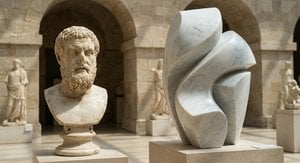
The Enduring Allure of Marble in Art History: From Classical Sculpture to Modern Abstraction
Explore the captivating history of marble sculpture from ancient Greece to modern art. Discover renowned artists like Canova & Michelangelo, carving techniques, and investment insights at ArtsDot.

The Enduring Legacy of Marble: A Comprehensive Exploration of Technique, Symbolism & Artistic Expression
Explore the rich history of marble sculpture from antiquity to the Renaissance! Discover key techniques, influential artists & enduring themes in classical art. Expert insights for collectors and enthusiasts at ArtsDot.

The Enduring Form: Exploring Themes & Techniques in Sculpture Across Historical Periods
Explore the rich history of sculpture from ancient masterpieces to contemporary innovations. Discover key techniques, influential artists & investment potential for discerning art collectors.

As 10 Obras em Bronze Mais Icônicas que Transformaram a História da Arte | ArtsDot
Descubra as 10 esculturas em bronze mais influentes da história! Explore a arte de Rodin, Michelangelo e outros mestres. Reproduções de alta qualidade para decorar sua casa com elegância. ArtsDot.