

- 33.0 x 47.0 cm


A imagem segue as suas escolhas: , .
Descrição do Item
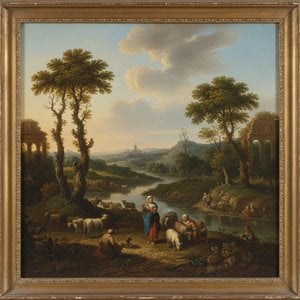
Discover 'Autumn' by Abel Grimmer (1607), a stunning Flemish genre painting of rural life. Explore its rich details & warm tones – a masterpiece of the Dutch Golden Age.
 Ler mais
Biografia do Artista
Abel Grimmer (c. 1570-1620) foi pintor flamengo renombrado por paisagens naturalistas e obras arquitetônicas inspiradas em Bruegel, buscando eficiência para criar séries marcantes das estações e a Torre de Babel.
Reprodução em Óleo Feita à Mão
Óleo sobre tela pintado à mão no tamanho e moldura de sua escolha, feito sob encomenda pelos nossos artistas. ( Alternar para Impressão Alternar para Imagem Digital)
Saiba mais sobre esta pintura
 Visualizar na parede
 Compartilhar
 Compartilhar
 Detalhes
 Guia
Guia

 Baixar imagem
 Semelhantes
 Raio X
 Ver diaporama
 Perguntas e Respostas
 Estatísticas
Encomende a sua pintura em quatro passos simples
Não tenha pressa. Você pode alterar qualquer resposta; o preço no seu carrinho de compras será atualizado conforme cada escolha.
1 Passo um de quatro
Qual tamanho você gostaria?
Estes tamanhos mantêm as proporções da pintura original. A ilustração mostra a sua escolha numa parede, acima de um sofá de dois metros.
Ou informe suas próprias medidas
Escolha entre os nossos tamanhos pré-definidos que respeitam as proporções originais da obra de arte.

Insira a largura e a altura desejadas para se ajustarem à sua moldura ou parede. Como esta obra é pintada à mão, para um tamanho com proporções diferentes, o artista poderá pintar um pouco mais ao redor da imagem ou reduzir ligeiramente a composição — você escolhe. Enviamos uma maquete digital para sua aprovação antes de iniciar a pintura. A imagem exibida nesta página não representa o resultado real — apenas a maquete mostra o resultado final.
2 Passo dois de quatro
Como deve ser preparado: enrolado, esticado ou emoldurado?
Os preços abaixo referem-se ao tamanho escolhido na primeira etapa.
Escolha as bordas da tela esticada
Escolha sua moldura

Branco €1

Bordas esfumaçadas €1

Bordas estendidas €1

P118B €10

P118H €10

P118W €10

P438Z €10

P508JH €12

P508YH €12

P805H €10

P805Z €10

P919BZ €10

P919G €10

P919XJ €10

P959ZH €10

P968JZ €12

W106C €8

W218G €10

W218JH €8

W218Y €10

W307PJ €10

W316G €10

W316PJ €8

W316Y €10

W398PJ €8

W4111J €10

W500HY €15

W500JH €15

W692G €12

W849H €8

W940BG €15

W953PJ €8

H24-GOLD €30

H24-SILVER €30

H36-GOLD €45

H36-SILVER €45
Com moldura
Moldura: . Dimensões totais com a moldura: .
3 Passo três de quatro
Gostaria de alterar algo na pintura?
A maioria das pessoas responde que não. Como cada pintura é feita à mão, nosso artista também pode adaptá-la para você.
Após o pedido, a equipe da ArtsDot.com enviará um e-mail ao cliente para instruções e fornecerá uma prévia da montagem
4 Passo quatro de quatro
Algumas opções de acabamento
Todos eles são opcionais. As respostas já selecionadas não têm custo adicional.
Quem o pintou?
Entrega mundial () em 3 a 4 semanas, em vez das 5 semanas padrão. (7 Novembro). Sem comprometer a qualidade.
Uma placa de identificação, como em um museu?
Detalhes da Placa de Bronze Gravada
This elegant plaque features the artist's name and the title of the artwork, finely engraved for a timeless presentation.
It is made from bronze with a refined, elegant finish. The text is precisely laser-engraved for a sharp and permanent result. Measuring 9x2 cm, the plaque is compact yet easy to read. It's built to be durable and scratch-resistant, offering a professional, museum-quality look. Mounting is simple thanks to the included adhesive backing.
Detalhes da Placa de Acrílico Transparente
The plaque includes essential engraved details such as the artist's name, the title of the artwork, the date it was created, the type of media used-like oil on canvas or watercolor-a brief description of the piece, and a QR code that links to the complete artwork information.
It is crafted from clear acrylic, offering a sleek, modern appearance. The text is UV-engraved in black to ensure strong visual contrast. With a size of 10x15 cm, it ensures optimal readability. It comes equipped with two metal hooks for secure wall mounting. The plaque is designed to be weather-resistant, making it suitable for various environments, and it includes interactive features that work seamlessly with smartphone scanning.
Detalhes da Placa de Acrílico Preto
This elegant plaque includes engraved information such as the artist's name, the title of the artwork, the date it was created, the type of media used (like oil on canvas or watercolor), a short description of the artwork, and a QR code for quick access to more information.
The plaque itself is made from refined black acrylic with a premium finish. The text is laser-engraved in white for high contrast and readability. Its size is 10x15 cm, designed to be easy to read. It comes with two metal hooks for professional mounting. The design is sleek and fits any interior style. It is also weather-resistant and durable, with built-in digital integration for mobile compatibility.
Um verniz protetor?
Para quando você precisa?
✓ Verifique e peça
A sua pintura, conforme encomendada

Autumn
Técnica de Reprodução
Tamanho da Reprodução
-

Artista Sênior de Elite
Mais detalhes, refinamento e tempo de produção adicional
-

Moldura para Reprodução
-
-
Para obras de arte ou reproduções com mais de 105 cm (aproximadamente 41 polegadas) em qualquer um dos lados, a moldura será enviada como um kit desmontado. Este método garante uma entrega segura e evita danos durante o transporte.
Montagem profissional necessária — este não é um produto DIY (faça você mesmo).
O kit deve ser montado e a tela esticada por um profissional de molduraria experiente, utilizando cola de madeira (não inclusa), um alicate de esticar tela e grampos para manter as travessas alinhadas enquanto a cola seca. A montagem incorreta ou a tensão desigual da tela podem danificar permanentemente a obra de arte e não estão cobertas pela nossa garantia.
 Para obras de arte ou reproduções com mais de 105 cm (aproximadamente 41 polegadas) em qualquer um dos lados, a moldura será enviada como um kit desmontado. Este método garante uma entrega segura e evita danos durante o transporte.
Todas as barras de madeira maciça estão incluídas, precisamente cortadas ao tamanho certo.
Montado com os parafusos fornecidos, além de cola para madeira para as junções dos cantos, que não está inclusa e deve ser providenciada pelo seu moldurista.
São necessárias ferramentas profissionais não incluídas: um alicate de estiramento de tela (esticador) e grampos para manter as ripas alinhadas enquanto a cola seca.
Importante:
As junções dos cantos requerem cola para madeira, as ripas devem ser mantidas com grampos até que a cola esteja completamente seca, e o estiramento da tela na moldura montada requer um alicate de esticar tela. Nenhum destes itens está incluído no kit. Por favor, certifique-se de contar com um profissional de molduraria experiente antes de encomendar este tamanho.

Etiqueta de identificação
-
-

Verniz de Proteção
Verniz brilhante (realça as cores e protege contra a luz e a umidade)
-

Personalizar minha obra
Exemplos de alterações possíveis: Substituir o rosto por uma foto do cliente; Adicionar um animal de estimação (ex.: substituir gato por cachorro); Incluir uma mensagem oculta no fundo; Alterar a paisagem ou os elementos do fundo.
-

Urgente
Entrega mundial () em 3 a 4 semanas, em vez das 5 semanas padrão. (7 Novembro). Sem comprometer a qualidade.
-
Envio Expresso
Entrega mundial para em 5 semanas. (14 Novembro).
Com envio incluído
Preço Total
€ 369
A opção de vidro está disponível apenas para tamanhos inferiores a 110 cm
Incluído em todos os pedidos
- Envio expresso gratuito para todo o mundo
- Tela de Linho de Alta Qualidade
- Seguro de transporte completo
- Garantia de Reembolso de Impostos Alfandegários
- Garantia de Fidelidade Cromática
- Política de Devolução em 100 Dias (Apenas para Defeitos)
- Garantia de reembolso de 100%
- Oferta de desconto por quantidade


Autumn by Abel Grimmer
Abel Grimmer (family name variations: 'Grimer' and 'Grimmaert') (c. 1570–c. 1620) was a Flemish late Renaissance painter, mainly of landscapes and, to a lesser extent, of architectural paintings. His works were important in the development towards more naturalism in Flemish landscape painting. Grimmer’s artistic legacy resides not merely in his impressive output but also in his innovative approach—a method that prioritized efficiency and stylistic consistency—which secured him a prominent place within the Antwerp art market during his lifetime. Born and died in Antwerp, he honed his craft under the tutelage of his father, Jacob Grimmer (c. 1526–1590), who himself had established renown by imitating Pieter Bruegel the Elder’s miniature landscapes and distributing them at affordable prices. This familial influence profoundly shaped Grimmer's artistic sensibilities, fostering a dedication to meticulous observation and a maA Window into Rural Life: Composition and Elements
The painting Autumn portrays a lively village scene, with a central figure of a woman tending to a fire. Surrounding her are other villagers engaged in various activities – spinning wool, weaving fabric – capturing the daily rhythms of rural existence during this autumnal season. Grimmer’s masterful composition utilizes a dynamic diagonal arrangement that draws the viewer's eye across the canvas, creating a sense of movement and immediacy. The artist skillfully employs earthy tones—ochre, umber, Sienna—and muted colors to evoke warmth and coziness, mirroring the comforting hues of falling leaves and harvest time. Detailed depictions of pumpkins scattered throughout the scene reinforce the thematic focus on autumn’s bounty.Technical Brilliance: Style and Technique
Grimmer's style exemplifies the Northern Renaissance aesthetic, characterized by naturalism and painstaking attention to detail. He achieved this remarkable level of realism through a technique rooted in oil paint—a medium favored during his era—employing layering glazes to build up color depth and texture. Brushstrokes are visible, conveying physicality and demonstrating Grimmer’s commitment to traditional methods. The artist meticulously rendered architectural structures – thatched roofs and wooden buildings – adding to the painting's rustic charm. Furthermore, the background landscape—rolling hills punctuated by a meandering river—provides crucial context, establishing a sense of spatial depth and enhancing the overall visual experience.Symbolism and Narrative Depth
Autumn serves as more than just a depiction of seasonal beauty; it embodies symbolic representations of peasant life in 17th-century Holland. The scene reflects hardships endured by rural communities, highlighting their reliance on agriculture and craftsmanship. Grimmer’s work aligns closely with the stylistic innovations pioneered by Pieter de Hooch and Jan Steen—artists known for genre paintings brimming with narrative elements and human interaction. Like these contemporaries, Grimmer infused his canvases with storytelling, inviting viewers to contemplate themes of labor, family, and tradition.A Legacy Preserved: Reproduction and Appreciation
Handmade oil paintings reproductions of Autumn can be found on ArtsDot.com, allowing art enthusiasts to own a piece of history—a testament to Abel Grimmer’s skill and artistic vision. The painting's enduring appeal stems from its ability to transport the viewer back in time, capturing the essence of a bygone era with remarkable accuracy. For more information on Abel Grimmer and his oeuvre, visit ArtsDot.com or Wikipedia. This stunning artwork remains a captivating symbol of Flemish Renaissance art.Perguntas e Respostas
Qual é a forma e as dimensões de "Autumn", de Abel Grimmer?
"Autumn", de Abel Grimmer possui as proporções de uma obra em Landscape de 33 x 47 cm.
Onde posso ver uma prévia de "Autumn"?
Uma prévia de "Autumn", de Abel Grimmer está disponível na página de Pré-visualização da obra.
"Autumn" está em domínio público?
Informação de direitos autorais para "Autumn", de Abel Grimmer: a obra está em em domínio público — seus direitos autorais expiraram. Isso determina se reproduções da imagem podem ser feitas livremente.
Obras Relacionadas


Abel Grimmer
1570 - 1620, Bélgica
Biografia do Artista
Abel Grimmer (c. 1570–c. 1620): O Pintor de Paisagens Simplificado
Abel Grimmer (com variações no sobrenome: 'Grimer' e 'Grimmaert') (c. 1570–c. 1620) foi um pintor flamengo do final do Renascimento, especializado principalmente em paisagens e, em menor escala, em pinturas arquitetônicas. Suas obras foram fundamentais no desenvolvimento de um naturalismo mais profundo na pintura de paisagem flamenga. O legado artístico de Grimmer reside não apenas em sua impressionante produção, mas também em sua abordagem inovadora — um método que priorizava a eficiência e a consistência estilística — o que lhe garantiu um lugar de destaque no mercado de arte de Antuérpia durante sua vida. Nascido e falecido em Antuérpia, ele aperfeiçoou seu ofício sob a tutela de seu pai, Jacob Grimmer (c. 1526–1590), que por sua vez havia conquistado renome ao imitar as paisagens em miniatura de Pieter Bruegel, o Velho, distribuindo-as a preços acessíveis. Esta influência familiar moldou profundamente as sensibilidades artísticas de Grimmer, fomentando uma dedicação à observação meticulosa e um domínio magistral da técnica — um compromisso que acabaria por definir seu estilo distinto.- Juventude e Formação: O atelier de Jacob Grimmer serviu como o crisol para os anos formativos de Abel, imergindo-o nas tradiás da pintura de paisagem flamenga enquanto simultaneamente encorajava a experimentação com novas abordagens.
- Casamento e Guilda: Em 1591, Abel casou-se com Catharina Lescornet e ascendeu rapidamente ao status de mestre na Guilda de São Lucas de Antuérpia — um momento crucial que significou seu reconhecimento como um artista habilidoso e lhe garantiu acesso a encomendas lucrativas.
- Sucessão do Atelier: Após a morte de Jacob em 1590, Abel herdou o atelier de seu pai, continuando a tradição familiar de produzir pinturas de paisagem que aderiam a fórmulas estabelecidas, enquanto as elevava sutilmente através de uma simplificação cuidadosa e refinamento estilístico.
O Estilo Artístico de Grimmer: A Influência de Bruegel e a Busca pela Eficiência
O estilo artístico de Grimmer é caracterizado por uma convergência marcante de influências — principalmente Pieter Bruegel, o Velho, e Hans Bol — mas distingue-se simultaneamente por um compromisso inabalável com a simplificação da técnica. Ao contrário de seus predecessores, que frequentemente utilizavam composições elaboradas e paletas de cores matizadas, Grimmer abraçou uma estética minimalista, priorizando a cleloza e o impacto visual. Esta escolha estilística derivou de uma compreensão pragmática do mercado de Antuérpia, onde a acessibilidade e o custo eram considerações primordiais. Cada área pictórica de suas paisagens era meticulosamente renderizada em um único tom — frequentemente tons suaves de ocre ou marrom — com modulação mínima para alcançar a máxima luminosidade e reduzir o efeito do verniz na textura da superfície. Esta simplificação deliberada não era meramente uma preferência estética; representava uma mudança fundamental em direção a um processo de produção mais econômico, garantindo que as pinturas de Grimmer permanecessem competitivas no cenário artístico vigente.- Harmonia de Cores e Luz: Grimmer empregou habilmente harmonias de cores que remetiam a Bruegel e Bol, capturando a luz atmosférica com uma precisão notável — uma marca registrada de sua obra.
- Simplicidade Composicional: Os edifícios eram retratados como formas geométricas — um afastamento deliberado das convenções anteriores — aumentando ainda mais o impacto visual geral de suas paisagens.
- Técnica de Produção: A técnica de Grimmer envolvia a aplicação mínima de verniz, eliminando reflexos na superfície e maximizando a vibração da cor — uma estratégia que sublinhava sua dedicação à eficiência e à precisão artística.
Obras Notáveis e Temas Recorrentes
A obra de Grimmer abrange uma gama diversificada de temas — principalmente paisagens que retratam as mudanças sazonais e interiores arquitetônicos — mas várias obras se destacam por sua inovação estilística e ressonância temática. Entre elas estão a série dos doze "Meses" (1592), uma cópia exata das gravuras de Hans Bol baseadas em desenhos de Pieter Bruegel, o Velho, publicada por Hans van Luyck em 1585; 'Primavera' e 'Verão', que espelham duas gravuras de Pieter van der Heyden baseadas nas composições de Bruegel; e as representações da Torre de Babel — uma narrativa inspirada nas pinturas seminais de Bruegel sobre este tema. Estas obras exemplificam a adaptação magistral de Grimmer às convenções artísticas estabelecidas, ao mesmo tempo em que transmitem profundas mensagens morais enraizadas na alegoria bíblica. O motivo da torre, refletindo as ansiedades sobre o orgulho humano e o desafio à autoridade divina, espelhava o turbulento clima político de Antuérpia durante a vida de Grimmer — uma cidade envolvida em conflitos com as províncias protestantes.Legado e Significância Histórica
Apesar das críticas direcionadas às suas escolhas estilísticas — que muitas vezes o retratavam como excessivamente dependente do trabalho de outros — o legado de Grimmer perdura como uma figura fundamental na evolução da pintura de paisagem flamenga. Sua técnica simplificada — caracterizada por paletas de cores monocromáticas e representações geométricas de edifícios — estabeleceu um precedente para gerações subsequentes de artistas, assegurando seu lugar na tradição artística de Antuérpia. Além disso, o compromisso inabalável de Grimmer em capturar a luz atmosférica e reproduzir fielmente os espaços arquitetônicos prefigurou desenvolvimentos na pintura de interiores holandesa defendida por Pieter Saenredam — demonstrando a amplitude de sua influência no cenário artístico mais amplo dos Países Baixos. A contribuição de Abel Grimmer para a arte flamenga é inegável: ele representa um passo crucial em direção ao naturalismo, mantendo simultaneamente um processo de produção econômico que garantiu que suas pinturas permanecessem acessíveis e influentes por séculos.Artigos Relacionados

Charles Leickert: Capturing the Dutch Golden Age Light – A Comprehensive Study of Technique, Context, and Legacy
Explore the captivating winter landscapes of Charles Leickert, a master of Dutch Golden Age light & atmosphere. Discover his techniques, symbolism, and lasting legacy – a comprehensive study for art enthusiasts and collectors.

Jan van Goyen: Master of Dutch Landscape & Atmospheric Perspective
Discover Jan van Goyen, the master of Dutch landscape painting. Explore his subtle technique, atmospheric realism & lasting influence on art history. Learn about this 17th-century pioneer at ArtsDot.
Nicolaes Berchem: Dutch Golden Age Pastoralism & the Evolution of Landscape Painting
Explore the captivating world of Nicolaes Berchem, a leading Dutch Golden Age painter. Discover his idyllic landscapes, masterful technique & lasting influence on art history. Learn more at ArtsDot.