Wczesne lata i kształcenie artystyczne
Urodzony w Wenecji około 1465 roku, Vittore Carpaccio dorastał w mieście definiowanym przez handel morski i jego unikalne, migotliwe światło. Jako młody adept szkoły weneckiej, szukał przewodnictwa u Gentile Belliniego. Ten okres terminowania był czasem formacyjnym, który ukształtował jego warsztat techniczny i zapewnił niezbędne fundamenty pod przyszłe sukcesy malarskie.
Szkolenie, jakie Carpaccio otrzymał pod okiem Belliniego, pozwoliło mu wypracować pewną rękę oraz niezwykłą uważność na specyficzne detale weneckiego życia. Nauczył się on poruszania w gąszczu złożonych kompozycji i niuansów koloru, które były kluczowe dla tej epoki. Ta wczesna edukacja pomogła mu wywalczyć swoje miejsce w niezwykle konkurencyjnym krajobrazie artystycznym Republiki, przygotowując grunt pod karierę poświęconą dokumentowaniu zarówno świętych narracji, jak i codziennej rzeczywistości jego rodzinnego miasta.
Styl artystyczny i inspiracje
Podejście Vittore Carpaccio do malarstwa pozostało uderzająco konserwatywne, nawet gdy świat wokół niego ulegał nieustannym przemianom. Podczas gdy wielu jego współczesnych z entuzjazmem przyjmowało potężne nurty humanistyczne, które redefiniowały włoski renesans, on często spoglądał w zupełnie innym kierunku. Jego dzieła niosą w sobie pewien rodzaj fantastyki, sięgając częściej ku duchowi średniowiecznego romansu niż ku pastoralnym ideałom, które faworyzowało kolejne pokolenie malarzy. Ta preferencja nadała jego scenom unikalną atmosferę, odrębną od ewoluujących gustów weneckiego kontynentu.
Język wizualny artysty został ukształtowany przez specyficzną mieszankę wpływów. Czerpał on obficie ze stylu Antonello da Messiny oraz skrupulatnych tradycji wczesnego malarstwa niderlandzkiego. To połączenie pozwoliło mu wypracować biegłość w operowaniu perspektywą oraz precyzję w oddawaniu architektonicznego detalu, co wyróżniało go na tle innych artystów jego epoki. Potrafił on umieszczać swoje tematy w niezwykle konkretnych, ustrukturyzowanych środowiskach, wykorzystując światłocień do budowania głębi, która wydawała się jednocześnie osadzona w rzeczywistości i nieziemska.
Ta dbałość o szczegół jest szczególnie widoczna w jego wielkoformatowych dziełach narracyjnych, w których potrafił wpleść złożone opowieści w samą tkankę otoczenia. Umiejętność oddawania tekstur tkanin oraz precyzyjnej geometrii budowli pomagała tworzyć poczucie realizmu, które wspierało jego bardziej wyobraźnią nasycone opowieści. Skupiając się na tych drobnych elementach, budował świat, który sprawiał wrażenie autentycznego i tętniącego życiem, nawet gdy tematyka skłaniała się ku sferze legendarnej lub świętej.
Wybitne dzieła i cykle narracyjne
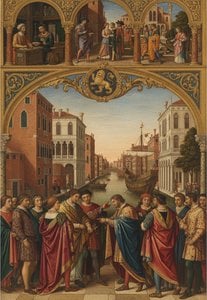
Najpełniejszą ekspresję Carpaccio odnalazł w wielkoformatowej narracji malarskiej. Jego najbardziej monumentalnym przedsięwzięciem stał się cykl dziewięciu płócien znany jako Legenda Świętej Urszuli, nad którym prace rozpoczął w 1490 roku. Dzieła te pozwoliły mu na kreowanie złożonych, tętniących życiem światów, wciągając widza w sam środek intymnych i szczegółowych momentów z życia świętej. Artysta posiadał również niezwykły dar chwytania ducha swojego rodzinnego miasta. W obrazie Cud relikwii Krzyża na moście Rialto przedstawił Wenecję u szczytu jej potęgi, wykorzystując miejski krajobraz, aby osadzić religijne narracje w namacalnej, rozpoznawalnej rzeczywistości.
Wszechstronność jego talentu objawia się w różnorodności otrzymywanych zleceń. Wśród nich odnajdziemy Portret doży Leonarda Loredana – dzieło będące świadectwem jego wysokiej pozycji w kręgu weneckiego renesansu. Carpaccio namalował również Świętego Jerzego ze smokiem, temperę na desce, która obecnie znajduje się w Scuola di San Giorgio degli Schiavoni w Wenecji. Kompozycja tego dzieła oraz dynamiczna interakcja postaci budują w nim niezwykłe poczucie dramatyzmu.
- Legenda Świętej Urszuli (rozpoczęta w 1490 r.)
- Cud relikwii Krzyża na moście Rialto
- Święty Jerzy ze smokiem
- Portret doży Leonarda Loredana
Kariera i najważniejsze zamówienia
Najbardziej płodne lata w twórczości Vittore Carpaccio przypadły na okres między 1490 a 1519 rokiem. W tym czasie artysta stał się nieodłącznym elementem życia religijnego Wenecji, otrzymując liczne zamówienia kościelne, które pozwoliły mu na zgłębianie złożonych, wielowątkowych narracji. Jego dzieła często przenosiły widza wprost na ulice miasta, chwytając ducha Repubetyki w monumentalnych, miejskich scenach. Doskonałym przykładem tej umiejętności jest Cud relikwii Krzyża na Ponte di Rialto – dzieło, które ukazuje Wenecję w samym szczycie jej obywatelskiej dumy.
Wraz z rozwojem kariery charakter jego mecenatu zaczął ulegać zmianom. O ile wczesne lata twórczości definiowały wielkie cykle religijne i dzieła o charakterze publicznym, o tyle jego produkcja po 1510 roku skierowała się ku sferze prywatnej. Artysta zaczął tworzyć przede wszystkim dla indywidualnych weneckich patronów, powołując do życia dzieła odzwierciedlające osobiste gusta rosnącej w siłę klasy kupieckiej. Ta ewolucja oznaczała przejście od wielkiej, publicznej opowieści z czasów młodości ku bardziej intymnym relacjom z kolekcjonerami.
Jego dorobek religijny pozostawał niezwykle stabilny przez pierwszą dekadę XVI wieku. Do najbardziej znaczących zamówień z tego okresu należą:
- Święty Tomasz Akwinata na tronie (1507)
- Prezentacja Chrystusa w Świątyni (1510)
Dziedzictwo i miejsce w historii
Vittore Carpaccio zajmuje wyjątkowe miejsce wśród wczesnych mistrzów renesansu weneckiego, okresu niosącego ze sobą głębokie przemiany w sztuce włoskiej. Podczas gdy jego współcześni nieustannie zmierzali ku nowym, humanistycznym trendom, Carpaccio często pozostawał zakotwiczony w bardziej tradycyjnym sposobie postrzegania świata. Do 1510 roku ci, którzy żyli i tworzyli u jego boku, zaczęli postrzegać jego styl jako zbyt konserwatywny. Artysta nie podążał za zmiennymi prądami swojej epoki, wybierając zamiast tego metodę, która z nostalgią spoglądała wstecz, ku szczegółowym, narracyjnym tradycjom przeszłości.
Ta niezłomność sprawiła, że jego nazwisko bywało czasem spychane na dalszy plan, ginąc w cieniu takich postaci jak Giovanni Bellini czy Giorgione. Podczas gdy inni ewoluowali w stronę zupełnie nowego języka wizualnego, Carpaccio nieustannie budował swoje światy poprzez precyzyjny detal architektoniczny oraz fascynację tym, co egzotyczne. Jego twórczość pozostaje oknem na konkretny moment w historii Wenecji, chwytając dumę obywatelską miasta oraz jego silne związki z Lewantem poprzez pryzmat, który dla jego rówieśników stawał się coraz bardziej staroświecki. Zmarł w 1526 roku, pozostawiając po sobie dorobek będący świadectwem niezwykłego, choć momentami wręcz upartego, oddania swojemu rzemiosłu.
Wśród jego najważniejszych dokonań odnaleźć możemy:
- Legenda o Świętej Urszuli
- Cud nad Relikwią Krzyża na Ponte di Rialto
- Święty Jerzy i Smok
Pytania i odpowiedzi
Gdzie mogę zobaczyć dzieła Vittore Carpaccio w wirtualnej galerii 3D?
Wirtualna Galeria 3D artysty Vittore Carpaccio to strona prezentująca jego dzieła w wirtualnej galerii trójwymiarowej.
Jak znaleźć dzieła Vittore Carpaccio o konkretnej tematyce?
Aby znaleźć dzieła artysty Vittore Carpaccio o konkretnej tematyce, skorzystaj ze strony Według słów kluczowych, która grupuje prace według słów kluczowych.
Na jakie okresy dzieli się kariera Vittore Carpaccio?
Chronologiczne zestawienie twórczości Vittore Carpaccio można znaleźć na stronie Osiągnięcia artystyczne, gdzie dzieła prezentowane są w kolejności ich powstania, podzielone na poszczególne etapy kariery.