Portret Moritz Von Schwind

Poznaj 85 najsłynniejszych obrazów autorstwa Moritz Von Schwind

Aktualizacja: Październik 2026 · ranking według naszego wskaźnika popularności (liczba wyszukiwań, wizyt i zamówień dla każdego dzieła) · 85 dzieł Moritz Von Schwind w naszym katalogu

W skrócie

Jeśli znasz choć jedno dzieło Moritz Von Schwind, to prawdopodobnie jest to The Singer’s Contest on the Wartburg (1846), które znajduje się w Städel Museum w Frankfurt nad Menem. Gnomes at the Toe of Bavaria (1850) oraz The Virgin (1863) dopełniają zestaw trzech dzieł, które ludzie rozpoznają natychmiast. Nasz katalog zawiera 85 dzieł autorstwa Moritz Von Schwind. Poniżej znajduje się 85 najbardziej znanych prac, z podaniem roku powstania, miejsca ekspozycji oraz informacji o tym, co czyni je wyjątkowymi.

1804 – 1871, Wiedeń Romanticism Najwięcej dzieł: Bawarskie Państwowe Zbiory Malarstwa

Zacznij tutaj: 10 najlepszych obrazów Moritz Von Schwind

2
Gnomes at the Toe of Bavaria (1850) autorstwa Moritz Von Schwind

Gnomes at the Toe of Bavaria

1850 · Oil · Lenbachhaus, Monachium

Deep within a vaulted stone chamber, a cluster of gnomes huddles in the dim light. They are crowded together, their bodies overlapping in a tight, restless knot of movement. The air feels heavy with the scent of damp earth and old parchment. A single piece of white paper catches the light, acting as a bright focal point amidst the surrounding gloom. This small, pale object draws the eye toward the…

3
The Virgin (1863) autorstwa Moritz Von Schwind

The Virgin

1863 · Oil · Bawarskie Państwowe Zbiory Malarstwa, Monachium

A single figure sits atop a high, rocky pedestal, rising above the world. She is draped in heavy, voluminous robes of peach, terracotta, and gold, the fabric cascading down the stone like slow-moving lava. Her gaze is fixed on a distant, unseen horizon, her expression one of profound tranquility and majesty. A crown rests upon her head, catching the light that spills from the upper left. Below her, a dark…

4
The Dream of Erwin von Steinbach (1845) autorstwa Moritz Von Schwind

The Dream of Erwin von Steinbach

1845 · Painting · Bawarskie Państwowe Zbiory Malarstwa, Monachium

In this work, we find ourselves suspended within the soaring, vertical reaches of a Gothic cathedral. The composition draws the eye upward, following the rhythmic lines of the vaulted ceilings and the slender columns that define this sacred space. Two winged figures, appearing as celestial beings or perhaps manifestations of a dream, float in the middle ground. One is draped in flowing, rose-colored robes, while the other is clad in…

5
Legend of the Bishop and the Devil (1854) autorstwa Moritz Von Schwind

Legend of the Bishop and the Devil

1854 · Oil · Bawarskie Państwowe Zbiory Malarstwa, Monachium

In this work, titled Legend of the Bishop and the Devil, Moritz von Schwind explores a narrative of supernatural confrontation. Painted in 1854, the scene captures a moment of tension between the earthly and the demonic. A muscular, demonic figure occupies the lower left, engaged in labor, while a bishop stands poised at the threshold of a stone ruin. This encounter is set against a rugged, mountainous landscape that provides…

6
Hero and Leander (1863) autorstwa Moritz Von Schwind

Hero and Leander

1863 · Oil On Canvas · Bawarskie Państwowe Zbiory Malarstwa, Monachium

Moritz von Schwind’s Hero and Leander, painted about 1863, translates a tragic mythological scene into a dramatic and melancholic Romantic-style oil painting. The work centers on the fatal separation of the two lovers, rendered with the emotional intensity characteristic of the 19th-century academic Romantic tradition.

10
Water Nymphs Watering a Stag (1846) autorstwa Moritz Von Schwind

Water Nymphs Watering a Stag

1846 · Oil On Canvas · Bawarskie Państwowe Zbiory Malarstwa, Monachium

Water Nymphs Watering a Stag is an oil on canvas work by the Austrian-born German painter Moritz von Schwind. Known in its original German context as Wassernymphen tränken einen Hirsch, the piece belongs to the Romantic movement. The artist's hand is evident in the lyrical treatment of the mythological subject matter, a hallmark of his approach to folklore and legend.

Więcej ulubionych dzieł Moritz Von Schwind, od 11 do 85

11A Symphony (1852) autorstwa Moritz Von SchwindA Symphony1852 · Neue Pinakothek 12Abduction of Aschenbrödel by the Fairy (1854) autorstwa Moritz Von SchwindAbduction of Aschenbrödel by the Fairy1854 · Bawarskie Państwowe Zbiory Malarstwa 13The Dream of Erwin von Steinbach (1822) autorstwa Moritz Von SchwindThe Dream of Erwin von Steinbach1822 · Staatliche Graphische Sammlung 14Abigail before David (1830) autorstwa Moritz Von SchwindAbigail before David1830 · Bawarskie Państwowe Zbiory Malarstwa 15The Erlking (1830) autorstwa Moritz Von SchwindThe Erlking1830 16The Bread Slicer (1823) autorstwa Moritz Von SchwindThe Bread Slicer1823 17The Moon Fairy (Appearance in the Forest) (1829) autorstwa Moritz Von SchwindThe Moon Fairy (Appearance in the Forest)1829 18Luna and Endymion (1829) autorstwa Moritz Von SchwindLuna and Endymion1829 19Scene of a fairy - tale (1829) autorstwa Moritz Von SchwindScene of a fairy - tale1829 20Sketch for a monument (1829) autorstwa Moritz Von SchwindSketch for a monument1829 21"Rübezahl" (1829) autorstwa Moritz Von Schwind"Rübezahl"1829 22Female fairy-tale figure at rock (1829) autorstwa Moritz Von SchwindFemale fairy-tale figure at rock1829 23Therese Hönig, née von Puffer (1836) autorstwa Moritz Von SchwindTherese Hönig, née von Puffer1836 · Bawarskie Państwowe Zbiory Malarstwa 24Fairy Dance in the Alder Grove (1844) autorstwa Moritz Von SchwindFairy Dance in the Alder Grove1844 · Städel Museum 25The Prisoner's Dream (1836) autorstwa Moritz Von SchwindThe Prisoner's Dream1836 · Bawarskie Państwowe Zbiory Malarstwa 26Landscape with Wanderer (1835) autorstwa Moritz Von SchwindLandscape with Wanderer1835 · Graphische Sammlung Albertina 27A Player with a Hermit (1846) autorstwa Moritz Von SchwindA Player with a Hermit1846 · Neue Pinakothek 28Saint Cecilia at the Organ (1845) autorstwa Moritz Von SchwindSaint Cecilia at the Organ1845 29Scene from the Huguenots (Stage Decoration ?) (1845) autorstwa Moritz Von SchwindScene from the Huguenots (Stage Decoration ?)1845 30Scene from Spontini's Vestalis, Stage Decoration (1845) autorstwa Moritz Von SchwindScene from Spontini's Vestalis, Stage Decoration1845 31Jessonda. Two Girls with Jugs (1845) autorstwa Moritz Von SchwindJessonda. Two Girls with Jugs1845 32Minstrel with a Hermit (1846) autorstwa Moritz Von SchwindMinstrel with a Hermit1846 · Staatliche Kunsthalle Karlsruhe 33portrait of a young man (1845) autorstwa Moritz Von Schwindportrait of a young man1845 342 nude riders gallopping to night (1845) autorstwa Moritz Von Schwind2 nude riders gallopping to night1845 35Hermit in a Rock Grotto (1863) autorstwa Moritz Von SchwindHermit in a Rock Grotto1863 · Bawarskie Państwowe Zbiory Malarstwa 36Brother-in-law Kronos (1855) autorstwa Moritz Von SchwindBrother-in-law Kronos1855 · Bawarskie Państwowe Zbiory Malarstwa 37Symphony (1852) autorstwa Moritz Von SchwindSymphony1852 · Bawarskie Państwowe Zbiory Malarstwa 38The Fairy Tale of Aschenbrödel (1854) autorstwa Moritz Von SchwindThe Fairy Tale of Aschenbrödel1854 · Bawarskie Państwowe Zbiory Malarstwa 39The Forest Chapel (1855) autorstwa Moritz Von SchwindThe Forest Chapel1855 · Bawarskie Państwowe Zbiory Malarstwa 40The Boatwoman (Baroness Marie Spaun at Lake Gmunden) (1851) autorstwa Moritz Von SchwindThe Boatwoman (Baroness Marie Spaun at Lake Gmunden)1851 41Rübezahl (1851) autorstwa Moritz Von SchwindRübezahl1851 42The Fairy Tale Cinderella, Picture Wall with 19 Pictures (1853) autorstwa Moritz Von SchwindThe Fairy Tale Cinderella, Picture Wall with 19 Pictures1853 43Portrait of Stallmeister Wilhelm Sachs (1855) autorstwa Moritz Von SchwindPortrait of Stallmeister Wilhelm Sachs1855 · Staatliche Kunsthalle Karlsruhe 44Wieland the forger and the Princess (1850) autorstwa Moritz Von SchwindWieland the forger and the Princess1850 · Museum Georg Schäfer 45Cinderella, to go on the prom (1852) autorstwa Moritz Von SchwindCinderella, to go on the prom1852 · Alte Nationalgalerie 46Apparition in the Forest (1858) autorstwa Moritz Von SchwindApparition in the Forest1858 · Bawarskie Państwowe Zbiory Malarstwa 47The Four Times of Day: The Evening (1860) autorstwa Moritz Von SchwindThe Four Times of Day: The Evening1860 · Bawarskie Państwowe Zbiory Malarstwa 48The Four Times of Day: Noon (1860) autorstwa Moritz Von SchwindThe Four Times of Day: Noon1860 · Bawarskie Państwowe Zbiory Malarstwa 49The Four Times of Day: The Morning (1860) autorstwa Moritz Von SchwindThe Four Times of Day: The Morning1860 · Bawarskie Państwowe Zbiory Malarstwa 50The Danube with its Tributaries (1860) autorstwa Moritz Von SchwindThe Danube with its Tributaries1860 · Bawarskie Państwowe Zbiory Malarstwa 51Anna Schwind, the Daughter of the Artist (1860) autorstwa Moritz Von SchwindAnna Schwind, the Daughter of the Artist1860 52Emperor Maximilian I in the Martinswand (1860) autorstwa Moritz Von SchwindEmperor Maximilian I in the Martinswand1860 53Knight on a Nighttime Boat Trip (1865) autorstwa Moritz Von SchwindKnight on a Nighttime Boat Trip1865 · Bawarskie Państwowe Zbiory Malarstwa 54Family of Tritons (1866) autorstwa Moritz Von SchwindFamily of Tritons1866 · Bawarskie Państwowe Zbiory Malarstwa 55Father Rhine, the Fideles Playing the Fiddle (1865) autorstwa Moritz Von SchwindFather Rhine, the Fideles Playing the Fiddle1865 · Bawarskie Państwowe Zbiory Malarstwa 56Helios with the Chariot of Horses (1869) autorstwa Moritz Von SchwindHelios with the Chariot of Horses1869 · Bawarskie Państwowe Zbiory Malarstwa 57In the Forest (Des Knaben Wunderhorn) (1848) autorstwa Moritz Von SchwindIn the Forest (Des Knaben Wunderhorn)1848 · Bawarskie Państwowe Zbiory Malarstwa 58The Beautiful Melusine (The Daughters of the Rhine) (1869) autorstwa Moritz Von SchwindThe Beautiful Melusine (The Daughters of the Rhine)1869 59The Erlking (1860) autorstwa Moritz Von SchwindThe Erlking1860 · Bawarskie Państwowe Zbiory Malarstwa 60Wieland the Smith (1850) autorstwa Moritz Von SchwindWieland the Smith1850 · Bawarskie Państwowe Zbiory Malarstwa 61The Knight's Dream (1859) autorstwa Moritz Von SchwindThe Knight's Dream1859 · Staatliche Kunsthalle Karlsruhe 62A Hermit Leads Horses to the Watering Hole (1850) autorstwa Moritz Von SchwindA Hermit Leads Horses to the Watering Hole1850 · Bawarskie Państwowe Zbiory Malarstwa 63Nightly Duel at a Garden Gate (1850) autorstwa Moritz Von SchwindNightly Duel at a Garden Gate1850 · Bawarskie Państwowe Zbiory Malarstwa 64Farewell at Dawn (1859) autorstwa Moritz Von SchwindFarewell at Dawn1859 · Nationalgalerie 65Karl August von Heigel autorstwa Moritz Von SchwindKarl August von HeigelLenbachhaus 66The Minstrel Contest at the Wartburg (1837) autorstwa Moritz Von SchwindThe Minstrel Contest at the Wartburg1837 · Staatliche Kunsthalle Karlsruhe 67Design for the Fairy Tale of "Aschenbrödel" (1853) autorstwa Moritz Von SchwindDesign for the Fairy Tale of "Aschenbrödel"1853 · Staatliche Kunsthalle Karlsruhe 68On the Wanderlust (1860) autorstwa Moritz Von SchwindOn the Wanderlust1860 · Schackgalerie 69Apparition in the Woods (1858) autorstwa Moritz Von SchwindApparition in the Woods1858 · Schackgalerie 70Early Morning (1858) autorstwa Moritz Von SchwindEarly Morning1858 · Sammlung Schack 71The Cat Symphony (1868) autorstwa Moritz Von SchwindThe Cat Symphony1868 · Staatliche Kunsthalle Karlsruhe 72The Ride Through the Forest autorstwa Moritz Von SchwindThe Ride Through the ForestBawarskie Państwowe Zbiory Malarstwa 73Game of Society autorstwa Moritz Von SchwindGame of Society 74Allegory of the Four Estates and Homage to Grand Duke Leopold von Baden autorstwa Moritz Von SchwindAllegory of the Four Estates and Homage to Grand Duke Leopold von BadenStaatliche Kunsthalle Karlsruhe 75Apparition in the Forest (from Sleeping Beauty) autorstwa Moritz Von SchwindApparition in the Forest (from Sleeping Beauty)Städel Museum 76Rübezahl autorstwa Moritz Von SchwindRübezahlBawarskie Państwowe Zbiory Malarstwa 77the Visit autorstwa Moritz Von Schwindthe VisitBawarskie Państwowe Zbiory Malarstwa 78Portrait of Frau Mosthaff autorstwa Moritz Von SchwindPortrait of Frau Mosthaff 79Honeymoon autorstwa Moritz Von SchwindHoneymoonBawarskie Państwowe Zbiory Malarstwa 80The Rose, or the Artist's Journey autorstwa Moritz Von SchwindThe Rose, or the Artist's JourneyAlte Nationalgalerie 81The painter joseph binder's adventure autorstwa Moritz Von SchwindThe painter joseph binder's adventureAlte Nationalgalerie 82Sabina of Steinbach autorstwa Moritz Von SchwindSabina of SteinbachAlte Nationalgalerie 83Farewell from the Valley (1846) autorstwa Moritz Von SchwindFarewell from the Valley1846 · Bawarskie Państwowe Zbiory Malarstwa 84The Return of Count von Gleichen (1864) autorstwa Moritz Von SchwindThe Return of Count von Gleichen1864 · Bawarskie Państwowe Zbiory Malarstwa 85Returning Knight (1846) autorstwa Moritz Von SchwindReturning Knight1846 · Bawarskie Państwowe Zbiory Malarstwa

Co najczęściej malował Moritz Von Schwind

Cztery tematy najczęściej pojawiające się w tych dziełach, z których każdy wraz z jego najbardziej znanym przykładem.

Gdzie możesz zobaczyć obrazy artysty Moritz Von Schwind

8 muzeów, w których znajduje się najwięcej obrazów z tej strony.

Muzeum Miasto Dzieła artysty Moritz Von Schwind Obrazy z tej listy
Bawarskie Państwowe Zbiory Malarstwa, MonachiumBawarskie Państwowe Zbiory Malarstwa Monachium 38 The Virgin, The Dream of Erwin von Steinbach, Legend of the Bishop and the Devil
Staatliche Kunsthalle Karlsruhe, KarlsruheStaatliche Kunsthalle Karlsruhe Karlsruhe 7 Minstrel with a Hermit, Portrait of Stallmeister Wilhelm Sachs, The Knight's Dream
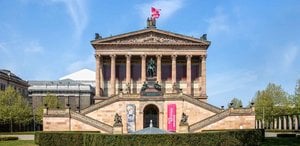
Alte Nationalgalerie, BerlinAlte Nationalgalerie Berlin 4 Cinderella, to go on the prom, The Rose, or the Artist's Journey, The painter joseph binder's adventure
Städel Museum, Frankfurt nad MenemStädel Museum Frankfurt nad Menem 3 The Singer’s Contest on the Wartburg, Fairy Dance in the Alder Grove, Apparition in the Forest (from Sleeping Beauty)
Lenbachhaus, MonachiumLenbachhaus Monachium 2 Gnomes at the Toe of Bavaria, Karl August von Heigel
Neue Pinakothek, MonachiumNeue Pinakothek Monachium 2 A Symphony, A Player with a Hermit
Schackgalerie, MonachiumSchackgalerie Monachium 2 On the Wanderlust, Apparition in the Woods
Staatliche Graphische Sammlung, MonachiumStaatliche Graphische Sammlung Monachium 1 The Dream of Erwin von Steinbach

Moritz Von Schwind dekada po dekadzie: jedno wybitne dzieło na każdą z nich

Dzieła według dekad

Wybierz dekadę, aby zobaczyć jej najważniejsze dzieło.

Twoje pytania dotyczące obrazów Moritz Von Schwind

Który obraz artysty Moritz Von Schwind jest najsłynniejszy?Zobacz odpowiedź

Na szczycie listy znajduje się The Singer’s Contest on the Wartburg (1846), Städel Museum, Frankfurt nad Menem. Tuż za nim: Gnomes at the Toe of Bavaria (1850) i The Virgin (1863).

Ile lat miał Moritz Von Schwind, gdy powstało The Singer’s Contest on the Wartburg?Zobacz odpowiedź

42 lat. Moritz Von Schwind urodził się w 1804, a The Singer’s Contest on the Wartburg pochodzi z 1846.

Jakie są 10 najsłynniejszych obrazów, których autorem jest Moritz Von Schwind?Zobacz odpowiedź

The Singer’s Contest on the Wartburg, Gnomes at the Toe of Bavaria, The Virgin, The Dream of Erwin von Steinbach, Legend of the Bishop and the Devil, Hero and Leander, Elf Dance in the Alder Grove, The Captive Princess, King Krokus and the wood Nymph i Water Nymphs Watering a Stag. Rok powstania oraz muzeum, w którym znajdują się poszczególne dzieła, znajdziesz w powyższej liście.

Ile obrazów stworzył/a Moritz Von Schwind?Zobacz odpowiedź

W naszym katalogu znajduje się 85 dzieł artysty Moritz Von Schwind, datowanych od 1822 do 1869.

Gdzie można zobaczyć słynne obrazy Moritz Von Schwind?Zobacz odpowiedź

Większość z nich znajdziesz w Bawarskie Państwowe Zbiory Malarstwa (Monachium), Staatliche Kunsthalle Karlsruhe (Karlsruhe) i Alte Nationalgalerie (Berlin). Powyższa lista muzeów zawiera pełne zestawienie.

Kiedy Moritz Von Schwind namalował swoje najsłynniejsze dzieła?Zobacz odpowiedź

W 1850s, bardziej niż w jakimkolwiek innym czasie: 24 z 85 dzieł na tej stronie pochodzi właśnie z tego okresu, w tym Gnomes at the Toe of Bavaria.

Które słynne obrazy Moritz Von Schwind powstały jako pierwsze, a które jako ostatnie?Zobacz odpowiedź

Najwcześniejsze dzieło pochodzi z The Dream of Erwin von Steinbach (1822), a najnowsze z Helios with the Chariot of Horses (1869).

Jakie tematy najczęściej pojawiają się na obrazach Moritz Von Schwind?Zobacz odpowiedź

Trees (10), Forest (10) i Woman (7) z 85 dzieł na tej stronie.

Jakich materiałów Moritz Von Schwind używał najczęściej?Zobacz odpowiedź

Oil, użyte w 13 z 85 dzieł na tej stronie.

Do jakiego nurtu artystycznego należał/a Moritz Von Schwind?Zobacz odpowiedź

Romanticism, co widać na dziełach prezentowanych na tej stronie.

Które dzieła artysty Moritz Von Schwind można zobaczyć w Bawarskie Państwowe Zbiory Malarstwa?Zobacz odpowiedź

Na tej stronie możesz zobaczyć 38 dzieł znajdujących się w Bawarskie Państwowe Zbiory Malarstwa, Monachium, w tym The Virgin, The Dream of Erwin von Steinbach i Legend of the Bishop and the Devil.

Czy mogę zamówić reprodukcję obrazu Moritz Von Schwind?Zobacz odpowiedź

Tak. Każdy obraz na tej stronie jest dostępny jako ręcznie malowana reprodukcja olejowa lub wydruk, w rozmiarze dopasowanym do Twoich potrzeb. Aby złożyć zamówienie, wystarczy przejść na stronę wybranego obrazu.

Poznaj Moritz Von Schwind

Moritz von Schwind: Poeta romantycznej wyobraźni

Moritz von Schwind, urodzony w 1804 roku w tętniących życiem artystycznych kręgach Wiednia i tragicznie zmarły w 1871 roku w bawarskim Pöcking, pozostaje jedną z najbardziej urzekających postaci niemieckiego romantyzmu. Był kimś znacznie więcej niż tylko malarzem; był poetą ubranym w technikę olejną, tkaczem snów i ludowych podań oraz mistrzem nastrojowych krajobrazów przesyconych głębokim symbolizmem. Jego geniusz nie polegał jedynie na biegłości technicznej, lecz na niezwykłej zdolności przekładania emocjonalnych prądów swojej epoki – trwającego jeszcze uroku rycerskości, szeptów germańskich legend i rodzącego się ducha romantyzmu – na wizualnie poruszające dzieła, które do dziś budzą zachwyt. Życie Schwinda było misterną tkaniną utkaną z przyjaźni z muzycznymi gigantami, takimi jak Schubert, królewskich zleceń oraz nieustannego dążenia do uchwycenia samej esencji poetyckiej fantazji.

Wczesne lata i artystyczne fundamenty

Wczesne lata Schwinda upłynęły pod znakiem przywilejów i szczęśliwego obcowania z wielką sztuką. Urodzony w arystokratycznej rodzinie, otrzymał solidne wykształcenie, które zaszczepiło w nim miłość do literatury i muzyki, współistniejącą z rozwijającym się talentem plastycznym. Kluczowym momentem w jego rozwoju była przyjaźń z Franzem Schubertem, którego pieśni stały się niewyczerpanym źródłem inspiracji przez całą karierę Schwinda. Artysta ilustrował wiele kompozycji Schuberta, z niezwykłą wrażliwością oddając melancholijne piękno tych utworów. Przeprowadzka do Monachium w 1828 roku, tuż po śmierci Schuberta, stała się punktem zwrotnym. Tam odnalazł mentora w osobie Corneliusa, ówczesnego dyrektora Akademii, i nawiązał relacje z innymi wybitnymi twórcami, jak Schnorr, co stworzyło żyzny grunt pod jego artystyczny wzrost. Ten okres położył fundamenty pod jego charakterystyczny styl – pełen lirycznej gracji, drobiazgowego detalu i niemal onirycznej jakości.

Królewskie zlecenia i rozkwit twórczości

Kariera Schwinda wzniosła się na wyżyny w latach 30. i 40. XIX wieku, napędzana serią prestiżowych zamówień. W 1834 roku powierzono mu dekorację nowego pałacu króla Ludwiga w Monachium, gdzie stworzył monumentalne malowidła ścienne ilustrujące sceny z poezji Tiecka – projekt ten zaprezentował jego rosnącą biegłość w narracji obrazowej i dbałość o historyczny detal. Umacniając swoją reputację, zaprojektował dla tego samego pałacu „Kinderfries” (fryz dziecięcy) – pełne radosnej beztroski przedstawienia młodzieńczej zabawy, które dowiodły jego zdolności do chwytania ulotnych chwil szczęścia. Przyjmował również zlecenia w Saksonii i Badenii, co ugruntowało jego pozycję jako czołowego artysty epoki. Szczególnym wyzwaniem była praca w Akademii w Karlsruhe w 1839 roku, gdzie stworzył rozległy fresk ucieleśniający idee Goethego – ambitny projekt odzwierciedlający intelektualny żar tamtych czasów.

Szczyt romantycznej wizji: Krajobrazy i legendy

Najsłynniejsze dzieła Schwinda powstały podczas jego pobytu we Frankfurcie (1844–1847) oraz późniejszych latach w Monachium. To właśnie wtedy narodziły się niektóre z jego najdoskonalszych obrazów sztalugowych, w tym „Konkurs śpiewaków w Wartburgu” (1846) – arcydzieło idealnie oddające ideały romantyzmu, przedstawiające zgromadzenie muzyków zatopionych w pasjonującym śpiewie pośród dramatycznej, średniowiecznej scenerii. Jego projekty na uroczystość upamiętniającą Goethego dodatkowo ukazały umiejętność łączenia historycznej precyzji z poetycką wyobraźnią. Jednak to interpretacje germańskich legend i folkloru zdefiniowały jego artystyczne dziedzictwo. Cykl „Pieśń o Nibelungach”, a w szczególności oszałamiające freski w zamku Hohenschwangau, opowiadające epicką historię Zygfryda i Brunhildy, stanowią świadectwo jego kunsztu w przekładaniu złożonych narracji na wizualnie pociągające sceny. Równie niezwykła jest jego praca nad historią Kupidyna i Psyche dla Lipska, demonstrująca zdolność do przywołania zarówno piękna, jak i melancholii.

Późne lata i dziedzictwo

Późniejsze lata życia Schwinda upłynęły pod znakiem pogarszającego się zdrowia, lecz nie ustającej produktywności artystycznej. W 1847 roku powrócił do Wiednia, gdzie stworzył cykl obrazów oparty na legendzie o Meluzynie, prezentując swój niezmienny talent. Jego ostatnie prace, w tym projekty upamiętniające muzyków dla Wiedeńskiej Opery Państwowej, odzwierciedlały głęboką miłość do muzyki i jej mocy inspirowania. Moritz von Schwind zmarł w Niederpöcking w 1871 roku, pozostawiając po sobie bogate dziedzictwo, które nieustannie zachwyca odbiorców. Jego malarstwo jest cenione nie tylko za techniczną doskonałość, ale przede wszystkim za zdolność przenoszenia widza do światów mitu, legendy i głębokiego rezonansu emocjonalnego – co na trwałe wpisało go w historię niemieckiej sztuki romantycznej.

Warto zapamiętać

  • Rübezahl (1834): Dramatyczny krajobraz przedstawiający mitycznego strażnika Alp Bawarskich, ucielejający tematy natury, potęgi i tajemnicy.
  • Sen Erwina von Steinbacha (1822): Złożony rysunek ukazujący gotycką scenę przepełnioną symbolizmem i psychologiczną głębią.
  • Krajobraz z wędrowcem (1835): Nastrojowy rysunek czarno-biały, przedstawiający samotną postać kontemplującą fantastyczny krajobraz, co odzwierciedla tematy izolacji i introspekcji.
  • Konkurs śpiewaków w Wartburgu (1846): Żywy i dynamiczny obraz ukazujący scenę muzycznej pasji w średniowiecznym anturażu – najsłynniejsze dzieło Schwinda.
  • Siedem kruków (1857): Seria ilustracji opartych na baśniach braci Grimm, prezentująca jego umiejętność łączenia fantazji z narracyjną opowieścią.

Dalsze poszukiwania

Wszystkie 85 dzieła artysty Moritz Von Schwind →