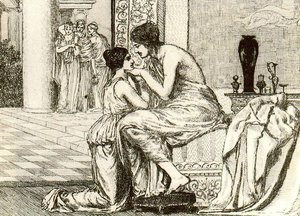
Portret Max Klinger

Najsłynniejsze obrazy artysty Max Klinger: Wszystkie 100, uszeregowane

Aktualizacja: Październik 2026 · ranking według naszego wskaźnika popularności (liczba wyszukiwań, wizyt i zamówień dla każdego dzieła) · 281 dzieł Max Klinger w naszym katalogu

W skrócie

Najbardziej znanym obrazem, który stworzył Max Klinger, jest The death peeing. Tuż po nim następują The Isle of the Dead oraz Presa. Z 281 dzieł Max Klinger w naszym katalogu, tych 100 jest najbardziej znanych. Każde z nich zawiera rok powstania, informację o muzeum oraz krótką notkę o tym, co czyni je wyjątkowymi.

1857 – 1920, Lipsk Symbolism Najwięcej dzieł: Bawarskie Państwowe Zbiory Malarstwa

Top 10 dzieł Max Klinger: obrazy, które zna każdy

1
The death peeing autorstwa Max Klinger

The death peeing

Painting

The air hangs heavy near the riverbank where a skeletal figure stands, stripped of the terrifying dignity often assigned to the Grim Reaper. This figure, a personification of death, occupies the shoreline with a startlingly mundane presence. He stands with legs apart, facing the water, engaged in the most basic of biological functions. The act of urination into the stream demystifies the specter, pulling the concept of mortality away from…

2
The Isle of the Dead autorstwa Max Klinger

The Isle of the Dead

Painting

The Isle of the Dead emerges from the vision of Max Klinger, a German artist who leaves a profound mark on the landscape of late 19th-century thought. Born in Leipzig in 1857, Klinger moves through a world of shifting aesthetics, eventually passing away in 1920. In this specific work, titled The Isle of the Dead, he captures a moment that feels suspended in a quiet, heavy stillness.

3
Presa autorstwa Max Klinger

Presa

Lithograph

The artwork presents a monochrome scene rendered in grayscale, utilizing a range of black, white, and gray tones. At the bottom center of the frame, a reclining nude female figure is positioned as the primary focal point. Above her, a large group of men in formal attire occupies the upper portion of the composition. These figures are partially obscured by shadow, creating a sense of depth through overlapping forms. The…

4
Y sin embargo! autorstwa Max Klinger

Y sin embargo!

Graphite

Max Klinger, born in Leipzig in 1857, produced Y sin embargo! as part of a career that bridged the transition from Realism to Symbolism. The artist, who died in 1920, was a significant figure in German art, known for his ability to move beyond mere visual representation to explore the psychological and the subconscious. This specific work reflects his interest in the intersection of the human form and the natural…

Odkrywaj dalej Max Klinger: 11 do 100

11At the Beach (1890) autorstwa Max KlingerAt the Beach1890 · Bawarskie Państwowe Zbiory Malarstwa 12Portrait of a Roman Woman on a Flat Roof in Rome (1891) autorstwa Max KlingerPortrait of a Roman Woman on a Flat Roof in Rome1891 · Städel Museum 13Christ in Olympus (1897) autorstwa Max KlingerChrist in Olympus1897 14Female Nude (1910) autorstwa Max KlingerFemale Nude1910 15Bathing Women (1912) autorstwa Max KlingerBathing Women1912 16A legation autorstwa Max KlingerA legation 17Plague autorstwa Max KlingerPlague 18Workers at a House Construction (1889) autorstwa Max KlingerWorkers at a House Construction1889 19Seaside Idyl autorstwa Max KlingerSeaside IdylBawarskie Państwowe Zbiory Malarstwa 20Female Study Head autorstwa Max KlingerFemale Study Head 21Portrait of a Gentleman autorstwa Max KlingerPortrait of a Gentleman 22Cupid autorstwa Max KlingerCupid 23Salvation autorstwa Max KlingerSalvation 24The source autorstwa Max KlingerThe source 25An Max Klinger autorstwa Max KlingerAn Max Klinger 26untitled (336) autorstwa Max Klingeruntitled (336) 27untitled (1870) autorstwa Max Klingeruntitled (1870) 28untitled (5707) autorstwa Max Klingeruntitled (5707) 29untitled (7927) autorstwa Max Klingeruntitled (7927) 30untitled (4077) autorstwa Max Klingeruntitled (4077) 31untitled (5205) autorstwa Max Klingeruntitled (5205) 32untitled (4640) autorstwa Max Klingeruntitled (4640) 33untitled (1790) autorstwa Max Klingeruntitled (1790) 34untitled (7957) autorstwa Max Klingeruntitled (7957) 35untitled (1515) autorstwa Max Klingeruntitled (1515) 36untitled (1160) autorstwa Max Klingeruntitled (1160) 37untitled (5386) autorstwa Max Klingeruntitled (5386) 38untitled (5714) autorstwa Max Klingeruntitled (5714) 39untitled (9844) autorstwa Max Klingeruntitled (9844) 40untitled (3585) autorstwa Max Klingeruntitled (3585) 41untitled (5586) autorstwa Max Klingeruntitled (5586) 42untitled (3254) autorstwa Max Klingeruntitled (3254) 43untitled (4823) autorstwa Max Klingeruntitled (4823) 44untitled (5191) autorstwa Max Klingeruntitled (5191) 45untitled (1133) autorstwa Max Klingeruntitled (1133) 46Venus in the sea autorstwa Max KlingerVenus in the sea 47Cupido autorstwa Max KlingerCupido 48untitled (3590) autorstwa Max Klingeruntitled (3590) 49untitled (7159) autorstwa Max Klingeruntitled (7159) 50Angustias autorstwa Max KlingerAngustias 51Old love. initial stamps autorstwa Max KlingerOld love. initial stamps 52untitled (5140) autorstwa Max Klingeruntitled (5140) 53Scene autorstwa Max KlingerScene 54Venus and Mercury autorstwa Max KlingerVenus and Mercury 55psyche bathing autorstwa Max Klingerpsyche bathing 56Phriam And Thisbe I autorstwa Max KlingerPhriam And Thisbe I 57untitled (2692) autorstwa Max Klingeruntitled (2692) 58Abduction autorstwa Max KlingerAbduction 59Venus and Psyche autorstwa Max KlingerVenus and Psyche 60Zephyr carrying his sisters autorstwa Max KlingerZephyr carrying his sisters 61The wedding party of Psyche autorstwa Max KlingerThe wedding party of Psyche 62Sister jumping from a rock autorstwa Max KlingerSister jumping from a rock 63Psyche and Ceres autorstwa Max KlingerPsyche and Ceres 64Love, death and extramundos autorstwa Max KlingerLove, death and extramundos 65untitled (9745) autorstwa Max Klingeruntitled (9745) 66Mother I autorstwa Max KlingerMother I 67Pan comforting Psyche autorstwa Max KlingerPan comforting Psyche 68untitled (4174) autorstwa Max Klingeruntitled (4174) 69Psyche crossing the Acheron autorstwa Max KlingerPsyche crossing the Acheron 70Desire autorstwa Max KlingerDesire 71Psyche on a rock autorstwa Max KlingerPsyche on a rock 72Jupiter and Venus autorstwa Max KlingerJupiter and Venus 73Psyche and Arundo autorstwa Max KlingerPsyche and Arundo 74Farmer planting misery autorstwa Max KlingerFarmer planting misery 75The childhood of Amor autorstwa Max KlingerThe childhood of Amor 76Satire autorstwa Max KlingerSatire 77Intermezzo 1 autorstwa Max KlingerIntermezzo 1 78Phriam And Thisbe II autorstwa Max KlingerPhriam And Thisbe II 79Charon autorstwa Max KlingerCharon 80untitled (1999) autorstwa Max Klingeruntitled (1999) 81Time and glory autorstwa Max KlingerTime and glory 82Psyche on the road to Tartarus autorstwa Max KlingerPsyche on the road to Tartarus 83Venus presents Psyche the Love autorstwa Max KlingerVenus presents Psyche the Love 84Titan autorstwa Max KlingerTitan 85Psyche venerated by the people autorstwa Max KlingerPsyche venerated by the people 86Psyche and Venus autorstwa Max KlingerPsyche and Venus 87Parade autorstwa Max KlingerParade 88Death knight autorstwa Max KlingerDeath knight 89The priestesses of Venus autorstwa Max KlingerThe priestesses of Venus 90untitled (8812) autorstwa Max Klingeruntitled (8812) 91Rockfall autorstwa Max KlingerRockfall 92Naked woman under a tree autorstwa Max KlingerNaked woman under a tree 93Cold Hand autorstwa Max KlingerCold Hand 94Captive autorstwa Max KlingerCaptive 95violation autorstwa Max Klingerviolation 96The great goddess autorstwa Max KlingerThe great goddess 97untitled (547) autorstwa Max Klingeruntitled (547) 98Psyche and Juno autorstwa Max KlingerPsyche and Juno 99Night 1 autorstwa Max KlingerNight 1 100untitled (2269) autorstwa Max Klingeruntitled (2269)

Obrazy artysty Max Klinger w ujęciu epokowym

Co najczęściej malował Max Klinger

Cztery tematy najczęściej pojawiające się w tych dziełach, z których każdy wraz z jego najbardziej znanym przykładem.

Gdzie możesz zobaczyć obrazy artysty Max Klinger

4 muzeów, w których znajduje się najwięcej obrazów z tej strony.

Muzeum Miasto Dzieła artysty Max Klinger Obrazy z tej listy
Bawarskie Państwowe Zbiory Malarstwa, MonachiumBawarskie Państwowe Zbiory Malarstwa Monachium 2 At the Beach, Seaside Idyl
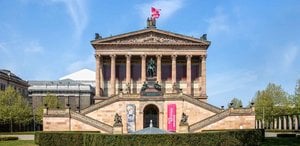
Alte Nationalgalerie, BerlinAlte Nationalgalerie Berlin 3 Venus in the Shell Carriage. Part of the Wall Decoration of Villa Albers in Berlin-Steglitz
National Gallery Prague, PragaNational Gallery Prague Praga 1 Evening
Städel Museum, Frankfurt nad MenemStädel Museum Frankfurt nad Menem 1 Portrait of a Roman Woman on a Flat Roof in Rome

Jedno słynne dzieło Max Klinger na każdą dekadę

Dzieła według dekad

Wybierz dekadę, aby zobaczyć jej najważniejsze dzieło.

Obrazy: Max Klinger – o co pytają ludzie

Z jakiego obrazu najbardziej znany jest Max Klinger?Zobacz odpowiedź

Na szczycie listy znajduje się The death peeing. Tuż za nim: The Isle of the Dead oraz Presa.

Które 10 obrazów Max Klinger jest najbardziej znanych?Zobacz odpowiedź

The death peeing, The Isle of the Dead, Presa, Y sin embargo!, Rescue, Mermaid holding a shell up, the philosopher, Venus in the Shell Carriage. Part of the Wall Decoration of Villa Albers in Berlin-Steglitz, Evening i Play in the meadow. Rok powstania oraz muzeum, w którym znajdują się poszczególne dzieła, znajdziesz w powyższej liście.

Ile jest dzieł artysty Max Klinger?Zobacz odpowiedź

W naszym katalogu znajduje się 281 dzieł artysty Max Klinger, datowanych od 1879 do 1912.

W których muzeach znajdują się najsłynniejsze obrazy Max Klinger?Zobacz odpowiedź

Większość z nich znajdziesz w Bawarskie Państwowe Zbiory Malarstwa (Monachium), Alte Nationalgalerie (Berlin) i National Gallery Prague (Praga). Powyższa lista muzeów zawiera pełne zestawienie.

Kiedy namalowano najsłynniejsze dzieła Max Klinger?Zobacz odpowiedź

W 1880s, bardziej niż w jakimkolwiek innym czasie: 3 z 100 dzieł na tej stronie pochodzi właśnie z tego okresu, w tym Venus in the Shell Carriage. Part of the Wall Decoration of Villa Albers in Berlin-Steglitz.

Jakie są najstarsze i najnowsze słynne obrazy autorstwa Max Klinger?Zobacz odpowiedź

Najwcześniejsze dzieło pochodzi z Evening (1879), a najnowsze z Bathing Women (1912).

Co najczęściej malował Max Klinger?Zobacz odpowiedź

Gods (7), Symbolic imagery (6) i Landscape (4) z 100 dzieł na tej stronie.

Czym zazwyczaj malował Max Klinger?Zobacz odpowiedź

Painting, użyte w 2 z 100 dzieł na tej stronie.

Z jakim nurtem artystycznym wiąże się Max Klinger?Zobacz odpowiedź

Symbolism, co widać na dziełach prezentowanych na tej stronie.

Co można zobaczyć u Max Klinger w Bawarskie Państwowe Zbiory Malarstwa?Zobacz odpowiedź

Na tej stronie możesz zobaczyć 2 dzieł znajdujących się w Bawarskie Państwowe Zbiory Malarstwa, Monachium, w tym At the Beach i Seaside Idyl.

Czy mogę zamówić reprodukcję Max Klinger do swojego domu?Zobacz odpowiedź

Tak. Każdy obraz na tej stronie jest dostępny jako ręcznie malowana reprodukcja olejowa lub wydruk, w rozmiarze dopasowanym do Twoich potrzeb. Aby złożyć zamówienie, wystarczy przejść na stronę wybranego obrazu.

Poznaj Max Klinger

The Shadowed World of Max Klinger: A Pioneer of Symbolism

Max Klinger, born in Leipzig in 1857, emerged as a pivotal figure bridging the gap between Realism and the burgeoning world of Symbolism. His artistic journey wasn’t one of immediate recognition but rather a gradual unfolding of a unique vision—a descent into the psychological depths that would profoundly influence modern art. Klinger's early training at the Academy of Fine Arts in Karlsruhe, under Karl Gussow, provided him with a solid foundation in traditional techniques, yet it was his fascination with the etchings of artists like Menzel and Goya that truly ignited his imagination. These masters demonstrated the power of printmaking to convey not merely visual representation but also narrative complexity and emotional intensity—qualities Klinger would masterfully employ throughout his career. He wasn’t content simply to depict the world as it appeared; he sought to unveil its hidden currents, its anxieties, and its dreams.

From Realism's Embrace to Symbolic Depths

Klinger’s artistic evolution was marked by a deliberate shift away from straightforward realism towards a more subjective and symbolic language. Initially, his work reflected the prevailing aesthetic of the time—detailed depictions of everyday life. However, this phase proved merely a stepping stone. The turning point came with his series of etchings, Paraphrase on the Finding of a Glove (1881). This ambitious project, comprising ten plates, wasn’t a literal illustration of an event but rather a fragmented, dreamlike exploration of desire, loss, and the complexities of human relationships. The glove itself became a potent symbol—a relic imbued with memory and longing. This series established Klinger as a leading voice in the Symbolist movement, demonstrating his ability to transform ordinary objects into vehicles for profound psychological insight. He wasn’t interested in simply showing what things looked like; he wanted to convey what they *felt* like, what they represented on a deeper, more subconscious level. The images are filled with an unsettling beauty and a sense of melancholy that continues to captivate viewers today.

Sculpture, Printmaking and the Exploration of Myth

Klinger's artistic output was remarkably diverse, encompassing painting, sculpture, and printmaking—though it’s arguably in the realm of graphic arts that he achieved his most enduring legacy. His prints are characterized by their meticulous technique, dramatic use of light and shadow, and haunting imagery. He wasn’t afraid to tackle challenging themes—mortality, sexuality, and the darker aspects of the human psyche. Beyond Paraphrase on the Finding of a Glove, works like his depictions of Faustian bargains and mythological scenes reveal a fascination with archetypal narratives and universal human struggles. His sculptural work, though less prolific than his prints, was equally ambitious. A prime example is his monumental installation in homage to Beethoven at the Vienna Secession in 1902—a powerful testament to the composer’s genius and a bold statement of artistic innovation. Klinger's sculptures were often deliberately unsettling, challenging conventional notions of beauty and form. They are not meant to be comforting or reassuring; rather, they invite contemplation and provoke emotional responses.

Influences and Artistic Development

Klinger’s artistic development was shaped by a complex interplay of influences. His early training under Karl Gussow instilled in him a respect for traditional techniques and a grounding in academic principles. However, it was his exposure to the works of Menzel, Goya, and other masters that broadened his horizons and encouraged him to experiment with new forms of expression. He deeply admired the work of Francisco Goya, particularly his ability to capture human suffering and social injustice through powerful imagery. The influence of Japanese woodblock prints—which he encountered during his time in Berlin—also played a significant role in shaping his aesthetic sensibilities. Klinger was drawn to the Japanese emphasis on simplicity, understatement, and the use of negative space. He also found inspiration in the writings of philosophers such as Arthur Schopenhauer and Friedrich Nietzsche, whose ideas about pessimism, irrationality, and the subconscious profoundly influenced his artistic vision.

Legacy and Influence: A Bridge to Modernity

Max Klinger’s influence extended far beyond his own lifetime. He paved the way for Expressionism, Surrealism, and other avant-garde movements that sought to explore the inner world of human experience. His emphasis on symbolism, psychological depth, and subjective interpretation resonated with artists grappling with the anxieties and uncertainties of the modern age. The artist’s exploration of dreamlike states and subconscious desires anticipated the work of later Surrealists like Salvador Dalí and René Magritte. Even in more recent times, Klinger's ideas continue to resonate with contemporary artists. In 1991, the Moscow art collective Inspection Medical Hermeneutics created “Klinger’s Boxes,” an installation directly inspired by his work—a testament to the enduring power of his vision. Klinger remains a crucial figure in understanding the transition from 19th-century academic traditions to the radical experimentation of the 20th century. His art invites us to confront our own shadows, to delve into the mysteries of the human psyche, and to recognize the profound beauty that can be found even in the darkest corners of existence.

Notable Works & Continued Relevance

Beyond the celebrated Paraphrase on the Finding of a Glove, Klinger’s oeuvre boasts numerous significant pieces. Paintings like “Karl Haberstock,” showcasing his influence on fellow artists, and works reflected in collections at Kunstsammlungen und Museen Augsburg demonstrate his broad impact. His monochrome photographs, such as "Days Of March III," with their intriguing UFO sightings, reveal a willingness to embrace the unconventional and explore the boundaries of perception. Klinger’s art isn't merely historical; it remains strikingly relevant today. In an era defined by uncertainty and rapid change, his exploration of psychological themes—anxiety, alienation, and the search for meaning—continues to resonate with audiences worldwide. His legacy is a reminder that true artistic innovation lies not in simply replicating reality but in revealing its hidden depths and challenging our preconceived notions about the world around us.

Wszystkie 281 dzieła artysty Max Klinger →