Portret Monogrammist IS

Najsłynniejsze obrazy artysty Monogrammist IS: Wszystkie 10, uszeregowane

Aktualizacja: Listopad 2026 · ranking według naszego wskaźnika popularności (liczba wyszukiwań, wizyt i zamówień dla każdego dzieła) · 10 dzieł Monogrammist IS w naszym katalogu

W skrócie

Najbardziej znanym obrazem, który stworzył Monogrammist IS, jest Portrait of an old woman (1651) – można go zobaczyć w Kunsthistorisches Museum w Wiedeń. Tuż po nim następują Portrait of a Man (1621) oraz A young scholar (1633). Z 10 dzieł Monogrammist IS w naszym katalogu, tych 10 jest najbardziej znanych. Każde z nich zawiera rok powstania, informację o muzeum oraz krótką notkę o tym, co czyni je wyjątkowymi.

Najwięcej dzieł: Nationalmuseum

Top 10 dzieł Monogrammist IS: obrazy, które zna każdy

1
Portrait of an old woman (1651) autorstwa Monogrammist IS

Portrait of an old woman

1651 · Oil On Panel · Kunsthistorisches Museum, Wiedeń

The portrait presents a bust-length view of an elderly woman, positioned in a three-quarter profile facing toward the left. Her head is wrapped in a coarse, light-colored headscarf that contrasts with the dark, indeterminate background. A fur collar rests against her shoulders, its texture rendered with soft, organic strokes. The subject's skin is marked by a network of fine lines and deep creases, particularly around the eyes and mouth, documenting…

Ręcznie malowana reprodukcja olejowa od $183 28 × 36 cm Rozmiar zgodny z oryginałem $195 33 × 41 cm Zamów w oryginalnym rozmiarze →
Zamów ręcznie malowane Poznaj jej historię

Gdzie możesz zobaczyć obrazy artysty Monogrammist IS

8 muzeów, w których znajduje się najwięcej obrazów z tej strony.

Muzea Miasto Dzieła artysty Monogrammist IS Obrazy z tej listy
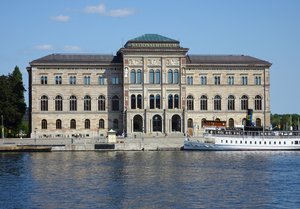
Nationalmuseum, StockholmNationalmuseum Stockholm 3 Portrait of an Old Lady, Old Man with a Growth on his Nose, Old Woman, possibly an Abbess, Reading a Letter
Kunsthistorisches Museum, WiedeńKunsthistorisches Museum Wiedeń 1 Portrait of an old woman
Metropolitan Museum of Art, Nowy JorkMetropolitan Museum of Art Nowy Jork 1 Portrait of a Man
Bawarskie Państwowe Zbiory Malarstwa, MonachiumBawarskie Państwowe Zbiory Malarstwa Monachium 1 A young scholar
National Gallery of Ireland, DublinNational Gallery of Ireland Dublin 1 A Dutch Kitchen Interior
Museum Catharijneconvent, UtrechtMuseum Catharijneconvent Utrecht 1 Baptism of the Eunuch
Herzog Anton Ulrich Museum, BrunszwikHerzog Anton Ulrich Museum Brunszwik 1 Old Man Beside a Table with Books
Museum Kunstpalast, DüsseldorfMuseum Kunstpalast Düsseldorf 1 Portrait of a scholar in oriental dress

Jedno słynne dzieło Monogrammist IS na każdą dekadę

Dzieła według dekad

Wybierz dekadę, aby zobaczyć jej najważniejsze dzieło.

Obrazy: Monogrammist IS – o co pytają ludzie

Z jakiego obrazu najbardziej znany jest Monogrammist IS?Zobacz odpowiedź

Na szczycie listy znajduje się Portrait of an old woman (1651), Kunsthistorisches Museum, Wiedeń. Tuż za nim: Portrait of a Man (1621) i A young scholar (1633).

Które 10 obrazów Monogrammist IS jest najbardziej znanych?Zobacz odpowiedź

Portrait of an old woman, Portrait of a Man, A young scholar, A Dutch Kitchen Interior, Baptism of the Eunuch, Portrait of an Old Lady, Old Man with a Growth on his Nose, Old Man Beside a Table with Books, Portrait of a scholar in oriental dress i Old Woman, possibly an Abbess, Reading a Letter. Rok powstania oraz muzeum, w którym znajdują się poszczególne dzieła, znajdziesz w powyższej liście.

Ile jest dzieł artysty Monogrammist IS?Zobacz odpowiedź

W naszym katalogu znajduje się 10 dzieł artysty Monogrammist IS, datowanych od 1621 do 1658.

W których muzeach znajdują się najsłynniejsze obrazy Monogrammist IS?Zobacz odpowiedź

Większość z nich znajdziesz w Nationalmuseum (Stockholm), Kunsthistorisches Museum (Wiedeń) i Metropolitan Museum of Art (Nowy Jork). Powyższa lista muzeów zawiera pełne zestawienie.

Kiedy namalowano najsłynniejsze dzieła Monogrammist IS?Zobacz odpowiedź

W 1640s, bardziej niż w jakimkolwiek innym czasie: 6 z 10 dzieł na tej stronie pochodzi właśnie z tego okresu, w tym A Dutch Kitchen Interior.

Jakie są najstarsze i najnowsze słynne obrazy autorstwa Monogrammist IS?Zobacz odpowiedź

Najwcześniejsze dzieło pochodzi z Portrait of a Man (1621), a najnowsze z Old Woman, possibly an Abbess, Reading a Letter (1658).

Co można zobaczyć u Monogrammist IS w Nationalmuseum?Zobacz odpowiedź

Na tej stronie możesz zobaczyć 3 dzieł znajdujących się w Nationalmuseum, Stockholm, w tym Portrait of an Old Lady, Old Man with a Growth on his Nose i Old Woman, possibly an Abbess, Reading a Letter.

Czy mogę zamówić reprodukcję Monogrammist IS do swojego domu?Zobacz odpowiedź

Tak. Każdy obraz na tej stronie jest dostępny jako ręcznie malowana reprodukcja olejowa lub wydruk, w rozmiarze dopasowanym do Twoich potrzeb. Aby złożyć zamówienie, wystarczy przejść na stronę wybranego obrazu.

Poznaj Monogrammist IS

The Shadow of the Monogram

In the quiet corners of the seventeenth century, a hand moved across canvas with such precision that it left behind only two letters: I.S. This elusive painter, known to history only by this small mark, lived through an era of profound change in the Netherlands. While the name of the person behind the brush remains lost to time, their presence is felt in every stroke of oil and every carefully rendered face. Some scholars suggest a Dutch origin, while others whisper of German or Baltic roots, yet there is no doubt that this artist found a home in Leiden during the 1630s.

The identity of this creator was first brought to light in 1904, when a collection of works bearing the same monogram were recognized as the output of a single, skilled hand. It is a curious thing to study an artist whose very existence is a puzzle. We see their work, we feel the weight of their subjects, but we cannot look them in the eye. They worked within the orbit of great names, perhaps even walking the same streets as Rembrandt, yet they chose—or were destined—to remain a mystery.

A Study of Human Truth

The work of Monogrammist IS does not seek the grand or the theatrical. Instead, it finds its strength in the quiet observation of a single soul. The artist specialized in tronies—those expressive head studies that capture a specific character or emotion—and honest portraits. There is a scientific realism in these paintings, a way of looking at a wrinkle, a growth on a nose, or the weathered skin of an elderly woman with an unblinking eye. Each figure is presented with a refined and articulated brushwork that suggests a deep respect for the physical world.

In these compositions, one finds a fascination with the textures of life. The paint often appears liquid and rich, flowing over the features of the subjects to create a sense of tangible reality. Whether depicting a man with a peculiar ailment or the solemn face of an aged woman, the artist avoids any attempt to beautify the subject beyond its natural state. This commitment to truth brings a certain gravity to the work. The figures do not perform for us; they simply exist within the frame.

Legacy in the Shadows

Though the artist's personal life remains obscured, their influence traveled far beyond the borders of Leiden. There are traces of a wider path, with suggestions that they may have moved through Scandinavia or even Eastern Europe. This movement is reflected in the way their works found their way into the hands of great collectors, from the Swedish nobility to the Hapsburg governors in Flanders. The provenance of these paintings tells a story of prestige and enduring interest that the artist's own biography cannot.

Today, the pieces attributed to this monogrammed hand reside in significant collections, such as the Kunsthistorisches Museum in Vienna and the Nationalmuseum in Stockholm. These works continue to invite scrutiny and wonder. Even as historians debate whether the painter was a contemporary of Rembrandt or a student of the Leiden Fijnschilder tradition, the art itself remains the primary voice. The mystery of the person only serves to focus our attention on the remarkable skill found within those two simple letters.