Portret Ernst Meyer

Poznaj 11 najsłynniejszych obrazów autorstwa Ernst Meyer

Aktualizacja: Listopad 2026 · ranking według naszego wskaźnika popularności (liczba wyszukiwań, wizyt i zamówień dla każdego dzieła) · 11 dzieł Ernst Meyer w naszym katalogu

W skrócie

Jeśli znasz choć jedno dzieło Ernst Meyer, to prawdopodobnie jest to A Roman street letter-writer writing a letter for a young girl (1827), które znajduje się w Thorvaldsen Museum w Kopenhaga. A little Italian girl by a fountain (1826) oraz Two friends (1835) dopełniają zestaw trzech dzieł, które ludzie rozpoznają natychmiast. Nasz katalog zawiera 11 dzieł autorstwa Ernst Meyer. Poniżej znajduje się 11 najbardziej znanych prac, z podaniem roku powstania, miejsca ekspozycji oraz informacji o tym, co czyni je wyjątkowymi.

1797 – 1861, Altona Najwięcej dzieł: Statens Museum for Kunst

Zacznij tutaj: 10 najlepszych obrazów Ernst Meyer

Więcej ulubionych dzieł Ernst Meyer, od 11 do 11

Gdzie możesz zobaczyć obrazy artysty Ernst Meyer

3 muzeów, w których znajduje się najwięcej obrazów z tej strony.

Muzea Miasto Dzieła artysty Ernst Meyer Obrazy z tej listy
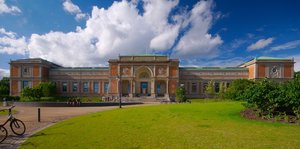
Statens Museum for Kunst, KopenhagaStatens Museum for Kunst Kopenhaga 8 A little Italian girl by a fountain, Two Friends. A Boy Sleeping beside a Pig, A Little Boy is Taken to the Monastery by His Parents
Nivaagaards Malerisamling, NibeNivaagaards Malerisamling Nibe 2 Two friends, Two Italian boys
Thorvaldsen Museum, KopenhagaThorvaldsen Museum Kopenhaga 1 A Roman street letter-writer writing a letter for a young girl

Ernst Meyer dekada po dekadzie: jedno wybitne dzieło na każdą z nich

Dzieła według dekad

Wybierz dekadę, aby zobaczyć jej najważniejsze dzieło.

Twoje pytania dotyczące obrazów Ernst Meyer

Który obraz artysty Ernst Meyer jest najsłynniejszy?Zobacz odpowiedź

Na szczycie listy znajduje się A Roman street letter-writer writing a letter for a young girl (1827), Thorvaldsen Museum, Kopenhaga. Tuż za nim: A little Italian girl by a fountain (1826) i Two friends (1835).

Ile lat miał Ernst Meyer, gdy powstało A Roman street letter-writer writing a letter for a young girl?Zobacz odpowiedź

30 lat. Ernst Meyer urodził się w 1797, a A Roman street letter-writer writing a letter for a young girl pochodzi z 1827.

Jakie są 10 najsłynniejszych obrazów, których autorem jest Ernst Meyer?Zobacz odpowiedź

A Roman street letter-writer writing a letter for a young girl, A little Italian girl by a fountain, Two friends, Two Friends. A Boy Sleeping beside a Pig, A Little Boy is Taken to the Monastery by His Parents, A Little Boy being Presented to a Priest, A Neapolitan Fisherman, A Roman Alley, Udsigt mod Mammellerne (Monti Ruffi) nær Olevano i Bjerglandskab ved Civitella. Rok powstania oraz muzeum, w którym znajdują się poszczególne dzieła, znajdziesz w powyższej liście.

Ile obrazów stworzył/a Ernst Meyer?Zobacz odpowiedź

W naszym katalogu znajduje się 11 dzieł artysty Ernst Meyer, datowanych od 1826 do 1846.

Gdzie można zobaczyć słynne obrazy Ernst Meyer?Zobacz odpowiedź

Większość z nich znajdziesz w Statens Museum for Kunst (Kopenhaga), Nivaagaards Malerisamling (Nibe) i Thorvaldsen Museum (Kopenhaga). Powyższa lista muzeów zawiera pełne zestawienie.

Kiedy Ernst Meyer namalował swoje najsłynniejsze dzieła?Zobacz odpowiedź

W 1830s, bardziej niż w jakimkolwiek innym czasie: 5 z 11 dzieł na tej stronie pochodzi właśnie z tego okresu, w tym Two friends.

Które słynne obrazy Ernst Meyer powstały jako pierwsze, a które jako ostatnie?Zobacz odpowiedź

Najwcześniejsze dzieło pochodzi z A little Italian girl by a fountain (1826), a najnowsze z A Little Boy being Presented to a Priest (1846).

Które dzieła artysty Ernst Meyer można zobaczyć w Statens Museum for Kunst?Zobacz odpowiedź

Na tej stronie możesz zobaczyć 8 dzieł znajdujących się w Statens Museum for Kunst, Kopenhaga, w tym A little Italian girl by a fountain, Two Friends. A Boy Sleeping beside a Pig i A Little Boy is Taken to the Monastery by His Parents.

Czy mogę zamówić reprodukcję obrazu Ernst Meyer?Zobacz odpowiedź

Tak. Każdy obraz na tej stronie jest dostępny jako ręcznie malowana reprodukcja olejowa lub wydruk, w rozmiarze dopasowanym do Twoich potrzeb. Aby złożyć zamówienie, wystarczy przejść na stronę wybranego obrazu.

Poznaj Ernst Meyer

The Transformation of Ahron Meyer

Born Ahron Meyer on 11 May 1797 in Altona, the man who would become known as Ernst Meyer began his life far from the Mediterranean light that eventually defined his career. His early years were marked by a fractured family structure; following his parents' divorce, he moved to Copenhagen with his mother. While his father, a broker, initially intended for him to follow a path in business, a clear interest in art emerged by 1812. This divergence led to a period of hardship when his father withdrew financial support, forcing the young man to find new footing under the care of a family associate.

His formal training began at the Royal Danish Academy of Fine Arts in 1816. During this period, he earned two silver medals, yet his ambitions were met with significant resistance. He sought the academy's gold medal for history painting, attempting to prove himself through grander, more classical subjects like the story of Joseph and Pharaoh. However, repeated failures in 1819 and 1821 prompted a profound shift. He removed his works from the academy gallery and abandoned the pursuit of historical narratives entirely.

A Roman Revelation

The trajectory of his life changed in 1824 when he traveled to Rome, accompanied by the sculptor Herman Wilhelm Bissen. It was here, amidst the street life of Naples and the coastal landscapes of Southern Italy, that he found a new purpose. The colorful reality of local populations provided the inspiration that historical subjects had lacked. He turned his attention to genre painting, capturing the quiet, domestic rhythms of Mediterranean life.

His work began to find an audience beyond the borders of Denmark. In 1833, a portrait of a Neapolitan fishing family caught the attention of Crown Prince Christian VIII, who purchased the piece. His depictions of sailors on Capri and the coastal life of Naples became widely recognized through various reproductions. This period marked his transition from a struggling student of history to a specialist in the observation of everyday human interaction.

Resilience Amidst Decline

The later years of Meyer's life were shaped by physical struggle. Around 1841, he began suffering from a debilitating illness, likely rheumatoid arthritis, which progressively deformed his hands and made it impossible to continue working in oils. Rather than retreating from art, he taught himself the delicate medium of watercolor. This necessity led to a refinement of his technique, as he developed a palette of subtle hues that many found superior to his earlier, heavier works.

Despite the use of crutches and the physical limitations imposed by his condition, he continued to travel and create until his death. He passed away in Rome on 31 January 1861, following a stroke during a morning walk. He was laid to rest in the Jewish section of Campo Verano, leaving behind a body of work that moved from the rigid structures of academic history to the soft, precise observations of Italian life.