
1893 - 1969

Kluczowe informacje

  • Works on this site: 55
  • Died: 1969
  • Art period: Modern
  • Top-ranked work: Untitled
  • Copyright status: Under copyright
  • Color intensity: balanced

The Life and Evolution of Ellinor Aiki

Born Ellinor Blumenfeldt in Tõstamaa, Estonia, the artist's life was marked by significant physical challenges from a young age. After suffering a debilitating fall at age six, she contracted a severe case of bone and joint tuberculosis that left her bedridden for nearly six years. Following her secondary school graduation in Pärnu in 1909, she worked as a teacher and a children's hospital attendant. Her formal artistic training began later in life; in 1928, she passed entrance examinations for the Pallas Art School in Tartu. She studied graphics, monotyping, etching, and lithography, eventually graduating from the Higher Art School Pallas in 1936 after studying in the Nikolai Triik painting studio.

Aiki's career was shaped by the shifting political landscape of Estonia. She was a member of the Estonian Artists' Cooperative and worked at the Tartu Artists' Bureau during the Nazi occupation. After fleeing to Germany during the Soviet occupation in 1944, she returned to Estonia in 1946. During this time, she was removed from the Estonian Artists' Union until 1957 due to her use of formalism, a period during which she painted very little.

Artistic Style and Transformation

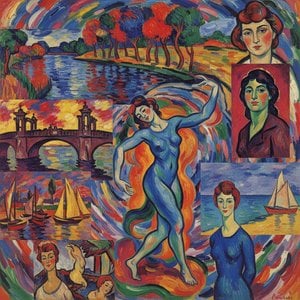
The evolution of Aiki's oeuvre is defined by a dramatic shift in color and tone. Her earlier works, primarily consisting of still lifes, portraits, cityscapes, and landscapes, were characterized by somber, muted, and somewhat bleak hues. However, after her ban by authorities was lifted in 1957, her style underwent a profound transformation.

Her later paintings became known for being:

In the spring of 1969, a personal exhibition of her works was coordinated at the Tartu Art Museum, featuring approximately one hundred pieces created between 1928 and 1969.
Szybki quiz

Do każdego pytania dotyczy tylko jedna poprawna odpowiedź.

Pytanie 1:
What was Ellinor Aiki's maiden name?
Pytanie 2:
In which year did she change her surname to Aiki?
Pytanie 3:
At which art school did she graduate in 1936?
Pytanie 4:
What medical condition did she suffer from as a child?
Pytanie 5:
How did her painting style change after her ban was lifted in 1957?

Pytania i odpowiedzi

Do jakiej epoki należał/a Ellinor Aiki?

Ellinor Aiki tworzył w okresie Modern. Epoka ta osadza twórczość artysty w kontekście historycznym.

Pod jakimi innymi nazwiskami znany jest Ellinor Aiki?

Ellinor Aiki jest znany/a również pod pseudonimami: Ellinor Blumenfeldt.

Jakich kolorów Ellinor Aiki używał najczęściej?

Genom Palety artysty Ellinor Aiki to strona prezentująca profil kolorystyczny całego dorobku twórczego tego artysty.

Które dzieła Ellinor Aiki są najczęściej oglądane?

Strona Statystyki odwiedzin artysty Ellinor Aiki przedstawia statystyki obliczone na podstawie dzieł tego artysty wymienionych w niniejsza strona.

Czy mogę przeglądać dzieła Ellinor Aiki według palety kolorystycznej?

Aby znaleźć prace artysty Ellinor Aiki w konkretnej palecie barw, skorzystaj ze strony Według palet kolorystycznych poświęconej temu artyście.

Gdzie mogę zobaczyć dzieła Ellinor Aiki w porządku chronologicznym?

Dzieła Ellinor Aiki można obejrzeć w porządku chronologicznym na stronie Chronologia dzieł artysty.

Gdzie mogę zobaczyć wszystkie dzieła autorstwa Ellinor Aiki?

Wszystkie dzieła Ellinor Aiki dostępne w niniejsza strona można przeglądać na stronie Wszystkie dzieła artysty.

Jak znaleźć wszystkie dzieła Ellinor Aiki wykonane w danej technice?

Strona Wszystkie techniki grupuje dzieła Ellinor Aiki według techniki wykonania.

Czy prace Ellinor Aiki są nadal chronione prawem autorskim?

Tak, prace tego artysty są nadal chronione prawem autorskim.