Wczesne lata, rodzina i kształcenie
Alfred Sisley przyszedł na świat w Paryżu 30 października 1839 roku. Jego dzieciństwo ukształtowało niezwykłe przenikanie się dwóch kultur, gdyż jego rodzice, William Sisley i Felicia Sell, byli brytyjskimi ekspatami mieszkającymi we Francji. Ojciec, pracujący jako kupiec luksusowych towarów importowanych, zapewnił młodemu chłopcu komfortowe, mieszczańskie warunki życia. Dzięki temu Alfred dorastał w dwujęzycznym świecie, czując się równie swobodnie w języku francuskim, jak i angielskim.
Ścieżka, którą pierwotnie wytyczono przed młodym artystą, nie miała nic wspólnego z pędzlem i płótnem. Ojciec planował, by syn kontynuował rodzinny biznes, dlatego w wieku osiemnastu lat Alfred udał się do Londynu, aby przygotować się do życia w świecie handlu. Jednak to przyciągająca siła sztuk wizualnych okazała się silniejsza niż rygor kupieckiego rzemiosła. Ostatecznie w 1861 roku powrócił do Paryża, by podjąć formalne studia, szukając sposobu na przekucie swojej pasji w prawdziwy zawód.
Został uczniem szwajcarskiego artysty Marc-Charles-Gabriela Gleyre'a w École des Beaux-Arts. To właśnie w tym akademickim środowisku zaczął budować fundamenty techniczne, które miały stać się wsparciem dla jego późniejszych, pełnych czułości poszukiwań w naturze. To właśnie w tych formacyjnych latach spędzonych w Paryżu zaczął odchodzić od sztywnych struktur tradycyjnego nauczania na rzecz bezpośredniej, intymnej obserwacji otaczającego go świata.
Impresjonistyczne kręgi Paryża
W paryskich pracowniach Alfred Sisley odnalazł wspólnotę ludzi o podobnych, buntowniczych ideach. Studiował u szwajcarskiego artysty Marca-Charlesa-Gabriela Gleyre’a w École des Beaux-Arts, w środowisku, które zaowocowało głębokimi, trwałymi przyjaźniami z Claude’em Monetem, Pierre’em-Auguste’em Renoirem oraz Frédériciem Bazille’em. Ci czterej młodzi mężczyźni dzielili wspólny cel: pragnienie odejścia od sztywnych, formalnych reguł malarstwa akademickiego. Zamiast nich woleli wynosić swoje płótna na świeże powietrze, usiłując uchwycić ulotne, zmienne właściwości światła i atmosfery, czerpiąc inspirację bezpośrednio z otaczającego ich świata natury.
Ten wspólny bunt ostatecznie doprowadził ich do rzucenia wyzwania ugruntowanemu światu sztuki. Oficjalny Salon Académie de Beaux-Arts, będący wówczas strażnikiem artystycznej legitymizacji, odmawiał zapraszania ich prac na wystawy. Dla ówczesnego społeczeństwa ich podejście było zbyt nowe i zbyt odmienne, by zostać uznane za prawdziwą sztukę. Zamiast jednak czekać na aprobatę tradycyjnych instytucji, grupa postanowiła wziąć sprawy w swoje ręce. W kwietniu 1874 roku zorganizowali i wzięli udział w Pierwszej Wystawie Impresjonistów – był to odważny krok, który pomógł zdefiniować nowy, przełomowy nurt w historii malarstwa.
Życie poświęcone malarstwu pejzażowemu
Podczas gdy wielu jego współczesnych błądziło między różnymi gatunkami sztuki, skupienie Alfred Sisley pozostawało zadziwiająco jednolite. Cały jego dorobek artystyczny składa się niemal wyłącznie z pejzaży. Dążył on do uchwycenia świata natury poprzez niezłomne oddanie idei malarstwa en plein air, często pracując na świeżym powietrzu, aby pochwycić ulotne zmiany światła w momencie ich zachodzenia. To oddanie bezpośredniemu, przeżywanemu na bieżąco doświadczeniu natury uczyniło go być może najbardziej konsekwentnym w swojej metodzie twórczej spośród wszystkich impresjonistów.
Jego życie było głęboko zakorzenione w francuskiej prowincji, mimo że formalnie posiadał brytyjskie obywatelstwo. Wędrował przez różnorodne krajobrazy, odnajdując inspirację w cichych zakątkach Francji. Jego ścieżka prowadziła przez Paryż i Louveciennes, a znaczny czas spędził w Marly-le-Roi, Sèvres, Veneux-les-Sablons oraz w Moret-sur-Loing. Te miejsca stanowiły stałe tło dla kariery poświęconej uważnej obserwacji subtelnych przemian nieba i wody.
Ta nieustanna obecność w krajobrazie pozwoliła mu wypracować głęboką zażyłość z terenem, który malował. Nie szukał on scen wielkich ani dramatycznych, lecz raczej cichej rzeczywistości miejsc, w których żył i tworzył. Jego dzieła są odzwierciedleniem życia spędzonego na spokojnej kontemplacji ziemi i atmosfery unoszącej się nad nią.
Malowanie angielskiego wybrzeża i Tamizy
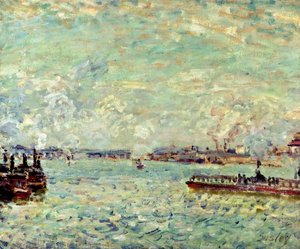
Choć jego życie było w dużej mierze zakorzenione we Francji, Alfred Sisley czuł nieodparty przyciąg ku krajobrazom Brytanii, odwiedzając ten kraj trzykrotnie. W 1874 roku udał się do Londynu w towarzystwie swojego mecenasa, Jeana-Baptiste'a Faure'a. Podczas tej wyprawy odnalazł spokojny temat w niepodlegających wahadłom pływów odcinkach Tamizy. W okolicach mostu Hampton Court, nieopodal East Molesey, stworzył dwadzieścia płócien, które uchwyciły specyficzne światło i ruch rzeki. Dzieła te stanowią świadectwo okresu głębokiej, skupionej obserwacji, prowadzonej z dala od znanych mu, francuskich brzegów rzek.
Relacja artysty z brytyjskim krajobrazem nie zawsze była łatwa. W 1881 roku planował malować na Isle of Wight, lecz wyprawa ta zakończyła się rozczarowaniem, gdy niezbędne materiały i płótna nigdy nie dotarły na miejsce. Ten niepowodzenie uniemożliwiło mu pełne zgłębienie poszukiwanego światła wybrzeża. Później, latem 1897 roku, odbył ostatnią podróż do Walii wraz ze swoją żoną, Eugénie. Te eskapady pozwoliły mu zetknąć się z odmienną atmosferą i innymi jakościami światła niż te, które odnalazł w dolinie Sekwany.
Spokój Moret-sur-Loing
Moret-sur-Loing stało się centralnym punktem życia Alfreda Sisleya, miejscem, w którym przez wiele lat odnajdywał swoją artystyczną tożsamość. Artysta czuł głęboką więź z tym miasteczkiem, zauważając, że to właśnie tutaj, w otoczeniu gęstej natury i nieustannie zmieniających się wód Loing, jego sztuka rozkwitła najbardziej. Rzeka była nieustanną towarzyszką jego prac, oferując cichy, pełen wdzięku temat, który pozwalał mu na mozolne studiowanie sposobu, w jaki światło tańczy na powierzchni wody.
Większość swojego czasu poświęcał utrwalaniu lokalnego krajobrazu, często skupiając się na kanałach i mostach, które nadawały miasteczku jego unikalny charakter. Te sceny nie szukały wielkiego dramatyzmu; chodziło w nich o uchwycenie ciszy i spokoju konkretnego miejsca. Alfred Sisley pragnął zapisać na płótnie moment, w którym niebo spotyka się z wodą, oraz sposób, w jaki architektura miasta wtapia się w soczystą zieleń. Jego pobyt w Moret-sur-Loing był długim czasem uważnej obserwacji, który trwał aż do jego śmierci w tym miejscu 29 stycznia 1899 roku, w wieku pięćdziesięciu dziewięciu lat.
- Moret o zachodzie słońca (ok. 1888)
- Most w Moret w świetle słonecznym (1892)
- Pejzaż rzeki w okolicach Moret-sur-Loing (1890)
Technika i styl artystyczny
Podejście Alfred Sisley do płótna wyrastało z cichej, nieustępliwej obserwacji świata natury. Nie szukał on tematów dramatycznych ani krzykliwych; zamiast tego jego twórczość koncentrowała się na subtelnym oddaniu światła oraz poczuciu głębokiego spokoju. Aby osiągnąć ten efekt, często rozpoczynał malowanie od nieba. Ustanawiając nieboskłon przed ziemią, potrafił lepiej uchwycić ulotny nastrój danej chwili i sprawić, by światło wydawało się nierozerwalnie zintegrowane z całą sceną. Ta metoda pozwoliła mu mistrzowsko opanować sposób, w jaki światło wchodzi w interakcję z taflą wody i ogromem nieba, tworząc atmosferę, która wydaje się autentyczna i żywa, a nie wyreżyserowana.
Jego paleta barw nigdy nie była agresywna. Preferował delikatną gamę kolorów, często zanurzając swoje pejzaże w bladych odcieniach zieleni, różu i fioletu. Często można dostrzec tony przygaszonego błękitu i kremu, które sugerują miękką poranną mgłę lub łagodne odbicie rzeki. Nakładał farbę z niezwykłą różnorodnością, zmieniając sposób prowadzenia pędzla, aby oddać grę światła i cienia. Ta technika pozwoliła mu wyjść poza ramy prostej reprezentacji, umożliwiając portretowanie sposobu, w jaki światło przesuwa się przez krajobraz wraz z upływem dnia.
- Kanał Saint-Martin w Paryżu (1870)
- Luty o poranku w Moret-sur-Loing (ok. 1881)
- Śluza w Saint-Mammès (1885)
Kluczowe dzieła i najważniejsze tematy
Alfred Sisley odnalazł swoje powołanie w cichym ruchu świata natury. Jego wzrok nieustannie zwracał się ku rzekom, kanałom i morzu, odnajdując szczególny rodzaj spokoju w sposobie, w jaki światło przenika się z wodą. Z taką samą swobodą, z jaką malował zmienne prądy rzeczne, oddawał ciężką, białą ciszę śniegu. Jego artystyczna koncentracja pozostawała niezmiennie skupiona na tych żywiołach, w nieustannym dążeniu do uchwycenia tego, jak krajobraz oddycha w jednej, ulotnej i przemijającej chwili.
W 1870 roku stworzył Kanał Saint-Martin w Paryżu, dzieło będące świadectwem jego wczesnego fascynowania się miejskimi wodami. Wraz z rozwojem kariery artysta coraz silniej przywiązał się do rytmów francuskiej prowincji. Ta głęboka więź z naturą wybrzmiewa w obrazie Luty o poranku w Moret-sur-Loing, namalowanym w 1881 roku, gdzie atmosfera zimowego poranka została oddana za pomocą miękkich, warstwowych tonów. Nie unikał jednak tematów bardziej dynamicznych, dokumentując na przykład gwałtowne zmiany w przyrodzie, takie jak wylewy Sekwany w Port-Marly w 1875 roku, co uwiecznił w serii niezwykle sugestywnych płócien.
- Kanał Saint-Martin w Paryżu (1870)
- Luty o poranku w Moret-sur-Loing (1881)
Dziedzictwo i nieprzemijający wpływ
Miejsce Alfreda Sisleya w historii sztuki zostało wykute przez cichą, niezłomną wytrwałość. Podczas gdy wielu jego współczesnych szukało sławy lub pragnęło wywołać zmiany społeczne za pomocą swoich płócien, on pozostał wierny subtelnym przeobrażeniom nieba i ruchowi wody. Stał się żywym ogniwem łączącym szkołę z Barbizon, z jej zakorzenionym realizmem, z pełnym rozkwitem impresjonizmu. To właśnie to połączenie pomogło zasypać przepaść między tradycyjnym malarstwem pejzażowym a nowymi, eksperymentalnymi sposobami postrzegania świata.
Uznanie dla jego talentu nie nadeszło jednak za jego życia. Choć zmagał się z trudnościami finansowymi i często tworzył w relatywnym zapomnieniu, wartość jego dzieł uległa radykalnej zmianie po jego odejściu. Ceny jego płócien gwałtownie wzrosły, zapewniając mu wreszcie bezpieczeństwo materialne, którego tak bardzo brakowało mu za życia. Dziś jego obrazy wciąż przyciągają ludzi, którzy odnajdują coś głębokiego w jego zdolności do ukazywania niezwykłości w tym, co zwyczajne. Pokazał bowiem, że prosty brzeg rzeki czy pochmurny poranek kryją w sobie wystarczającą głębię, by stać się tematem całego życia poświęconego studiom nad naturą.
Wpływ jego podejścia jest widoczny w twórczości późniejszych pejzażystów. Artyści ci czerpali z jego metody chwytania ulotnych właściwości światła oraz sposobu, w jaki atmosfera przemienia scenę. Jego oddanie malowaniu en plein air pomogło ustanowić standard bezpośredniego kontaktu artysty z naturalnym światem. Dziedzictwo Sisleya odnajdujemy w tym specyficznym, delikatnym sposobie utrwalania chwili, zanim światło się zmieni, a obraz bezpowrotnie zniknie.
Gdzie dziś można podziwiać jego dzieła
Aby osobiście doświadczyć kojącego światła na pejzażach, które uwiecznił Alfred Sisley, należy udać się do kilku najważniejszych instytucji w Europie i Ameryce Północnej. W Paryżu jego obecność jest niezwykle silna w Musée d'Orsay, które przechowuje znaczącą liczbę jego płócien. Luwr również posiada dzieła z jego kolekcji, dbając o to, by jego artystyczna wizja pozostała integralną częścią głębokiej historii sztuki tego miasta. Miłośnicy podróżujących do Wielkiej Brytanii mogą odnaleźć ślady jego talentu w londyńskiej National Gallery, podczas gdy National Gallery of Wales pozwala jeszcze głębiej spojrzeć na jego oddanie naturze.
Twórczość artysty wykracza daleko poza granice Francji, a wiele jego obrazów odnalazło dom w prestiżowych amerykańskich kolekcjach. Zarówno Art Institute of Chicago, jak i Metropolitan Museum of Art w Nowym Jorku posiadają jego prace, co pozwala odbiorcom obcować z jego subtelną paletą barw w zupełnie odmiennych kontekstach. W Stanach Zjednoczonych Nelson-Atkins Museum of Art w Kansas City również pielęgnuje jego malarstwo, dzięki czemu te pełne spokoju rzeczne sceny stają się dostępne dla szerokiej publiczności po obu stronach Atlantyku.
- Bridge at Villeneuve la Garenne, około 1872
- Grand Jatte, około 1873
- The Saint Martin Canal in Paris, około 1870
- Moret at Sunset, około 1888
Pytania i odpowiedzi
Które dzieła Alfred Sisley są najczęściej oglądane?
Strona Statystyki odwiedzin artysty Alfred Sisley przedstawia statystyki obliczone na podstawie dzieł tego artysty wymienionych w niniejsza strona.
Do jakiej epoki należał/a Alfred Sisley?
Alfred Sisley tworzył w okresie – Wiek XIX. Epoka ta osadza twórczość artysty w kontekście historycznym.
Jak znaleźć dzieła Alfred Sisley o konkretnej tematyce?
Dzieła artysty Alfred Sisley można przeglądać według słów kluczowych na stronie Według słów kluczowych. Każde słowo kluczowe grupuje powiązane ze sobą dzieła.