
 Traditional Chinese Art
 156.0 x 43.0 cm

The picture follows your choices: , .
Opis obiektu
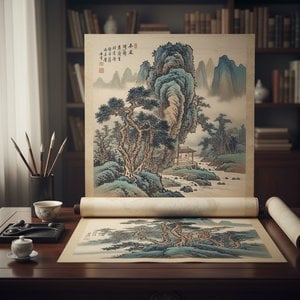
Exquisite Chinese calligraphy scroll by Zhang Ruitu (1570-1641). A dynamic ‘Poem in Cursive Script’ showcasing traditional Shuibanjing technique & symbolic beauty. Explore this rare Ming Dynasty masterpiece.
Biografia artysty
Explore the elegant calligraphy of Zhang Ruitu (1570-1641), renowned for his cursive scripts of poems & landscapes like 'Han Capital' & 'Red Cliff'. Discover classic Chinese art.
 Rozwiń treść
Ręcznie malowana reprodukcja olejowa
Ręcznie malowany obraz olejny na płótnie, wykonany na zamówienie przez naszych artystów w wybranym przez Ciebie wymiarze i oprawie. ( Przełącz na wydania drukowane Przejdź do wersji cyfrowej)
More about this painting
 Podgląd w skali 1:1
 Wyślij jako kartkę
 Udostępnij
 Szczegóły dzieła
 Przewodnik

 Pobierz obraz
 Podobne obiekty
 RTG
RTG Pokaz slajdów
 Q&A
Q&A Statystyki
Order your painting in four simple steps
Take your time. You can change any answer; the price in your order card follows each choice.
1 Step one of four
Which size would you like?
These sizes keep the proportions of the original painting. The drawing shows your choice on a wall, above a two-metre sofa.
Or give your own measurements
Wybierz spośród naszych standardowych rozmiarów, które zachowują oryginalne proporcje dzieła sztuki.

Wpisz wymaganą szerokość i wysokość, aby obraz pasował do Twojej ramy lub ściany. Ponieważ jest to dzieło malowane ręcznie, w przypadku rozmiaru o innych proporcjach artysta może domalować nieco więcej wokół obrazu lub przyciąć jego fragmenty — wybór należy do Ciebie. Przed rozpoczęciem pracy prześlemy Ci cyfrową wizualizację do zatwierdzenia. Obraz widoczny na tej stronie nie przedstawia rzeczywistego efektu — jedynie wizualizacja oddaje realny rezultat.
2 Step two of four
How should it be prepared: rolled, stretched or framed?
The prices below are for the size you chose in step one.
Choose the edges of the stretched canvas
Choose your frame

White zł1

Blurside zł1

Extended zł1

P118B zł10

P118H zł10

P118W zł10

P438Z zł10

P508JH zł12

P508YH zł12

P805H zł10

P805Z zł10

P919BZ zł10

P919G zł10

P919XJ zł10

P959ZH zł10

P968JZ zł12

W106C zł8

W218G zł10

W218JH zł8

W218Y zł10

W307PJ zł10

W316G zł10

W316PJ zł8

W316Y zł10

W398PJ zł8

W4111J zł10

W500HY zł15

W500JH zł15

W692G zł12

W849H zł8

W940BG zł15

W953PJ zł8

H24-GOLD zł30

H24-SILVER zł30

H36-GOLD zł45

H36-SILVER zł45
W oprawie
Moulding: . Overall size with the frame: .
3 Step three of four
Would you like anything changed in the painting?
Most people answer no. Because each painting is made by hand, our artist can also adapt it for you.
After order, ArtsDot.com team will email client for instructions and provide a mockup preview
4 Step four of four
A few finishing options
All of them are optional. The answers already selected cost nothing extra.
Who paints it?
Dostawa na całym świecie () w ciągu 3–4 tygodni zamiast standardowych 5 tygodni. (29 Październik). Bez kompromisów w kwestii jakości.
A nameplate, as in a museum?
Szczegóły grawerowanej brązowej tabliczki
This elegant plaque features the artist's name and the title of the artwork, finely engraved for a timeless presentation.
It is made from bronze with a refined, elegant finish. The text is precisely laser-engraved for a sharp and permanent result. Measuring 9x2 cm, the plaque is compact yet easy to read. It's built to be durable and scratch-resistant, offering a professional, museum-quality look. Mounting is simple thanks to the included adhesive backing.
Szczegóły przezroczystej tabliczki akrylowej
The plaque includes essential engraved details such as the artist's name, the title of the artwork, the date it was created, the type of media used-like oil on canvas or watercolor-a brief description of the piece, and a QR code that links to the complete artwork information.
It is crafted from clear acrylic, offering a sleek, modern appearance. The text is UV-engraved in black to ensure strong visual contrast. With a size of 10x15 cm, it ensures optimal readability. It comes equipped with two metal hooks for secure wall mounting. The plaque is designed to be weather-resistant, making it suitable for various environments, and it includes interactive features that work seamlessly with smartphone scanning.
Szczegóły czarnej tabliczki akrylowej
This elegant plaque includes engraved information such as the artist's name, the title of the artwork, the date it was created, the type of media used (like oil on canvas or watercolor), a short description of the artwork, and a QR code for quick access to more information.
The plaque itself is made from refined black acrylic with a premium finish. The text is laser-engraved in white for high contrast and readability. Its size is 10x15 cm, designed to be easy to read. It comes with two metal hooks for professional mounting. The design is sleek and fits any interior style. It is also weather-resistant and durable, with built-in digital integration for mobile compatibility.
A protective varnish?
When do you need it?
✓ Check and order
Your painting, as you ordered it

POEM IN CURSIVE SCRIPT
Technika reprodukcji
Wymiary reprodukcji
-

Wybitny mistrz artystyczny
Większa szczegółowość, finezja i dodatkowy czas na realizację
-

Opcje oprawy reprodukcji
-
-
W przypadku dzieł sztuki lub reprodukcji, których którykolwiek z boków przekracza 105 cm (około 41 cali), rama zostanie wysłana w formie zestawu do samodzielnego montażu. Metoda ta zapewnia bezpieczną dostawę i zapobiega uszkodzeniom podczas transportu.
Wymagany profesjonalny montaż – nie jest to produkt typu DIY.
Zestaw musi zostać złożony, a płótno naciągnięte przez doświadczonego profesjonalnego ramiarza, przy użyciu kleju do drewna (brak w zestawie), kleszczy do naciągania płótna oraz ścisków, które utrzymają krosna w równej pozycji podczas schnięcia kleju. Nieprawidłowy montaż lub nierównomierne napięcie płótna może trwale uszkodzić dzieło sztuki i nie podlega naszej gwarancji.
 W przypadku dzieł sztuki lub reprodukcji, których którykolwiek z boków przekracza 105 cm (około 41 cali), rama zostanie wysłana w formie zestawu do samodzielnego montażu. Metoda ta zapewnia bezpieczną dostawę i zapobiega uszkodzeniom podczas transportu.
W zestawie znajdują się wszystkie listwy z litego drewna, precyzyjnie docięte do wymiarów.
Montaż odbywa się przy użyciu dołączonych wkrętów oraz kleju do drewna do łączenia narożników, którego zestaw nie zawiera i który musi zostać dostarczony przez ramiarza.
Wymagane są profesjonalne narzędzia, których nie ma w zestawie: kleszcze do naciągania płótna (napinacz) oraz zaciski, które pozwolą utrzymać listwy w równej pozycji podczas schnięcia kleju.
Ważne:
Do połączenia narożników niezbędny jest klej do drewna, listwy należy unieruchomić za pomocą ścisków do momentu całkowitego wyschnięcia kleju, a naciągnięcie płótna na złożoną ramę wymaga użycia kleszczy do naciągania płótna. Żaden z tych elementów nie jest dołączony do zestawu. Przed zamówieniem tego rozmiaru zalecamy konsultację z doświadczonym ramiarzem.

Etykieta obiektu
-
-

Lakier ochronny
Lakier z połyskiem (pogłębia kolory, chroni przed światłem i wilgocią)
-

Personalizacja dzieła
Przykłady możliwości personalizacji: zastąp twarz zdjęciem klienta; dodaj zwierzę domowe (np. zamień kota na psa); umieść ukrytą wiadomość w tle; zmień krajobraz lub elementy tła.
-

Ekspresowa
Dostawa na cały świat () w ciągu 3–4 tygodni zamiast standardowych 5 tygodni. (29 Październik). Bez kompromisów w kwestii jakości.
-
Przesyłka ekspresowa
Dostawa na cały świat () w ciągu 5 tygodni. (5 Listopad).
W cenie
Cena całkowita
zł 1013
Opcja ze szkłem jest dostępna wyłącznie w rozmiarach poniżej 110 cm
Included with every order
- Bezpłatna ekspresowa wysyłka na cały świat
- Wysokiej jakości płótno lniane
- Pełne ubezpieczenie przesyłki
- Gwarancja zwrotu należności celnych i podatków importowych
- Gwarancja wiernego odwzorowania kolorów
- 100-dniowa polityka zwrotów (tylko w przypadku wad)
- Gwarancja 100% zwrotu pieniędzy
- Zniżka przy zakupie wielu sztuk


Podobne dzieła


Zhang Ruitu
1570 - 1641
Biografia artysty
A Life Etched in Ink: The Calligraphy of Zhang Ruitu
Zhang Ruitu (1570-1641) stands as a pivotal figure in the late Ming dynasty, not for grand political maneuvers or battlefield victories, but for the exquisite grace and profound emotional depth he brought to Chinese calligraphy. Born in Jinjiang, Fujian province, Zhang’s life unfolded against a backdrop of dynastic shifts and personal trials, experiences that subtly infused his art with a poignant sensibility. He entered imperial service in 1607, navigating the complex currents of courtly life, but his true passion lay in the mastery of brush and ink. While achieving high rank – eventually reaching the grand secretariat – Zhang’s career was marked by political upheaval. A temporary fall from favor during the decline of Wei Zhongxian's power saw him stripped of his position, though he later regained some standing through financial restitution. This period of adversity seems to have deepened his commitment to artistic expression as a refuge and a means of self-cultivation. He ultimately retreated to his native Fujian in his later years, dedicating himself fully to painting and calligraphy until his death in 1641.The Art of Cursive Script: A Rejection of Convention
Zhang Ruitu’s artistic legacy rests primarily on his mastery of cursive script – *caoshu* – a style known for its fluidity, abstraction, and expressive power. He didn't simply replicate existing models; instead, he embarked on a deliberate path to forge his own unique voice within this venerable tradition. While deeply respectful of the Northern Song monumental landscape style, Zhang consciously moved away from Dong Qichang’s emphasis on dynamic brushwork and calligraphic abstraction. His work reveals a lyrical interpretation, prioritizing emotional resonance over sheer technical display. He favored satin as his support material rather than paper, contributing to the unique texture and luminosity found in his pieces. His calligraphy wasn't merely about beautiful forms; it was an embodiment of inner feeling, a visual manifestation of poetic thought. The works he created often featured poems by renowned Tang dynasty masters like Du Fu and Meng Haoran, imbuing his art with layers of literary allusion and historical depth.Major Works and Artistic Characteristics
Among Zhang Ruitu’s most celebrated pieces are ‘Han Capital,’ a stunning 1622 cursive scroll that exemplifies his dynamic style and historical awareness, and ‘Red Cliff’, another masterpiece showcasing his ability to capture the essence of classical poetry through elegant brushwork. ‘Calligraphy in Running Script’ demonstrates his technical prowess with traditional Chinese techniques. His compositions often feature a linear arrangement, emphasizing the flow and rhythm of the characters. A key characteristic is his use of the *shuibanjing* technique – a method involving careful control of ink wash to create subtle gradations and atmospheric effects. Beyond these specific works, Zhang’s ‘Poem in Cursive Script’ scrolls are particularly noteworthy for their symbolic beauty and rarity within the Ming Dynasty context. His signature style is easily recognizable through his powerful regular script inscriptions accompanying his cursive compositions.Influences and Legacy
Zhang Ruitu's artistic development was shaped by a deep engagement with classical Chinese literature and painting traditions. He drew inspiration from the Northern Song monumental landscape style, adapting its principles to suit his own aesthetic sensibilities. His work also reflects an understanding of earlier calligraphers, but he never simply imitated them; instead, he synthesized these influences into something distinctly his own. His rejection of Dong Qichang’s more abstract approach and his focus on lyrical expression set him apart from many of his contemporaries. Zhang Ruitu's influence extended beyond his immediate circle, inspiring later generations of calligraphers to explore the expressive potential of cursive script. Today, he is remembered as a master of his craft, whose works embody the elegance, depth, and emotional power of Chinese calligraphy at its finest.Historical Significance
Zhang Ruitu’s work provides valuable insight into the cultural climate of the late Ming dynasty – a period marked by political instability and social upheaval. His art reflects a yearning for tranquility and spiritual renewal amidst these turbulent times. His ability to seamlessly blend poetry, history, and calligraphy speaks to the broader intellectual currents of his era. The fact that he was able to navigate the complexities of courtly life while maintaining his artistic integrity is testament to his resilience and dedication. Zhang Ruitu’s legacy extends beyond the realm of art; it offers a glimpse into the soul of a scholar-official grappling with the challenges of a changing world, finding solace and meaning in the timeless beauty of ink and brush. His pieces are now held in prestigious collections like The Metropolitan Museum of Art and the Asian Art Museum, ensuring his enduring place in the history of Chinese art. His work continues to captivate audiences today, offering a profound meditation on the power of calligraphy as a form of self-expression and cultural preservation.Powiązane artykuły
Pu Xinyu's 'Puru': A Legacy of Literati Painting & Emotional Resonance
Explore the captivating world of Pu Xinyu (Puru), the last great literati painter. Discover his imperial heritage, masterful ink wash techniques & enduring legacy – a valuable addition to any discerning art collection.

Efemerowe Wyrażenia: Niuanse Malarstwa Tuszem w Historii i Sztuce Współczesnej
Poznaj fascynujący świat malarstwa tuszem! Odkryj historię, techniki i filozofię tej wyjątkowej sztuki azjatyckiej. Przewodnik po mistrzach pędzla i inspiracje dla współczesnych artystów.

Xie Zhiliu: A Legacy of Ink Wash Painting & Modern Chinese Literati Tradition
Explore the legacy of Xie Zhiliu, a master of Chinese ink wash painting & prominent figure in modern art. Discover his techniques, influences, and contributions to literati tradition. A guide for discerning collectors.