


Obraz dostosowuje się do Twoich wyborów: , .
Opis obiektu
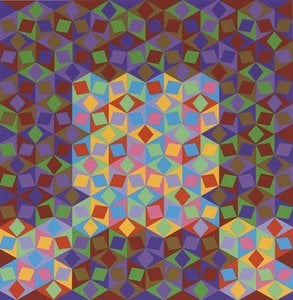
Explore 'Soeloe' by Victor Vasarely – a vibrant Op Art masterpiece of geometric abstraction! Discover layered hexagonal forms & digital artistry.
 Rozwiń treść
Biografia artysty
Pionier Op Art, Victor Vasarely, mistrz iluzji optycznych. Odkryj jego hipnotyzujące abstrakcje geometryczne już dziś.
Ręcznie malowana reprodukcja olejowa
Ręcznie malowany obraz olejny na płótnie, wykonany na zamówienie przez naszych artystów w wybranym przez Ciebie wymiarze i oprawie. ( Przełącz na wydania drukowane Przejdź do wersji cyfrowej)
Ten utwór podlega ochronie prawem autorskim
Dzieło sztuki prezentowane na tej stronie podlega ochronie prawem autorskim, co oznacza, że nie mamy prawa do tworzenia ani sprzedaży jego identycznej reprodukcji. Ochrona ta jest egzekwowana na mocy umów międzynarodowych, takich jak Konwencja berneńska oraz przez przepisy prawa krajowego, w tym te określone w Prawo autorskie USA – Tytuł 17.
Jako pełną szacunku i legalną alternatywę oferujemy personalizowane, malowane ręcznie dzieła sztuki inspirowane oryginałem. Nasi wykwalifikowani i profesjonalni artyści starannie analizują styl, nastrój oraz artystyczną esencję pierwowzoru, aby stworzyć nowe, unikalne dzieło, które przywołuje te same emocje – pozostając jednocześnie w pełni oryginalną kreacją.
Metoda ta jest w pełni zgodna z przepisami prawa autorskiego, ponieważ nie polega na kopiowaniu ani powielaniu chronionego dzieła. Stanowi ona kreatywną reinterpretację – nowy obraz, który czerpie inspirację z oryginału, ale nie jest z nim tożsamy.
Więcej o tym obrazie
 Wyślij jako kartkę
 Udostępnij
 Szczegóły dzieła
 Przewodnik

 Pobierz obraz
 Podobne obiekty
 Pokaz slajdów
 Pytania i odpowiedzi
 Statystyki
Zamów swój obraz w czterech prostych krokach
Nie spiesz się. Możesz zmienić każdą odpowiedź; cena w Twoim koszyku będzie aktualizowana po każdym wyborze.
1 Pierwszy z czterech kroków
Który rozmiar wybierasz?
Te rozmiary zachowują proporcje oryginalnego obrazu. Rysunek przedstawia wybrany przez Ciebie format na ścianie, nad dwumetrową sofą.
lub podaj własne wymiary
Wybierz spośród naszych standardowych rozmiarów, które zachowują oryginalne proporcje dzieła sztuki.

Wpisz wymaganą szerokość i wysokość, aby obraz pasował do Twojej ramy lub ściany. Ponieważ jest to dzieło malowane ręcznie, w przypadku rozmiaru o innych proporcjach artysta może domalować nieco więcej wokół obrazu lub przyciąć jego fragmenty — wybór należy do Ciebie. Przed rozpoczęciem pracy prześlemy Ci cyfrową wizualizację do zatwierdzenia. Obraz widoczny na tej stronie nie przedstawia rzeczywistego efektu — jedynie wizualizacja oddaje realny rezultat.
2 Drugi z czterech kroków
W jaki sposób przygotować dzieło: w formie tuby, na krosnach czy w ramie?
Poniższe ceny dotyczą rozmiaru wybranego w pierwszym kroku.
Wybierz krawędzie płótna naciągniętego na ramę
Wybierz ramę

Białe krawędzie zł1

rozmyte krawędzie zł1

Przedłużony zł1

P118B zł10

P118H zł10

P118W zł10

P438Z zł10

P508JH zł12

P508YH zł12

P805H zł10

P805Z zł10

P919BZ zł10

P919G zł10

P919XJ zł10

P959ZH zł10

P968JZ zł12

W106C zł8

W218G zł10

W218JH zł8

W218Y zł10

W307PJ zł10

W316G zł10

W316PJ zł8

W316Y zł10

W398PJ zł8

W4111J zł10

W500HY zł15

W500JH zł15

W692G zł12

W849H zł8

W940BG zł15

W953PJ zł8

H24-GOLD zł30

H24-SILVER zł30

H36-GOLD zł45

H36-SILVER zł45
W oprawie
Profil: . Wymiar całkowity w ramie: .
3 Trzeci z czterech kroków
Czy chcieliby Państwo wprowadzić jakieś zmiany w obrazie?
Większość osób odpowiada przecząco. Ponieważ każdy obraz jest tworzony ręcznie, nasz artysta może również dostosować go do Twoich potrzeb.
Po złożeniu zamówienia zespół ArtsDot.com skontaktuje się z klientem drogą mailową w celu uzyskania instrukcji i prześle podgląd projektu
4 Krok czwarty z czterech
Kilka opcji wykończenia
Wszystkie są opcjonalne. Wybrane już odpowiedzi nie wiążą się z żadnymi dodatkowymi kosztami.
Kto jest autorem?
Dostawa na całym świecie () w ciągu 3–4 tygodni zamiast standardowych 5 tygodni. (12 Listopad). Bez kompromisów w kwestii jakości.
Tabliczka informacyjna, jak w muzeum?
Szczegóły grawerowanej brązowej tabliczki
This elegant plaque features the artist's name and the title of the artwork, finely engraved for a timeless presentation.
It is made from bronze with a refined, elegant finish. The text is precisely laser-engraved for a sharp and permanent result. Measuring 9x2 cm, the plaque is compact yet easy to read. It's built to be durable and scratch-resistant, offering a professional, museum-quality look. Mounting is simple thanks to the included adhesive backing.
Szczegóły przezroczystej tabliczki akrylowej
The plaque includes essential engraved details such as the artist's name, the title of the artwork, the date it was created, the type of media used-like oil on canvas or watercolor-a brief description of the piece, and a QR code that links to the complete artwork information.
It is crafted from clear acrylic, offering a sleek, modern appearance. The text is UV-engraved in black to ensure strong visual contrast. With a size of 10x15 cm, it ensures optimal readability. It comes equipped with two metal hooks for secure wall mounting. The plaque is designed to be weather-resistant, making it suitable for various environments, and it includes interactive features that work seamlessly with smartphone scanning.
Szczegóły czarnej tabliczki akrylowej
This elegant plaque includes engraved information such as the artist's name, the title of the artwork, the date it was created, the type of media used (like oil on canvas or watercolor), a short description of the artwork, and a QR code for quick access to more information.
The plaque itself is made from refined black acrylic with a premium finish. The text is laser-engraved in white for high contrast and readability. Its size is 10x15 cm, designed to be easy to read. It comes with two metal hooks for professional mounting. The design is sleek and fits any interior style. It is also weather-resistant and durable, with built-in digital integration for mobile compatibility.
Werniks ochronny?
Kiedy potrzebujesz dostawy?
✓ Sprawdź i zamów
Twoje dzieło, dokładnie tak, jak zamówiłeś

Soeloe
Technika reprodukcji
Wymiary reprodukcji
-

Wybitny mistrz artystyczny
Większa szczegółowość, finezja i dodatkowy czas na realizację
-

Opcje oprawy reprodukcji
-
-
W przypadku dzieł sztuki lub reprodukcji, których którykolwiek z boków przekracza 105 cm (około 41 cali), rama zostanie wysłana w formie zestawu do samodzielnego montażu. Metoda ta zapewnia bezpieczną dostawę i zapobiega uszkodzeniom podczas transportu.
Wymagany profesjonalny montaż – nie jest to produkt typu DIY.
Zestaw musi zostać złożony, a płótno naciągnięte przez doświadczonego profesjonalnego ramiarza, przy użyciu kleju do drewna (brak w zestawie), kleszczy do naciągania płótna oraz ścisków, które utrzymają krosna w równej pozycji podczas schnięcia kleju. Nieprawidłowy montaż lub nierównomierne napięcie płótna może trwale uszkodzić dzieło sztuki i nie podlega naszej gwarancji.
 W przypadku dzieł sztuki lub reprodukcji, których którykolwiek z boków przekracza 105 cm (około 41 cali), rama zostanie wysłana w formie zestawu do samodzielnego montażu. Metoda ta zapewnia bezpieczną dostawę i zapobiega uszkodzeniom podczas transportu.
W zestawie znajdują się wszystkie listwy z litego drewna, precyzyjnie docięte do wymiarów.
Montaż odbywa się przy użyciu dołączonych wkrętów oraz kleju do drewna do łączenia narożników, którego zestaw nie zawiera i który musi zostać dostarczony przez ramiarza.
Wymagane są profesjonalne narzędzia, których nie ma w zestawie: kleszcze do naciągania płótna (napinacz) oraz zaciski, które pozwolą utrzymać listwy w równej pozycji podczas schnięcia kleju.
Ważne:
Do połączenia narożników niezbędny jest klej do drewna, listwy należy unieruchomić za pomocą ścisków do momentu całkowitego wyschnięcia kleju, a naciągnięcie płótna na złożoną ramę wymaga użycia kleszczy do naciągania płótna. Żaden z tych elementów nie jest dołączony do zestawu. Przed zamówieniem tego rozmiaru zalecamy konsultację z doświadczonym ramiarzem.

Etykieta obiektu
-
-

Lakier ochronny
Lakier z połyskiem (pogłębia kolory, chroni przed światłem i wilgocią)
-

Personalizacja dzieła
Przykłady możliwości personalizacji: zastąp twarz zdjęciem klienta; dodaj zwierzę domowe (np. zamień kota na psa); umieść ukrytą wiadomość w tle; zmień krajobraz lub elementy tła.
-

Ekspresowa
Dostawa na cały świat () w ciągu 3–4 tygodni zamiast standardowych 5 tygodni. (12 Listopad). Bez kompromisów w kwestii jakości.
-
Przesyłka ekspresowa
Dostawa na cały świat () w ciągu 5 tygodni. (19 Listopad).
W cenie
Cena całkowita
zł 1028
Opcja ze szkłem jest dostępna wyłącznie w rozmiarach poniżej 110 cm
W każdym zamówieniu
- Bezpłatna ekspresowa wysyłka na cały świat
- Wysokiej jakości płótno lniane
- Pełne ubezpieczenie przesyłki
- Gwarancja zwrotu należności celnych i podatków importowych
- Gwarancja wiernego odwzorowania kolorów
- 100-dniowa polityka zwrotów (tylko w przypadku wad)
- Gwarancja 100% zwrotu pieniędzy
- Zniżka przy zakupie wielu sztuk


Victor Vasarely’s “Soeloe”: A Dive into Geometric Perception
The artwork "Soeloe," presented here as a meticulously crafted hand-painted reproduction, offers an immersive journey into the visionary world of Victor Vasarely – a pivotal figure in the development of Op Art and a key innovator within the broader movement towards geometric abstraction. Born Károly Vaszary in 1906 in Pécs, Croatia (then part of Austria-Hungary), Vasarely’s artistic trajectory was initially far removed from the canvas; his early studies in medicine hinted at a different path before he decisively embraced the power of visual expression in 1927. This decision, fueled by an intense fascination with perception and form, led him to enroll in the Podolini-Volkmann Academy and ultimately into the influential workshop of Sándor Bortnyik – Műhely – where the principles of functional design and the Bauhaus movement profoundly shaped his artistic sensibilities. “Soeloe” embodies this legacy perfectly, showcasing a deliberate orchestration of hexagonal shapes that challenges our very understanding of space and visual experience.
- A Symphony of Color: The artwork’s dominant palette – vibrant blues ranging from deep indigo to luminous cyan, punctuated by intense reds and stark whites – immediately captivates the viewer. Vasarely masterfully employs gradient effects within each shape, subtly shifting hues and saturations that create a dynamic and almost kinetic visual experience.
- Geometric Precision: The core of “Soeloe” lies in its meticulously constructed composition of overlapping hexagonal shapes. These forms, defined by sharp edges, generate a grid-like structure that simultaneously appears ordered and deliberately disrupted, reflecting Vasarely’s fascination with the interplay between order and chaos.
- Digital Roots: Despite its seemingly analog execution through hand-painting, the artwork's genesis can be traced back to the digital techniques employed by Vasarely himself – vector graphics software used to create these complex geometric patterns. This connection highlights the evolution of artistic expression from traditional methods to modern digital tools.
The Rise of Op Art and Kinetic Perception
“Soeloe” is inextricably linked to the broader context of Op Art, a movement that emerged in the 1960s – though Vasarely’s work predates it significantly – aiming to stimulate optical illusions through carefully arranged patterns. Vasarely's exploration extended beyond mere visual trickery; he sought to understand and manipulate how our eyes perceive depth, movement, and spatial relationships. His work isn't simply about creating beautiful shapes; it’s an investigation into the fundamental principles of human perception. The tightly packed arrangement of hexagons in “Soeloe” deliberately exploits this perceptual phenomenon, inviting the viewer to actively engage with the artwork and experience its effects firsthand.
- Bauhaus Influence: Vasarely's training within Bortnyik’s workshop instilled a deep appreciation for functional design and geometric abstraction – hallmarks of the Bauhaus movement. This influence is evident in “Soeloe’s” emphasis on clarity, precision, and the reduction of form to its essential elements.
- Kinetic Art Precursor: Vasarely's work anticipated the rise of kinetic art, which explores the relationship between perception and movement. While "Soeloe" is static, it evokes a sense of dynamic energy through its complex arrangement and manipulation of visual space.
Symbolism and Emotional Impact
Interestingly, “Soeloe” deliberately avoids overt symbolism or figurative representation. Vasarely was primarily interested in exploring the formal qualities of color and shape for their own sake – a pure aesthetic pursuit. However, this lack of explicit meaning doesn’t diminish the artwork's emotional impact. The controlled chaos of the composition generates a sense of visual tension and excitement, inviting contemplation and stimulating the viewer’s imagination. The sheer density of the forms creates an immersive experience, drawing the eye across the surface and fostering a feeling of dynamic movement.
Note: This hand-painted reproduction captures the essence of Vasarely's groundbreaking work, offering a unique opportunity to own a piece of art history that continues to challenge and inspire.Pytania i odpowiedzi
Jaki nastrój wprowadzi Soeloe do wnętrza?
Dzięki swojemu Modern nastrojowi, "Soeloe" idealnie sprawdzi się w Living Room.
Jaka technika i styl charakteryzują „Soeloe” – Victor Vasarely?
"Soeloe" powstało przy użyciu Digital, w stylu Op Art.
W jaki sposób tematyka dzieła "Soeloe" odnosi się do typowych motywów twórczości Victor Vasarely?
Wśród motywów charakterystycznych dla twórczości Victor Vasarely – takich jak op art pioneer, systematic abstraction, design & visuals, early digital art, mondrian's geometry, kinetic art roots, bauhaus principles, optical perception – dzieło „Soeloe” wprowadza własne skupienie na geometric abstraction, optical illusions, color field art, hexagonal patterns, digital design, modern art, vibrant colors.
Podobne dzieła




Victor Vasarely
1906 - 1997, Węgry
Biografia artysty
Wczesne lata i edukacja Victora Vasarely'ego
Urodzony 9 kwietnia 1906 roku w węgierskim Pécs jako Károly Vaszary, człowiek, który miał stać się znany jako Victor Vasarely, rozpoczął swoją drogę w zupełnie innej dziedzinie. W 1925 roku przeniósł się w progi Uniwersytetu im. Eötvösa Loránda w Budapeszcie, aby studiować medycynę. Przez dwa lata logika ludzkiego ciała i nauka zajmowały jego czas, lecz ostatecznie to magnetyzm ekspresji wizualnej wziął górę. Do 1927 roku porzucił studia medyczne, by oddać się nauce tradycyjnego malarstwa akademickiego w Akademii Podolini-Volkmann.
Jego szkolenie trwało nadal, gdy trafił do pracowni Sándora Bortnyika, znanej jako műhely. To właśnie w tym warsztacie zakorzeniły się zasady ruchu Bauhaus, koncentrujące się na przecięciu funkcjonalnego designu z abstrakcją geometryczną. Tutaj uwaga artysty przesunęła się w stronę tego, co strukturalne i systematyczne. Lekcje odebrane w tych studiach stały się fundamentem dla jego późniejszych poszukiwań nad tym, w jaki sposób kształty i kolory wchodzą w interakcję z ludzkim okiem.
Rozwój unikalnego języka wizualnego
W latach między 1929 a 1944 rokiem Vasarely skoncentrował swoją twórczość na pracy graficznej. Te lata upłynęły mu na fascynujących eksperymentach nad tym, w jaki sposób światło i cień wchodzą w interakcję z prostymi formami. Jego wczesny okres graficzny zaowocował takimi dziełami jak Chess Board (1935) oraz Girl-power (1934). W 1937 roku artysta pracował również nad Zebras. Prace te ukazują rodzące się zainteresowanie tym, w jaki sposób widz postrzega płaską powierzchnię, co skłoniło go do odejścia od tradycyjnego malarstwa na rzecz bardziej ustrukturyzowanego, graficznego podejścia.
Między 1944 a 1947 rokiem nastąpił zwrot w jego artystycznej drodze. Vasarely przesuwał się przez różne estetyki, eksplorując podejścia kubistyczne, futurystyczne, ekspresjonistyczne, symbolistyczne, aż po surrealistyczne. Ostatecznie jednak wyprzedził te eksperymenty, poszukując bardziej precyzyjnego sposobu na organizację przestrzeni. Ta żmudna wędrówka ku nowej logice doprowadziła go do opublikowania jego Żółtego Manifestu. Jego twórczość przestała skupiać się na indywidualnej ekspresji, a zaczęła dotyczyć mechaniki wzroku. To właśnie ta systematyczna metoda ostatecznie ugruntowała jego pozycję jako lidera ruchu Op art.
Technika i mistrzostwo iluzji optycznej
Podejście, jakie przyjął Victor Vasarely, opiera się na systematycznym wykorzystaniu geometrii w celu wywołania fizycznej reakcji u widza. Artysta nie polegał na tradycyjnych źródłach światła ani klasycznym chiaroscuro, aby budować formę. Zamiast tego, posłużył się wyrafinowaną grą wysokokontrastowych pigmentów, aby zasymulować głębię i ruch. Poprzez manipulowanie gęstością koloru, potrafił oszukać oko, zmuszając je do postrzegania wklęsłości i wypukłości na płaskiej płaszczyźnie. Ta metoda sprawia, że statyczna powierzchnia zmienia się w przestrzeń, która zdaje się pulsować, pęcznieć lub cofać.
Jego metoda, którą określał mianem kinetyki wizualnej lub plastique cinétique, opiera się na precyzyjnym układzie kształtów. Wykorzystywał efekty teksturalne, perspektywę, cień oraz światło, aby budować te niezwykłe iluzje. Prace te często bazują na sposobie, w jaki oko interpretuje rytmiczny, wewnętrzny blask, a nie na zewnętrznym oświetleniu. Dzięki zastosowaniu siatek i zasad matematycznych, tworzył wrażenie wizualnych wibracji oraz wirujących efektów. Rezultatem jest poczucie ruchu, które istnieje całkowicie wewnątrz percepcji odbiorcy.
Precyzja jego techniki jest aż nadto widoczna w sposobie, w jaki operuje kolorem i linią, tworząc architektoniczną głębię. W dziełach takich jak Torony-Nagy, przecięcie ostrych, białych linii z głębokimi błękitami i szmaragdową zielenią tworzy rytmiczną wibrację optyczną. Te elementy współgrają ze sobą, wywołując wrażenie pulsującego światła. Vasarely używał tych narzędzi, aby wyjść poza ramy prostej reprezentacji, skupiając się zamiast tego na samej mechanice tego, jak widzimy.
Kluczowe dzieła i osiągnięcia
Rok 1937 przyniósł przełom w twórczości artysty, gdy powstanie Zebra wyznaczyło zwrot ku temu, co wielu uznaje za najwcześniejsze przykłady Op Artu. Dzieło to odeszło od tradycyjnej reprezentacji, skupiając się zamiast tego na tym, w jaki sposób ludzkie oko interpretuje proste formy. Eksperymenty z rytmem i światłem osiągnęły swój szczyt w latach 60. XX wieku, czego najdoskonalszym przykładem jest powstałe w 1969 roku dzieło Torony-Nagy. Kompozycja ta, wykorzystująca cztery stylizowane wieże oraz wysokokontrastową paletę błękitów, zieleni i pomarańczy, tworzy niezwykłe wrażenie wewnętrznego blasku. Całość opiera się na przecięciu białych linii i manipulacji gęstością barw, co sprawia, że płaska powierzchnia zdaje się pulsować i cofać w nieokreśloną przestrzeń.
Pasja artysty do badania ruchu wykraczała daleko poza ramy płótna, przenikając w przestrzeń trójwymiarową oraz do przedmiotów codziennego użytku. Zaprojektował on Georges Pompidou – monumentalny obiekt kinetyczny, który zintegrował jego wizualne teorie z fizyczną, poruszającą się formą. To zainteresowanie praktycznym zastosowaniem geometrii zaowocowało również współpracą ze studiem Rosenthal Studio Linie. Efektem tego partnerstwa stała się seria zastawy stołowej Suomi – limitowany nakład 500 elementów, który wprowadził jego hipnotyzujące, geometryczne wzory prosto do domowego zacisza.
- Zebra (1937)
- Torony-Nagy (1969)
- Seria zastawy stołowej Suomi
Powstanie Fondation Vasarely
W 1966 roku Victor Vasarely rozpoczął proces powoływania do życia Fondation Vasarely. Projekt ten wyrastał z jego unikalnych idei dotyczących koncepcji „sztuki dla wszystkich” oraz wizji „miasta jutra”. Artysta pragnął stworzyć przestrzeń, która wykraczałaby poza tradycyjne doświadczenie galerii, stając się żywym odzwierciedleniem tych postulatów. Fizyczna budowa gmachu rozpoczęła się w 1973 roku.
Fundacja została oficjalnie uroczyście zainaugurowana 14 lutego 1976 roku w Aix-en-Provence we Francji. Miejsce to zaprojektowano tak, aby mogło pomieścić jego dzieła oraz promować teorie na temat wzajemnych relacji między sztuką a projektowaniem urbanistycznym. Sama architektura przestrzeni stała się integralną częścią tej wizji, a układ budynku miał wspierać specyficzny sposób, w jaki jego geometryczne formy miały być doświadczane przez publiczność.
Trwałe dziedzictwo i światowa sława
Zasięg jego wizualnego języka wykraczał daleko poza mury galerii sztuki. Jego wzory i geometryczne struktury przeniknęły do tekstur codziennego życia, wpływając na linie mody, układy projektowania wnętrz oraz logikę grafiki użytkowej. Nawet wczesny rozwój grafiki komputerowej nosi w sobie piętno jego systematycznego podejścia do formy i percepcji. Jego idee nie ograniczały się jedynie do płótna; przeniknęły do funkcjonalnego świata przedmiotów oraz do struktur cyfrowych, które nadeszły później.
W 1982 roku jego twórczość wyruszyła w podróż w przestrzeń kosmiczną, kiedy to serigrafie zostały umieszczone na pokładzie francusko-radzieckiego statku kosmicznego Salut 7. Ten moment podkreślił głęboką więź między jego matematyczną precyzją a szerszym, ludzkim dążeniem do eksploracji nieznanego. Victor Vasarely pozostał centralną postacią w historii sztuki nowoczesnej aż do swojej śmierci w Paryżu, we Francji, 15 marca 1997 roku.
Gdzie dziś można podziwiać jego dzieła
Śledzenie fizycznej obecności twórczości, którą pozostawił po sobie Victor Vasarely, wymaga podróży przez wiele malowniczych zakątków Francji i Węgier. W Aix-en-Provence we Francji znajduje się Fondation Vasarely, która przechowuje znaczną część jego dorobku. Muzeum to zostało założone przez samego artystę, aby szerzyć jego wizję sztuki dostępnej dla każdego. Przestrzeń ta została podzielona na siedem sześciokątnych komór, z których każda ma 14 metrów szerokości i 11 metrów wysokości, co pozwala na ekspozycję czterdziestu dwóch monumentalnych dzieł o wymiarach 6 na 8 metrów.
Jego obecność na Węgrzech jest równie silna i wyrażona poprzez dedykowane przestrzenie wystawiennicze. Muzeum Vasarely mieści się w Pécs, mieście jego narodzin, a także w Pałacu Zichy w Óbudzie w Budapeszcie. Te miejsca oferują możliwość bezpośredniego spotkania z geometrycznymi formami i efektami optycznymi, które definiowały jego artystyczną praktykę. We Francji kolejnym ważnym punktem na mapie jego dziedzictwa jest Muzeum Vasarely w Pałacu Saint-Firmin w Gordes.
Poza tymi konkretnymi muzeami, wpływ artysty odnajdujemy w licznych kolekcjach instytucjonalnych. Niektóre z jego dzieł znajdują się w Bilbao Fine Arts Museum, podczas gdy inne tworzą zbiory Inter-American Development Bank w Waszyngtonie oraz Bechtler Museum of Modern Art w Charlotte. Te rozproszone lokalizacje sprawiają, że jego wizualne eksperymenty pozostają żywe i dostępne dla zróżnicowanych odbiorców na całym świecie.




Powiązane artykuły

Top 10 Sławnych Obrazów w Odcieniach Szaroniebieskiego – Inspiracje dla Wnętrz | ArtsDot.com
Odkryj 10 najsłynniejszych obrazów w odcieniach szaroniebieskiego! Poznaj historie Claude Moneta, Degasa i Van Gogha. Inspiracje wnętrzarskie i reprodukcje najwyższej jakości na ArtsDot.com – sztuka dla Twojego domu.

Geometria Sztuki: 10 Arcydzieł Abstrakcji Geometrycznej | ArtsDot.com
Odkryj 10 arcydzieł abstrakcji geometrycznej! Poznaj historię Mondriana, Kandinskiego i Maleвича. Inspiracje wnętrzarskie z malarstwem abstrakcyjnym – reprodukcje najwyższej jakości na ArtsDot.com. Eksploruj kolekcję online!

Top 10 arcydzieł ekspresjonizmu abstrakcyjnego – inspiracje dla Twojego wnętrza | ArtsDot.com
Odkryj 10 arcydzieł ekspresjonizmu abstrakcyjnego – Pollock, Rothko, de Kooning i inni. Poznaj historie artystów, techniki i inspiracje dla Twojego wnętrza. Reprodukcje najwyższej jakości na ArtsDot.com!