


 Podgląd w skali
 Wyślij jako kartkę
 Udostępnij
 Szczegóły dzieła

 Pobierz
 Podobne obiekty
 RTG
RTG Pokaz slajdów
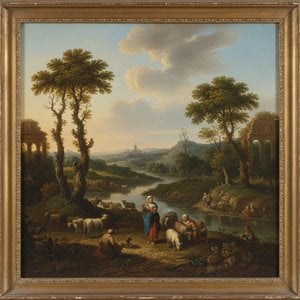
Cattle Piece
 Dutch Golden Age
 1843
1843 64.0 x 83.0 cm
 The Shire Hall Gallery
 Rozwiń treść
Ręcznie malowana reprodukcja olejowa
Ręcznie malowany obraz olejny na płótnie, wykonany na zamówienie przez naszych artystów w wybranym przez Ciebie wymiarze i oprawie. ( Zamów wydruk Kup obraz wysokiej rozdzielczości)




































Wybierz spośród naszych standardowych rozmiarów, które zachowują oryginalne proporcje dzieła sztuki.

Możesz wprowadzić własne wymiary, aby dopasować obraz do konkretnej ramy lub przestrzeni. Jeśli wybrany rozmiar nie będzie odpowiadał proporcjom oryginału, przytniecie dzieło sztuki lub rozszerzymy je o dodatkowe elementy, ręcznie domalowane przez artystę. Przed rozpoczęciem produkcji wyślemy projekt cyfrowy do Twojej akceptacji.
Należy pamiętać, że podgląd na ekranie nie odzwierciedla rzeczywistego przycinania ani rozszerzania obrazu. Tylko projekt dokładnie pokaże ostateczną kompozycję.
Choć oferujemy możliwość zamówienia niestandardowych rozmiarów, zalecamy wybór wymiaru z gotowej listy, aby zachować oryginalne proporcje dzieła.
Po złożeniu zamówienia zespół ArtsDot.com skontaktuje się z klientem drogą mailową w celu uzyskania instrukcji i prześle wizualizację projektu
Dostawa na całym świecie () w ciągu 3–4 tygodni zamiast standardowych 5 tygodni. (29 Sierpień). Bez kompromisów w kwestii jakości.

Bezpłatna ekspresowa wysyłka na cały świat

Wysokiej jakości płótno lniane

Pełne ubezpieczenie przesyłki

Gwarancja zwrotu należności celnych i podatków importowych

Gwarancja wiernego odwzorowania kolorów

Polityka 60-dniowego zwrotu (tylko w przypadku wad)

Gwarancja 100% zwrotu kosztów

Zniżka przy zamówieniu wielu produktów
 Opcja ze szkłem jest dostępna wyłącznie w rozmiarach poniżej 110 cm

Cattle Piece
Technika reprodukcji
Wymiary reprodukcji
-


Cena całkowita
$ 288
Podobne dzieła


O artyście
The Brief, Luminous Life of Thomas Peploe Wood
In the quiet corners of Staffordshire, where the rolling hills and ancient woodlands meet the soft light of the English Midlands, there once lived a talent as fleeting as the morning mist. Thomas Peploe Wood (1817–1845) was an artist whose life was tragically truncated by tuberculosis, yet in his brief twenty-eight years, he managed to capture the very soul of the landscape he called home. Born in Great Haywood to a toll gate keeper and a shoemaker, Wood’s journey from a provincial upbringing to the prestigious galleries of London is a testament to raw, unbridled passion. Though largely self-taught, his eye for beauty was sharpened by the mentorship of the architect Thomas Trubshaw, who recognized that this young man possessed a rare ability to translate the textures of nature onto paper and canvas.
Wood’s ascent into the wider art world was propelled by connections that bridged the gap between the rural heartlands and the metropolitan elite. Through Trubshaw’s guidance, Wood found himself introduced to luminaries such as the print dealer Dominic Charles Colnagiente and the renowned sculptor Sir Francis Chantrey. These encounters provided him with a window into the sophisticated artistic circles of London, allowing his work to reach audiences far beyond the borders of Staffordshire. His talent eventually earned him the patronage of William Salt, a prominent banker and antiquary, who commissioned Wood to document the architectural and natural splendor of the region for an ambitious historical project. This relationship ensured that while Wood’s life was short, his visual legacy became inextricably linked to the historical identity of his native county.
A Romantic Vision in Watercolor and Oil
The artistry of Thomas Peploe Wood is deeply rooted in the Romantic movement, an era defined by an emotional reverence for the sublime power of nature. His work often reflects the influence of masters like Claude Lorrain and Joshua Reynolds, particularly in his sophisticated use of atmospheric perspective. By manipulating light and shadow, Wood could create a profound sense of depth, inviting the viewer to wander through misty valleys or stand beneath the heavy boughs of ancient trees. He possessed a singular ability to capture the ephemeral—the way sunlight filters through autumn leaves or the soft, damp glow of a riverbank after rain.
While his mastery extended to the rich, textured surfaces of oil painting, it was in the delicate medium of watercolor that Wood truly found his voice. The fluidity of watercolor allowed him to execute luminous washes and subtle tonal gradations that perfectly mirrored the shifting moods of the Staffordshire countryside. His repertoire was diverse, ranging from the pastoral serenity of Cattle Piece to the more dramatic, architectural focus seen in his depictions of Ilam Hall and Manley Hall. Whether he was rendering the rugged beauty of a landscape or the quiet dignity of an animal, his brushwork remained imbued with a sense of reverence for the natural world.
A Legacy Etched in Stone and Canvas
Though history has occasionally overlooked Wood, favoring the more enduring figures of the Victorian era, his contributions to British landscape art remain significant. His works are not merely aesthetic objects but historical documents that preserve the vanished vistas of 19th-century England. Today, his paintings can be found in some of the most prestigious collections in the United Kingdom, including:
- The British Museum, where his precision and vision are preserved for scholars and enthusiasts alike.
- The Victoria and Albert Museum, highlighting his place within the broader narrative of British decorative and fine arts.
- Staffordshire County Museum, serving as a cornerstone of local heritage and regional pride.
- The William Salt Library, where his commissioned works continue to tell the story of Staffordshire’s architectural history.
The tragedy of Wood's early death at age twenty-eight leaves us with a sense of "what might have been." Yet, in the surviving sixty or so works, there is no sense of incompleteness, only a concentrated burst of brilliance. Even his family’s grief was transformed into art; his younger brother, Samuel Peploe Wood, a talented sculptor, erected an elaborate memorial cross for Thomas in the churchyard of St. Michael and All Angels. In this way, the memory of the artist remains physically anchored to the very earth he so lovingly painted, ensuring that the "Forgotten Romantic" will never truly fade into obscurity.

thomas peploe wood
1817 - 1845
Krótka nota
- Artistic Movement Or Style: Landscape Painting
- Artists Or Movements Influenced By This Artist: ['Dutch Golden Age']
- Artists Who Influenced This Artist: ['Thomas Trubshaw']
- Date Of Birth: 1 January 1817
- Date Of Death: 4 April 1845
- Full Name: Thomas Peploe Wood
- Nationality: English
- Notable Artworks:
- Ilam Hall
- Cattle Piece
- Gypsy Scene
- Place Of Birth: Great Haywood, Staffordshire
Powiązane artykuły

Golden Light & Dutch Skies: Bringing the Magic of Dutch Golden Age Landscapes into Your Home
Transform your home with the breathtaking light of Dutch Golden Age landscapes. Discover how hand-painted oil reproductions of masterworks like Ruisdael and Vermeer bring timeless elegance, atmosphere, and soulful texture to modern interiors. Elevate your space with museum-quality art.

Złoty Wiek Holandii: 10 arcydzieł, które zmieniły historię sztuki | ArtsDot.com
Odkryj 10 arcydzieł Złotego Wieku Holandii! Poznaj historię Rembrandta, Vermeera i innych mistrzów. Reprodukcje obrazów najwyższej jakości do Twojego wnętrza – ArtsDot.com.
Nicolaes Berchem: Dutch Golden Age Pastoralism & the Evolution of Landscape Painting
Explore the captivating world of Nicolaes Berchem, a leading Dutch Golden Age painter. Discover his idyllic landscapes, masterful technique & lasting influence on art history. Learn more at ArtsDot.

Charles Leickert: Capturing the Dutch Golden Age Light – A Comprehensive Study of Technique, Context, and Legacy
Explore the captivating winter landscapes of Charles Leickert, a master of Dutch Golden Age light & atmosphere. Discover his techniques, symbolism, and lasting legacy – a comprehensive study for art enthusiasts and collectors.

Złoty Wiek Niderlandów: Światło, Realizm i Kulturowe Innowacje w Malarstwie Barokowym
Odkryj fascynujący świat malarstwa holenderskiego Złotego Wieku! Poznaj arcydzieła Rembrandta, Vermeera i innych mistrzów. Analiza technik, gatunków i wpływu na sztukę europejską.

