


 Zobacz w skali 1:1
 Wyślij
 Udostępnij
 Szczegóły
 Przewodnik

 Pobierz plik obrazu
 Podobne obiekty
 RTG
RTG Pokaz slajdów
 Statystyki
Bearded Running Figure

 Czytaj więcej
Giclée / Wydruk artystyczny
Wydruki giclée lub płótna o jakości muzealnej, szybka realizacja i szeroki wybór opcji wykończenia. ( Kup ręcznie malowany obraz Przełącz na wersję cyfrową)




P118B zł10

P118H zł10

P118W zł10

P438Z zł10

P508JH zł12

P508YH zł12

P805H zł10

P805Z zł10

P919BZ zł10

P919G zł10

P919XJ zł10

P959ZH zł10

P968JZ zł12

W106C zł8

W218G zł10

W218JH zł8

W218Y zł10

W307PJ zł10

W316G zł10

W316PJ zł8

W316Y zł10

W398PJ zł8

W4111J zł10

W500HY zł15

W500JH zł15

W692G zł12

W849H zł8

W940BG zł15

W953PJ zł8




Wybierz spośród naszych standardowych rozmiarów, które zachowują oryginalne proporcje dzieła sztuki.

Wpisz wymaganą szerokość i wysokość, aby dopasować grafikę do ramy lub ściany. Wydruk można jedynie przyciąć, nigdy nie powiększając go poza oryginalny obraz, dlatego format o innym proporcji spowoduje utratę części kompozycji. Przed rozpoczęciem druku prześlemy Ci cyfrowy podgląd do zatwierdzenia. Obraz wyświetlany na tej stronie nie pokazuje rzeczywistego przycięcia — jedynie podgląd oddaje ten efekt.
Dostawa na cały świat () w ciągu 2 tygodni zamiast standardowych 4/5 tygodni. (21 Październik)

Bezpłatna ekspresowa wysyłka na cały świat

Wysokiej jakości płótno lniane

Pełne ubezpieczenie transportowe

Gwarancja zwrotu należności celnych i podatków importowych

Gwarancja idealnego odwzorowania barw

100-dniowy okres na zwrot dzieła w przypadku wykrycia wad produkcyjnych

Gwarancja 100% zwrotu pieniędzy

Oferta przy zakupie wielu sztuk
 Opcja ze szkłem jest dostępna wyłącznie w rozmiarach poniżej 110 cm

Bearded Running Figure
Giclée / Wydruk artystyczny
Rozmiar reprodukcji
-


Suma do zapłaty
zł 235
A Glimpse of Motion: Thomas Cole's "Bearded Running Figure"
Thomas Cole’s “Bearded Running Figure” isn’t a grand landscape, the kind for which he is most celebrated as the founder of the Hudson River School. Instead, it offers something more intimate—a fleeting moment captured with remarkable immediacy. This sketch, likely a preparatory study for a larger work or perhaps an exploration in its own right, depicts a man, powerfully built and sporting a full beard, caught mid-stride, bow and arrow held tautly in his hand. The image vibrates with energy; it’s not merely a depiction of running but a visceral representation of motion itself.
The Artist's Hand: Technique and Style
Executed primarily in pencil on cream-colored paper, the artwork reveals Cole’s mastery of gestural drawing. There is a deliberate looseness to the lines—they are not precise or rigidly defined but rather flow with the implied movement of the figure. Hatching and cross-hatching skillfully suggest volume and shadow, giving form to the muscular physique without resorting to overly detailed anatomical rendering. The monochromatic palette, limited to varying shades of brown and grey pencil, amplifies the focus on line and form, creating a raw, unfinished quality that speaks to the spontaneity of the creative process. It’s clear this wasn't intended as a finished piece for exhibition but rather as an exploration—a way for Cole to capture the essence of a pose, a feeling, before committing it to a larger canvas.
Echoes of Myth and Narrative
While seemingly simple in its subject matter, “Bearded Running Figure” resonates with deeper symbolic meaning. The figure’s attire suggests a connection to classical antiquity or perhaps even mythology—a hunter, an athlete, a warrior engaged in pursuit. The bow and arrow are potent symbols of skill, power, and defense, hinting at themes of survival and the primal instincts that drive human action. Cole was deeply influenced by European masters like Poussin and Claude Lorraine, artists who imbued their landscapes with allegorical narratives. This sketch seems to carry a similar weight—a suggestion of a larger story unfolding beyond the frame. It evokes a sense of urgency, a feeling that this figure is racing against time or pursuing something vital.
Historical Context: The Romantic Spirit
Created during Cole’s prolific career (likely sometime before his death in 1848), “Bearded Running Figure” reflects the broader artistic and cultural currents of the Romantic era. This period emphasized emotion, individualism, and a reverence for nature—themes that are subtly present even in this seemingly straightforward sketch. The Hudson River School, which Cole pioneered, sought to capture the sublime beauty of the American landscape, often imbuing it with spiritual significance. While this particular work doesn't depict a sweeping vista, it shares the Romantic sensibility’s fascination with human drama played out against a backdrop of natural power and mystery. It is a testament to Cole’s ability to find profound meaning in even the most fleeting moments.
An Enduring Impression
“Bearded Running Figure” offers a unique window into the creative process of one of America's greatest landscape painters. It’s not just a sketch; it’s an embodiment of motion, strength, and perhaps a hint of narrative intrigue. The work invites viewers to contemplate the power of human endeavor and the enduring appeal of classical imagery—a testament to Cole’s artistic vision and his ability to capture the essence of a moment with remarkable skill and sensitivity.
Pytania i odpowiedzi
Jaki dominujący odcień przenika „Bearded Running Figure” autorstwa Tomasz Cole?
„Bearded Running Figure” skłania się ku Green to Violet Spectrum tonacji.
W jakim pomieszczeniu najlepiej wyeksponować "Bearded Running Figure", biorąc pod uwagę jego paletę barw?
Dzięki swojej palecie barw Monochrome, dzieło „Bearded Running Figure” autorstwa Tomasz Cole jest polecane do Living Room. Kolorystyka stanowi jedną z przyczyn tej sugestii.
Jakie kolory dominują w „Bearded Running Figure” autorstwa Tomasz Cole?
Kolorystyka dzieła „Bearded Running Figure” autorstwa Tomasz Cole: paleta Monochrome, w której dominuje Putty (#dfddd4).
Podobne dzieła


Biografia artysty
A Pioneer of American Landscape Painting
Thomas Cole, a name inextricably linked to the birth of distinctly American art, stands as a pivotal figure in 19th-century painting. Born in Bolton le Moors, Lancashire, England, in 1801, his early life offered little indication of the profound impact he would have on the artistic landscape. Emigrating to the United States with his family in 1818 and settling in Ohio, Cole’s journey was one of self-discovery and artistic awakening. Initially working as an itinerant portrait painter—a common trade at the time—he soon found himself drawn to the untamed beauty of the American wilderness. This shift wasn't merely a change in subject matter; it represented a fundamental divergence from European artistic traditions, which often focused on historical or mythological narratives. Cole’s landscapes weren’t simply depictions of scenery; they were imbued with a spiritual and allegorical depth that resonated deeply with a nation forging its own identity. His move to Catskill, New York, in 1825 proved transformative, providing him with both inspiration and a permanent base from which to explore the surrounding Hudson River Valley—a region that would become inextricably linked with his artistic legacy.The Hudson River School and Romantic Ideals
Cole is rightfully regarded as the founder of the Hudson River School, an art movement characterized by its romantic portrayal of the American landscape. However, to label him simply a “landscape painter” feels inadequate. His work transcended mere representation; it was deeply philosophical, often exploring themes of humanity’s relationship with nature, the passage of time, and the rise and fall of civilizations. Influenced by European Romanticism—particularly the works of Claude Lorrain and J.M.W. Turner—Cole adapted these sensibilities to an American context. Where European Romantics often depicted dramatic, sublime landscapes as a reflection of inner turmoil, Cole’s paintings frequently conveyed a sense of optimism and divine presence within the natural world. He saw in the vastness of the American wilderness a symbol of national potential and spiritual renewal. The Oxbow (1836), perhaps his most iconic work, exemplifies this perfectly—a sweeping vista that contrasts the wild, untamed river valley with the cultivated farmlands, representing both the promise and the challenges of westward expansion. The painting’s meticulous detail and subtle color variations capture not just a scene but also a feeling – a sense of awe and wonder at the power and beauty of nature.Allegory and The Course of Empire
While celebrated for his realistic depictions of nature, Cole’s artistic ambition extended beyond pure landscape painting. He frequently employed allegory to convey complex moral and philosophical ideas. This is most powerfully demonstrated in his monumental series The Course of Empire, created between 1833 and 1836. Comprising five canvases—“Savage State,” “Pastoral State,” “Arcadian State,” “Consummation,” and “Destruction”—the series traces the cyclical history of a civilization, from its pristine origins to its inevitable decline. The paintings are not merely historical narratives; they serve as cautionary tales about the dangers of unchecked ambition and the fragility of human achievement. The series was inspired by the writings of Count de Volney, whose book *Ruines; or Meditations on the Ruins of Empires* explored similar themes. The dramatic lighting and carefully chosen symbols in each painting—ranging from towering forests to crumbling ruins—invite viewers to contemplate the consequences of their actions and the impermanence of worldly power.Technique and Style
Cole’s artistic style was characterized by a remarkable blend of observation, skill, and imagination. He meticulously studied nature, often making numerous pencil sketches *en plein air* (outdoors) to capture the nuances of light, shadow, and color. However, he wasn't simply a recorder of reality; he skillfully manipulated these elements to create emotionally resonant compositions. Cole’s use of atmospheric perspective—the subtle blurring of distant objects—and his mastery of chiaroscuro (the contrast between light and dark) added depth and drama to his paintings. He was acutely aware of the limitations of his own technical abilities, famously stating that he avoided depicting human figures prominently in his landscapes, preferring instead to focus on the grandeur of nature itself. This decision allowed him to prioritize the spiritual and philosophical themes he sought to convey.Legacy and Enduring Influence
Thomas Cole’s untimely death in 1848 at the age of 47 marked a significant loss for the American art world. However, his influence continued to reverberate through generations of artists. He directly mentored Frederic Edwin Church, who would become one of the leading figures of the second generation of Hudson River School painters. His emphasis on observation from nature, combined with a deeply personal and symbolic approach to landscape painting, laid the foundation for a distinctly American artistic tradition. Cole’s work continues to be exhibited in major museums across the United States, including the New-York Historical Society, the National Gallery of Art in Washington D.C., and the Smithsonian American Art Museum. His paintings are not merely historical artifacts; they remain powerfully evocative and relevant today, prompting viewers to contemplate their own relationship with nature and the enduring questions about humanity’s place in the world. The Thomas Cole National Historic Site in Catskill, New York, preserves his home and studio, offering visitors a glimpse into the life and work of this remarkable artist.
Tomasz Cole
1801 - 1848 , Wielka Brytania
Najważniejsze informacje
- Artistic Movement Or Style: Szkoła Hudson
- Artists Or Movements Influenced By This Artist: ['Asher B. Durand']
- Date Of Birth: 1 lutego 1801
- Date Of Death: 11 lutego 1848
- Full Name: Thomas Cole
- Nationality: Amerykanin
- Notable Artworks:
- Course of Empire
- Oxbow
- Voyage of Life
- Place Of Birth: Bolton, Wielka Brytania
Zobacz także powiązane artykuły

Robert Spencer: Luminism, Narrative & the American Landscape Tradition
Explore the captivating world of Luminism & the Hudson River School with our expert analysis. Discover the history, artists, and enduring beauty of 19th-century American landscape painting. Find museum-quality reproductions at ArtsDot.

Szkoła Rzeki Hudson: 10 arcydzieł, które ukształtowały pejzaż amerykańskiej sztuki | ArtsDot
Odkryj 10 arcydzieł Szkoły Rzeki Hudson – malarstwo krajobrazowe Cole'a, Churcha i Bierstadta. Poznaj historię artystów i inspiracje romantyzmu amerykańskiego. Reprodukcje obrazów najwyższej jakości na ArtsDot.com! Eksploruj kolekcję online.
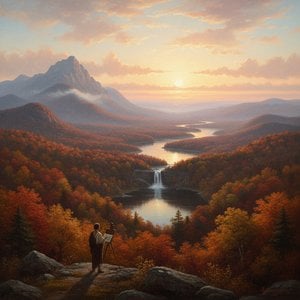
Sublime Krajobrazy: Narodziny Amerykańskiej Tożsamości Artystycznej i Rola Szkoły Hudson River
Odkryj fascynującą historię Szkoły Hudson River i narodziny amerykańskiej tożsamości artystycznej. Poznaj kluczowych artystów, techniki malarskie i inspiracje. Reprodukcje najwyższej jakości na ArtsDot.com!

The Alchemy of Graphite: An Expert Guide to Mastering Detail and Depth in Pencil Sketching
Unlock the secrets of graphite sketching with our expert guide for art students. Learn to master pencil grades, create realistic depth, and capture intricate textures through professional techniques designed to elevate your observational drawing skills.
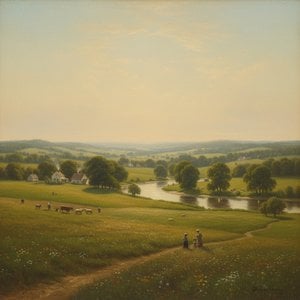
Thomas Worthington Whittredge: Capturing the American Pastoral Ideal with Luminist Light
Explore the luminous landscapes of Thomas Worthington Whittredge, a key figure in the Hudson River School and master of Luminism. Discover his captivating paintings & legacy with ArtsDot.


