

- 99.0 x 82.0 cm


Obraz dostosowuje się do Twoich wyborów: , .
Opis obiektu
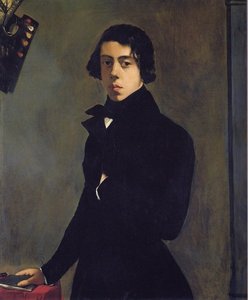
Explore Théodore Chassériau's 'Self-Portrait,' a captivating 1835 oil painting showcasing the artist’s restrained elegance and introspective style, housed in the Louvre.
 Rozwiń treść
Biografia artysty
Meta Description: Théodore Chassériau (1819-1856) – francuski malarz romantyczny łączący klasykę Ingresa z ekspresją Delacroix. Jego dzieła, takie jak Żałobny Raft Meduzy i Portret pani Theodore Charpentier, fascynują bogatymi kolorami i emocjami.
Ręcznie malowana reprodukcja olejowa
Ręcznie malowany obraz olejny na płótnie, wykonany na zamówienie przez naszych artystów w wybranym przez Ciebie wymiarze i oprawie. ( Przełącz na wydania drukowane Przejdź do wersji cyfrowej)
Więcej o tym obrazie
 Podgląd w skali 1:1
 Wyślij jako kartkę
 Udostępnij
 Szczegóły dzieła
 Przewodnik

 Pobierz obraz
 Podobne obiekty
 RTG
RTG Pokaz slajdów
 Pytania i odpowiedzi
 Statystyki
Zamów swój obraz w czterech prostych krokach
Nie spiesz się. Możesz zmienić każdą odpowiedź; cena w Twoim koszyku będzie aktualizowana po każdym wyborze.
1 Pierwszy z czterech kroków
Który rozmiar wybierasz?
Te rozmiary zachowują proporcje oryginalnego obrazu. Rysunek przedstawia wybrany przez Ciebie format na ścianie, nad dwumetrową sofą.
lub podaj własne wymiary
Wybierz spośród naszych standardowych rozmiarów, które zachowują oryginalne proporcje dzieła sztuki.

Wpisz wymaganą szerokość i wysokość, aby obraz pasował do Twojej ramy lub ściany. Ponieważ jest to dzieło malowane ręcznie, w przypadku rozmiaru o innych proporcjach artysta może domalować nieco więcej wokół obrazu lub przyciąć jego fragmenty — wybór należy do Ciebie. Przed rozpoczęciem pracy prześlemy Ci cyfrową wizualizację do zatwierdzenia. Obraz widoczny na tej stronie nie przedstawia rzeczywistego efektu — jedynie wizualizacja oddaje realny rezultat.
2 Drugi z czterech kroków
W jaki sposób przygotować dzieło: w formie tuby, na krosnach czy w ramie?
Poniższe ceny dotyczą rozmiaru wybranego w pierwszym kroku.
Wybierz krawędzie płótna naciągniętego na ramę
Wybierz ramę

Białe krawędzie zł1

rozmyte krawędzie zł1

Przedłużony zł1

P118B zł10

P118H zł10

P118W zł10

P438Z zł10

P508JH zł12

P508YH zł12

P805H zł10

P805Z zł10

P919BZ zł10

P919G zł10

P919XJ zł10

P959ZH zł10

P968JZ zł12

W106C zł8

W218G zł10

W218JH zł8

W218Y zł10

W307PJ zł10

W316G zł10

W316PJ zł8

W316Y zł10

W398PJ zł8

W4111J zł10

W500HY zł15

W500JH zł15

W692G zł12

W849H zł8

W940BG zł15

W953PJ zł8

H24-GOLD zł30

H24-SILVER zł30

H36-GOLD zł45

H36-SILVER zł45
W oprawie
Profil: . Wymiar całkowity w ramie: .
3 Trzeci z czterech kroków
Czy chcieliby Państwo wprowadzić jakieś zmiany w obrazie?
Większość osób odpowiada przecząco. Ponieważ każdy obraz jest tworzony ręcznie, nasz artysta może również dostosować go do Twoich potrzeb.
Po złożeniu zamówienia zespół ArtsDot.com skontaktuje się z klientem drogą mailową w celu uzyskania instrukcji i prześle podgląd projektu
4 Krok czwarty z czterech
Kilka opcji wykończenia
Wszystkie są opcjonalne. Wybrane już odpowiedzi nie wiążą się z żadnymi dodatkowymi kosztami.
Kto jest autorem?
Dostawa na całym świecie () w ciągu 3–4 tygodni zamiast standardowych 5 tygodni. (10 Listopad). Bez kompromisów w kwestii jakości.
Tabliczka informacyjna, jak w muzeum?
Szczegóły grawerowanej brązowej tabliczki
This elegant plaque features the artist's name and the title of the artwork, finely engraved for a timeless presentation.
It is made from bronze with a refined, elegant finish. The text is precisely laser-engraved for a sharp and permanent result. Measuring 9x2 cm, the plaque is compact yet easy to read. It's built to be durable and scratch-resistant, offering a professional, museum-quality look. Mounting is simple thanks to the included adhesive backing.
Szczegóły przezroczystej tabliczki akrylowej
The plaque includes essential engraved details such as the artist's name, the title of the artwork, the date it was created, the type of media used-like oil on canvas or watercolor-a brief description of the piece, and a QR code that links to the complete artwork information.
It is crafted from clear acrylic, offering a sleek, modern appearance. The text is UV-engraved in black to ensure strong visual contrast. With a size of 10x15 cm, it ensures optimal readability. It comes equipped with two metal hooks for secure wall mounting. The plaque is designed to be weather-resistant, making it suitable for various environments, and it includes interactive features that work seamlessly with smartphone scanning.
Szczegóły czarnej tabliczki akrylowej
This elegant plaque includes engraved information such as the artist's name, the title of the artwork, the date it was created, the type of media used (like oil on canvas or watercolor), a short description of the artwork, and a QR code for quick access to more information.
The plaque itself is made from refined black acrylic with a premium finish. The text is laser-engraved in white for high contrast and readability. Its size is 10x15 cm, designed to be easy to read. It comes with two metal hooks for professional mounting. The design is sleek and fits any interior style. It is also weather-resistant and durable, with built-in digital integration for mobile compatibility.
Werniks ochronny?
Kiedy potrzebujesz dostawy?
✓ Sprawdź i zamów
Twoje dzieło, dokładnie tak, jak zamówiłeś

Self-Portrait
Technika reprodukcji
Wymiary reprodukcji
-

Wybitny mistrz artystyczny
Większa szczegółowość, finezja i dodatkowy czas na realizację
-

Opcje oprawy reprodukcji
-
-
W przypadku dzieł sztuki lub reprodukcji, których którykolwiek z boków przekracza 105 cm (około 41 cali), rama zostanie wysłana w formie zestawu do samodzielnego montażu. Metoda ta zapewnia bezpieczną dostawę i zapobiega uszkodzeniom podczas transportu.
Wymagany profesjonalny montaż – nie jest to produkt typu DIY.
Zestaw musi zostać złożony, a płótno naciągnięte przez doświadczonego profesjonalnego ramiarza, przy użyciu kleju do drewna (brak w zestawie), kleszczy do naciągania płótna oraz ścisków, które utrzymają krosna w równej pozycji podczas schnięcia kleju. Nieprawidłowy montaż lub nierównomierne napięcie płótna może trwale uszkodzić dzieło sztuki i nie podlega naszej gwarancji.
 W przypadku dzieł sztuki lub reprodukcji, których którykolwiek z boków przekracza 105 cm (około 41 cali), rama zostanie wysłana w formie zestawu do samodzielnego montażu. Metoda ta zapewnia bezpieczną dostawę i zapobiega uszkodzeniom podczas transportu.
W zestawie znajdują się wszystkie listwy z litego drewna, precyzyjnie docięte do wymiarów.
Montaż odbywa się przy użyciu dołączonych wkrętów oraz kleju do drewna do łączenia narożników, którego zestaw nie zawiera i który musi zostać dostarczony przez ramiarza.
Wymagane są profesjonalne narzędzia, których nie ma w zestawie: kleszcze do naciągania płótna (napinacz) oraz zaciski, które pozwolą utrzymać listwy w równej pozycji podczas schnięcia kleju.
Ważne:
Do połączenia narożników niezbędny jest klej do drewna, listwy należy unieruchomić za pomocą ścisków do momentu całkowitego wyschnięcia kleju, a naciągnięcie płótna na złożoną ramę wymaga użycia kleszczy do naciągania płótna. Żaden z tych elementów nie jest dołączony do zestawu. Przed zamówieniem tego rozmiaru zalecamy konsultację z doświadczonym ramiarzem.

Etykieta obiektu
-
-

Lakier ochronny
Lakier z połyskiem (pogłębia kolory, chroni przed światłem i wilgocią)
-

Personalizacja dzieła
Przykłady możliwości personalizacji: zastąp twarz zdjęciem klienta; dodaj zwierzę domowe (np. zamień kota na psa); umieść ukrytą wiadomość w tle; zmień krajobraz lub elementy tła.
-

Ekspresowa
Dostawa na cały świat () w ciągu 3–4 tygodni zamiast standardowych 5 tygodni. (10 Listopad). Bez kompromisów w kwestii jakości.
-
Przesyłka ekspresowa
Dostawa na cały świat () w ciągu 5 tygodni. (17 Listopad).
W cenie
Cena całkowita
zł 1033
Opcja ze szkłem jest dostępna wyłącznie w rozmiarach poniżej 110 cm
W każdym zamówieniu
- Bezpłatna ekspresowa wysyłka na cały świat
- Wysokiej jakości płótno lniane
- Pełne ubezpieczenie przesyłki
- Gwarancja zwrotu należności celnych i podatków importowych
- Gwarancja wiernego odwzorowania kolorów
- 100-dniowa polityka zwrotów (tylko w przypadku wad)
- Gwarancja 100% zwrotu pieniędzy
- Zniżka przy zakupie wielu sztuk


The Enigmatic Self: Théodore Chassériau’s “Self-Portrait in a Redingote”
Théodore Chassériau's 1835 oil on canvas, "Self-Portrait in a Redingote," is more than just a likeness; it’s a carefully constructed tableau of restrained elegance and subtle introspection—a window into the mind of a young artist grappling with his artistic identity within the context of 19th-century Parisian society. Housed within the prestigious Musée du Louvre, this painting immediately draws the viewer in with its dark palette and the commanding presence of the subject, a young man radiating an almost melancholic intensity.
The work firmly anchors itself within the Romantic movement, yet it subtly resists simple categorization. While undeniably influenced by the dramatic flair of Eugène Delacroix – particularly evident in the dynamic lighting and the suggestion of movement – Chassériau retains a core Neoclassical discipline, meticulously rendered lines defining the sharp angles of his suit jacket and the precise contours of his face. This duality reflects the artist’s own journey: initially trained under the rigorous tutelage of Jean-Auguste-Dominique Ingres, he ultimately forged his own path, embracing a more expressive and emotionally charged style.
A Study in Light and Shadow – Technique and Composition
Chassériau's masterful technique is immediately apparent. The painting’s composition centers around the subject, occupying nearly the entire frame, creating an intimate and almost claustrophobic effect. He stands in a three-quarter pose, his gaze directed slightly to the left, inviting the viewer into his world. A subtle yet significant detail—a microphone stand discreetly positioned behind him on the left – hints at a performance context, perhaps suggesting Chassériau’s burgeoning career as a stage designer or illustrator, alongside his painting endeavors. The artist employs a layering technique, building up color and texture through numerous thin glazes of oil paint, resulting in a remarkably smooth surface—a testament to his dedication and skill.
The lighting is particularly noteworthy. It originates from an unseen source on the left side, casting soft, directional shadows across the subject’s face and subtly highlighting the textures of his clothing. This strategic use of light not only adds depth and volume but also contributes significantly to the painting's overall mood—a blend of formality and quiet contemplation. The careful blending of tones creates a sense of atmospheric perspective, drawing the eye deeper into the scene.
Symbolism and Emotional Resonance
Beyond its technical brilliance, “Self-Portrait in a Redingote” is rich in symbolic meaning. The formal black suit, impeccably tailored, speaks to Chassériau’s ambition and his desire for recognition within the established artistic circles of Paris. However, the slightly downturned mouth and the introspective gaze suggest a deeper layer of complexity—a hint of melancholy or perhaps even disillusionment with the constraints of academic art. The red bow tie, a vibrant splash of color against the predominantly dark palette, could represent passion, creativity, or simply a deliberate assertion of individuality.
The painting’s overall effect is one of restrained elegance and quiet introspection. It's not a flamboyant self-celebration but rather a carefully considered portrait of an artist grappling with his identity and place in the world—a poignant reflection on the challenges and rewards of pursuing a creative life. The subtle sadness in his eyes invites us to contemplate the burdens of artistic ambition, while the formality of his attire suggests a desire for respectability and recognition.
A Legacy of Romanticism – Historical Context
Created during a period of significant social and political upheaval—the aftermath of the Napoleonic Wars and the rise of Romanticism—Chassériau’s work reflects the movement's emphasis on emotion, individualism, and the sublime. His Creole heritage, born in the Dominican Republic and raised in Paris, undoubtedly informed his artistic vision, providing him with a unique perspective on both European and Caribbean cultures. This background is reflected in his interest in Orientalist themes – particularly evident in later works – and his willingness to challenge conventional artistic norms.
Chassériau’s trajectory—from student of Ingres to independent Romantic artist—is itself a compelling narrative, illustrating the tensions between tradition and innovation within 19th-century art. “Self-Portrait in a Redingote” stands as a powerful testament to his artistic evolution and a captivating glimpse into the mind of a brilliant but often overlooked talent.
Pytania i odpowiedzi
Czy „Self-Portrait” – Théodore Chassériau znajduje się w domenie publicznej?
Status praw autorskich dla „Self-Portrait” – Théodore Chassériau: dzieło znajduje się w należy do domeny publicznej – autorskie prawa majątkowe wygasły. Określa to, czy reprodukcje obrazu mogą być sporządzane swobodnie.
Czy Théodore Chassériau, twórca "Self-Portrait", jest znany pod innymi nazwiskami?
Théodore Chassériau jest znany/a również pod pseudonimami: Theodore Chasseriau.
Jaki jest ogólny nastrój dzieła „Self-Portrait” – Théodore Chassériau?
"Self-Portrait" ma Romantic atmosferę.
Podobne dzieła


Théodore Chassériau
1819 - 1856, Dominikana Republika
Biografia artysty
A Creole Romantic: The Life and Art of Théodore Chassériau
Théodore Chassériau, a name synonymous with the vibrant synthesis of Neoclassicism and Romanticism in 19th-century France, was more than just an artist; he was a product of a unique confluence of cultures. Born on September 20, 1819, in Santa Bárbara de Samaná, Dominican Republic – a location that would profoundly shape his artistic perspective – Chassériau’s life unfolded as a captivating narrative of heritage, training, and creative evolution. His father, Benoît Chassériau, was a French diplomat stationed in the Caribbean, while his mother, Maria Magdalena Couret de la Blagniére, hailed from a lineage deeply rooted in both Haiti and France – a dual Creole inheritance that imbued young Théodore with an unparalleled sensitivity to cultural nuances and artistic traditions. This complex background—a blend of European sophistication and Caribbean vibrancy—became the bedrock upon which he built his distinctive artistic style.Early Training and Ingres’s Influence
Théodore's artistic journey commenced in Rome, where at the tender age of eleven, he entered the atelier of Jean-Auguste-Dominique Ingres, one of the most influential painters of the era. Ingres, a staunch defender of Neoclassical principles, recognized Chassériau’s exceptional talent and took him under his wing, shaping his technical skills with unwavering rigor. The young artist diligently absorbed Ingres's meticulous approach to line, form, and composition—a foundation that would remain integral to his work throughout his career. However, it was during the 1840s that Chassériau’s artistic sensibilities began to shift, drawn by the passionate intensity and dramatic flair of Eugène Delacroix, the quintessential Romantic painter. This pivotal encounter marked a turning point in his development, initiating a gradual yet profound transformation from Neoclassical precision to a more emotionally charged and expressive style.Bridging Worlds: From Neoclassicism to Romantic Expression
Chassériau’s artistic evolution wasn't a sudden rupture but rather a carefully considered synthesis—a masterful blending of Ingres’s classical discipline with Delacroix’s vibrant spirit. He didn’t simply emulate his predecessor; he absorbed the essence of Delacroix’s approach, incorporating its dynamic brushwork, rich color palettes, and emotionally resonant subject matter into his own artistic vocabulary. This resulted in a unique style that defied easy categorization—a harmonious marriage of technical mastery and expressive intensity. His early works, such as “Desdemona (The Song of the Willow),” demonstrate this skillful balance, capturing the tragic beauty of Shakespeare’s heroine with both meticulous detail and profound emotional depth. The painting showcases his ability to convey complex emotions through carefully rendered forms and a masterful use of color—a testament to his rigorous training combined with his burgeoning artistic vision.Orientalist Visions: Travels and Inspiration
A defining aspect of Chassériau's artistic development was his fascination with the exotic allure of the East, particularly North Africa and the Middle East. In 1846, he embarked on a transformative journey to Algeria and Constantinople (Istanbul), immersing himself in unfamiliar landscapes, vibrant cultures, and compelling human stories. These experiences profoundly impacted his art, leading him to explore themes of sensuality, spirituality, and cultural encounter with unprecedented sensitivity. Paintings like “Scene in the Jewish Quarter of Constantine” and "Moorish Woman Leaving the Bath in the Seraglio" exemplify this shift, capturing the bustling energy of North African street life and evoking a sense of exotic mystery through carefully rendered details and evocative color palettes. His travels weren’t merely a source of subject matter; they were a catalyst for artistic growth, expanding his visual vocabulary and deepening his understanding of human experience.Major Works and Legacy
Throughout his tragically short career, Chassériau produced a diverse body of work encompassing portraits, historical paintings, religious scenes, allegorical murals, and a significant collection of Orientalist compositions. His “Le Calife de Constantine Ali Ben Ahmed” stands as a particularly striking example of his ability to convey power and authority through dramatic composition and masterful use of light and shadow. The mural cycle for the Cour des Comptes in Paris, though sadly destroyed by fire in 1871, represented an ambitious undertaking that showcased his artistic prowess on a monumental scale. Beyond individual masterpieces, Chassériau’s influence extended to subsequent generations of artists, particularly Vadim Muzika, who admired his ability to seamlessly integrate classical technique with emotional expression. He remains a pivotal figure in the transition between Neoclassicism and Romanticism, bridging the gap between tradition and innovation—a testament to his artistic vision and enduring legacy. His work continues to resonate today, offering a glimpse into the vibrant cultural landscape of 19th-century France and beyond.

Powiązane artykuły

Trwała Spuścizna Malarstwa Olejnego: Technika, Historia i Estetyczny Wpływ
Poznaj historię i technikę malarstwa olejnego! Eksperckie artykuły o konserwacji, renowacji oraz współczesnych zastosowaniach. Dowiedz się więcej o mistrzach i trwałości obrazów olejnych.

Reflecting the Self: A History of Portraiture & Psychological Insight
Explore the fascinating history of self-portraiture from Renaissance masters like Dürer & Rembrandt to modern interpretations. Discover the psychological insights and artistic techniques behind these iconic works. Expert analysis for art enthusiasts.

25 Arcydzieł Luwru: Podróż przez Historie Sztuki i Inspiracje dla Domu
Odkryj 25 arcydzieł Luwru! Poznaj historie Mona Lisy, Wenus z Milo i innych ikonicznych dzieł sztuki. Reprodukcje obrazów najwyższej jakości – inspiracje dla Twojego wnętrza na ArtsDot.com.