

 Podgląd w skali 1:1
 Wyślij jako kartkę
 Udostępnij
 Szczegóły dzieła
 Przewodnik

 Pobierz obraz
 Podobne obiekty
 RTG
RTG Pokaz slajdów
 Pytania i odpowiedzi
 Statystyki
Hot Sand


 Rozwiń treść
Dzieło sztuki prezentowane na tej stronie podlega ochronie prawem autorskim, co oznacza, że nie mamy prawa do tworzenia ani sprzedaży jego identycznej reprodukcji. Ochrona ta jest egzekwowana na mocy umów międzynarodowych, takich jak Konwencja berneńska oraz przez przepisy prawa krajowego, w tym te określone w Prawo autorskie USA – Tytuł 17.
Metoda ta jest w pełni zgodna z przepisami prawa autorskiego, ponieważ nie polega na kopiowaniu ani powielaniu chronionego dzieła. Stanowi ona kreatywną reinterpretację – nowy obraz, który czerpie inspirację z oryginału, ale nie jest z nim tożsamy.
Giclée / Wydruk artystyczny
Wydruki giclée lub płótna o jakości muzealnej, szybka realizacja i szeroki wybór opcji wykończenia. ( Zamów ręcznie malowaną reprodukcję Przejdź do wersji cyfrowej)




P118B zł10

P118H zł10

P118W zł10

P438Z zł10

P508JH zł12

P508YH zł12

P805H zł10

P805Z zł10

P919BZ zł10

P919G zł10

P919XJ zł10

P959ZH zł10

P968JZ zł12

W106C zł8

W218G zł10

W218JH zł8

W218Y zł10

W307PJ zł10

W316G zł10

W316PJ zł8

W316Y zł10

W398PJ zł8

W4111J zł10

W500HY zł15

W500JH zł15

W692G zł12

W849H zł8

W940BG zł15

W953PJ zł8




Wybierz spośród naszych standardowych rozmiarów, które zachowują oryginalne proporcje dzieła sztuki.

Wpisz wymaganą szerokość i wysokość, aby dopasować grafikę do ramy lub ściany. Wydruk można jedynie przyciąć, nigdy nie powiększając go poza oryginalny obraz, dlatego format o innych proporcjach spowoduje utratę części kompozycji. Przed rozpoczęciem druku prześlemy Ci cyfrowy podgląd do zatwierdzenia. Obraz wyświetlany na tej stronie nie pokazuje rzeczywistego przycięcia — jedynie podgląd oddaje ten efekt.
Dostawa na cały świat () w ciągu 2 tygodni zamiast standardowych 4/5 tygodni. (12 Listopad)

Bezpłatna ekspresowa wysyłka na cały świat

Wysokiej jakości płótno lniane

Pełne ubezpieczenie przesyłki

Gwarancja zwrotu należności celnych i podatków importowych

Gwarancja wiernego odwzorowania kolorów

100-dniowa polityka zwrotów (tylko w przypadku wad)

Gwarancja 100% zwrotu pieniędzy

Zniżka przy zakupie wielu sztuk
 Opcja ze szkłem jest dostępna wyłącznie w rozmiarach poniżej 110 cm

Hot Sand
Giclée / Wydruk artystyczny
Wymiary reprodukcji
-


Cena całkowita
zł 246
Pytania i odpowiedzi
Skąd pochodzą odwiedzający „Hot Sand” – Technical Sergeant Harry A. Jackson Usmc?
Dla dzieła „Hot Sand” dostępna jest strona Statystyki wyświetleń. Przedstawia ona miesięczną liczbę odwiedzin tego dzieła oraz innych prac artysty, z podziałem na kraje i języki.
Jakie kolory dominują w dziele „Hot Sand” – Technical Sergeant Harry A. Jackson Usmc?
„Hot Sand” charakteryzuje się paletą Dark, w której dominuje Espresso (#3c2712).
Jaki kolor dominuje w kompozycji „Hot Sand” – Technical Sergeant Harry A. Jackson Usmc?
Kolorem, który najbardziej wyróżnia się w "Hot Sand", jest Espresso (#3c2712). Dominujący kolor ułatwia dopasowanie dzieła sztuki do wnętrza.
Podobne dzieła


Biografia artysty
A Life Forged in Fire and Freedom
The life of Technical Sergeant Harry A. Jackson USMC was a profound tapestry woven from the disparate threads of combat, cowboy grit, and high-society abstraction. Born in Chicago, United States of America, his early years were defined by two enduring passions: the precision of drawing and the untamed spirit of horses. At just fourteen years old, driven by a restless wanderlust, he famously boarded a freight train bound for Cody, Wyoming, seeking the rugged life of a cowboy. This formative period in the American West would later provide the soul for much of his most enduring representational work.
However, the call of duty intervened when he enlisted in the Marine Corps in 1943. As the youngest Marine combat artist to serve in World War II, Jackson occupied a unique and harrowing position within the 2d Battalion, 25th Marines, 4th Marine Division. His eyes were not merely witnesses to history but active participants in it, as he captured the visceral reality of amphibious assaults on Roi-Namur, Kwajalein, Tarawa, and Saipan. The physical and psychological toll of these battles was immense; wounded on both Tarawa and Saipan, Jackson would carry the invisible scars of post-traumatic stress disorder and the neurological tremors of epilepsy for the remainder of his life.
From Combat Sketches to Abstract Expressionism
Following his service, Jackson utilized the GI Bill to refine his craft, studying at the Art Institute of Chicago and the Academy of Fine Arts. His journey through the art world was one of remarkable stylistic evolution. Upon returning to the vibrant pulse of New York City, he found himself immersed in a circle of legendary abstract expressionist painters, including Jackson Pollock and Willem de Kooning. During this era, his work reflected the energy and spontaneity of the movement that was then redefining the boundaries of modern art.
Yet, despite his proximity to the avant-garde, Jackson’s heart remained tethered to the narrative power of the representational. In the early 1950s, a period of travel through Europe allowed him to study the techniques of the Old Masters, an experience that deepened his appreciation for classical form and storytelling. This duality—the ability to navigate the complexities of modern abstraction while maintaining a profound connection to traditional realism—became the hallmark of his mature career. He eventually established studios in Cody, Wyoming, and Camaiore, Italy, bridging the gap between the American frontier and the European tradition.
A Legacy in Bronze and Memory
Ultimately, Harry Jackson is most celebrated for his monumental bronze sculptures that breathe life into the legends of the Old West. His work serves as a vital historical record, capturing the rugged dignity of the cowboy era with a sculptor's tactile permanence. Through his ability to translate the grit of combat and the vastness of the American landscape into tangible art, he achieved an international following that honored both his technical mastery and his lived experience.
His contributions to the American artistic canon are marked by several key elements:
- The Combat Artist's Eye: His unique role as a Marine combat artist provided a rare, firsthand visual documentation of Pacific theater warfare.
- Stylistic Versatility: A rare trajectory that moved from the visceral sketches of war to the experimental heights of New York abstraction and finally to classical representationalism.
- Cultural Preservation: His dedication to the stories of the American West through bronze sculpture, ensuring the legends of the frontier remained etched in the cultural consciousness.

Technical Sergeant Harry A. Jackson Usmc
1924 - 2011 , United States of America
Krótka nota
- Artistic Movement Or Style: Abstract Expressionism and Representational
- Artists Who Influenced This Artist: ['Old Masters']
- Full Name: Harry Jackson
- Notable Artworks:
- Combat Photographer
- Saipan Marine
- Hot Sand
- Place Of Birth: Chicago, United States of America
- Date Of Birth: 1924
- Date Of Death: 2011
Powiązane artykuły

Arcydzieła XIX Wieku: 10 Obrazów Opowiadających Epokę | ArtsDot
Odkryj 10 arcydzieł XIX wieku! Poznaj historię Monet, Van Gogha i Courbeta. Imesjonizm, realizm, romantyzm – obrazy pełne emocji i piękna czekają na ArtsDot.com. Znajdź idealny obraz do swojego wnętrza!

Thomas Sandby: Pioneering Watercolourist & Topographer of Georgian England
Explore the life & art of Thomas Sandby (1721-1798), a pioneering English watercolourist and architect. Discover his innovations, role in founding the Royal Academy, and lasting legacy at ArtsDot.

Jean-Louis Ernest Meissonier: Realism, Historical Narrative & Artistic Perfection
Explore the world of Jean-Louis Ernest Meissonier, a master of French Realism renowned for his meticulously detailed historical & military scenes. Discover his iconic artworks and lasting legacy.

Thomas Whitcombe: Navigating Light & Landscape – A Reassessment of Technique & Influence
Discover the captivating world of Thomas Whitcombe, a leading British marine painter. Explore his life, techniques, and enduring legacy with our expert analysis & guide for collectors.
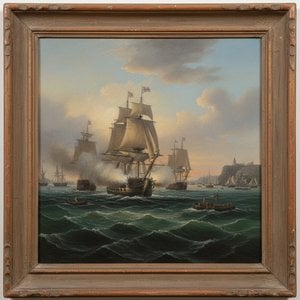
Thomas Butterworth (1768–1842): Navigating the Aesthetics of British Marine Painting
Explore the captivating maritime art of Thomas Butterworth (1768–1842). Discover his stunning depictions of Napoleonic naval battles and life at sea, commissioned works for the East India Company, and enduring legacy. Learn more today!