
 Contemporary Realism
 1854
1854 38.0 x 32.0 cm

The picture follows your choices: , .
Opis obiektu
Admire Stephen Pearce’s ‘Alexander Stewart’ (1854) – a stunning 19th-century portrait! Explore its elegance, historical context & detailed oil painting reproduction at ArtsDot.com.
 Rozwiń treść
Biografia artysty
Stephen Pearce (1819–1904) był angielskim malarzem portretowym i kolarzem, znanym z szczegółowych dzieł sztuki pięknej, obrazów eksploracji Arktyki oraz ikonicznych scen takich jak „Coursing at Ashdown Park”. Jego twórczość stanowi wyjątkową refleksję epoki brytyjskiej kultury i nauki!
Ręcznie malowana reprodukcja olejowa
Ręcznie malowany obraz olejny na płótnie, wykonany na zamówienie przez naszych artystów w wybranym przez Ciebie wymiarze i oprawie. ( Przełącz na wydania drukowane Przejdź do wersji cyfrowej)
More about this painting
 Podgląd w skali 1:1
 Wyślij jako kartkę
 Udostępnij
 Szczegóły dzieła
 Przewodnik

 Pobierz obraz
 Podobne obiekty
 RTG
RTG Pokaz slajdów
 Q&A
Q&A Statystyki
Order your painting in four simple steps
Take your time. You can change any answer; the price in your order card follows each choice.
1 Step one of four
Which size would you like?
These sizes keep the proportions of the original painting. The drawing shows your choice on a wall, above a two-metre sofa.
Or give your own measurements
Wybierz spośród naszych standardowych rozmiarów, które zachowują oryginalne proporcje dzieła sztuki.

Wpisz wymaganą szerokość i wysokość, aby obraz pasował do Twojej ramy lub ściany. Ponieważ jest to dzieło malowane ręcznie, w przypadku rozmiaru o innych proporcjach artysta może domalować nieco więcej wokół obrazu lub przyciąć jego fragmenty — wybór należy do Ciebie. Przed rozpoczęciem pracy prześlemy Ci cyfrową wizualizację do zatwierdzenia. Obraz widoczny na tej stronie nie przedstawia rzeczywistego efektu — jedynie wizualizacja oddaje realny rezultat.
2 Step two of four
How should it be prepared: rolled, stretched or framed?
The prices below are for the size you chose in step one.
Choose the edges of the stretched canvas
Choose your frame

White zł1

Blurside zł1

Extended zł1

P118B zł10

P118H zł10

P118W zł10

P438Z zł10

P508JH zł12

P508YH zł12

P805H zł10

P805Z zł10

P919BZ zł10

P919G zł10

P919XJ zł10

P959ZH zł10

P968JZ zł12

W106C zł8

W218G zł10

W218JH zł8

W218Y zł10

W307PJ zł10

W316G zł10

W316PJ zł8

W316Y zł10

W398PJ zł8

W4111J zł10

W500HY zł15

W500JH zł15

W692G zł12

W849H zł8

W940BG zł15

W953PJ zł8

H24-GOLD zł30

H24-SILVER zł30

H36-GOLD zł45

H36-SILVER zł45
W oprawie
Moulding: . Overall size with the frame: .
3 Step three of four
Would you like anything changed in the painting?
Most people answer no. Because each painting is made by hand, our artist can also adapt it for you.
After order, ArtsDot.com team will email client for instructions and provide a mockup preview
4 Step four of four
A few finishing options
All of them are optional. The answers already selected cost nothing extra.
Who paints it?
Dostawa na całym świecie () w ciągu 3–4 tygodni zamiast standardowych 5 tygodni. (31 Październik). Bez kompromisów w kwestii jakości.
A nameplate, as in a museum?
Szczegóły grawerowanej brązowej tabliczki
This elegant plaque features the artist's name and the title of the artwork, finely engraved for a timeless presentation.
It is made from bronze with a refined, elegant finish. The text is precisely laser-engraved for a sharp and permanent result. Measuring 9x2 cm, the plaque is compact yet easy to read. It's built to be durable and scratch-resistant, offering a professional, museum-quality look. Mounting is simple thanks to the included adhesive backing.
Szczegóły przezroczystej tabliczki akrylowej
The plaque includes essential engraved details such as the artist's name, the title of the artwork, the date it was created, the type of media used-like oil on canvas or watercolor-a brief description of the piece, and a QR code that links to the complete artwork information.
It is crafted from clear acrylic, offering a sleek, modern appearance. The text is UV-engraved in black to ensure strong visual contrast. With a size of 10x15 cm, it ensures optimal readability. It comes equipped with two metal hooks for secure wall mounting. The plaque is designed to be weather-resistant, making it suitable for various environments, and it includes interactive features that work seamlessly with smartphone scanning.
Szczegóły czarnej tabliczki akrylowej
This elegant plaque includes engraved information such as the artist's name, the title of the artwork, the date it was created, the type of media used (like oil on canvas or watercolor), a short description of the artwork, and a QR code for quick access to more information.
The plaque itself is made from refined black acrylic with a premium finish. The text is laser-engraved in white for high contrast and readability. Its size is 10x15 cm, designed to be easy to read. It comes with two metal hooks for professional mounting. The design is sleek and fits any interior style. It is also weather-resistant and durable, with built-in digital integration for mobile compatibility.
A protective varnish?
When do you need it?
✓ Check and order
Your painting, as you ordered it

Alexander Stewart
Technika reprodukcji
Wymiary reprodukcji
-

Wybitny mistrz artystyczny
Większa szczegółowość, finezja i dodatkowy czas na realizację
-

Opcje oprawy reprodukcji
-
-
W przypadku dzieł sztuki lub reprodukcji, których którykolwiek z boków przekracza 105 cm (około 41 cali), rama zostanie wysłana w formie zestawu do samodzielnego montażu. Metoda ta zapewnia bezpieczną dostawę i zapobiega uszkodzeniom podczas transportu.
Wymagany profesjonalny montaż – nie jest to produkt typu DIY.
Zestaw musi zostać złożony, a płótno naciągnięte przez doświadczonego profesjonalnego ramiarza, przy użyciu kleju do drewna (brak w zestawie), kleszczy do naciągania płótna oraz ścisków, które utrzymają krosna w równej pozycji podczas schnięcia kleju. Nieprawidłowy montaż lub nierównomierne napięcie płótna może trwale uszkodzić dzieło sztuki i nie podlega naszej gwarancji.
 W przypadku dzieł sztuki lub reprodukcji, których którykolwiek z boków przekracza 105 cm (około 41 cali), rama zostanie wysłana w formie zestawu do samodzielnego montażu. Metoda ta zapewnia bezpieczną dostawę i zapobiega uszkodzeniom podczas transportu.
W zestawie znajdują się wszystkie listwy z litego drewna, precyzyjnie docięte do wymiarów.
Montaż odbywa się przy użyciu dołączonych wkrętów oraz kleju do drewna do łączenia narożników, którego zestaw nie zawiera i który musi zostać dostarczony przez ramiarza.
Wymagane są profesjonalne narzędzia, których nie ma w zestawie: kleszcze do naciągania płótna (napinacz) oraz zaciski, które pozwolą utrzymać listwy w równej pozycji podczas schnięcia kleju.
Ważne:
Do połączenia narożników niezbędny jest klej do drewna, listwy należy unieruchomić za pomocą ścisków do momentu całkowitego wyschnięcia kleju, a naciągnięcie płótna na złożoną ramę wymaga użycia kleszczy do naciągania płótna. Żaden z tych elementów nie jest dołączony do zestawu. Przed zamówieniem tego rozmiaru zalecamy konsultację z doświadczonym ramiarzem.

Etykieta obiektu
-
-

Lakier ochronny
Lakier z połyskiem (pogłębia kolory, chroni przed światłem i wilgocią)
-

Personalizacja dzieła
Przykłady możliwości personalizacji: zastąp twarz zdjęciem klienta; dodaj zwierzę domowe (np. zamień kota na psa); umieść ukrytą wiadomość w tle; zmień krajobraz lub elementy tła.
-

Ekspresowa
Dostawa na cały świat () w ciągu 3–4 tygodni zamiast standardowych 5 tygodni. (31 Październik). Bez kompromisów w kwestii jakości.
-
Przesyłka ekspresowa
Dostawa na cały świat () w ciągu 5 tygodni. (7 Listopad).
W cenie
Cena całkowita
zł 1022
Opcja ze szkłem jest dostępna wyłącznie w rozmiarach poniżej 110 cm
Included with every order
- Bezpłatna ekspresowa wysyłka na cały świat
- Wysokiej jakości płótno lniane
- Pełne ubezpieczenie przesyłki
- Gwarancja zwrotu należności celnych i podatków importowych
- Gwarancja wiernego odwzorowania kolorów
- 100-dniowa polityka zwrotów (tylko w przypadku wad)
- Gwarancja 100% zwrotu pieniędzy
- Zniżka przy zakupie wielu sztuk


Artistic Details
The painting depicts Alexander Stewart dressed in formal attire, complete with a black jacket, white shirt, and a black bow tie. His facial expression conveys confidence and engagement, as if he is actively participating in a conversation or making eye contact with the viewer. The backdrop of a wall adds depth to the composition, while the well-defined suit and bow tie draw attention to Stewart's attire.Artist Background
Stephen Pearce was a prolific artist known for his portrait paintings, many of which are part of the National Portrait Gallery's collection. His works often featured prominent figures of his time, showcasing his ability to capture their personalities and styles.Relevance in Art History
The painting Alexander Stewart is significant not only for its artistic merit but also for its historical context. It reflects the fashion and social norms of the mid-19th century, providing a glimpse into the lives of the elite during that era.Reproduction and Appreciation
For art enthusiasts who wish to own a piece of history, ArtsDot.com offers high-quality, handmade oil painting reproductions of Alexander Stewart. These reproductions are crafted with meticulous attention to detail, ensuring that the essence of the original artwork is preserved.Conclusion
The painting Alexander Stewart by Stephen Pearce is a masterpiece that combines elegance and historical significance. Through its detailed portrayal of fashion and social status, it provides a window into the past. For those who appreciate fine art and history, this painting is a must-see.- View the original painting on ArtsDot.com
- Learn more about the National Portrait Gallery (United States)
Pytania i odpowiedzi
Kto jest autorem i jaki styl reprezentuje "Alexander Stewart"?
"Alexander Stewart" powstało autorstwa Stephen Pearce w stylu Contemporary Realism. Artysta oraz nurt definiują tradycję tego dzieła.
Kiedy powstało i w jakim nurcie utrzymane jest dzieło „Alexander Stewart” – Stephen Pearce?
„Alexander Stewart” – Stephen Pearce datowane jest na 1854 rok i reprezentuje nurt Contemporary Realism.
Czy mogę zobaczyć „Alexander Stewart” – Stephen Pearce w różnym oświetleniu?
"Alexander Stewart" można badać warstwa po warstwie na stronie Analiza rentgenowska, która oferuje interaktywny podgląd inspirowany stołem świetlnym konserwatora, prezentujący jedenaście optycznych odczytów obrazu.
Podobne dzieła


Stephen Pearce
1819 - 1904, Wielka Brytania
Biografia artysty
Early Life and Artistic Foundations
Stephen Pearce, born in the heart of London on November 16, 1819, at King’s Mews, Charing Cross, entered a world subtly interwoven with England’s regal fabric. As the sole child of Stephen Pearce, a clerk within the Department of the Master of Horse, and Ann Whittington, his upbringing was steeped in service to the Crown—a connection that would profoundly resonate throughout his artistic journey. This proximity instilled not merely decorum but access to subjects that defined much of his early career: the magnificent horses of the Royal Mews. Formal training commenced at Sass’s Academy in Charlotte Street, a respected institution for aspiring artists, followed by rigorous study at the prestigious Royal Academy Schools beginning in 1840. A pivotal moment arrived in 1841 when he became a pupil of Sir Martin Archer Shee, a prominent portraitist whose influence shaped Pearce's approach to capturing likeness and character. These formative years laid the groundwork for a career balancing meticulous technique with an evolving artistic sensibility. He was baptised on December 17th, 1819 at St Martin in the Fields Church—a solemn occasion reflecting his family’s dedication to upholding royal traditions.A Versatile Career: Portraiture, Equine Art, and Literary Circles
Pearce’s professional life unfolded across decades, marked by remarkable versatility. From 1842 to 1846, he served as an amanuensis—a secretary—to the celebrated novelist Charles Lever. This period offered unique immersion into literary circles, broadening his understanding of narrative and character development – skills that subtly informed the psychological depth of his portraiture. His initial artistic successes centered on paintings of favored horses within the Royal Mews, exhibited at the Royal Academy in 1839 and again in 1841, establishing him as a skilled animalier. The meticulous observation of equine anatomy and musculature—a hallmark of Shee’s instruction—became central to Pearce's artistic practice. A sojourn to Italy around 1849 proved transformative, refining his aesthetic sensibilities before he resumed regular contributions to Burlington House exhibitions upon his return to England. His style underwent noticeable evolution; early works displayed metronomic precision with pronounced shadowing, reflecting the academic tradition of his time—a deliberate choice intended to convey dignity and composure. Simultaneously, Pearce cultivated connections within London’s intellectual elite, engaging in discussions about art, literature, and philosophy alongside prominent figures like Tennyson and Dickens.The Arctic Chronicles: A Defining Commission
It was through a unique confluence of artistic talent and historical circumstance that Pearce truly distinguished himself: his involvement in documenting the era’s fervent interest in Arctic exploration. Perhaps most notable is “The Arctic Council discussing a plan of search for Sir John Franklin” (1851), commissioned by Colonel John Barrow. This large-scale painting, depicting leading figures strategizing the rescue mission for the ill-fated explorer Sir John Franklin, captured the public’s imagination and served as a poignant reminder of the perils and heroism inherent in polar expeditions. The work is not merely a historical record but a carefully constructed drama, each figure rendered with individual character and contributing to the overall sense of anxious deliberation. Pearce skillfully employed chiaroscuro—the dramatic interplay of light and shadow—to heighten emotional impact and convey the seriousness of the undertaking. He meticulously researched the subject matter, consulting scientific journals and accounts from Arctic expeditions to ensure accuracy.Legacy and Historical Significance
Pearce’s artistic vision was shaped by 19th-century British art's prevailing currents. His training under Sir Martin Archer Shee firmly placed him within the tradition of formal, academic portraiture that dominated the era. The enduring popularity of equestrian subjects reflected a broader cultural fascination with horses and horsemanship, particularly among the aristocracy and landed gentry. He married Matilda Jane Cheswright in 1858, establishing a family rooted in London’s social landscape. His dedication to capturing human emotion alongside animal form—a hallmark of his oeuvre—earned him respect within artistic circles. The National Portrait Gallery holds an impressive collection of forty-four portraits by Pearce, including two self-portraits, underscoring his substantial contribution to British portraiture. Stephen Pearce died peacefully on January 31st, 1904, at Sussex Gardens, West London—a quiet end for a man who had spent his life pursuing artistic excellence and documenting the grandeur of Victorian Britain. His work continues to inspire admiration for its technical mastery and profound engagement with both human psychology and the natural world.
Powiązane artykuły

Odtwarzanie Sztuki: Przewodnik po Średnicach Reprodukcji – Olej, Płótno i Papier
Poznaj świat wysokiej jakości reprodukcji obrazów w ! Oferujemy wierne kopie arcydzieł, druki na płótnie i obrazy malowane ręcznie. Poradniki, personalizacja i gwarancja satysfakcji.
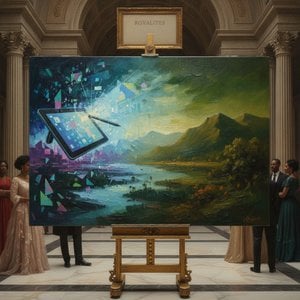
Przekształć cyfrowe NFT w ręcznie malowaną reprodukcję olejną – maksymalizuj marże, ciesz się luksusową jakością i zyskaj prowizję!
Zamów ręcznie malowaną reprodukcję olejną NFT na ArtsDot.com – ekspert w jakości i trwałości, z certyfikatem autentyczności. Maksymalizuj marże, ciesz się luksusową jakością i zyskaj prowizje. Zaufaj profesjonalistom.

Arcydzieła XIX Wieku: 10 Obrazów Opowiadających Epokę | ArtsDot
Odkryj 10 arcydzieł XIX wieku! Poznaj historię Monet, Van Gogha i Courbeta. Imesjonizm, realizm, romantyzm – obrazy pełne emocji i piękna czekają na ArtsDot.com. Znajdź idealny obraz do swojego wnętrza!