


 Podgląd w skali
 Wyślij jako kartkę
 Udostępnij
 Szczegóły dzieła

 Pobierz
 Podobne obiekty
 RTG
RTG Pokaz slajdów
Music
 Oil On Canvas
- WallArt
- Academic Art
 1890
1890- 19th Century
 64.0 x 77.0 cm
 Newark Town Hall Museum And Art Gallery
 Rozwiń treść
Ręcznie malowana reprodukcja olejowa
Ręcznie malowany obraz olejny na płótnie, wykonany na zamówienie przez naszych artystów w wybranym przez Ciebie wymiarze i oprawie. ( Zamów wydruk Kup obraz wysokiej rozdzielczości)




P118B $10

P118H $10

P118W $10

P438Z $10

P508JH $12

P508YH $12

P805H $10

P805Z $10

P919BZ $10

P919G $10

P919XJ $10

P959ZH $10

P968JZ $12

W106C $8

W218G $10

W218JH $8

W218Y $10

W307PJ $10

W316G $10

W316PJ $8

W316Y $10

W398PJ $8

W4111J $10

W500HY $15

W500JH $15

W692G $12

W849H $8

W940BG $15

W953PJ $8




Wybierz spośród naszych standardowych rozmiarów, które zachowują oryginalne proporcje dzieła sztuki.

Możesz wprowadzić własne wymiary, aby dopasować obraz do konkretnej ramy lub przestrzeni. Jeśli wybrany rozmiar nie będzie odpowiadał proporcjom oryginału, przytniecie dzieło sztuki lub rozszerzymy je o dodatkowe elementy, ręcznie domalowane przez artystę. Przed rozpoczęciem produkcji wyślemy projekt cyfrowy do Twojej akceptacji.
Należy pamiętać, że podgląd na ekranie nie odzwierciedla rzeczywistego przycinania ani rozszerzania obrazu. Tylko projekt dokładnie pokaże ostateczną kompozycję.
Choć oferujemy możliwość zamówienia niestandardowych rozmiarów, zalecamy wybór wymiaru z gotowej listy, aby zachować oryginalne proporcje dzieła.
Po złożeniu zamówienia zespół ArtsDot.com skontaktuje się z klientem drogą mailową w celu uzyskania instrukcji i prześle wizualizację projektu
Dostawa na całym świecie () w ciągu 3–4 tygodni zamiast standardowych 5 tygodni. (25 Sierpień). Bez kompromisów w kwestii jakości.

Bezpłatna ekspresowa wysyłka na cały świat

Wysokiej jakości płótno lniane

Pełne ubezpieczenie przesyłki

Gwarancja zwrotu należności celnych i podatków importowych

Gwarancja wiernego odwzorowania kolorów

Polityka 60-dniowego zwrotu (tylko w przypadku wad)

Gwarancja 100% zwrotu kosztów

Zniżka przy zamówieniu wielu produktów
 Opcja ze szkłem jest dostępna wyłącznie w rozmiarach poniżej 110 cm

Music
Technika reprodukcji
Wymiary reprodukcji
-


Cena całkowita
$ 263
Opis dzieła
The Resonance of Melody: An Encounter with Sir William Nicholson's "Music"
To stand before "Music" is to be enveloped in a moment suspended between sound and silence. This exquisite portrait, dating from 1890, captures not merely the act of playing, but the very essence of musical creation itself. The composition draws the viewer into an intimate scene where artistry meets contemplation. On the left, the violinist is depicted with a focused grace, his posture suggesting deep immersion in the melody flowing through him. His presence anchors the narrative, drawing our eye toward the source of this beautiful outpouring.
Composition and Symbolism: A Study in Harmony
The arrangement of elements within the canvas speaks volumes about the nature of art. To the right of the musician rests an open book, a silent repository of notes and knowledge, upon which the violin itself seems to rest, its bow poised as if awaiting the next breath of inspiration. This juxtaposition—the physical instrument against the written score—creates a beautiful dialogue between theory and practice. Adding subtle touches of still life interest are the two apples nestled in the upper left corner; these humble fruits often carry symbolic weight, suggesting themes of knowledge or perhaps even the sweetness inherent in artistic endeavor. The inclusion of a chair in the background adds depth, grounding this ethereal performance within a tangible, lived-in space.
Technique and Artistic Context
Sir William Nicholson’s handling of paint here showcases a mastery characteristic of late Victorian academic painting, yet infused with a modern sensibility. While rooted in established traditions, the work possesses an immediacy that belies its age. The technique allows for both meticulous detail—visible in the texture of the wood and the folds of clothing—and soft, atmospheric transitions that give the scene a dreamlike quality. Considering Nicholson’s background, this piece reflects a period where art was navigating the transition from rigid academicism toward more personal, evocative expression. It is a testament to his ability to capture human emotion through carefully observed detail.
Emotional Resonance for the Modern Collector
Owning a reproduction of "Music" is inviting a continuous source of inspiration into your home or studio. This painting does not shout its beauty; rather, it whispers it, encouraging moments of quiet reflection. For those who appreciate the confluence of culture, intellect, and emotion, this piece serves as a profound focal point. It speaks to the universal human need for beauty, for narrative, and for the transcendent power that art—whether played on strings or captured on canvas—can bestow upon our daily lives.
Podobne dzieła


O artyście
Early Life and Artistic Beginnings
Sir William Newzam Prior Nicholson, born on February 5, 1872, in Newark-on-Trent, Nottinghamshire, emerged from a background that blended industrial pragmatism with artistic sensibility. His father, William Nicholson, was an industrialist and Conservative MP of Newark, while his mother, Annie Elizabeth Prior, brought to the family a connection to the aesthetic traditions of Oxfordshire. From a young age, William displayed an aptitude for art, nurtured by lessons from William Cubley, a local painter who himself traced his artistic roots back to Sir Joshua Reynolds. This early exposure laid the foundation for a career that would span diverse mediums and styles – from striking portraits and elegant still lifes to innovative woodcuts and graphic design. A brief stint at Hubert von Herkomer’s art school proved pivotal, not only for honing his technical skills but also for introducing him to Mabel Pryde, who would become his wife and an essential collaborator in his burgeoning artistic journey. It was through Mabel that he met her brother, James Pryde, a partnership that would soon revolutionize the world of graphic design and establish Nicholson’s reputation as a true innovator.The Beggarstaffs and a Revolution in Poster Art
The collaboration between William Nicholson and James Pryde, known as “J. & W. Beggarstaff,” marked a turning point in British visual culture. Rejecting the prevailing ornate aesthetic of Victorian posters – often cluttered with fussy details and overly sentimental imagery – they embraced a bold simplicity characterized by striking silhouettes, flat planes of color, and a deliberate rejection of traditional perspective. Their designs weren’t merely advertisements; they were statements—powerful, graphic compositions that captured the public's imagination and challenged conventional notions of visual communication. Posters for productions like Don Quixote and publications such as Harper’s Magazine became instantly recognizable, influencing a generation of artists and designers. The Beggarstaffs’ work wasn’t confined to commercial art; it was about redefining how images were used to convey information and evoke emotion. Their impact resonated far beyond the realm of posters, influencing illustration and even painting with its emphasis on strong form and deliberate composition. This period demonstrated Nicholson's remarkable ability to synthesize artistic vision with practical design considerations, solidifying his position as a leading figure in early 20th-century graphic art.From Woodcuts to Portraits: A Developing Style
Following the dissolution of the Beggarstaff partnership – largely due to creative differences and differing commercial ambitions – Nicholson embarked on a period of stylistic exploration and experimentation. He turned his attention to woodcut and wood-engraving, techniques that allowed him to further refine his mastery of line and form. This medium offered a unique challenge, demanding precision and control as he translated images onto the block. Encouraged by the influential James Abbott McNeill Whistler, who recognized Nicholson’s talent and provided valuable guidance, he embraced these methods, producing intricate and evocative prints that showcased his growing artistic maturity. These works – including series like *An Alphabet*, *An Almanac of Twelve Sports*, and *Twelve Portraits* – demonstrated a remarkable ability to capture essence with minimal detail, a quality that would become a hallmark of his style. Simultaneously, Nicholson began to establish himself as a portrait painter, receiving commissions from prominent figures of the era, including members of the Royal Family. His portraits weren’t merely likenesses; they were insightful studies of character, revealing the inner lives of his subjects through subtle nuances of expression and pose – capturing not just physical appearance but also social standing and personality. Works like *Lady in Furs, Mme. P.* exemplify this skill, imbued with a quiet dignity and an understanding of human psychology.Still Life, Landscape, and Lasting Legacy
In the later stages of his career, Nicholson increasingly focused on still life and landscape painting. His still lifes – often featuring luxurious fabrics, exotic fruits, and gleaming tableware – are celebrated for their exquisite attention to detail, harmonious color palettes, and a quiet sense of intimacy. He imbued everyday objects with a poetic quality, elevating them beyond mere representation to become symbols of beauty and contemplation. Nicholson’s landscapes, frequently depicting scenes from his travels in Spain and Italy, reveal a sensitivity to light and atmosphere, capturing the essence of place with remarkable skill – from the sun-drenched hills of Tuscany to the rugged coastline of Cornwall. Throughout his life, Nicholson remained a versatile artist, constantly experimenting with new techniques and approaches, always seeking to refine his craft and expand his artistic horizons. He authored children’s books, designed for the theatre, and continued to produce prints alongside his paintings, demonstrating a remarkable adaptability and a deep-seated passion for art in all its forms. Sir William Nicholson's influence extends beyond his own prolific output; he inspired generations of artists with his commitment to craftsmanship, his innovative spirit, and his ability to find beauty in the ordinary. His work remains a testament to the power of art to illuminate the human experience and transform our perception of the world around us – a legacy that continues to captivate and inspire today. He died on May 16, 1949, leaving behind a rich artistic legacy that endures.
William Nicholson
1872 - 1949 , Wielka Brytania
Krótka nota
- Artistic Movement Or Style: Portrety, krajobrazy, warstwa druku
- Artists Or Movements Influenced By This Artist: ['Beggarstaffs']
- Artists Who Influenced This Artist:
- Whistler
- James Pryde
- Date Of Birth: 5 lutego 1872
- Date Of Death: 16 maja 1949
- Full Name: Sir William Newzam Prior Nicholson
- Nationality: Brytyjczyk
- Notable Artworks:
- Lady in Furs
- Lowestoft Bowl
- n
- Plaza de toros, Malaga
- Place Of Birth: Newark, Wielka Brytania
Powiązane artykuły

Arcydzieła XIX Wieku: 10 Obrazów Opowiadających Epokę | ArtsDot
Odkryj 10 arcydzieł XIX wieku! Poznaj historię Monet, Van Gogha i Courbeta. Imesjonizm, realizm, romantyzm – obrazy pełne emocji i piękna czekają na ArtsDot.com. Znajdź idealny obraz do swojego wnętrza!
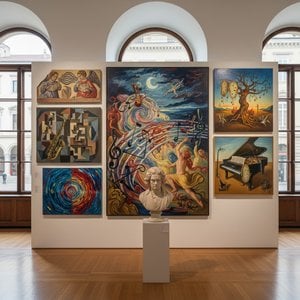
Harmonies on Canvas: Exploring the Visual Representation of Music in Art History
Explore the fascinating history of music's visual representation in art! From ancient symbolism to modern abstraction, discover how artists have captured sound and emotion on canvas. Expert insights & stunning examples.

Trwała Spuścizna Malarstwa Olejnego: Technika, Historia i Estetyczny Wpływ
Poznaj historię i technikę malarstwa olejnego! Eksperckie artykuły o konserwacji, renowacji oraz współczesnych zastosowaniach. Dowiedz się więcej o mistrzach i trwałości obrazów olejnych.

Olej na płótnie: Historia, techniki i ponadczasowy urok malarskiego medium
Poznaj historię i techniki malarstwa olejowego! Od renesansowych mistrzów po współczesne zastosowania – wszystko o oleju na płótnie. Poradniki, konserwacja i inspiracje dla pasjonatów sztuki.

The Enduring Power of Painting: A Historical & Contemporary Exploration of Form and Emotion
Explore the rich history & enduring techniques of oil painting with ArtsDot. Discover masterpieces, learn about art collecting, and find authentic handmade reproductions crafted by skilled artists.


