


 Zobacz w skali 1:1
 Wyślij
 Udostępnij
 Szczegóły
 Przewodnik

 Pobierz plik obrazu
 Podobne obiekty
 RTG
RTG Pokaz slajdów
 Statystyki
Saint Thomas

 Czytaj więcej
Giclée / Wydruk artystyczny
Wydruki giclée lub płótna o jakości muzealnej, szybka realizacja i szeroki wybór opcji wykończenia. ( Kup ręcznie malowany obraz Przełącz na wersję cyfrową)




P118B $10

P118H $10

P118W $10

P438Z $10

P508JH $12

P508YH $12

P805H $10

P805Z $10

P919BZ $10

P919G $10

P919XJ $10

P959ZH $10

P968JZ $12

W106C $8

W218G $10

W218JH $8

W218Y $10

W307PJ $10

W316G $10

W316PJ $8

W316Y $10

W398PJ $8

W4111J $10

W500HY $15

W500JH $15

W692G $12

W849H $8

W940BG $15

W953PJ $8




Wybierz spośród naszych standardowych rozmiarów, które zachowują oryginalne proporcje dzieła sztuki.

Możesz wprowadzić własne wymiary, aby dopasować dzieło do konkretnej ramy lub przestrzeni. Jeśli wybrany rozmiar nie będzie odpowiadał proporcjom oryginalnego obrazu, przytniecie dzieło lub rozszerzymy obraz za pomocą odbicia lustrzanego lub jednolitego wypełnienia krawędzi. Przed rozpoczęciem produkcji prześlemy cyfrową wizualizację do Twojej akceptacji.
Prosimy pamiętać, że podgląd na ekranie nie odzwierciedla faktycznego przycinania ani rozszerzania. Tylko wizualizacja dokładnie pokaże końcową kompozycję.
Mimo dostępności niestandardowych rozmiarów, zalecamy wybór wymiaru z listy zdefiniowanej, aby zachować oryginalne proporcje.
Dostawa na cały świat () w ciągu 2 tygodni zamiast standardowych 4/5 tygodni. (24 Wrzesień)

Bezpłatna ekspresowa wysyłka na cały świat

Wysokiej jakości płótno lniane

Pełne ubezpieczenie transportowe

Gwarancja zwrotu należności celnych i podatków importowych

Gwarancja idealnego odwzorowania barw

100-dniowy okres na zwrot dzieła w przypadku wykrycia wad produkcyjnych

Gwarancja 100% zwrotu pieniędzy

Oferta przy zakupie wielu sztuk
 Opcja ze szkłem jest dostępna wyłącznie w rozmiarach poniżej 110 cm

Saint Thomas
Giclée / Wydruk artystyczny
Rozmiar reprodukcji
-


Suma do zapłaty
$ 62
A Portrait of Faith and Power: Sir Peter Paul Rubens’ Saint Thomas
Sir Peter Paul Rubens's "Saint Thomas" is not merely a depiction of an early Christian figure; it’s a potent distillation of the Baroque era’s fascination with religious devotion, intellectualism, and the dramatic assertion of power. This arresting portrait, likely created around 1610-1615 during his prolific period in Italy, immediately commands attention with its robust physicality and the palpable sense of learned contemplation emanating from Saint Thomas himself. The painting speaks to a world grappling with theological debate, papal authority, and the burgeoning influence of humanist thought – themes deeply embedded within Rubens’s artistic vision.
- Subject Matter: The central figure is undoubtedly Saint Thomas, one of Jesus' twelve apostles traditionally recognized as the doubter who touched Christ’s wounds to confirm his resurrection. His posture, deliberately weighty and grounded, conveys a sense of solemn authority and unwavering faith.
- Symbolism: The inclusion of books – several scattered around him – is crucial. They represent Thomas’s dedication to scholarship, his role as a disseminator of knowledge within the Church, and perhaps even a subtle allusion to the biblical accounts he meticulously studied. The swords, positioned on either side, are a more complex symbol, often interpreted as representing both divine judgment and the martial virtues associated with apostleship.
- Color & Technique: Rubens’s signature use of rich, saturated colors – deep blues, reds, and browns – dominates the composition. His masterful application of oil paint creates a remarkable sense of texture and volume, particularly evident in the folds of Thomas's robe and the worn leather of his books. The dynamic brushwork, characteristic of the Baroque style, adds to the painting’s energetic feel.
Baroque Grandeur: Contextualizing Rubens’ Vision
Rubens was a pivotal figure in the development of Baroque art, a movement characterized by its emotional intensity, dramatic compositions, and opulent use of color. Working primarily in Southern Europe – Antwerp, Italy (particularly Rome), and Flanders – he absorbed influences from Mannerism and classical antiquity while forging his own distinctly Baroque style. “Saint Thomas” exemplifies this synthesis; it’s both deeply rooted in Christian iconography and infused with the dynamism and theatricality that defined the era. The painting reflects the Counter-Reformation's emphasis on accessible religious imagery, designed to inspire faith and reaffirm the Church's authority – a mission Rubens actively embraced during his time in Rome.
- The Papal Commission: It’s believed this portrait was commissioned by Cardinal Scipione Borgia, a powerful figure within the Roman Catholic Church. This connection highlights the significant role Rubens played as a court painter and diplomat, navigating the complex political landscape of 17th-century Europe.
- Humanist Influence: The intellectual atmosphere of Renaissance Italy profoundly impacted Rubens’s work. He was deeply engaged with humanist scholarship, evident in his meticulous attention to detail and his embrace of classical motifs.
A Masterpiece Reimagined: Reproduction Details
ArtsDot offers a meticulously crafted hand-painted reproduction of Sir Peter Paul Rubens' “Saint Thomas,” capturing the essence of this iconic Baroque masterpiece. Our skilled artisans employ traditional oil painting techniques, replicating Rubens’s rich color palette and dynamic brushwork with exceptional accuracy. Each reproduction is created on archival-quality canvas using premium pigments, ensuring lasting beauty and vibrancy for generations to come. The scale can be customized to suit your specific needs, from intimate wall décor pieces to grand statement artworks.
- Hand-Painted Precision: Unlike digital prints or mass-produced reproductions, our hand-painted versions are created by experienced artists who possess a deep understanding of Rubens’s style and technique.
- Archival Materials: We utilize only the finest materials – acid-free canvas, premium oil paints, and durable framing options – to guarantee the longevity of your artwork.
Bringing Baroque Beauty into Your Space
"Saint Thomas" is more than just a portrait; it’s an investment in art history and a testament to the enduring power of human faith and intellect. Whether you are a seasoned collector, an interior designer seeking to infuse your space with timeless elegance, or simply someone captivated by the beauty of Baroque art, this reproduction offers a unique opportunity to own a piece of artistic genius. Let this powerful image transform your surroundings and evoke the grandeur and spiritual depth of Sir Peter Paul Rubens’s legacy.
Podobne dzieła


Biografia artysty
A Life Forged in Baroque Splendor
Sir Peter Paul Rubens, a name synonymous with the very essence of Baroque dynamism, was far more than simply a painter; he was a diplomat, a scholar, and a cultural architect who fundamentally reshaped the artistic landscape of 17th-century Europe. Born in Siegen, Germany, in 1577, his early life was marked by displacement—a formative experience that subtly permeated his later work with an undercurrent of drama and emotional depth. His father, Jan Rubens, a lawyer fleeing religious persecution for his Calvinist beliefs, uprooted the family from their native Antwerp, then under Spanish rule. This initial exile instilled in young Peter Paul a sense of resilience and adaptability, qualities that would serve him well throughout his multifaceted career. Following his father’s death in 1587, the family returned to Antwerp, where he received a humanist education before embarking on his artistic training around 1590, apprenticing under Tobias Verhaecht and Adam van Noort, honing foundational skills in drawing and painting techniques. However, it was his time with Otto van Veen that proved pivotal, exposing him to the rich legacy of Italian Renaissance art—a world he would soon embrace wholeheartedly.The Italian Awakening and Artistic Synthesis
In 1600, Rubens embarked on a transformative journey to Italy, a pilgrimage that irrevocably shaped his artistic vision. For eight years, he immersed himself in the masterpieces of Michelangelo, Raphael, and Titian, absorbing their mastery of form, color, and composition. The influence of these Renaissance giants is readily apparent in his early Italian works, characterized by classical themes and idealized figures. Yet, Rubens didn’t merely imitate; he synthesized these influences with his own innate talent, developing a distinctive style marked by vibrant hues, dynamic compositions, and a sensuous depiction of the human form. He studied anatomy meticulously, resulting in figures that possessed both physical realism and emotional power—robust bodies imbued with life and movement. This period wasn’t solely about artistic development; it was a profound intellectual awakening, fostering a deep appreciation for classical mythology and literature which would become recurring motifs throughout his oeuvre. Upon returning to Antwerp in 1608, Rubens swiftly established himself as the leading artist of his time, receiving a flood of commissions that testified to his burgeoning reputation and solidifying his position at the forefront of Flemish art.A Master of Many Forms: Painting Beyond Boundaries
Rubens’s artistic output was astonishingly diverse and prolific. He didn't confine himself to a single genre; instead, he excelled in history paintings, mythological scenes, portraits, landscapes, and religious works—a testament to his versatility and boundless creativity. His large-scale canvases, often intended for churches, palaces, and public spaces, were breathtaking displays of technical virtuosity and dramatic storytelling. The Descent from the Cross (c. 1616-1617) exemplifies his masterful use of light and shadow to create a scene of profound emotional intensity, drawing viewers into the heart of the narrative. The figures are not merely depicted; they *feel* the weight of grief and the drama of the moment. The Raising of the Cross (1610-1611), with its swirling figures and dynamic composition, showcases his ability to convey movement and energy—a hallmark of his Baroque style. Even in seemingly static subjects like The Judgement of Paris (c. 1636), Rubens infused a sense of life and vitality through his vibrant color palette and sensual depiction of the human form. His technique was equally remarkable – a masterful command of oil painting, employing impasto to create texture and depth, alongside delicate glazing techniques to achieve luminous effects. He frequently employed allegorical figures and symbolic imagery, layering narratives with complex meanings that invited contemplation and interpretation.The Influence of Rubens: A Legacy of Dynamism
Rubens’s impact on the art world was immediate and profound. His style quickly became a dominant force in Flemish painting, influencing generations of artists who sought to emulate his dynamism, color, and sensuality. Artists like Anthony van Dyck, known for his elegant portraits and masterful compositions, were directly inspired by Rubens's work. Jacob Jordaens, another prominent Antwerp painter, adopted many of Rubens’s techniques and compositional strategies. Even centuries later, the influence of Rubens can be seen in the works of Eugène Delacroix, the Romantic French painter who admired Rubens’s dramatic flair and expressive use of color. Beyond his direct followers, Rubens's work served as a model for artists across Europe, shaping the course of Baroque art and contributing to the development of new artistic styles. His emphasis on movement, emotion, and sensual beauty resonated with audiences throughout the 17th and 18th centuries, cementing his place as one of the most important figures in Western art history.Diplomacy, Legacy, and Enduring Influence
Rubens’s influence extended far beyond the realm of art. His diplomatic skills were highly sought after by the Southern Netherlands (modern-day Belgium), and he undertook numerous missions to England, France, and Spain, negotiating treaties and fostering political alliances—a unique dual role that afforded him a nuanced perspective on European affairs and further enhanced his reputation as a man of intellect and influence. In 1630, he married Hélène Fourment, who became both his muse and frequent subject in his paintings – her youthful beauty gracing many of his later works, embodying the sensuality and vitality that characterized his style. He continued to paint prolifically until his death in Antwerp in 1640, leaving behind a vast legacy that continues to inspire awe and admiration. His impact on subsequent generations of artists is immeasurable; painters like Anthony van Dyck, Jacob Jordaens, and Eugène Delacroix all drew inspiration from his dynamic compositions, vibrant colors, and sensuous figures. Rubens didn’t just define the Baroque style—he elevated painting to a new level of prestige and influence, solidifying Antwerp as a major center of artistic production during the 17th century. He remains, centuries later, a towering figure in the history of art, a testament to the power of human creativity and the enduring allure of Baroque splendor.Key Characteristics of Rubens’s Style
- Dynamic Composition: Rubens' paintings are known for their energetic and dramatic arrangements of figures.
- Vibrant Color Palette: He employed a rich, warm color scheme that brought his canvases to life.
- Sensuous Figures: His depictions of the human form were characterized by fullness, vitality, and often, overt sensuality.
- Masterful Use of Light and Shadow: Rubens skillfully manipulated light and shadow to create depth, drama, and emotional impact.
- Allegorical Symbolism: His works frequently incorporated allegorical figures and symbolic imagery, adding layers of meaning and complexity.

Rubens
1577 - 1640 , Niemcy
Najważniejsze informacje
- Artistic Movement Or Style: Barokowy
- Artists Or Movements Influenced By This Artist:
- Anthony van Dyck
- Jacob Jordaens
- Artists Who Influenced This Artist:
- Tycjan
- Rafael
- Michelangelo
- Date Of Birth: 1577
- Date Of Death: 1640
- Full Name: Sir Peter Paul Rubens
- Nationality: Flamandzki
- Notable Artworks:
- Deszcz z krzyżem
- Wniebowzięcie Najświętszej Maryi Panny
- Portret Isabelle Brant
- Place Of Birth: Siegen, Niemcy
Zobacz także powiązane artykuły
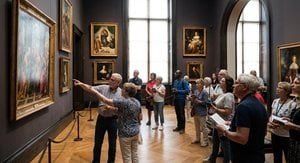
25 Arcydzieł Alte Pinakothek: Historia Sztuki w Twoim Domu | ArtsDot.com
Odkryj 25 arcydzieł Alte Pinakothek w Monachium! Poznaj historię Rembrandta, Rubensa i Dürera. Reprodukcje obrazów najwyższej jakości dla Twojego wnętrza. Inspiracje i dekoracje ścienne na ArtsDot.com

Peter Paul Rubens: A Baroque Master's Life, Legacy & Enduring Influence
Discover the life & art of Peter Paul Rubens, the most influential artist of the Flemish Baroque tradition. Explore his masterpieces, legacy, and impact on art history with ArtsDot.

Barokowe arcydzieła: 10 obrazów, które zdefiniowały epokę | ArtsDot.com
Odkryj 10 arcydzieł baroku! Caravaggio, Rembrandt, Rubens i inni artyści, którzy zdefiniowali epokę. Poznaj historie, techniki i inspiracje tych niezwykłych obrazów. Reprodukcje najwyższej jakości na ArtsDot.com – idealne do Twojego wnętrza!

Dramatyczny Rozkwit Baroku: Dziedzictwo Sztuki Kontrreformacji i Mistrzowie Chiaroscuro
Odkryj dramatyczny świat baroku! Poznaj historię sztuki kontrreformacji, mistrzów chiaroscuro i weneckich arcydzieł. Reprodukcje najwyższej jakości na ArtsDot.com.

Odbitki Giclée: Jakość Archiwalna i Estetyczne Niuanse dla Wymagającego Kolekcjonera
Poznaj sekrety druku giclée – technologii zapewniającej najwyższą jakość reprodukcji sztuki i trwałość archiwalaną. Poradnik dla wymagających kolekcjonerów o wyborze papieru, tuszy i profilach kolorystycznych.


