

- 160.0 x 137.0 cm


The picture follows your choices: , .
Opis obiektu
Samuel Scott's "A Thames Wharf" (1757) captures a bustling London riverside scene—a vivid depiction of maritime trade and daily life along the River Thames.
 Rozwiń treść
Biografia artysty
Discover Samuel Scott, a pivotal British landscape painter known for evocative riverside & seascape scenes from 1702-1772. Explore his art of London & the war of Jenkins' Ear!
Ręcznie malowana reprodukcja olejowa
Ręcznie malowany obraz olejny na płótnie, wykonany na zamówienie przez naszych artystów w wybranym przez Ciebie wymiarze i oprawie. ( Przełącz na wydania drukowane Przejdź do wersji cyfrowej)
More about this painting
 Podgląd w skali 1:1
 Wyślij jako kartkę
 Udostępnij
 Szczegóły dzieła
 Przewodnik

 Pobierz obraz
 Podobne obiekty
 RTG
RTG Pokaz slajdów
 Q&A
Q&A Statystyki
Order your painting in four simple steps
Take your time. You can change any answer; the price in your order card follows each choice.
1 Step one of four
Which size would you like?
These sizes keep the proportions of the original painting. The drawing shows your choice on a wall, above a two-metre sofa.
Or give your own measurements
Wybierz spośród naszych standardowych rozmiarów, które zachowują oryginalne proporcje dzieła sztuki.

Wpisz wymaganą szerokość i wysokość, aby obraz pasował do Twojej ramy lub ściany. Ponieważ jest to dzieło malowane ręcznie, w przypadku rozmiaru o innych proporcjach artysta może domalować nieco więcej wokół obrazu lub przyciąć jego fragmenty — wybór należy do Ciebie. Przed rozpoczęciem pracy prześlemy Ci cyfrową wizualizację do zatwierdzenia. Obraz widoczny na tej stronie nie przedstawia rzeczywistego efektu — jedynie wizualizacja oddaje realny rezultat.
2 Step two of four
How should it be prepared: rolled, stretched or framed?
The prices below are for the size you chose in step one.
Choose the edges of the stretched canvas
Choose your frame

White zł1

Blurside zł1

Extended zł1

P118B zł10

P118H zł10

P118W zł10

P438Z zł10

P508JH zł12

P508YH zł12

P805H zł10

P805Z zł10

P919BZ zł10

P919G zł10

P919XJ zł10

P959ZH zł10

P968JZ zł12

W106C zł8

W218G zł10

W218JH zł8

W218Y zł10

W307PJ zł10

W316G zł10

W316PJ zł8

W316Y zł10

W398PJ zł8

W4111J zł10

W500HY zł15

W500JH zł15

W692G zł12

W849H zł8

W940BG zł15

W953PJ zł8

H24-GOLD zł30

H24-SILVER zł30

H36-GOLD zł45

H36-SILVER zł45
W oprawie
Moulding: . Overall size with the frame: .
3 Step three of four
Would you like anything changed in the painting?
Most people answer no. Because each painting is made by hand, our artist can also adapt it for you.
After order, ArtsDot.com team will email client for instructions and provide a mockup preview
4 Step four of four
A few finishing options
All of them are optional. The answers already selected cost nothing extra.
Who paints it?
Dostawa na całym świecie () w ciągu 3–4 tygodni zamiast standardowych 5 tygodni. (1 Listopad). Bez kompromisów w kwestii jakości.
A nameplate, as in a museum?
Szczegóły grawerowanej brązowej tabliczki
This elegant plaque features the artist's name and the title of the artwork, finely engraved for a timeless presentation.
It is made from bronze with a refined, elegant finish. The text is precisely laser-engraved for a sharp and permanent result. Measuring 9x2 cm, the plaque is compact yet easy to read. It's built to be durable and scratch-resistant, offering a professional, museum-quality look. Mounting is simple thanks to the included adhesive backing.
Szczegóły przezroczystej tabliczki akrylowej
The plaque includes essential engraved details such as the artist's name, the title of the artwork, the date it was created, the type of media used-like oil on canvas or watercolor-a brief description of the piece, and a QR code that links to the complete artwork information.
It is crafted from clear acrylic, offering a sleek, modern appearance. The text is UV-engraved in black to ensure strong visual contrast. With a size of 10x15 cm, it ensures optimal readability. It comes equipped with two metal hooks for secure wall mounting. The plaque is designed to be weather-resistant, making it suitable for various environments, and it includes interactive features that work seamlessly with smartphone scanning.
Szczegóły czarnej tabliczki akrylowej
This elegant plaque includes engraved information such as the artist's name, the title of the artwork, the date it was created, the type of media used (like oil on canvas or watercolor), a short description of the artwork, and a QR code for quick access to more information.
The plaque itself is made from refined black acrylic with a premium finish. The text is laser-engraved in white for high contrast and readability. Its size is 10x15 cm, designed to be easy to read. It comes with two metal hooks for professional mounting. The design is sleek and fits any interior style. It is also weather-resistant and durable, with built-in digital integration for mobile compatibility.
A protective varnish?
When do you need it?
✓ Check and order
Your painting, as you ordered it

A Thames Wharf
Technika reprodukcji
Wymiary reprodukcji
-

Wybitny mistrz artystyczny
Większa szczegółowość, finezja i dodatkowy czas na realizację
-

Opcje oprawy reprodukcji
-
-
W przypadku dzieł sztuki lub reprodukcji, których którykolwiek z boków przekracza 105 cm (około 41 cali), rama zostanie wysłana w formie zestawu do samodzielnego montażu. Metoda ta zapewnia bezpieczną dostawę i zapobiega uszkodzeniom podczas transportu.
Wymagany profesjonalny montaż – nie jest to produkt typu DIY.
Zestaw musi zostać złożony, a płótno naciągnięte przez doświadczonego profesjonalnego ramiarza, przy użyciu kleju do drewna (brak w zestawie), kleszczy do naciągania płótna oraz ścisków, które utrzymają krosna w równej pozycji podczas schnięcia kleju. Nieprawidłowy montaż lub nierównomierne napięcie płótna może trwale uszkodzić dzieło sztuki i nie podlega naszej gwarancji.
 W przypadku dzieł sztuki lub reprodukcji, których którykolwiek z boków przekracza 105 cm (około 41 cali), rama zostanie wysłana w formie zestawu do samodzielnego montażu. Metoda ta zapewnia bezpieczną dostawę i zapobiega uszkodzeniom podczas transportu.
W zestawie znajdują się wszystkie listwy z litego drewna, precyzyjnie docięte do wymiarów.
Montaż odbywa się przy użyciu dołączonych wkrętów oraz kleju do drewna do łączenia narożników, którego zestaw nie zawiera i który musi zostać dostarczony przez ramiarza.
Wymagane są profesjonalne narzędzia, których nie ma w zestawie: kleszcze do naciągania płótna (napinacz) oraz zaciski, które pozwolą utrzymać listwy w równej pozycji podczas schnięcia kleju.
Ważne:
Do połączenia narożników niezbędny jest klej do drewna, listwy należy unieruchomić za pomocą ścisków do momentu całkowitego wyschnięcia kleju, a naciągnięcie płótna na złożoną ramę wymaga użycia kleszczy do naciągania płótna. Żaden z tych elementów nie jest dołączony do zestawu. Przed zamówieniem tego rozmiaru zalecamy konsultację z doświadczonym ramiarzem.

Etykieta obiektu
-
-

Lakier ochronny
Lakier z połyskiem (pogłębia kolory, chroni przed światłem i wilgocią)
-

Personalizacja dzieła
Przykłady możliwości personalizacji: zastąp twarz zdjęciem klienta; dodaj zwierzę domowe (np. zamień kota na psa); umieść ukrytą wiadomość w tle; zmień krajobraz lub elementy tła.
-

Ekspresowa
Dostawa na cały świat () w ciągu 3–4 tygodni zamiast standardowych 5 tygodni. (1 Listopad). Bez kompromisów w kwestii jakości.
-
Przesyłka ekspresowa
Dostawa na cały świat () w ciągu 5 tygodni. (8 Listopad).
W cenie
Cena całkowita
zł 1023
Opcja ze szkłem jest dostępna wyłącznie w rozmiarach poniżej 110 cm
Included with every order
- Bezpłatna ekspresowa wysyłka na cały świat
- Wysokiej jakości płótno lniane
- Pełne ubezpieczenie przesyłki
- Gwarancja zwrotu należności celnych i podatków importowych
- Gwarancja wiernego odwzorowania kolorów
- 100-dniowa polityka zwrotów (tylko w przypadku wad)
- Gwarancja 100% zwrotu pieniędzy
- Zniżka przy zakupie wielu sztuk


A Thames Wharf by Samuel Scott – A Window into 18th Century London
Samuel Scott’s “A Thames Wharf,” painted circa 1757, isn't merely a depiction of a bustling riverside scene; it’s a meticulously crafted snapshot of daily life in burgeoning London. The painting transports us to the heart of maritime commerce and the rhythms of a city on the cusp of transformation, offering a rare glimpse into the world of the East India Company and the vital role the Thames played as its artery. Scott, often considered the “father of English watercolour,” masterfully captures this atmosphere with an almost palpable sense of energy and immediacy – a testament to his innovative approach to capturing light and texture.The Scene Unfolds: Commerce and Community
The composition immediately draws the eye into a vibrant tableau of activity centered around a wharf on the River Thames. The foreground is populated with figures engaged in various tasks: men loading goods onto boats, overseeing operations, and even a dog adding a touch of domesticity to the scene. Notice the careful attention to detail – the varied clothing styles, suggesting a diverse workforce; the sturdy treadwheel crane dominating the middle ground, a crucial piece of machinery for unloading cargo; and the smaller vessel moored in the background, hinting at the constant flow of trade. The buildings lining the wharf are rendered with a realistic yet subtly stylized approach, reflecting the architectural trends of the mid-18th century – brick construction and pitched roofs creating a sense of solidity and permanence. The sky, filled with billowing clouds, adds depth and drama to the scene, suggesting both the potential for inclement weather and the dynamic nature of the river itself.Technique and Style: The Dawn of Watercolour
Scott’s mastery lies in his innovative use of watercolour – a medium he championed during a period when oil painting was still considered the dominant technique. He skillfully employed layering, glazing, and scumbling to achieve remarkable luminosity and atmospheric perspective. Observe how light dances across the surfaces of the buildings and boats, creating an illusion of depth and movement. The artist’s loose brushstrokes and vibrant palette contribute to the overall sense of immediacy and spontaneity – a characteristic that distinguished his work from more formal, academic styles. The painting's realism is tempered by a certain romanticism; Scott wasn’t simply documenting a scene, but rather imbuing it with emotion and character.Historical Context: The East India Company and London’s Rise
“A Thames Wharf” provides invaluable insight into the economic and social landscape of 18th-century London. The painting directly references the East India Company, a powerful entity that controlled vast trade networks across Asia. The presence of the treadwheel crane – a relatively new invention at the time – highlights the increasing mechanization of port operations and the growing importance of London as a global trading center. Furthermore, the bustling activity depicted reflects the city’s rapid growth and transformation during this period, fueled by commerce, immigration, and innovation. The painting serves as a visual record of a pivotal moment in London's history – a time when it was becoming one of the world’s leading financial and commercial hubs.Symbolism and Emotional Resonance
Beyond its historical significance, “A Thames Wharf” resonates with a powerful sense of human connection and industriousness. The figures depicted are not merely anonymous laborers; they represent a community engaged in a vital economic activity. The painting evokes a feeling of energy, movement, and the relentless pursuit of prosperity. It’s a celebration of London's dynamism and its role as a gateway to the world. The slightly hazy atmosphere and the subtle play of light contribute to an overall mood of optimism and possibility – reflecting the belief in progress that characterized this era. This painting is more than just a depiction of a wharf; it’s a portrait of a city on the rise, capturing the spirit of innovation and ambition that defined 18th-century London.Pytania i odpowiedzi
Z czego wynika obecny status praw autorskich dzieła "A Thames Wharf"?
Dzieło "A Thames Wharf" autorstwa Samuel Scott znajduje się w należy do domeny publicznej – autorskie prawa majątkowe wygasły. Okres ochrony praw autorskich liczony jest od daty śmierci artysty, a Samuel Scott zmarł(a) w 1772.
Do którego etapu kariery Samuel Scott należy dzieło „A Thames Wharf” (1757)?
"A Thames Wharf", powstałe w 1757, należy do Mature Period w twórczości Samuel Scott.
Jaki jest dominujący kolor w „A Thames Wharf” – Samuel Scott?
Dominującym kolorem dzieła „A Thames Wharf” – Samuel Scott jest Espresso (#605448).
Podobne dzieła


Samuel Scott
1702 - 1772, United Kingdom
Biografia artysty
The Father of English Watercolour: The Legacy of Samuel Scott
Samuel Scott, born in London around 1702, remains a figure shrouded in artistic mystery—a testament to the challenges faced by documenting artists of his era. Despite scarce biographical details regarding his formative years and training, Scott emerged as one of Britain’s most prominent landscape painters during the mid-18th century, establishing himself as a pioneer in watercolour technique and profoundly influencing subsequent generations of British artists. His distinctive style—characterized by serene riverside scenes and dramatic seascapes imbued with atmospheric perspective—captured the spirit of his time and cemented his legacy as “the father of English watercolour.”
Scott’s artistic journey commenced in approximately 1720, initially focusing on maritime art. Like many artists of his generation, he was deeply impacted by the works of Willem van de Velde the Younger, owning numerous copies and absorbing a masterful handling of light and texture. This influence is palpable in his early works depicting warships engaged in naval battles, demonstrating a meticulous attention to detail and an understanding of compositional principles rooted in Dutch marine painting traditions. His ability to translate the raw power of the sea into delicate, evocative imagery allowed him to bridge the gap between rigid maritime documentation and fine art.
A Vision of London and the Thames
As his career matured, Scott turned his gaze toward the heart of the British Empire, finding profound inspiration in the bustling waterways of the River Thames. His works serve as a vivid window into 18th-century London, capturing the rhythmic pulse of maritime trade and the daily life of the riverside. In masterpieces such as A Thames Wharf (1757), he presents a bustling depiction of commerce, where the movement of boats and the structure of the wharves tell a story of a city in constant motion. His talent lay in his ability to blend topographical accuracy with a romanticized atmosphere, making the industrial and commercial aspects of London appear both grand and intimate.
Beyond the busy docks, Scott possessed a remarkable gift for capturing the architectural majesty of London’s landmarks. His depictions of the city often utilized an oil on canvas medium to achieve a sense of permanence and grandeur, as seen in The Thames at Westminster Bridge with Barges (1746). In this work, he showcases London’s architectural detail through a Romantic lens, using light and shadow to create a captivating historical atmosphere. Similarly, his View of Somerset House Looking Downstream from the York Water-Tower demonstrates his skill in topographical painting, offering a serene look at the cityscape and the nearby Tower of London, rendered with a precision that honors the structural elegance of the era.
Artistic Collaborations and Historical Significance
The development of Scott's style was also shaped by significant professional partnerships. His collaborative project with George Lambert on six paintings portraying East India Company settlements showcased his versatility and ability to synthesize disparate artistic elements—architecture alongside landscape—reflecting the intellectual currents of the period. This partnership resulted in images that conveyed both grandeur and intimacy, capturing the essence of colonial enterprise while simultaneously celebrating the beauty of natural surroundings. Such works were not merely aesthetic pursuits but served as important historical records of Britain's expanding global reach.
The enduring significance of Samuel Scott lies in his role as a transitional figure who helped elevate watercolour from a medium of mere sketching to a respected form of fine art. His contributions can be summarized through several key artistic pillars:
- Pioneering Technique: He introduced a level of atmospheric depth and light manipulation that would define the English watercolour tradition for decades.
- Maritime Mastery: By blending Dutch marine influences with British subject matter, he created a unique genre of naval and riverine art.
- Topographical Documentation: His detailed renderings of London landmarks provided an invaluable visual archive of 18th-century urban life and architecture.
- Cultural Synthesis: Through his collaborations, he successfully merged the documentation of colonial expansion with the aesthetic beauty of landscape painting.
Through his dedicated observation of the Thames and the sea, Samuel Scott did more than just paint landscapes; he captured the very soul of a maritime nation during a period of immense growth and transformation.
Powiązane artykuły

25 Arcydzieł National Gallery w Londynie: Sztuka dla Twojego Domu | ArtsDot
Odkryj 25 arcydzieł National Gallery w Londynie! Poznaj historie Van Gogha, Moneta i Rembrandta. Reprodukcje obrazów najwyższej jakości dla Twojego wnętrza – inspiracje i dekoracje na ArtsDot.com.

Henry Scott Tuke: Sunlit Masculinity & the Pastoral Ideal in Victorian Painting
Explore the captivating world of Henry Scott Tuke's paintings – a master of British Impressionism renowned for his intimate depictions of youth and sunlit maritime scenes. Discover his legacy & aesthetic influence.
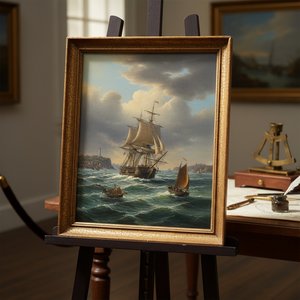
Samuel Walters: Capturing Victorian Maritime Life with Precision & Artistry
Explore the exquisite maritime paintings of Samuel Walters (1811-1882). Discover his mastery of detail, historical scenes & influence on Victorian art. Learn about collecting his works and find high-quality reproductions at ArtsDot.