


 Zobacz w skali 1:1
 Wyślij
 Udostępnij
 Szczegóły
 Przewodnik

 Pobierz plik obrazu
 Podobne obiekty
 RTG
RTG Pokaz slajdów
 Statystyki
The pictorial content


 Czytaj więcej
Ręcznie malowana reprodukcja olejowa
Ręcznie malowany obraz olejny na płótnie, wykonany na zamówienie przez naszych artystów w wybranym przez Ciebie wymiarze i oprawie. ( Przełącz na wersję drukowaną Przełącz na wersję cyfrową)




P118B $10

P118H $10

P118W $10

P438Z $10

P508JH $12

P508YH $12

P805H $10

P805Z $10

P919BZ $10

P919G $10

P919XJ $10

P959ZH $10

P968JZ $12

W106C $8

W218G $10

W218JH $8

W218Y $10

W307PJ $10

W316G $10

W316PJ $8

W316Y $10

W398PJ $8

W4111J $10

W500HY $15

W500JH $15

W692G $12

W849H $8

W940BG $15

W953PJ $8




Wybierz spośród naszych standardowych rozmiarów, które zachowują oryginalne proporcje dzieła sztuki.

Możesz wprowadzić własne wymiary, aby dopasować obraz do konkretnej ramy lub przestrzeni. Jeśli wybrany rozmiar nie będzie odpowiadał proporcjom oryginału, przytniecie dzieło sztuki lub rozszerzymy je o dodatkowe elementy, ręcznie domalowane przez artystę. Przed rozpoczęciem produkcji wyślemy projekt cyfrowy do Twojej akceptacji.
Należy pamiętać, że podgląd na ekranie nie odzwierciedla rzeczywistego przycinania ani rozszerzania obrazu. Tylko projekt dokładnie pokaże ostateczną kompozycję.
Choć oferujemy możliwość zamówienia niestandardowych rozmiarów, zalecamy wybór wymiaru z gotowej listy, aby zachować oryginalne proporcje dzieła.
Po złożeniu zamówienia zespół ArtsDot.com skontaktuje się z klientem drogą mailową w celu uzyskania instrukcji i prześle wizualizację projektu
Dostawa na całym świecie () w ciągu 3–4 tygodni zamiast standardowych 5 tygodni. (22 Wrzesień). Bez kompromisów w kwestii jakości.

Bezpłatna ekspresowa wysyłka na cały świat

Wysokiej jakości płótno lniane

Pełne ubezpieczenie transportowe

Gwarancja zwrotu należności celnych i podatków importowych

Gwarancja idealnego odwzorowania barw

100-dniowy okres na zwrot dzieła w przypadku wykrycia wad produkcyjnych

Gwarancja 100% zwrotu pieniędzy

Oferta przy zakupie wielu sztuk
 Opcja ze szkłem jest dostępna wyłącznie w rozmiarach poniżej 110 cm

The pictorial content
Technika wykonania
Rozmiar reprodukcji
-


Suma do zapłaty
$ 263
A Dreamscape Unveiled: René Magritte’s ‘The Pictorial Content’ (1947)
“The visible world is what we wrongly believe to be reality.” – René Magritte This captivating artwork, created in 1947 by the master of Surrealism, René Magritte, presents a compelling and unsettling vision. ‘The Pictorial Content’ isn't merely a painting; it’s an invitation to question perception itself—a hallmark of Magritte’s artistic philosophy.Subject & Composition: A Figure in Flux
At the heart of the composition lies a strikingly elongated figure draped in a vibrant, flowing robe. The figure's features are deliberately exaggerated – large, expressive eyes and a wide mouth contribute to an almost mask-like quality. Arms extend outwards in a gesture that feels both inviting and ambiguous, perhaps offering direction or simply acknowledging the viewer’s presence.- The composition is intentionally unbalanced; the central figure dominates while swirling brushstrokes create a dynamic, chaotic background.
- Adding to the dreamlike quality, the robe appears to be dissolving or dripping, suggesting impermanence and fluidity.
- A whimsical yet unsettling detail – several small birds perch atop the figure’s head, introducing an element of unexpectedness and perhaps symbolizing freedom or fragility.
Style & Technique: Echoes of Expressionism & Surrealist Innovation
While firmly rooted in Surrealism, ‘The Pictorial Content’ displays stylistic leanings towards Expressionism. Magritte employs a loose, gestural brushwork and prioritizes emotional impact over precise representation.- Impasto technique: The thick application of paint creates texture and depth, enhancing the visual richness.
- Color Palette: Bold and vibrant hues – whites, pinks, yellows, and blues – clash and harmonize simultaneously, contributing to a sense of unease and dynamism.
- Flattened Perspective: The lack of traditional perspective further amplifies the surreal atmosphere, drawing the viewer into an ambiguous space.
Historical Context & Artistic Evolution
Born in 1898, René Magritte navigated various artistic movements before solidifying his signature Surrealist style. Initially influenced by Impressionism and Futurism, he found his true voice through the exploration of dreams, subconscious imagery, and the subversion of everyday objects. Created post-World War II, ‘The Pictorial Content’ reflects a period of profound societal upheaval and existential questioning – themes that resonate deeply within the artwork's unsettling atmosphere.Symbolism & Interpretation: A Fragmented Self?
Magritte rarely offered definitive interpretations of his work, preferring to leave them open to individual contemplation. However, several readings emerge from ‘The Pictorial Content’.- Alienation and Isolation: The figure’s ambiguous expression and the chaotic background could represent feelings of detachment and loneliness.
- Fragmented Identity: The dissolving robe and distorted features might symbolize a fractured sense of self, grappling with internal conflicts.
- The Power of Perception: As with much of Magritte’s oeuvre, the painting challenges our understanding of reality, prompting us to question what we see and how we interpret it.
Emotional Impact & Interior Design Considerations
‘The Pictorial Content’ evokes a complex range of emotions – disorientation, anxiety, curiosity, and perhaps even a touch of wonder. Its bold colors and dynamic composition make it a striking focal point for any interior space.- Modern Living Rooms: The artwork's surreal quality complements contemporary design schemes.
- Eclectic Collections: It adds an intriguing layer to collections that blend different artistic styles.
- Creative Offices: Its thought-provoking nature can inspire creativity and innovation in a professional setting.
Podobne dzieła


Biografia artysty
Early Life and the Seeds of Surrealism
René Magritte, born René François Ghislain Magritte on November 21, 1898, in Lessines, Belgium, emerged into a world that would profoundly shape his enigmatic artistic vision. His early years were marked by an unsettling event – the suicide of his mother when he was just thirteen. The image of her body being recovered from the River Sambre, with her dress obscuring her face, became a haunting motif that would subtly permeate his later work, manifesting in veiled figures and a persistent exploration of hidden realities. This early trauma instilled within him a fascination with mystery, loss, and the unsettling power of what remains unseen. While details of his childhood remain somewhat elusive, it’s clear this formative experience laid the groundwork for his lifelong questioning of perception and representation. He began drawing lessons at age ten, revealing an innate inclination towards visual expression, but initially explored Impressionism before embarking on a path that would lead him to become one of the most significant figures in Surrealist art.Artistic Development and Influences
Magritte’s artistic journey was not immediate or straightforward. He studied at the Académie Royale des Beaux-Arts in Brussels, yet found its traditional methods stifling. His early work experimented with Futurism and Cubism, absorbing elements of these avant-garde movements but ultimately rejecting their purely formal concerns. It wasn't until encountering Giorgio de Chirico’s painting *The Song of Love* in 1922 that Magritte discovered a resonance that would irrevocably alter his artistic course. De Chirico’s dreamlike landscapes and unsettling juxtapositions unlocked within Magritte a new way of seeing – a world where the familiar could be rendered strange, and the ordinary imbued with profound mystery. This encounter sparked his commitment to Surrealism, though he often maintained a unique distance from its more overtly psychological or automatic approaches. He preferred a meticulous, almost clinical precision in his painting, using realistic techniques to depict illogical scenarios.The Heart of Surrealism: Challenging Reality
By 1926, Magritte had fully embraced the tenets of Surrealism, producing *Le Jockey Perdu (The Lost Jockey)*, widely considered his first truly surrealist work. However, his brand of Surrealism was distinct. He wasn’t interested in exploring the subconscious through free association or dream imagery in the manner of some of his contemporaries. Instead, Magritte sought to challenge viewers' perceptions of reality by presenting ordinary objects in unexpected contexts, forcing them to question their assumptions about the world around them. Iconic works like *The Treachery of Images (This is not a pipe)* (1929) brilliantly deconstructs the relationship between image and object, reminding us that a representation is never the thing itself. *Les Amants (The Lovers)* (1927-1928), with its shrouded figures, echoes the trauma of his mother’s death while simultaneously exploring themes of concealment and intimacy. *Time Transfixed* (1938) presents a locomotive bursting through a brick wall, disrupting our sense of space and time. And *The Human Condition* (1933), a canvas within a canvas, blurs the boundaries between representation and reality, prompting us to consider how we perceive and interpret the world.Later Life, Recognition, and Enduring Legacy
Despite initial struggles for recognition, Magritte’s work gradually gained prominence, particularly in the United States with exhibitions in 1936 and later retrospective shows at the Museum of Modern Art (1965) and the Metropolitan Museum of Art (1992). He remained politically engaged throughout his life, advocating for artistic autonomy. He continued to refine his signature style, exploring themes of repetition, illusion, and the power of language in paintings that are both intellectually stimulating and visually arresting. Magritte died on August 15, 1967, leaving behind a body of work that continues to captivate and challenge audiences worldwide. His influence extends far beyond the realm of painting, impacting pop art, minimalist art, conceptual art, and even advertising and film. Today, his paintings are held in major museum collections around the globe, including the Musées royaux des beaux-arts de Belgique in Brussels, which houses the Magritte Museum – dedicated entirely to his work and boasting the world’s largest collection of his creations.- Museum Collections: Musées royaux des beaux-arts de Belgique, Brussels; Magritte Museum.
Magritte's enduring legacy lies in his ability to make us see the familiar anew, to question our assumptions about reality, and to appreciate the power of art to provoke thought and inspire wonder. He wasn’t simply painting images; he was crafting visual paradoxes that continue to resonate with viewers decades after their creation, solidifying his position as a true master of Surrealism and a pivotal figure in 20th-century art.

René Magritte
1898 - 1967 , Belgia
Najważniejsze informacje
- Artistic Movement Or Style: Surrealizm
- Artists Or Movements Influenced By This Artist:
- Pop art
- Minimalist sztuka
- Artists Who Influenced This Artist: ['Giorgio de Chirico']
- Date Of Birth: 21 listopada 1898
- Date Of Death: 15 sierpnia 1967
- Full Name: René François Ghislain Magritte
- Nationality: Belgijski
- Notable Artworks:
- Les Amants
- The Treachery of Images
- Time Transfixed
- Place Of Birth: Lessines, Belgia
Zobacz także powiązane artykuły

Salvador Dalí: 25 Najbardziej Znanych Obrazów Mistrza Surrealizmu | ArtsDot.com
Odkryj 25 najbardziej znanych obrazów Salvadora Dalí – mistrza surrealizmu! Poznaj historie, symbolikę i techniki jego niezwykłych dzieł. Reprodukcje najwyższej jakości na ArtsDot.com. Znajdź idealny obraz do Twojego wnętrza.

10 Arcydzieł Surrealizmu, które Zdefiniowały Sztukę XX Wieku | ArtsDot
Odkryj 10 arcydzieł surrealizmu, które zrewolucjonizowały sztukę! Poznaj historie Dalíego, Magritte'a i innych mistrzów. Reprodukcje obrazów najwyższej jakości na ArtsDot.com – inspiracje dla Twojego wnętrza.

Surrealizm w sztuce: 10 arcydzieł, które zmieniły postrzeganie rzeczywistości | ArtsDot.com
Odkryj 10 arcydzieł surrealizmu! Poznaj historie Dalí, Magritte'a i innych mistrzów tego ruchu. Inspiracje wnętrzarskie i reprodukcje obrazów najwyższej jakości na ArtsDot.com. Eksploruj pełną kolekcję online!
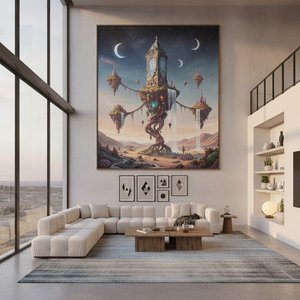
Dreamscapes Unveiled: A Curated Guide to Integrating Surrealist Landscape Art into Modern Interiors
Discover how to transform your home with the captivating mystery of Surrealist landscape art. Our expert guide explores iconic dreamscapes, offering professional tips on curating, styling, and commissioning bespoke surrealist masterpieces for a sophisticated, soulful interior.

Surrealizm w Obrazach: 10 Arcydzieł, Które Zdefiniowały Ruch | ArtsDot.pl
Odkryj 10 arcydzieł surrealizmu! Poznaj historie Dalí, Magritte’a i Miró. Inspiracje, techniki i znaczenie onirycznych obrazów. Reprodukcje najwyższej jakości na ArtsDot.com – galeria sztuki online dla Twojego wnętrza. Eksploruj kolekcję!


