

 Podgląd w skali 1:1
 Wyślij jako kartkę
 Udostępnij
 Szczegóły dzieła
 Przewodnik

 Pobierz obraz
 Podobne obiekty
 RTG
RTG Pokaz slajdów
 Pytania i odpowiedzi
 Statystyki
Surf and Seaweed


 Rozwiń treść
Dzieło sztuki prezentowane na tej stronie podlega ochronie prawem autorskim, co oznacza, że nie mamy prawa do tworzenia ani sprzedaży jego identycznej reprodukcji. Ochrona ta jest egzekwowana na mocy umów międzynarodowych, takich jak Konwencja berneńska oraz przez przepisy prawa krajowego, w tym te określone w Prawo autorskie USA – Tytuł 17.
Metoda ta jest w pełni zgodna z przepisami prawa autorskiego, ponieważ nie polega na kopiowaniu ani powielaniu chronionego dzieła. Stanowi ona kreatywną reinterpretację – nowy obraz, który czerpie inspirację z oryginału, ale nie jest z nim tożsamy.
Giclée / Wydruk artystyczny
Wydruki giclée lub płótna o jakości muzealnej, szybka realizacja i szeroki wybór opcji wykończenia. ( Zamów ręcznie malowaną reprodukcję Przejdź do wersji cyfrowej)




P118B zł10

P118H zł10

P118W zł10

P438Z zł10

P508JH zł12

P508YH zł12

P805H zł10

P805Z zł10

P919BZ zł10

P919G zł10

P919XJ zł10

P959ZH zł10

P968JZ zł12

W106C zł8

W218G zł10

W218JH zł8

W218Y zł10

W307PJ zł10

W316G zł10

W316PJ zł8

W316Y zł10

W398PJ zł8

W4111J zł10

W500HY zł15

W500JH zł15

W692G zł12

W849H zł8

W940BG zł15

W953PJ zł8




Wybierz spośród naszych standardowych rozmiarów, które zachowują oryginalne proporcje dzieła sztuki.

Wpisz wymaganą szerokość i wysokość, aby dopasować grafikę do ramy lub ściany. Wydruk można jedynie przyciąć, nigdy nie powiększając go poza oryginalny obraz, dlatego format o innych proporcjach spowoduje utratę części kompozycji. Przed rozpoczęciem druku prześlemy Ci cyfrowy podgląd do zatwierdzenia. Obraz wyświetlany na tej stronie nie pokazuje rzeczywistego przycięcia — jedynie podgląd oddaje ten efekt.
Dostawa na cały świat () w ciągu 2 tygodni zamiast standardowych 4/5 tygodni. (12 Listopad)

Bezpłatna ekspresowa wysyłka na cały świat

Wysokiej jakości płótno lniane

Pełne ubezpieczenie przesyłki

Gwarancja zwrotu należności celnych i podatków importowych

Gwarancja wiernego odwzorowania kolorów

100-dniowa polityka zwrotów (tylko w przypadku wad)

Gwarancja 100% zwrotu pieniędzy

Zniżka przy zakupie wielu sztuk
 Opcja ze szkłem jest dostępna wyłącznie w rozmiarach poniżej 110 cm

Surf and Seaweed
Giclée / Wydruk artystyczny
Wymiary reprodukcji
-


Cena całkowita
zł 246
Podobne dzieła


Biografia artysty
A Pioneer of Vision: The Life and Art of Ralph Steiner
Ralph Steiner emerged as a pivotal figure in the evolution of American photography and avant-garde filmmaking, a true innovator who bridged the gap between artistic experimentation and social consciousness. Born in Cleveland, Ohio, in 1899, his journey began with an initial pursuit of chemistry at Dartmouth College. However, this scientific inclination soon gave way to a burgeoning passion for visual expression when he discovered photography. This shift proved transformative, setting him on a path that would redefine the boundaries of both still and moving images. His early training at the Clarence H. White School of Modern Photography in 1921 was foundational, instilling in him not only technical mastery but also an appreciation for the artistic potential inherent within the medium. The guidance he received from Clarence H. White proved invaluable, leading to his employment at the Manhattan Photogravure Company where Steiner honed his skills producing photogravure plates based on Robert Flaherty’s groundbreaking film, *Nanook of the North*. This early exposure to cinematic storytelling would profoundly influence his own artistic endeavors.From Stillness to Motion: Experimentation and Innovation
Steiner's creative spirit quickly extended beyond traditional photographic practices. He transitioned into freelance work in New York City, initially focusing on commercial assignments for publications like *Ladies’ Home Journal*, but this pragmatic pursuit did not stifle his desire for artistic exploration. Influenced by the work of Paul Strand, he became involved with the Film and Photo League around 1927, a collective dedicated to socially engaged art. This marked a turning point in his career, as he began to explore the power of imagery as a tool for social commentary. Simultaneously, Steiner played a crucial role in mentoring Walker Evans, providing both technical assistance and access to essential equipment – a testament to his generosity and commitment to fostering emerging talent. His own experimentation with film blossomed during this period, culminating in *H2O* (1929), a pioneering abstract work that captured the mesmerizing patterns of water through evocative imagery. This film, alongside similar works by Joris Ivens and Henwar Rodakiewicz, established Steiner as a key figure in early experimental cinema. The recognition bestowed upon *H2O*, including its addition to the National Film Registry in 2005, underscores its enduring significance. He continued pushing boundaries with films like *Surf and Seaweed* (1931) and *Mechanical Principles* (1930), expanding his exploration of abstract forms and rhythmic visual sequences.Documenting a Nation: Social Realism and the Power of Film
The 1930s witnessed a shift in Steiner’s focus towards documentary filmmaking, driven by a desire to use his art as a force for social change. His involvement with the Harry Alan Potamkin Film School brought him into contact with Leo Hurwitz, whose vision of film as a tool for activism deeply resonated with Steiner. This led to his participation with NYKino, a collective producing newsreels for worker’s rallies and strikes – much of this work sadly lost in a warehouse fire. However, he also contributed to satirical “pool” films like *Pie in the Sky* (1935), an early collaboration with Elia Kazan that showcased his versatility. His most significant documentary achievements came through his cinematography on Pare Lorentz’s landmark films, *The Plow That Broke the Plains* (1936) and *The River* (1938). Commissioned by the Resettlement Administration during the New Deal era, these films powerfully depicted the devastating impact of the Dust Bowl on American farmers, offering a poignant visual record of hardship and resilience. Steiner’s collaboration with Willard Van Dyke on *The City* (1939), set to music by Aaron Copland, further solidified his reputation as a master documentarian, capturing the vibrant energy and complex social fabric of New York City.A Lasting Legacy: From Hollywood to Private Visions
Following a brief foray into Hollywood as a writer-producer in the 1940s, Steiner returned to New York and resumed freelance photography for publications like *Vogue* and *Look Magazine*, before retiring in 1962. However, his creative spirit remained undimmed. He settled in Vermont and Maine, where he continued making films privately, creating eight works grouped under the title “The Joy of Seeing” between 1960 and 1975 – a testament to his lifelong dedication to visual exploration. Steiner’s still photographs are characterized by their unique angles, abstraction, and sometimes surreal subject matter, reflecting a modernist sensibility that challenged conventional perspectives. His work stands as a significant contribution to early American avant-garde cinema, influencing filmmakers like Timoleon Wilkins and inspiring generations of artists to push the boundaries of visual storytelling. Ralph Steiner’s legacy lies in his pioneering spirit, blending artistic experimentation with social commentary, and bridging the gap between early abstract film movements and later generations of experimental filmmakers. He remains a vital figure in understanding the evolution of American photography and cinema, a true visionary whose work continues to resonate today.- Born: Cleveland, United States of America (1899)
- Died: 1986

Ralph Steiner
1899 - 1986 , United States of America
Krótka nota
- Full Name: Ralph Steiner
- Nationality: American
- Date Of Birth: 1899
- Date Of Death: 1986
- Place Of Birth: Cleveland, United States of America
- Notable Artworks:
- H2O
- Surf and Seaweed
- The Plow...
- Switches
- Ford Car
- Artistic Movement Or Style: Avant-garde, Documentary
- Artists Who Influenced This Artist: ['Paul Strand']
- Artists Or Movements Influenced By This Artist: ['Timoleon Wilkins']
Powiązane artykuły

Piktorializm w Polsce: Poszukiwanie Duszy Fotografii i Estetyki Malarskiej
Poznaj historię piktorializmu w Polsce – nurtu fotografii artystycznej dążącego do estetyki malarskiej. Odkryj kluczowe postacie, techniki i wpływ na polską sztukę. Ekspercka analiza i fascynujące fakty!

Beyond the Lens: Photography's Enduring Influence on Modern & Contemporary Art
Explore photography's pivotal role in shaping modern & contemporary art. Discover key movements, influential artists like Stieglitz, and expert collecting advice from ArtsDot.

Monochromatyczne Wizje: Estetyka i Historyczne Znaczenie Fotografii Czarno-Białej
Odkryj fascynujący świat fotografii czarno-białej! Poznaj historię, techniki i arcydzieła monochromatycznej sztuki. Inspiracje, porady i analiza wpływu na współczesną estetykę. ArtsDot.com.
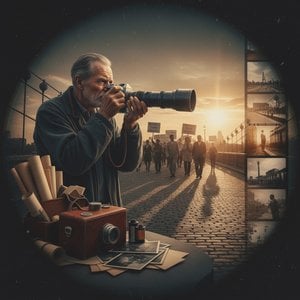
Witnessing History Through Lens & Light: Documentary Photography's Enduring Legacy
Explore the powerful history of documentary photography – from its origins to contemporary masters like Gordon Parks & W. Eugene Smith. Discover how this art form shapes our understanding of society and witness pivotal moments in time.

Top 10 arcydzieł fotografii dokumentalnej – inspiracje do wnętrz od ArtsDot.com
Poznaj 10 arcydzieł fotografii dokumentalnej, które zmieniły świat! Odkryj historie wybitnych fotografów i ich wpływ na sztukę współczesną. Reprodukcje obrazów najwyższej jakości – ArtsDot.com. Eksploruj kolekcję online!